


July 2026 Updates: New Standards for Paper Sacks in Packaging and Distribution
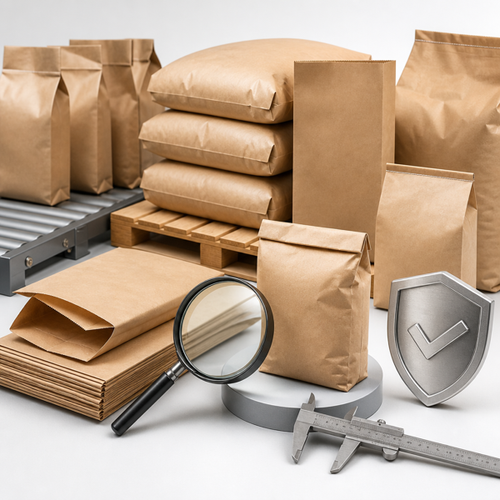
Packaging and Distribution of Goods professionals will find July 2026 a significant month, with the publication of two international ISO standards focused on the specification and quality of paper sacks. As the drive toward consistent, reliable, and safe packaging continues worldwide, these new standards provide updated guidelines for conditioning, testing, and dimensional control, ultimately supporting quality assurance and regulatory compliance across global supply chains.
Overview / Introduction
The Packaging and Distribution of Goods industry is a cornerstone of modern commerce, supporting the movement and protection of products worldwide. Standardized packaging not only improves product integrity but also ensures interoperability, safety, and sustainability throughout the supply chain. With frequent advances in materials, regulatory requirements, and customer expectations, up-to-date standards are essential for manufacturers, procurement specialists, engineers, and compliance managers.
In July 2026, two critical ISO standards were released:
- ISO 6599-1:2026: Focused on the conditioning of paper sacks for testing
- ISO 8367-1:2026: Defining dimensional tolerances for paper sacks
This article provides a comprehensive overview of both standards, helping industry professionals understand their requirements, benefits, and real-world implications.
Detailed Standards Coverage
ISO 6599-1:2026 - Conditioning for Testing of Paper Sacks
Packaging — Conditioning for testing — Part 1: Paper sacks
Scope & Purpose: ISO 6599-1:2026 outlines precise atmospheres and procedures for conditioning paper sacks prior to and during physical testing. Correct conditioning is crucial for ensuring that test results reflect real-world performance and comparability across different laboratories or production sites.
The standard covers:
- Definition of conditioning environments (particularly temperature and humidity)
- Separate protocols for sacks with and without barrier plies
- Specification of equipment required to monitor and maintain conditions
- Determination of conditioning periods and reporting requirements
Key Requirements and Specifications:
- Conditioning atmosphere: Must be closely regulated for temperature and relative humidity. Specific values are provided for standard practice (commonly 23°C and 50% RH), reflecting widely accepted international norms for packaging materials testing.
- Minimum conditioning periods: Defined separately for paper sacks with and without barrier plies. This ensures that different construction types reach moisture equilibrium appropriately before testing.
- Equipment and monitoring: The testing environment must include temperature and humidity control as well as accurate data logging and verification practices.
- Test reporting: Laboratories must record atmospheric conditions and periods during which samples are conditioned to facilitate traceability and repeatability.
Who Needs To Comply:
- Paper sack manufacturers
- Packaging laboratories and quality assurance teams
- Procurement and supply chain organizations sourcing or accepting paper sacks
Practical Implications: Ensuring strict adherence to conditioning protocols enhances test repeatability, reduces variability, and supports claims of compliance in procurement and regulatory contexts. This is especially important for companies exporting packaged goods, where uniform test methods help bridge regional regulatory differences.
Notable Changes: This edition clarifies minimum conditioning periods for different sack types and aligns conditioning environments with broader packaging test standards, supporting harmonization and easier cross-comparison.
Key highlights:
- Standardizes conditioning atmospheres and methods across labs
- Defines separate conditioning periods based on sack construction
- Specifies detailed test report and documentation requirements
Access the full standard:View ISO 6599-1:2026 on iTeh Standards
ISO 8367-1:2026 - Dimensional Tolerances for Paper Sacks
Packaging — Dimensional tolerances for general purpose sacks — Part 1: Paper sacks
Scope & Purpose: ISO 8367-1:2026 specifies allowable dimensional tolerances—permissible variation in length, width, and related measurements—during the manufacture of paper sacks. Dimensional consistency is vital for packaging operations, automation, palletization, and overall logistics efficiency.
Covered within this standard:
- Permitted tolerances on all major dimensions of paper sacks
- Reference to sack definitions as outlined in ISO 6590-1
- Grammage specifications for the sack paper itself (including single ply and multi-ply constructions)
Key Requirements and Specifications:
- Dimensional tolerances: Comprehensive tables set maximum permissible deviation from nominal (design) dimensions for key features such as sack mouth, length, and width.
- Paper grammage: Minimum grammage values established, both for individual plies and total construction, ensuring suitable strength and durability for general-purpose sacks.
- Quality control: Tolerances apply from point of manufacture to delivery, supporting robust inspection and acceptance criteria throughout the supply chain.
Who Needs To Comply:
- Sack and packaging manufacturers
- Procurement and quality assurance specialists
- Distributors and end-users (especially those employing automated filling or palletizing equipment)
Practical Implications: By enforcing tight dimensional tolerances, the standard helps to minimize problems such as faulty packing machine operations, misfits in transport, or reduced load stability. Companies that demand reliable, high-speed operations or that operate in tightly regulated sectors will especially benefit from adherence.
Notable Changes: The 2026 edition clarifies relationships with related ISO packaging standards, and specifies tolerances in line with best practices adapted from both ISO and CEN technical committees.
Key highlights:
- Clearly defines max/min tolerances for all key dimensions
- Establishes minimum grammage for sack construction
- Ensures compatibility and interchangeability across equipment and regions
Access the full standard:View ISO 8367-1:2026 on iTeh Standards
Industry Impact & Compliance
The publication of these two standards impacts packaging operations at multiple levels:
- Manufacturers now have clear criteria for both environmental conditioning before testing and product dimensional tolerances, which can streamline quality assurance and customer acceptance.
- Quality and compliance managers benefit from unambiguous testing protocols and inspection checklists.
- Procurement specialists can define clear acceptance criteria in supplier contracts, reducing disputes and ensuring globally harmonized shipments.
- Global supply chains gain from standardized performance and compatibility, especially when shipping internationally or automating warehousing and filling operations.
Compliance Considerations:
- Adapting manufacturing and testing lines to new requirements may require updated instrumentation, staff training, or adjusted documentation.
- Ensuring third-party suppliers adhere to these standards can require contractual modification and additional audits.
- Certification or declaration of conformity to ISO 6599-1:2026 and ISO 8367-1:2026 may be requested by large customers or regulators.
Benefits of Adopting These Standards:
- Improved product and testing consistency
- Enhanced confidence in international and inter-company transactions
- Reduced waste, rework, and quality disputes
- Robust basis for claims of compliance in regulated sectors (e.g., food, chemicals)
Risks of Non-Compliance:
- Increased rejection rates and client dissatisfaction
- Potential regulatory actions or recalls in specific markets
- Disrupted automation, leading to costly downtime or inefficiencies
Technical Insights
While ISO 6599-1:2026 and ISO 8367-1:2026 focus on different phases of the paper sack lifecycle, several technical themes recur:
Environmental Control: Precise management of temperature and humidity is essential not only for testing but for paper sack storage and dispatch. Calibration and maintenance of equipment are essential best practices.
Measurement Precision: Both standards require accurate dimensional measurement. Regular calibration of instruments (e.g., rulers, vernier calipers, scales) and documented procedures underpin reliable compliance.
Documentation: Recording conditioning periods, environmental values, and measurement data ensures traceability and supports both internal audits and external certification.
Integration with Other Standards: Both standards reference and align with related ISO publications (such as ISO 6590-1 for sack definitions), supporting seamless transitions for organizations already implementing ISO-based quality systems.
Implementation Best Practices:
- Audit current conditioning and measurement procedures against new standard methods
- Train staff on new requirements, and ensure correct use of specified atmospheric and dimensional controls
- Update test reports and quality documents to include all specified data points
- Communicate new requirements clearly to suppliers and partners
Testing and Certification:
- Organizations may wish to seek third-party validation or self-certify against these standards to provide assurance to downstream clients and regulators. Engaging reputable testing labs or updating internal protocols is recommended.
Conclusion / Next Steps
The July 2026 publication of ISO 6599-1:2026 and ISO 8367-1:2026 marks a significant advancement for the Packaging and Distribution of Goods sector, especially for those involved in the production, procurement, and quality assurance of paper sacks. These standards provide robust, harmonized requirements that help organizations achieve greater product consistency, regulatory compliance, and supply chain efficiency.
Key Takeaways:
- Conditioning and testing environments for paper sacks are now globally standardized
- Manufacturers must meet precise dimensional and grammage requirements
- Full traceability and documentation are core to compliance
Recommendations:
- Download and review the full texts of the new standards
- Conduct a compliance gap analysis against current practices
- Train teams on the updated requirements
- Communicate expectations to partners and suppliers
- Stay subscribed to standards updates through authoritative platforms such as iTeh Standards
Stay informed. Stay compliant. Elevate your packaging standards.
Categories
- Latest News
- New Arrivals
- Generalities
- Services and Management
- Natural Sciences
- Health Care
- Environment
- Metrology and Measurement
- Testing
- Mechanical Systems
- Fluid Systems
- Manufacturing
- Energy and Heat
- Electrical Engineering
- Electronics
- Telecommunications
- Information Technology
- Image Technology
- Precision Mechanics
- Road Vehicles
- Railway Engineering
- Shipbuilding
- Aircraft and Space
- Materials Handling
- Packaging
- Textile and Leather
- Clothing
- Agriculture
- Food technology
- Chemical Technology
- Mining and Minerals
- Petroleum
- Metallurgy
- Wood technology
- Glass and Ceramics
- Rubber and Plastics
- Paper Technology
- Paint Industries
- Construction
- Civil Engineering
- Military Engineering
- Entertainment