


August 2026: New ISO Standard Sets Criteria for Wet Wipes Compatibility in Paper Technology
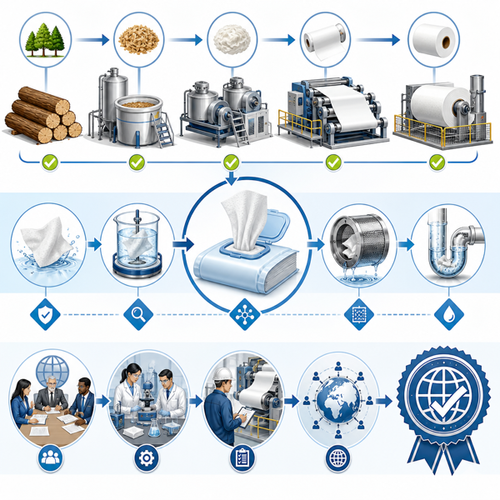
Keeping wastewater safe and minimizing blockages just got easier. In August 2026, the paper products industry welcomed a pivotal standard: ISO/TS 18671:2026, a technical specification that for the first time comprehensively defines test methodologies for assessing the compatibility of wet wipes and moist toilet tissue with wastewater collection and treatment systems. This new standard also sets requirements for product labelling, equipping manufacturers, utilities, and regulators with consistent criteria to reduce system blockages and protect the environment. Only one key standard is newly published this month, but its reach extends across hygiene product manufacturing, plumbing systems, municipal treatment facilities, and environmental impact initiatives.
Overview / Introduction
The paper technology sector has witnessed rapid growth in personal care products, specifically the use of wet wipes and moist toilet tissue. However, improper disposal of these products has led to significant challenges within wastewater infrastructure—blockages, higher treatment costs, and increased environmental risks.
International standards like ISO/TS 18671:2026 are essential to harmonize testing, set clear expectations for product design, and guide manufacturers on appropriate labelling. This article provides insights on how this standard supports quality assurance, helps organizations demonstrate compliance, and drives more sustainable product development.
By the end of this article, readers will understand:
- The scope and structure of ISO/TS 18671:2026
- Key requirements and technical methodologies for testing
- Labelling rules for non-compliant products
- Implications for compliance, procurement, and environmental stewardship
Detailed Standards Coverage
ISO/TS 18671:2026 – Test Methodologies for Wet Wipes and Moist Toilet Tissue
Test methodologies for assessing the compatibility of wet wipes and moist toilet tissue with the wastewater collection and treatment systems, and appropriate labelling
Scope and Applicability:
- ISO/TS 18671:2026 offers detailed methodologies for manufacturers and testing labs to evaluate whether wet wipes and moist toilet tissue can safely pass through both domestic plumbing and municipal wastewater systems without causing blockages or operational failures.
- The standard explicitly excludes toilet paper (covered in other ISO documents), chemical or compost toilets not connected to sewers, macerator and vacuum sewer systems, and products made solely from water-soluble polymers.
Key Sections and Requirements:
- Context & Rationale: Highlights the operational and environmental costs of flushing products that aren't compatible. Blockages in plumbing and sewers, increased treatment burdens, environmental releases, and higher waste disposal costs are all consequences the standard aims to mitigate.
- Definitions: Provides terminology for critical properties like biodegradation, disintegration, and mineralization. These definitions form the foundation for objective and reproducible testing.
- Framework: Sets out all system elements at risk—namely toilets, drainlines, transport (sewers and pumps), wastewater treatment facilities, and broader environmental impacts.
- Testing Methodologies:
- Includes toilet clearance tests, drainline clearance, household pump evaluations, wastewater transport network compatibility, and a range of disintegration/biodegradation assessments simulating both domestic and municipal conditions.
- Recommends choosing one of several globally recognized testing methodologies, such as GD4 or the UK Water Industry Specification (WIS), and following it precisely. Mixing individual tests from different regimes is discouraged.
- Parameters Covered: Flush volume, drainline design, sewer transit time, effluent temperature, system age, and topography are all acknowledged as variables influencing performance and testing.
- Labelling Requirements:
- Mandates clear, visible labelling on all wet wipes and moist toilet tissue that do not meet the standard’s criteria, including specific geometric shapes, colours, size, location, and advisory text.
- Offers recommended labelling symbols and packaging options in Annex A, ensuring harmonization across markets.
- Annexes: Summarizes current global test methods and regional adaptations, enabling companies to select the method most applicable in their jurisdiction.
Who Needs to Comply:
- Manufacturers of wet wipes and moist toilet tissue targeting distribution in markets where wastewater systems exist.
- Retailers, compliance officers, procurement teams for private label brands, and regulators responsible for public health and utility performance.
Implementation and Practical Implications:
- Testing must be performed and verified before products are marketed as ‘flushable’ or sewer-compatible.
- Incompatible products must not carry misleading flushability claims and must use standardized do-not-flush labels.
- Adoption minimizes risk of regulatory enforcement, wastewater utility claims, and consumer complaints.
Notable Advancements:
- The standard reflects lessons learned from multiple national protocols and aligns testing with real-world sewer and treatment system conditions.
- Emphasizes harmonization to prevent market fragmentation and reduce confusion among both manufacturers and consumers.
Key highlights:
- Comprehensive laboratory and real-environment test protocols for compatibility across full wastewater system lifecycle
- Distinct pass/fail criteria and independent test regimes (e.g., full adoption of GD4 or UK WIS)
- Mandatory consumer labelling for all non-compatible products, supporting informed disposal and environmental responsibility
Access the full standard:View ISO/TS 18671:2026 on iTeh Standards
Industry Impact & Compliance
For Businesses:
- The release of this standard impacts manufacturing, product design, marketing, and regulatory teams in the hygiene and personal care sector. By clarifying minimum requirements and objective test methods, organizations can more reliably develop products that are less likely to be implicated in sewer blockages or environmental non-compliance.
- Utilities and municipal authorities can now reference an international baseline when setting their own specifications or purchasing guidelines for acceptable products.
Compliance Considerations:
- Timelines for implementation will depend on market regulatory adoption, but proactive manufacturers and distributors benefit by demonstrating alignment ahead of enforcement.
- Periodic product testing is recommended, especially in light of ongoing R&D into new fibres, binders, and chemical treatments used in wet wipes.
- Proper labelling is critical: failure to comply can result in regulatory penalties, product recalls, or reputational harm.
Benefits of Adoption:
- Minimizes costly blockages in domestic plumbing and municipal sewer networks
- Reduces the volume of non-biodegradable solids requiring landfill or advanced removal from wastewater
- Standardizes labelling to assist consumers in correct disposal, reducing downstream environmental risks
- Provides a competitive advantage in markets with strong environmental, social, and governance (ESG) mandates
Risks of Non-Compliance:
- Lost access to markets where adherence to international or regional standards is required (public tenders, major retailers, or government procurement)
- Increased likelihood of legal action or utility claims for costs related to sewer blockages
- Harm to brand reputation in an increasingly sustainability-conscious marketplace
Technical Insights
Common Technical Requirements:
- Replication of real-world system conditions: Tests must account for flush volume, water temperature, sewer layout, transit time, and other realistic parameters.
- Biodegradation and disintegration rates: A key focus throughout the protocol is ensuring products break down as they move through plumbing and into municipal treatment.
- Mechanical durability versus break-up: Striking a balance so wipes achieve desired user performance but still disintegrate adequately in the sewer context.
- No substitution between methodologies: Choose and apply one method (such as GD4 or UK WIS) completely; do not mix and match test elements.
Implementation Best Practices:
- Integrate standard requirements into plant quality systems. Document test results and retain for regulatory inspection.
- Collaborate with certified labs for third-party verification of product claims.
- Update packaging promptly to align with labelling rules. Ensure all non-flushable products are marked according to ISO/TS 18671:2026 guidelines.
- Maintain ongoing surveillance for product portfolio changes or raw material updates that could affect flushability.
Testing and Certification Considerations:
- Selection of reference methods should be based on targeted geographic or regulatory market.
- Testing equipment (slosh boxes, shake flasks, etc.), sample preparation, and result reporting must follow prescribed protocols for validity.
- Certification may be required by retail partners or public entities before products are accepted in supply chains or public tenders.
Conclusion / Next Steps
ISO/TS 18671:2026 marks a significant advance in safeguarding wastewater systems and enhancing environmental responsibility within the paper technology and hygiene products industry. It brings international coherence to testing and product claims, clarifies regulatory expectations, and supports public health efforts to reduce costly and disruptive blockages.
Key Takeaways:
- Manufacturers and retailers should integrate ISO/TS 18671:2026 into product development and quality assurance workflows immediately.
- Accurate, standardized labelling will reduce consumer confusion and support compliance.
- Utilities, procurement officers, and regulators can now refer to a robust, internationally vetted document to inform purchasing and enforcement decisions.
Recommendations:
- Review and, if necessary, requalify all wet wipes and moist toilet tissue products using the new standard’s methodologies.
- Update technical files and compliance documentation to reference ISO/TS 18671:2026.
- Monitor additional regional regulations that may build on or reference this ISO technical specification.
For a deeper dive and to secure official copies for quality or procurement teams, we recommend visiting the authoritative source below:
Access the full standard:View ISO/TS 18671:2026 on iTeh Standards
Stay informed on forthcoming updates in paper technology standards by subscribing to notifications at iTeh Standards. Implementing the latest ISO criteria is an essential step for all stakeholders dedicated to quality, sustainability, and operational excellence.
Categories
- Latest News
- New Arrivals
- Generalities
- Services and Management
- Natural Sciences
- Health Care
- Environment
- Metrology and Measurement
- Testing
- Mechanical Systems
- Fluid Systems
- Manufacturing
- Energy and Heat
- Electrical Engineering
- Electronics
- Telecommunications
- Information Technology
- Image Technology
- Precision Mechanics
- Road Vehicles
- Railway Engineering
- Shipbuilding
- Aircraft and Space
- Materials Handling
- Packaging
- Textile and Leather
- Clothing
- Agriculture
- Food technology
- Chemical Technology
- Mining and Minerals
- Petroleum
- Metallurgy
- Wood technology
- Glass and Ceramics
- Rubber and Plastics
- Paper Technology
- Paint Industries
- Construction
- Civil Engineering
- Military Engineering
- Entertainment