


June 2026: New Standards Advance Petroleum and Energy Technologies
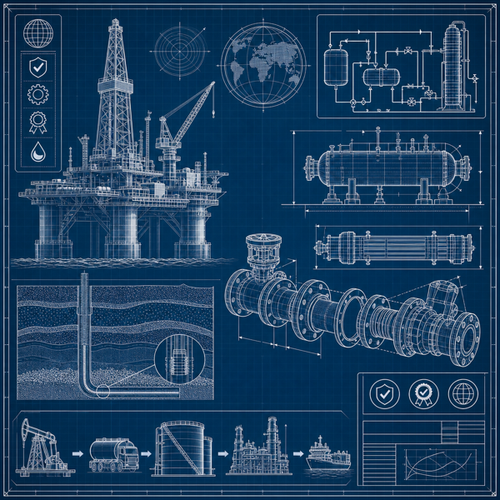
The petroleum and energy technologies sector witnesses a pivotal series of updates with the release of five significant international standards in June 2026. Covering well integrity lifecycle management, production assurance, reliability processes, and the precision of measurement methods, these standards reflect the industry’s evolution toward enhanced safety, operational efficiency, and compliance—extending even into lower carbon energy operations. This latest batch of standards sets new benchmarks and provides robust guidelines that will shape practices across upstream, midstream, and downstream environments.
Overview / Introduction
Petroleum and Energy Technologies underpin global energy security, economic resilience, and sustainable advancement. The formulation and adoption of high-quality standards are integral for ensuring safe operations, reliable equipment, accurate measurement, and responsible resource management. With the industry now embracing both traditional oil and gas and emerging lower carbon assets, aligned, up-to-date standards are more critical than ever.
This article provides practitioners, engineers, quality leaders, and compliance professionals with a detailed understanding of the newly published international standards for June 2026. Readers will discover:
- The scope, technical requirements, and intent behind each new standard
- Who is impacted and what implementation means in practical terms
- Insights for optimizing adoption and compliance across organizational processes
Detailed Standards Coverage
prEN ISO 16530 - Well Integrity Life Cycle Governance
Oil and Gas Industries Including Lower Carbon Energy – Well Integrity – Life Cycle Governance (ISO/DIS 16530:2024)
This comprehensive standard sets out minimum industry requirements and best-practice recommendations for managing well integrity throughout the entire life cycle—which spans from design to abandonment. It is applicable to any well (onshore, offshore, subsea) operated in the petroleum and natural gas sector, regardless of well age or function.
The document systematically addresses six key life cycle phases—Basis of Design, Design, Construction, Operation, Intervention, and Abandonment. Each phase is supported by prescriptive barrier management techniques, risk assessment protocols, organizational and documentation structures, and performance measurement fundamentals. The intent is to prevent compromise of well integrity which could otherwise result in safety or environmental incidents.
Key requirements include:
- Establishment of a well integrity policy and management system
- Risk-based design, construction, operation, and abandonment protocols
- Mandatory barrier verification and reporting activities
- Continuous improvement and audit processes
- Guidance for special well types (e.g., non-petroleum, storage, geothermal)
Who should comply? This standard is essential for operators, drilling contractors, well intervention providers, safety and environment officers, and engineering leaders in the oil and gas sector.
Practical implications:
- Implementation ensures risk-based well design and adds clarity to operational handover and documentation.
- Provides a robust structure for compliance with regulatory regimes and for internal audits.
- Supports scalable application according to well-specific risk profiles.
Key highlights:
- Covers all well types and life cycle phases
- Mandates risk assessment and robust barrier management
- Aligns integrity management with continuous improvement
Access the full standard:View prEN ISO 16530 on iTeh Standards
EN ISO 20815:2026 - Production Assurance and Reliability Management (CEN Edition)
Oil and Gas Industries Including Lower Carbon Energy – Production Assurance and Reliability Management (ISO 20815:2026)
This authoritative standard delivers the requirements and structured guidance for production assurance and reliability management across upstream, midstream, downstream, and petrochemical assets, as well as lower carbon energy projects such as CCS and hydrogen.
Focusing on systematic, value-driven processes, the standard defines twelve key processes with seven core production assurance activities—ranging from risk categorization to performance analysis—to optimize both economic and safety outcomes throughout an asset’s life cycle. It specifies establishing and ongoing operation of Production Assurance Programmes (PAP) and Reliability Management Programmes (RMP), addressing operator, contractor, vendor, and regulator roles.
Key specifications include:
- Management processes for production reliability, integrity, and optimization
- Guidance for technology qualification, system design, and performance measurement
- Integration of HSE (Health, Safety, Environment) risk management
- Activities for both traditional petroleum and low-carbon energy operations
Target audience: Operators, contractors, equipment suppliers, regulatory authorities, consultants, research institutions, and academic programs.
Practical implications:
- Embeds production assurance into project management and asset operations
- Adopts structured, data-driven frameworks for reliability and maintenance
- Provides a unified methodology across global oil, gas, and energy projects
Key highlights:
- Covers entire value chain—including CCS and renewables
- Integrates HSE and reliability in asset management
- Structured process for continuous improvement and cost efficiency
Access the full standard:View EN ISO 20815:2026 on iTeh Standards
EN ISO 4259-1:2026 - Precision of Measurement Methods and Results (Part 1)
Petroleum and Related Products – Precision of Measurement Methods and Results – Part 1: Determination of Precision Data in Relation to Methods of Test (ISO 4259‑1:2026)
Accurate and reliable measurement is fundamental to petroleum product quality and compliance. This standard prescribes the detailed methodology for designing and conducting interlaboratory studies (ILS) that determine the precision of test methods used within the petroleum industry.
It establishes statistical definitions and stepwise procedures for:
- Planning and executing ILS to generate robust precision data
- Calculating repeatability and reproducibility metrics
- Managing sample sizes, data consistency, outlier detection, and variance analysis
- Applying protocols specifically designed for homogeneous products—including petroleum and derivatives
Who should comply? Laboratory managers, analytical chemists, quality assurance professionals, method developers, and organizations involved in product certification and trade.
Practical uses:
- Empowers labs to validate and compare measurement methods
- Ensures that product test results are statistically meaningful for quality claims and specification
- Supports risk-based decision making in compliance and dispute resolution
Key highlights:
- Defines ILS planning and execution for precision data
- Comprehensive treatment of statistical evaluation and outlier management
- Essential for labs seeking method accreditation or reliable QA
Access the full standard:View EN ISO 4259-1:2026 on iTeh Standards
EN ISO 4259-2:2026 - Interpretation and Application of Precision Data (Part 2)
Petroleum and Related Products – Precision of Measurement Methods and Results – Part 2: Interpretation and Application of Precision Data in Relation to Methods of Test (ISO 4259-2:2026)
Building on Part 1, this standard provides the methodology for applying precision estimates from test methods to real-world specification management and conformance decisions. It guides both suppliers and receivers in:
- Setting realistic and enforceable specification limits based on statistical test method precision
- Interpreting conflicting test results and resolving disputes between supplier and customer
- Applying repeatability and reproducibility data to validate conformity to product standards
- Navigating confidence intervals and conformance challenges—especially crucial in high-value petroleum trading and certification
Target audience: Quality managers, laboratory analysts, procurement leaders, contract managers, auditors, and technical consultants.
Practical benefits:
- Reduces risk of erroneous rejections or acceptances
- Standardizes resolution procedures for conformance conflicts
- Provides a statistical framework for specification setting and validation
Key highlights:
- Instructs how to apply precision metrics for valid, defensible decision making
- Outlines dispute resolution processes
- Ensures consistent and fair commercial practices
Access the full standard:View EN ISO 4259-2:2026 on iTeh Standards
ISO 20815:2026 - Production Assurance and Reliability Management (ISO Edition)
Oil and Gas Industries Including Lower Carbon Energy — Production Assurance and Reliability Management
This third edition updates and supersedes previous versions, aligning with the CEN publication and introducing further clarifications and technical enhancements relevant to a global audience. The standard holistically addresses the principles, requirements, and best practices for managing production assurance and reliability over the full lifespan of oil and gas assets, including lower carbon energy infrastructure.
Among its advanced features are:
- Enhanced terminology for reliability and asset management
- Expanded guidance for linking production assurance strategies to sustainability and climate resilience
- More rigorous descriptions of core and interacting processes
- Emphasis on structured data analysis, performance measurement, and continuous organizational learning
Applicability: The standard’s framework supports operators, engineering teams, vendors, regulatory agencies, academic researchers, and consultants worldwide.
Practical implications:
- Enables planning and execution of competitive, resilient, and safe operations
- Fosters standardization of reliability practices across multinational operations
- Facilitates compliance with evolving regulatory and market requirements, particularly in the context of energy transition
Key highlights:
- Technical update with harmonized international requirements
- Detailed process guidelines for asset life cycle management
- Addresses both legacy hydrocarbon and green energy projects
Access the full standard:View ISO 20815:2026 on iTeh Standards
Industry Impact & Compliance
The June 2026 standards set a new bar for operational, measurement, and management practices throughout the petroleum and energy sector. Key impacts include:
- Enhanced Safety & Environmental Protection: Well integrity management is strengthened, addressing the full well lifecycle and reducing risks of hazardous incidents.
- Impartial and Efficient Dispute Resolution: Application of standardized, statistically sound measurement and conformance processes ensures fair resolution between trading partners and regulators.
- Upgraded Reliability & Performance: Integration of production assurance principles delivers improved asset uptime, reduced operational losses, and optimized maintenance investment.
- Cross-Sectoral Relevance: Standards now explicitly incorporate lower carbon energy assets, allowing seamless extension of best practices into hydrogen, ammonia, and CCS projects.
Compliance considerations:
- Early adoption is advisable; compliance timelines should be integrated with project planning and operational reviews.
- Regular audits and staff training are recommended to ensure ongoing conformity and continuous improvement.
- Non-compliance can result in operational disruptions, legal liabilities, increased costs, and reputational harm.
Benefits of adoption:
- Competitive differentiation
- Improved safety, reliability, and environmental stewardship
- Smoother regulatory audits and certification
Technical Insights
Across the June 2026 standards, several technical themes emerge:
- Systematic Risk Management: Risk-based approaches govern everything from well design to measurement validation.
- Integrated Lifecycle Processes: New standards demand that integrity, assurance, and measurement accuracy be managed continuously, not as isolated tasks.
- Data-Driven Decisions: Robust data collection, interlaboratory validations, and statistical analysis underpin reliability, conformance, and specification management.
- Best Practices in Testing: Laboratories and operators are advised to maintain detailed documentation, participate in round-robin testing, and continuously calibrate methods against evolving standards.
Implementation Tips:
- Map existing processes against new requirements and perform gap analysis
- Update quality management systems and train staff on new documentation and reporting protocols
- Collaborate with supply chain partners and accredited labs for method validation and interlaboratory studies
- Use precision data to actively review and optimize product specifications
Testing and Certification:
- Accredited labs should establish interlaboratory studies as per EN ISO 4259-1, using precision data actively in conformance decisions (per EN ISO 4259-2)
- Operators should seek external certification to demonstrate compliance with integrity and reliability management programs
Conclusion / Next Steps
The latest standards for petroleum and energy technologies released in June 2026 represent a significant step forward in regulatory alignment, operational excellence, and technical clarity. Organizations across the sector are encouraged to:
- Review and integrate these standards into their management systems
- Engage in continuous professional development and staff training
- Leverage precision and reliability data for smarter operational decisions
- Stay connected with authoritative sources such as iTeh Standards for real-time updates and access to the full library of industry standards
Proactive adoption will position businesses for robust compliance, operational resilience, and technological leadership—driving success in traditional and emerging energy markets.
Categories
- Latest News
- New Arrivals
- Generalities
- Services and Management
- Natural Sciences
- Health Care
- Environment
- Metrology and Measurement
- Testing
- Mechanical Systems
- Fluid Systems
- Manufacturing
- Energy and Heat
- Electrical Engineering
- Electronics
- Telecommunications
- Information Technology
- Image Technology
- Precision Mechanics
- Road Vehicles
- Railway Engineering
- Shipbuilding
- Aircraft and Space
- Materials Handling
- Packaging
- Textile and Leather
- Clothing
- Agriculture
- Food technology
- Chemical Technology
- Mining and Minerals
- Petroleum
- Metallurgy
- Wood technology
- Glass and Ceramics
- Rubber and Plastics
- Paper Technology
- Paint Industries
- Construction
- Civil Engineering
- Military Engineering
- Entertainment