

October 2026: New ISO Standard Enhances Fire Safety for Water-Filled Plastic Pipes
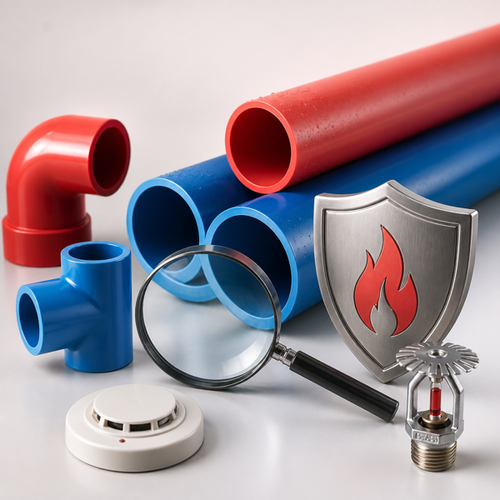
In October 2026, the field of environmental protection and health safety saw a critical enhancement with the release of ISO 23648:2026: Plastics — Impinging Flame Test on Water-Filled Plastic Pipes. This new international standard provides a much-needed, systematic approach to evaluating the fire performance of water-filled plastic and fibre reinforced plastic (FRP) pipes—key components in marine, industrial, and infrastructure applications worldwide.
Through this update, stakeholders gain access to detailed test methodologies that promote operational safety and regulatory compliance, addressing the gap left by previous guidelines.
Overview / Introduction
Environmental Protection, Health, and Safety standards play a pivotal role in safeguarding people, assets, and the environment in diverse industries, from shipping and construction to utilities and manufacturing. These standards not only serve as benchmarks for product quality and operational safety but also support global harmonization, ease of trade, and technical innovation.
With the publication of ISO 23648:2026, organizations finally have a comprehensive and uniform method to assess the resistance of water-filled plastic pipes against fire hazards. This article explores the standard's scope, technical requirements, implementation considerations, and its implications for compliance and safety management.
Detailed Standards Coverage
ISO 23648:2026 - Plastics — Impinging Flame Test on Water-Filled Plastic Pipes
Plastics — Impinging Flame Test on Water-Filled Plastic Pipes
The newly published ISO 23648:2026 fills a longstanding gap in the evaluation of plastic and fibre reinforced plastic (FRP) pipes—especially those deployed in environments where fire risk is a significant hazard, such as on ships and offshore structures. Developed by ISO Technical Committee 61 (Plastics), Subcommittee 4 (Burning behaviour), this standard offers a tested, repeatable procedure to measure how these pipes perform when exposed to direct flame while filled with water.
Scope and Purpose
- Establishes a method for evaluating the fire performance of water-filled plastic and FRP pipes
- Provides a rigorous, detailed protocol suitable for compliance with both international maritime guidelines (IMO Assembly Resolution A.753(18)) and broader building safety regulations
- Enables consistent performance measurement, supporting design specification and regulatory review processes
Key Requirements and Specifications
- Defines the heat source and fuel gas supply system for generating a repeatable impinging flame
- Details apparatus setup, including specimen support, water supply, timing, temperature, and pressure measurement
- Outlines test specimen preparation, including required dimensions, joint design, and thermal conditioning prior to testing
- Specifies test procedures: heat flux measurement, step-by-step flame impingement application, and evaluation of aftereffects
- Sets acceptance criteria: survival time, deformation limits, and allowable leakage or failure modes
- Mandates complete reporting, including photos, graphs of temperature and pressure, and detailed observations
This standard is directly applicable to:
- Manufacturers of plastic and FRP pipes
- Marine, offshore, and building services engineers
- Testing laboratories specializing in fire safety qualifications
- Shipbuilders, regulatory inspectors, and compliance professionals
Implementation and Practical Implications
- Enables effective assessment and certification for use of plastic pipes in fire-prone or regulated environments
- Assists in risk evaluation for marine piping systems, safeguarding vessels and crews
- Supports compliance with International Maritime Organization guidelines and other regional fire safety requirements
Key highlights:
- Comprehensive fire testing procedure tailored for water-filled plastic and FRP pipes
- Incorporates detailed apparatus, specimen, and reporting requirements to ensure global consistency
- Aligned with IMO fire safety resolutions, closing previous gaps in marine and offshore guidance
Access the full standard:View ISO 23648:2026 on iTeh Standards
Industry Impact & Compliance
Adoption of ISO 23648:2026 is a significant advancement for industries relying on plastic and FRP piping in demanding environments. For the maritime sector, the new standard delivers the clarity missing from prior IMO guidelines, supporting safer vessel design and more reliable risk management. Regulatory agencies and inspectors now have a precise, internationally accepted benchmark for fire performance testing.
Compliance Considerations:
- Organizations should review and update their procurement, design, and testing protocols to reference ISO 23648:2026 wherever applicable
- Stakeholders must be aware of implementation timelines—especially for new builds or major retrofits
- Certification bodies and third-party laboratories will need to establish or update their test equipment and procedures to align with this standard
Benefits of Early Adoption:
- Reduced liability and improved safety for personnel and assets
- Enhanced market access, especially in regions or sectors where international compliance is mandatory
- Demonstrated commitment to environmental protection and health/safety best practices
Risks of Non-Compliance:
- Regulatory penalties or approval delays for marine, offshore, or critical infrastructure projects
- Increased risk of catastrophic failures in fire scenarios
- Loss of confidence from partners, insurers, and end-users
Technical Insights
The impinging flame test method described in ISO 23648:2026 introduces standardized procedures that foster reproducibility and accuracy across laboratories. Some common technical elements include:
- Test Apparatus Consistency: Mandated specifications for heat sources, burner types, measurement devices, and support systems.
- Test Specimen Preparation: Strict guidelines for pipe size, joint assembly, wall thickness, and water conditioning to ensure fair comparison of different pipe products.
- Test Execution: Standardized duration and intensity of flame application; precise measurement of temperature, pressure, and visible effects.
- Acceptance Criteria: Clearly defined performance thresholds—pass/fail based on deformation, integrity, and leakage upon exposure.
Implementation Best Practices:
- Conduct detailed training for laboratory staff on apparatus setup, calibration, and safety procedures
- Pre-qualify suppliers and materials for pipe production based on compliance with ISO 23648:2026
- Maintain thorough documentation, including annotated test photographs and recorded data
- Coordinate with notified bodies or third-party certifiers for impartial assessment
Testing and Certification Considerations:
- Only accredited or ISO-compliant laboratories should conduct these tests
- Retesting may be required if specifications, manufacturing procedures, or materials change
- Clear communication of results in standardized report format is essential for regulatory acceptance
Conclusion / Next Steps
With the introduction of ISO 23648:2026, the environmental protection and safety industry gains a vital new tool for mitigating fire risk and improving product reliability. Organizations involved in the specification, production, or installation of water-filled plastic and FRP pipes should prioritize understanding and implementing the new requirements.
Key Takeaways:
- The new standard brings detailed, globally harmonized fire test procedures for plastic pipe systems
- Early adoption supports compliance, reduces liability, and strengthens safety outcomes
- Firms should update internal guidelines and engage with certification bodies to assure alignment
Action Steps for Industry Professionals:
- Review the full text of ISO 23648:2026
- Audit existing designs, procurement, and testing protocols for conformity
- Connect with certified laboratories and regulatory bodies regarding transition timelines
- Monitor iTeh Standards for further updates and guidance in Environmental Protection and Safety
Stay ahead in the evolving landscape of environmental and health protection standards—ensure your organization leverages ISO 23648:2026 for a safer and more resilient future.
Categories
- Latest News
- New Arrivals
- Generalities
- Services and Management
- Natural Sciences
- Health Care
- Environment
- Metrology and Measurement
- Testing
- Mechanical Systems
- Fluid Systems
- Manufacturing
- Energy and Heat
- Electrical Engineering
- Electronics
- Telecommunications
- Information Technology
- Image Technology
- Precision Mechanics
- Road Vehicles
- Railway Engineering
- Shipbuilding
- Aircraft and Space
- Materials Handling
- Packaging
- Textile and Leather
- Clothing
- Agriculture
- Food technology
- Chemical Technology
- Mining and Minerals
- Petroleum
- Metallurgy
- Wood technology
- Glass and Ceramics
- Rubber and Plastics
- Paper Technology
- Paint Industries
- Construction
- Civil Engineering
- Military Engineering
- Entertainment