


August 2026: New ISO Standard Advances Plastics Coating Durability Testing
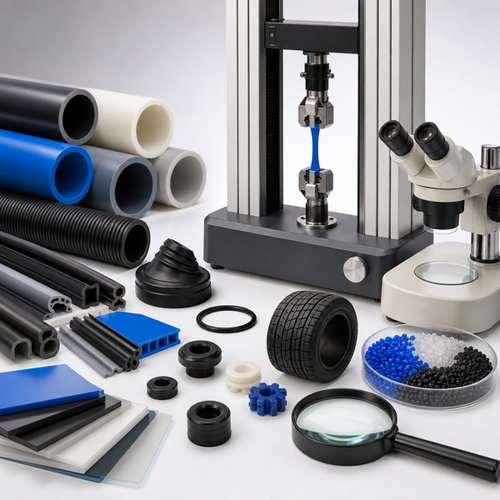
Discover the most recent advancements in the Rubber and Plastics Industries with the publication of ISO 22785-4:2026 in August 2026. This standard introduces rigorous new methods for abrasion and scratch testing of protective coatings on plastics and composite materials—crucial for ensuring product durability and quality. As industries demand improved surface performance and longer product life cycles, these testing protocols bring much-needed clarity and consistency to both R&D and production.
Overview / Introduction
The Rubber and Plastics Industries depend on reliable surface coatings to meet increasing expectations for aesthetics, longevity, and environmental resistance. Whether used in automotive, electronics, consumer goods, or construction, coated plastic parts are subject to daily wear and challenging operating conditions. International standards like ISO 22785-4:2026 play a vital role in defining how coating performance should be measured, offering universally accepted guidelines for manufacturers, suppliers, quality assurance teams, and testing laboratories.
This article provides:
- A clear summary of the new standard’s requirements
- Insights on implementation and compliance
- An analysis of industry impact and technical considerations
Detailed Standards Coverage
ISO 22785-4:2026 - Abrasion and Scratch Testing for Coatings on Plastics
Paints and varnishes — Coatings on plastics and composites — Part 4: Abrasion and scratch testing
Scope & Purpose: This ISO standard establishes internationally recognized methods for evaluating abrasion and scratch resistance of painted or varnished coatings applied to plastics and composites. Its protocols are designed to identify how different plastics substrates can affect the protective performance of coatings under mechanical stress. This is essential for ensuring that coated components—whether car dashboards, electronic device housings, or medical enclosures—maintain their appearance and function over time.
Key Requirements and Testing Methods:
- Sample Preparation: Ensures substrates and coatings are defect-free, properly conditioned, aged, and homogeneously coated. Specific guidance is provided on substrate elasticity and surface conditions, as these factors strongly influence abrasion and scratch resistance.
- Abrasion and Scratch Testing:
- Linear Abrasion Method: Uses devices like the crockmeter to simulate wear via parallel, reciprocating movement under specified loads. Adjustable test parameters include force, path length, and test duration.
- Hand Abrasion Tester: Simulates real-world manual wear using silicone stamps and fabric to mimic finger touch—optionally combined with sweat or creams for realistic conditions.
- Scratch Tests: Both manual and automated scratch tests are detailed, providing repeatable procedures for assessing surface damage thresholds.
- Rotating Abrasion Methods: Includes Taber, Martindale, and wash-resistance tests for broader assessment of coating robustness.
- Evaluation After Testing: Employs visual inspection, color and gloss measurement, haze quantification, and gravimetric (weight loss) analysis to objectively quantify coating degradation.
- Environmental Control: Testing is performed under controlled temperature and humidity, with strict reporting of all relevant environmental parameters.
Who Should Comply:
- Coatings and plastics manufacturers, car makers, appliance and electronics producers, quality-control labs, and test service providers dealing with coated plastic/composite parts.
Practical Implications:
- More consistent, repeatable test results across supply chains
- Greater confidence in product durability for new designs and market approvals
- Better benchmarking against competitors and customer requirements
Key highlights:
- Establishes step-by-step methods for abrasion and scratch resistance testing
- Emphasizes substrate influence and conditioning for plastics
- Supports rigorous visual, colorimetric, gloss, haze, and weight-based evaluations
Access the full standard:View ISO 22785-4:2026 on iTeh Standards
Industry Impact & Compliance
The introduction of ISO 22785-4:2026 is poised to have wide-reaching effects across multiple sectors that rely on coated plastics. Businesses must adapt their testing procedures, update specifications with their supply chain partners, and invest in compliant test equipment. Not only does this support products that meet higher global expectations for wear resistance, but it also helps ensure products gain access to competitive markets where certification and conformance are often mandatory.
Compliance Timelines and Best Practices:
- Organizations should begin gap assessments immediately, evaluating whether current procedures align with the standard
- Quality managers should update documentation and train labs on new sample preparation, conditioning, and reporting requirements
- New product releases or recertifications should reference the latest test procedures to guarantee future-proof compliance
Benefits of Adoption:
- Reduced product recalls and warranty claims related to premature coating failures
- Streamlined procurement of coated components that perform reliably across suppliers
- Faster product development cycles with harmonized testing and reporting
Risks of Non-Compliance:
- Increased risk of product failures in the field, leading to brand reputation damage
- Potential regulatory penalties or exclusion from markets requiring certified durability testing standards
- Loss of business opportunities due to outdated or incompatible in-house testing
Technical Insights
Common Technical Requirements
- All tests must consider substrate elasticity, surface condition, and prior conditioning—elements that differ significantly between plastics and metals.
- A broad range of abrasives and friction partners (cotton, felt, metal, special papers) can be used, allowing tailoring for the end-use environment.
- Environmental factors (temperature and humidity) are now strictly controlled and documented to enhance repeatability.
Implementation Best Practices
- Upgrade laboratory capabilities by investing in devices specified (e.g., crockmeters, Martindale testers, standardized abrasion media).
- Document all substrate/coating combinations and control for sample flatness and surface homogeneity. Keep thorough conditioning and ageing records per ISO guidelines.
- Train testing personnel both on new methods and the importance of following environmental controls and reporting protocols.
- Compare against previous in-house or regional standards to identify significant procedural or performance differences that may affect product acceptance.
Testing and Certification Considerations
- All parties should agree on test method parameters—such as load, path, friction partner—to assure reliable data and contract fulfillment.
- Consider lab accreditation to ISO/IEC 17025 for test validity in regulated markets.
- Establish consistent interim assessment points to proactively monitor product changes during development or after material changes.
Conclusion / Next Steps
The release of ISO 22785-4:2026 marks a major step in harmonizing performance criteria for coatings used on plastic and composite substrates. For stakeholders in the Rubber and Plastics Industries, early adoption is crucial to remain competitive, minimize risk, and ensure robust, market-ready products. Organizations should immediately download the new standard, update internal processes, and communicate any upstream or downstream changes to their partners.
Take Action:
- Review and integrate ISO 22785-4:2026 into your quality management workflows
- Conduct staff training on new test and reporting procedures
- Explore further resources and future updates on iTeh Standards
Stay informed and ensure your products deliver durability and compliance with the latest in abrasion and scratch testing technology.
Categories
- Latest News
- New Arrivals
- Generalities
- Services and Management
- Natural Sciences
- Health Care
- Environment
- Metrology and Measurement
- Testing
- Mechanical Systems
- Fluid Systems
- Manufacturing
- Energy and Heat
- Electrical Engineering
- Electronics
- Telecommunications
- Information Technology
- Image Technology
- Precision Mechanics
- Road Vehicles
- Railway Engineering
- Shipbuilding
- Aircraft and Space
- Materials Handling
- Packaging
- Textile and Leather
- Clothing
- Agriculture
- Food technology
- Chemical Technology
- Mining and Minerals
- Petroleum
- Metallurgy
- Wood technology
- Glass and Ceramics
- Rubber and Plastics
- Paper Technology
- Paint Industries
- Construction
- Civil Engineering
- Military Engineering
- Entertainment