

October 2026: New Functional Safety Requirements for Adjustable Speed Power Drive Systems
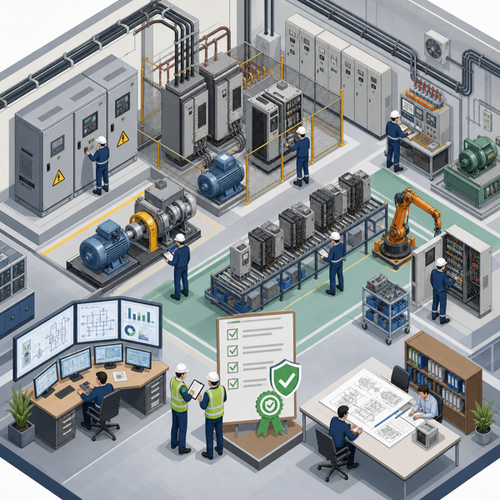
Staying ahead in electrical engineering requires a deep understanding of evolving safety and performance standards for critical systems. In October 2026, a crucial update was introduced with the new edition of IEC 61800-5-2:2016, focused on functional safety requirements for adjustable speed electrical power drive systems. This standard, published by the International Electrotechnical Commission (IEC), brings a suite of new technical requirements, updated definitions, and clarified recommendations that impact power drive system manufacturers, integrators, compliance teams, and operators alike.
With this update, professionals across industrial automation, manufacturing, and energy sectors must align their processes, development cycles, and risk management strategies to deliver safer, more reliable adjustable speed drive systems. This article delivers an in-depth analysis of the sole newly published standard for October 2026, outlining its scope, compliance implications, technical demands, and actionable next steps.
Overview / Introduction
Adjustable speed electrical power drive systems are foundational to modern industrial automation, supporting precise motion, optimized energy use, and robust process control in sectors such as manufacturing, robotics, materials handling, and energy production. As these systems increasingly integrate complex electronics and digital controls, ensuring their functional safety—the ability to maintain safe operational states even under fault conditions—has become a paramount concern.
International standards like the IEC 61800 family ensure a consistent global approach to safety, performance, and interoperability. The October 2026 release of IEC 61800-5-2:2016 (Ed. 2.1; 2026-10) brings forward advancements reflecting the latest in risk analysis, reliability modeling, and robust design, providing the benchmarks engineers and organizations must meet for compliance and market acceptance.
In this article, you’ll discover:
- The core requirements and scope of IEC 61800-5-2:2016
- Key technical and managerial changes from previous editions
- Who needs to comply and how implementation affects your business
- Best practices for ensuring conformance and minimizing risk
Detailed Standards Coverage
IEC 61800-5-2:2016 – Functional Safety for Adjustable Speed Power Drive Systems
Adjustable speed electrical power drive systems – Part 5-2: Safety requirements – Functional
The international standard IEC 61800-5-2:2016 focuses on the functional safety of adjustable speed electrical power drive systems (PDS(SR))—specifically those intended for use in safety-related applications where failure could lead to hazardous situations. This updated edition provides a harmonized approach for the design, development, integration, and validation of these systems, bringing safety-related power drive technologies into alignment with the latest global safety frameworks.
What It Covers and Scope
This standard addresses the requirements for the functional safety of PDS(SR) operating mainly in high or continuous demand modes. It synchronizes safety-related considerations for power drive systems with the framework of IEC 61508 (the general functional safety standard for electrical/electronic/programmable electronic systems), setting specific criteria for PDS(SR) as subcomponents of larger safety-related systems.
The scope includes:
- Design, development, integration, and validation of PDS(SR) for safety sub-functions
- Requirements for hardware and software design to meet defined Safety Integrity Levels (SIL up to SIL 3)
- The management of functional safety throughout the lifecycle of the product
- Verification and validation processes, including type and integration testing
- Documentation, modification control, and user information for safe application
Key Requirements and Specifications
The standard demands a systematic and documented approach to:
- Define and specify all safety sub-functions (such as safe torque off, safely-limited speed, safe stop, and more)
- Establish safety integrity and performance targets for each required safety sub-function
- Develop the system architecture to ensure fault tolerance, diagnostic coverage, and hardware redundancy where necessary
- Test and verify electromagnetic, thermal, and mechanical immunity
- Manage changes with rigorous impact analysis, traceability, and required authorizations
Additionally, this edition incorporates:
- New definitions for terms like "category" and "safety sub-function"
- Segmentation of sub-functions into monitoring and output functions
- Deletion of outdated concepts (e.g., proof test requirements)
- Updates reflecting new methodologies and rules from ISO 13849 on control system safety
- Enhanced requirements for immunity (EMC, thermal, mechanical)
Who Needs to Comply
This standard is critical for:
- Manufacturers and suppliers of adjustable speed power drive systems
- System integrators embedding PDS(SR) into safety-related control systems
- Original equipment manufacturers (OEMs) and engineering design teams
- Compliance managers and quality assurance professionals in automation, energy, and process industries
- Certification and testing laboratories assessing drive system safety
Practical Implications for Implementation
Meeting IEC 61800-5-2:2016 involves cross-disciplinary collaboration between hardware engineers, software developers, and safety managers. Organizations must:
- Develop detailed Safety Requirements Specifications (SRS) and Safety Integrity Requirements for every product
- Document safety lifecycle management plans, including roles, responsibilities, and assessment processes
- Apply best-practice reliability modeling (fault trees, Markov models, parts count)
- Execute robust testing for electromagnetic, thermal, and shock/vibration scenarios
- Maintain detailed change logs and control modification processes to ensure traceability and ongoing compliance
Notable Changes from Previous Editions
Key technical and editorial updates include:
- Rationale for excluding low demand mode
- Refined definitions and categorizations for sub-functions (monitoring, output)
- Updated requirements for thermal and mechanical immunity
- New references to IEC 61508:2010 and ISO 13849-1/2
- Greater emphasis on systematic safety integrity and reliability assessment
- Expanded test requirements, including electromagnetic immunity and environmental robustness
- Revised annexes for fault models, test procedures, and safety assessment guidance
Key highlights:
- Aligns power drive safety requirements with international best practices (IEC 61508, ISO 13849)
- Introduces explicit requirements for SIL assignment and hardware/software independence
- Enhanced focus on immunity, fault detection, and diagnostic coverage
Access the full standard:View IEC 61800-5-2:2016 on iTeh Standards
Industry Impact & Compliance
With its updated requirements, IEC 61800-5-2:2016 fundamentally shapes the approach to safety among manufacturers, system designers, and end-users of adjustable speed electrical power drive systems. Key impacts include:
- Stronger Lifecycle Management: Organizations must document every phase, from concept to decommissioning, including planning, requirements capture, design, integration, testing, and validation. This places a premium on process discipline and traceability.
- Compliance as a Market Enabler: Adopting the standard ensures acceptance in global markets, demonstrates due diligence, and provides a robust legal defense in the event of safety incidents.
- Enhanced Risk Reduction: Systematic assessment and mitigation of hazards reduce the probability of dangerous failures, protecting personnel, assets, and the environment.
- Product Differentiation: Products certified to IEC 61800-5-2:2016 are more attractive to safety-conscious buyers—especially in regulated sectors like process automation, robotics, and heavy industry.
Compliance Considerations & Timelines:
- Organizations must review and update their design, documentation, and testing processes to meet the new requirements.
- Training for engineering and compliance staff on lifecycle management and performance level/SIL assignment is essential.
- Early adoption can mitigate supply chain and customer compliance risks and avoid costly retrofits.
Benefits of Adoption:
- Clear, repeatable processes for safety management and assessment
- Reduction in random and systematic failures
- Simplified integration of power drive systems into larger functional safety architectures
- Preferred status for global supply agreements and procurement tenders
Risks of Non-Compliance:
- Loss of market access, particularly in regulated industries
- Exposure to legal liability and increased insurance costs
- Costly redesigns and certification delays
Technical Insights
Common Technical Requirements
Across all applications, IEC 61800-5-2:2016 demands:
- Validated architectural design, partitioning safety and non-safety sub-functions to prevent cross-faults
- Assignment and documentation of Safety Integrity Level (SIL) for each safety sub-function
- Detailed reliability analysis and evidence for hardware fault tolerance, diagnostic coverage, and fail-safe mechanisms
- Robust software development practices, including version control, testing, and independent verification for safety-critical functions
- Intensive immunity testing for electromagnetic, thermal, and mechanical stresses
- Continuous validation of modifications and strict change management
Implementation Best Practices
- Early Requirements Capture: Involve safety and quality stakeholders from the start to align on hazard identification, risk assessment, and performance targets.
- Model-Driven Design: Use reliability block diagrams, fault trees, and Markov models to predict, document, and verify failure tolerance and response.
- Separation of Safety Functions: Partition safety and non-safety firmware/software, utilizing hardware interlocks where possible.
- Layered Testing: Conduct both development and integration testing—including EM, thermal, and shock testing—to IEC and manufacturer-defined conditions.
- Comprehensive Documentation: Maintain up-to-date design documents, test reports, control policies, and modification logs, as required for traceability and certification audits.
Testing & Certification Considerations
Certified products must undergo:
- Type, integration, and end-use (field) testing
- Traceable record-keeping for all design changes and test results
- Independent certification or assessment by accredited bodies when required by market or jurisdiction
Conclusion / Next Steps
IEC 61800-5-2:2016 represents an essential step forward in globally harmonizing the functional safety requirements for adjustable speed power drive systems. Electrical engineering professionals, compliance managers, and OEMs are urged to review the standard in detail, audit existing processes and products against the new requirements, and update their life cycle management strategies accordingly.
Key takeaways:
- Immediate review and gap analysis is essential for all organizations designing or integrating adjustable speed PDS(SR)
- Early adoption of the new technical requirements will streamline compliance and reduce future cost and liability
- Ongoing training and process improvement will ensure sustainable safety and product competitiveness
Recommendations:
- Download and study the full IEC 61800-5-2:2016 standard
- Enroll key personnel in training on IEC 61508, IEC 61800, and ISO 13849 functional safety frameworks
- Engage with accredited bodies early to plan testing, validation, and market certification
- Monitor updates via iTeh Standards to stay ahead of regulatory and technical developments
Explore the standard in full detail:View IEC 61800-5-2:2016 on iTeh Standards
Stay compliant, lead in safety, and drive your organization forward by adopting the latest functional safety standards in electrical engineering. For further updates in international standards, continue following iTeh Standards for authoritative news and guidance.
Categories
- Latest News
- New Arrivals
- Generalities
- Services and Management
- Natural Sciences
- Health Care
- Environment
- Metrology and Measurement
- Testing
- Mechanical Systems
- Fluid Systems
- Manufacturing
- Energy and Heat
- Electrical Engineering
- Electronics
- Telecommunications
- Information Technology
- Image Technology
- Precision Mechanics
- Road Vehicles
- Railway Engineering
- Shipbuilding
- Aircraft and Space
- Materials Handling
- Packaging
- Textile and Leather
- Clothing
- Agriculture
- Food technology
- Chemical Technology
- Mining and Minerals
- Petroleum
- Metallurgy
- Wood technology
- Glass and Ceramics
- Rubber and Plastics
- Paper Technology
- Paint Industries
- Construction
- Civil Engineering
- Military Engineering
- Entertainment