

October 2026: New Energy Efficiency Standard Released for Railway Systems
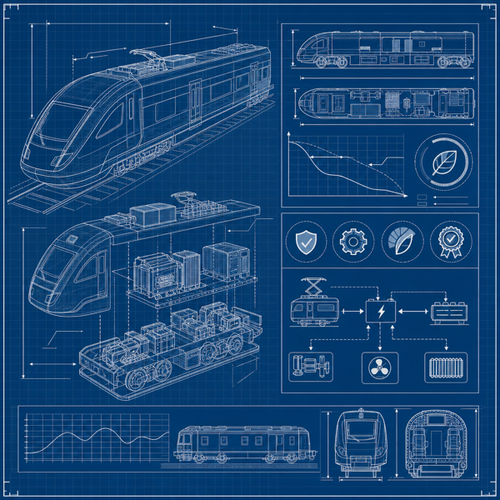
October 2026: New Standard Advances Energy Efficiency in Railway Engineering
A major step forward for sustainability in railway engineering came in October 2026 with the publication of IEC TS 63498:2026. Focusing exclusively on advancing system energy efficiency, this influential standard harmonizes how electric railway systems and their subsystems—such as trains, contact lines, and substations—are evaluated and compared. For professionals in Railway Engineering, this release sets a new benchmark for defining, measuring, and improving energy performance across the entire sector.
The standard emphasizes comprehensive system coverage, strengthening international alignment and providing clear pathways to better energy management for rolling stock, power networks, and non-traction loads. Stakeholders concerned with compliance, procurement, and operational efficiency should closely consider how this new specification will reshape requirements and best practices.
Overview / Introduction
Railway engineering plays a vital role in global transportation, connecting people, goods, and resources through efficient, sustainable movement. As environmental imperatives and operational demands intensify, ensuring the energy efficiency of electric railway systems has become central to industry priorities. International standards like IEC TS 63498:2026 help unify approaches, clarify technical criteria, and facilitate verifiable improvements that benefit operators, manufacturers, and passengers worldwide.
This article offers a deep dive into the new energy efficiency specification, what it covers, primary requirements, and how it will impact the railway industry. Readers will gain insights into:
- The scope and key elements of the new standard
- Core technical definitions and KPIs
- Implementation best practices
- Compliance requirements and strategic benefits
Detailed Standards Coverage
IEC TS 63498:2026 – System Energy Efficiency for Railway Applications
IEC TS 63498:2026: Railway Applications – System Energy Efficiency
Building on years of industry input and technical review, IEC TS 63498:2026 presents a harmonized specification for assessing and improving the energy efficiency of complete electric railway systems and their subsystems—trains, contact lines, substations, and both traction and non-traction loads.
Scope and Purpose
The standard applies to all electric railway systems, encompassing passenger and freight operations, and aims to:
- Establish clear definitions and requirements for Key Performance Indicators (KPIs) related to energy efficiency
- Clarify system boundaries to ensure consistent evaluation
- Enable credible performance comparisons between different railways and across countries
- Guide measurement, simulation, and validation of energy consumption
Key Requirements & Specifications
IEC TS 63498:2026 centers on harmonizing how energy use is traced, calculated, and benchmarked by:
- Specifying measurable, comparable KPIs such as final energy consumption per transported mass (
tkm), per available seat (ask), per vehicle (vkm), and per actual traffic output (pkm) - Guiding the definition of system boundaries and subsystems (including power networks, rolling stock, stations, depots, and auxiliary systems)
- Requiring consideration of both traction and non-traction energy loads
- Mandating harmonized procedures for simulation/calculation and validation of consumed energy, including regenerative feedback
- Providing a structure for ranking transportation quality and identifying fundamental system characteristics affecting efficiency (system flexibility, functions, features)
- Presenting referenced standards and regulations, supporting compatibility with parallel requirements
Who Needs to Comply
- Railway operators (passengers & freight)
- Rolling stock manufacturers and system integrators
- Infrastructure managers and energy suppliers
- Technical consultants and compliance officers
Practical Implementation Insights
Implementing IEC TS 63498:2026 involves:
- Mapping all inputs and outputs within defined system boundaries
- Establishing regular data collection and reporting on KPIs
- Ensuring alignment of non-traction and auxiliary subsystem measurement
- Integrating energy feedback from regenerative braking
- Using harmonized simulation and validation methodologies across organizations
For organizations managing both infrastructure and operations, the standard encourages a system-level approach—moving beyond isolated subsystem metrics to whole-network optimization.
Notable Advances Over Previous Approaches
- For the first time, universally harmonized KPIs and boundary definitions are established at the system level, supporting international comparability and benchmarking
- Emphasis on transparent methodology for tracing, calculating, and validating both energy input and recovered energy
- Explicit inclusion of non-traction loads in energy performance evaluations
Key highlights:
- Unifies definitions and measurement framework for energy efficiency KPIs
- Covers all electric railway subsystems (traction and non-traction)
- Facilitates international benchmarking and regulatory alignment
Access the full standard:View IEC TS 63498:2026 on iTeh Standards
Industry Impact & Compliance
The release of IEC TS 63498:2026 signals a pivotal shift for the railway industry, emphasizing:
- Enhanced comparability: Harmonized KPIs allow organizations to benchmark performance on a global scale, facilitating cross-border and cross-operator assessments.
- Regulatory alignment: By adopting a single framework, companies reduce risks of non-conformity with national or international requirements.
- Strategic efficiency gains: Structured energy measurement and optimization can drive substantial OPEX savings and reinforce sustainability commitments.
Compliance Considerations and Timelines:
- Organizations should immediately assess current practices against the new requirements.
- Compliance may require upgrading data acquisition, reporting, and validation systems.
- Transition periods may be stipulated by local regulators; early adoption is recommended for competitive and reputational advantages.
Benefits of Adoption:
- Lower operational costs through targeted energy-saving initiatives
- Improved environmental performance and reporting
- Increased attractiveness for public tenders and partnerships through proven efficiency metrics
Risks of Non-Compliance:
- Penalties for failing to meet regulatory or contractually mandated energy KPIs
- Loss of market credibility and exclusion from international projects
- Missed cost-saving opportunities and diminished sustainability achievements
Technical Insights
Common Technical Requirements Across the Standard:
- Accurate delineation of physical and logical system boundaries
- Standardized measurement of all energy inflows and outflows, including regenerative energy
- KPI calculations based on harmonized definitions (e.g.,
tkm,pkm,ask,vkm) - Systematic inclusion of non-traction (auxiliary) energy consumption
- Assessment of network features—such as substations, contact lines, and energy storage—that influence system efficiency
Implementation Best Practices:
- Boundary Mapping: Use provided figures and definitions to ensure all system and subsystem boundaries are correctly established. This avoids gaps in measurement and reporting.
- Comprehensive Data Collection: Equip infrastructure, rolling stock, and auxiliary systems with appropriate energy meters and data loggers, supporting both regular monitoring and detailed audits.
- Integrated Simulation Models: Leverage simulation tools for scenario planning, using standardized parameters to project the impact of operational and design changes on energy profiles.
- Stakeholder Coordination: Ensure multi-disciplinary teams—engineering, operations, asset management—collaborate to fulfill system-level requirements.
- Continuous Improvement Loop: Use periodic KPI reports to benchmark, set targets, and review progress toward efficiency and sustainability goals.
Testing and Certification Considerations:
- Regular audits against standardized KPIs
- Validation of data collection and analysis processes
- Engagement with certification bodies to confirm compliance and facilitate best-practice dissemination
Conclusion / Next Steps
The publication of IEC TS 63498:2026 sets a new global benchmark for energy efficiency in railway engineering. By providing harmonized KPIs, clear boundary definitions, and comprehensive guidance for system-level energy management, it gives organizations the tools needed to improve performance, support sustainability, and excel in competitive markets.
Key Takeaways:
- Move from isolated subsystem optimization to holistic, system-wide energy efficiency
- Leverage internationally consistent KPIs for robust benchmarking and reporting
- Prepare for evolving regulatory requirements by adopting best-in-class measurement and validation techniques
Recommendations:
- Begin an internal gap assessment against IEC TS 63498:2026 today
- Upgrade measurement, simulation, and reporting systems as needed
- Engage with stakeholders across departments to align on new processes
- Visit iTeh Standards to access the complete text and stay updated with future developments
Staying informed and proactive ensures your organization remains at the forefront of efficiency, compliance, and innovation in the railway sector.
Categories
- Latest News
- New Arrivals
- Generalities
- Services and Management
- Natural Sciences
- Health Care
- Environment
- Metrology and Measurement
- Testing
- Mechanical Systems
- Fluid Systems
- Manufacturing
- Energy and Heat
- Electrical Engineering
- Electronics
- Telecommunications
- Information Technology
- Image Technology
- Precision Mechanics
- Road Vehicles
- Railway Engineering
- Shipbuilding
- Aircraft and Space
- Materials Handling
- Packaging
- Textile and Leather
- Clothing
- Agriculture
- Food technology
- Chemical Technology
- Mining and Minerals
- Petroleum
- Metallurgy
- Wood technology
- Glass and Ceramics
- Rubber and Plastics
- Paper Technology
- Paint Industries
- Construction
- Civil Engineering
- Military Engineering
- Entertainment