


New Railway Rescue Coupler Standard Released: May 2026 Update
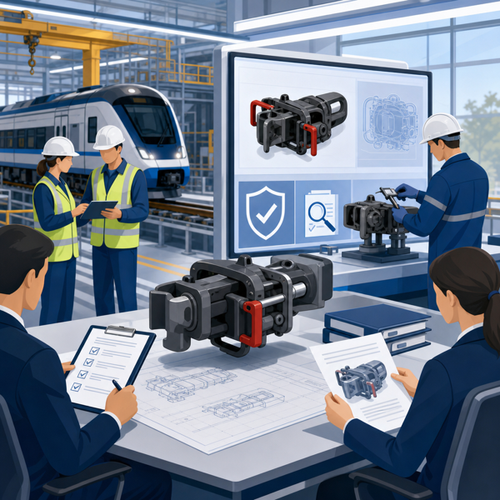
May 2026: Essential Update to Railway Rescue Coupler Standards
In a significant development for railway engineering, May 2026 marks the publication of an updated European standard—EN 15020:2022+A1:2026—that sets forth new requirements for rescue couplers used in interoperable railway systems. This crucial update, driven by advancements in technology and harmonization efforts across Europe, introduces enhanced specifications for design, connection interfaces, and testing of rescue couplers integral in towing and rescue scenarios. As railway operators strive for improved safety and efficiency, adoption of this standard is poised to influence rolling stock manufacturers, maintainers, and rescue vehicle suppliers throughout the sector.
Overview / Introduction
Railway engineering is a constantly evolving field that requires rigorous safety, operational reliability, and interoperability across diverse national and transnational networks. Central to these objectives is the standardization of critical components such as couplers—the mechanical devices that connect train vehicles and enable rescue operations.
Standards like EN 15020 ensure that despite the variability in rolling stock and rescue vehicles, compatibility and performance remain uncompromised. The latest amendment, EN 15020:2022+A1:2026, is a major milestone for professionals concerned with rescue procedures, technical compatibility, and compliance. This article explains the key elements, technical distinctions, and implications of this standard, offering essential guidance for engineers, quality managers, and compliance officers in railway organizations.
Detailed Standards Coverage
EN 15020:2022+A1:2026 – Performance Requirements for Railway Rescue Couplers
Railway applications – Rescue coupler – Performance requirements, specific interface geometry and test methods
The newly amended EN 15020:2022+A1:2026 standard is the definitive guide for the rescue coupler—the device connecting a rescue vehicle equipped with a draw hook to a train set with a Type 10 automatic coupler. Developed by CEN and harmonized across Europe, the standard ensures seamless interoperability and safety during rescue operations, particularly for trains compliant with the Technical Specification for Interoperability (TSI) Locomotives and Passenger rolling stock requirements.
Scope and Application
The standard applies to:
- All train sets designed for interoperability under TSI Loc & Pas
- Rescue vehicles equipped with draw hooks as specified in EN 15566
- Trains with Type 10 automatic couplers per EN 16019
Scope highlights:
- Outlines performance requirements for rescue couplers
- Details the specific interface geometry necessary for secure and compatible connections
- Covers mechanical and pneumatic requirements to ensure operability during rescue scenarios
Key Requirements and Specifications
Mechanical Performance:
- Minimum strength and durability standards for all metallic and non-metallic parts
- Mandated use of materials certified to inspection document types 3.1 or 3.2 (EN 10204:2004), covering chemical composition and mechanical strength
- Structural requirements consistent with EN 12663-1 for safe towing and rescue operations
Interface Geometry:
- Interface design compatible with both rescue vehicles (draw hook per EN 15566) and rescued trains (Type 10 coupler per EN 16019)
- Defined headstock layouts as specified in EN 16839
- Ensures correct alignment, coupling height, and secure attachment under varied rescue conditions
Operational & Environmental Conditions:
- Performance validation for coupling, uncoupling, and towing under real-use environments
- Requirements for both manual and automatic operation compatibility
Testing Methods:
- Detailed type tests including static strength, coupling/uncoupling functionality, and pneumatic checks
- Routine production tests to ensure ongoing conformity
- Use of normative references for welding standards across all relevant components
Documentation & Inspection:
- Mandatory documentation according to EN 10204
- Inspection and verification requirements for both initial qualification and ongoing production
Who Must Comply
- Rolling stock manufacturers integrating rescue interfaces
- Rescue vehicle suppliers and their technical design teams
- Railway operators responsible for rescue preparedness
- Certification organizations conducting conformity assessments
Notable Changes from Previous Versions
- Scope refined for direct compatibility with TSI Loc & Pas requirements
- Revised product requirements (Clause 4) for harmonized metallic/non-metallic inspection
- Updated mechanical and pneumatic specifications
- Reference to current versions of related standards (EN 15566, EN 16019, EN 16839)
- Annexes on automatic coupler characteristics now referenced to relevant standards and no longer included in full
- Enhanced requirements for geometric inspections and dimensional verification
- Editorial clarifications to improve usability
Key highlights:
- Comprehensive alignment with interoperability regulations and TSI
- Significantly expanded testing and documentation obligations
- Removal of certain annexes in favor of direct references to recent, specialized standards
Access the full standard:View EN 15020:2022+A1:2026 on iTeh Standards
Industry Impact & Compliance
The revision and upgrade of EN 15020 have broad implications for organizations across the railway sector:
- Interoperability: Ensures rescue couplers are universally compatible with European rescue vehicles and rolling stock, supporting efficient cross-network operations.
- Safety Improvements: Stricter requirements on mechanical integrity and interface geometry reduce the risk of coupling failures during rescue events.
- Operational Readiness: Clearly defined procedures and test methods enable operators to ensure their fleets are always equipped for emergency towing scenarios.
Compliance Considerations:
- Transition deadlines: National standards bodies must adopt or endorse the new standard by November 2026 (withdrawal of conflicting standards).
- Documentation and inspection protocols are stricter; organizations must ensure robust traceability of materials, manufacturing, and testing results.
- Procurement and maintenance teams should update technical documents and qualification processes to align with the new requirements.
Benefits of Adoption:
- Reduces risk of equipment incompatibility and rescue delays
- Enhances regulatory compliance under European law
- Simplifies training and operational procedures through standardized components
Risks of Non-Compliance:
- Potential for regulatory penalties or restricted access to interoperable networks
- Increased risk of operational incidents during emergency situations
- Higher long-term costs stemming from non-standardized components and maintenance
Technical Insights
Common Technical Requirements
- Material certification per EN 10204:2004 for metallic and non-metallic parts
- Strict mechanical and pneumatic performance testing
- Interface geometry compatibility for safe, error-proof connections
- Design validation through simulation and real-world mechanical testing
- Documentation in line with EN 15085 welding and production standards
Implementation Best Practices
- Material and Supplier Controls: Ensure all supplier materials are inspected and certified before production.
- Design Validation: Make use of 3D CAD models and physical prototypes to verify interface geometry and operational clearance.
- Routine Testing: Establish routine compliance checks for all new and in-service couplers; document test results as per EN 10204.
- Training and Documentation: Update operational manuals and maintenance documentation to reflect new definitions and interfaces introduced by the updated EN 15020.
- Collaboration: Engage with rolling stock and rescue vehicle manufacturers early to avoid interface mismatches.
Testing and Certification Considerations
- Leverage accredited laboratories for type and routine testing
- Maintain up-to-date records for regulatory audits
- Coordinate certifications with notified bodies familiar with EN 15020 and related interoperability standards
Conclusion / Next Steps
May 2026’s revision of EN 15020 stands as a critical update for railway engineering professionals involved in rescue preparedness and rolling stock interoperability. By establishing more rigorous and harmonized performance requirements for rescue couplers and related systems, this standard promotes greater safety, efficiency, and flexibility across European railway networks.
Key takeaways:
- Immediate review of design and procurement policies is recommended
- Update maintenance and operating manuals for rescue equipment
- Initiate training on new coupling and testing procedures
Organizations are encouraged to:
- Access the full published standard via iTeh Standards
- Collaborate with key suppliers and certification bodies
- Stay alert for further regulatory updates impacting rescue and towing systems
Discover the complete requirements and implementation guidance by reviewing EN 15020:2022+A1:2026 on iTeh Standards.
Stay informed with iTeh Standards for comprehensive, authoritative resources on the latest in railway engineering and interoperability requirements.
Categories
- Latest News
- New Arrivals
- Generalities
- Services and Management
- Natural Sciences
- Health Care
- Environment
- Metrology and Measurement
- Testing
- Mechanical Systems
- Fluid Systems
- Manufacturing
- Energy and Heat
- Electrical Engineering
- Electronics
- Telecommunications
- Information Technology
- Image Technology
- Precision Mechanics
- Road Vehicles
- Railway Engineering
- Shipbuilding
- Aircraft and Space
- Materials Handling
- Packaging
- Textile and Leather
- Clothing
- Agriculture
- Food technology
- Chemical Technology
- Mining and Minerals
- Petroleum
- Metallurgy
- Wood technology
- Glass and Ceramics
- Rubber and Plastics
- Paper Technology
- Paint Industries
- Construction
- Civil Engineering
- Military Engineering
- Entertainment