


Railway Engineering Standards: Key May 2026 Updates for Safety and Control
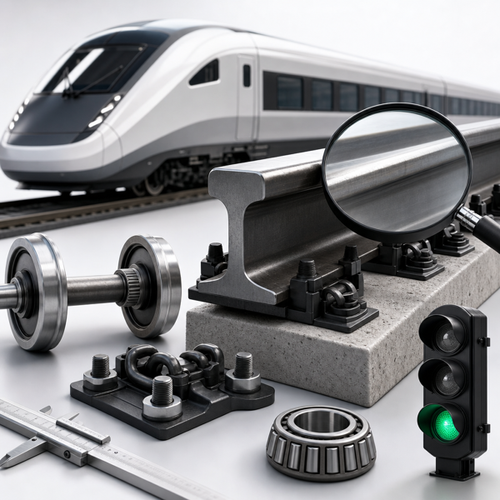
The landscape of railway safety and technology has taken a significant leap forward with the publication of five new and revised international standards in May 2026. Addressing the critical topics of cableway installations, rolling stock equipment, emergency controls, and passenger safety, these standards embody the industry’s ongoing commitment to operational excellence and accident prevention. Covering every stage from planning and design through maintenance and operation, these documents set a new benchmark for compliance and risk management in the railway engineering sector.
Overview / Introduction
Railway engineering is a cornerstone of modern transportation, encompassing the infrastructure, equipment, and safety systems that underpin passenger and freight mobility worldwide. High-profile cableways, advanced rolling stock, and safety-critical systems require ever-evolving standards to ensure performance, safety, and compatibility. Internationally recognized specifications help organizations mitigate operational risks, fulfill legal obligations, and assure public confidence.
This article explores the five latest standards published in May 2026:
- Comprehensive requirements for cableway installations carrying people
- Safety controls and carrier designs
- Emergency push button integration in driver's cabs
- Next-generation electronic equipment for rolling stock
- General safety and environmental guidelines for all cableway installations
Industry professionals, engineers, compliance officers, and procurement specialists will find detailed analyses below explaining what each standard covers, key requirements, practical advice for implementation, and critical changes from prior editions.
Detailed Standards Coverage
prEN 13223 - Drive Systems and Mechanical Equipment in Cableway Installations
Safety requirements for cableway installations designed to carry persons - Drive systems and other mechanical equipment
This standard defines safety requirements for both mechanical and electrical equipment used in drive systems and other mechanical elements of passenger-carrying cableway installations. It addresses the full lifecycle—planning, installation, manufacture, maintenance, and operation—ensuring that all components are designed and maintained for maximum safety and reliability.
The provisions are engineered to prevent accidents, accommodate diverse cableway types, and protect workers. The standard carefully clarifies interactions with local regulations and is comprehensive across different drive systems (main, auxiliary, evacuation). Clauses 6-11 focus on drive systems’ mechanical and electrical equipment; clauses 12-20 cover further mechanical components such as sheaves, winches, bearings, rope guides, and station equipment.
Key highlights:
- Lifecycle requirements for mechanical and electrical drive equipment
- Mandatory monitoring and control for speed, braking, and operational safety
- Detailed guidelines for brakes (hydraulic, pneumatic, electric), stopping procedures, and emergency measures
Access the full standard:View prEN 13223 on iTeh Standards
prEN 13796-1 - Carriers: Cabin, Chairs, Grips, Brakes for Cableways
Safety requirements for cableway installations designed to carry persons - Carriers - Part 1: Grips, carrier trucks, on-board brakes, cabins, chairs, carriages, maintenance carriers, tow-hangers
prEN 13796-1 details the essential safety and engineering specifications for all types of carriers in cableway systems—including grips, carrier trucks, on-board brakes, cabins, chairs, maintenance carriers, and tow-hangers. Safety measures, verification methods, construction material requirements, and production testing are thoroughly addressed.
The document emphasizes accident prevention and worker protection, incorporating provisions for static and fatigue verification, environmental actions (wind, snow, impact forces), material selection (with focus on steel and welded elements), and fire prevention. It includes new requirements for wind impact and verification procedures for onboard braking systems and grips.
Key highlights:
- Structural and fatigue testing delegated for all carrier components
- Environmental load considerations, including wind and adverse weather
- Updated requirements for safe design of on-board brakes, seats, and carrier access
Access the full standard:View prEN 13796-1 on iTeh Standards
EN 18141:2026 - Emergency Push Button Specifications for Train Driver’s Cab
Railway applications - Braking - Emergency push button
EN 18141:2026 introduces harmonized requirements for the design, function, and testing of emergency push buttons located in train driving cabs. This standard is crucial for rolling stock safety and complies with the latest operational, environmental, and user interface guidelines.
Key sections cover the two-state function (emergency brake application demanded or not), mechanical and electrical specifications, and performance under various environmental influences (shock, vibration, temperature, humidity, corrosion, and solar exposure). The emergency push button must provide consistent, reliable actuation to initiate train-wide emergency braking safely and is distinct from emergency handles. Detailed type test and in-service assessment protocols are included, ensuring field robustness.
Key highlights:
- Unambiguous two-position actuation and mechanical linkage
- Extensive environmental resistance (shock, vibration, pollutants)
- Strict fire/smoke, insulation, and corrosion test requirements
Access the full standard:View EN 18141:2026 on iTeh Standards
EN 50155:2026 - Electronic Equipment for Railway Rolling Stock
Railway applications - Rolling stock - Electronic equipment
EN 50155:2026 is the definitive standard for electronic equipment installed on railway vehicles. It covers hardware used for control, regulation, protection, diagnostics, energy supply, and subsystem control (for doors, ETCS [European Train Control System] on-board functionality, and wheel slide protection). The scope includes electronic components, sensors, and semiconductor drive units linked to railway rolling stock subsystems.
The document addresses all critical phases—design, integration, operating conditions, documentation, maintenance, and repair. Notably, requirements for reliability, maintainability, hardware (printed circuit boards, insulation), software integration, and environmental robustness (temperature, humidity, shock, vibration) are specified. The document aligns with related standards, and for software development, relies on EN 50716.
Key highlights:
- Complete lifecycle requirements for electronic equipment on rolling stock
- Demanding environmental class specifications (temperature, vibration, pollutants)
- Best practices for software/hardware verification and maintainability
Access the full standard:View EN 50155:2026 on iTeh Standards
prEN 12929-1 - General Safety Requirements for All Cableway Installations
Safety requirements for cableway installations designed to carry persons - General requirements - Part 1: Requirements for all installations
prEN 12929-1 provides the overarching safety framework applicable to all passenger cableway installations. It consolidates general safety principles, risk management measures, and explicit requirements arising from various hazard scenarios such as wind, environmental forces, and specific passenger group considerations. It introduces substantial updates for wind impact and reinforces accident prevention and worker safety protocols.
This standard covers route design, structural clearance, permissible ground clearance, drive and brake systems, rope guidance, boarding platforms, rescue and evacuation procedures, fire protection, lightning protection, documentation, and operational measures. It is applicable across funiculars, aerial ropeways, and ski tows, ensuring harmonized levels of safety irrespective of installation type.
Key highlights:
- General safety requirements for design, route, and environmental influences
- Comprehensive wind effect assessment and technical/operational measures
- Enhanced worker protection, evacuation, and rescue standards
Access the full standard:View prEN 12929-1 on iTeh Standards
Industry Impact & Compliance
The May 2026 railway engineering standards deliver a systematic improvement in operational safety, technical consistency, and workforce protection. Their adoption impacts:
- Construction and modernization projects: Compliance is now expected in new installations and major refurbishments, ensuring streamlined risk assessments and state-of-the-art safety features.
- Procurement and design: Engineers and specifiers must verify all suppliers, components, and systems align with these harmonized standards.
- Maintenance and operations management: Clearer documentation and maintenance protocols make for more predictable lifecycle management and safer working environments.
- Legal liability: Observing these standards lowers exposure to liability stemming from accidents or system failures.
Compliance timelines will typically correspond to regulatory implementations across national jurisdictions, with a transition period for existing assets. Early adoption offers proactive risk control and can be a competitive advantage in bids and certifications.
Benefits of adopting these standards:
- Increased passenger and worker safety
- International alignment and easier cross-border acceptance
- Reduced risk of accidents and equipment failure
- Streamlined procurement and system audits
Risks of non-compliance:
- Regulatory penalties and exclusion from major projects
- Increased liability from accidents or technical incidents
- Higher maintenance and retrofitting costs over the lifecycle
Technical Insights
Common Technical Requirements
Across the five new standards, several technical themes persist:
- Robustness for harsh environments: All standards demand equipment and installations function reliably under mechanical shocks, vibration, temperature extremes, humidity, pollution, wind, and ice.
- Risk assessment and verification: Each standard emphasizes systematic risk management—supported by calculations, verifications, and fatigue/static testing.
- Redundant safety controls: Critical functions, particularly braking and drive controls, require redundancy and continuous monitoring.
- Comprehensive documentation: Technical documents, risk analyses, maintenance instructions, and records of safety-critical components must be maintained as part of compliance.
Best Practices for Implementation
- Early planning: Integrate standard requirements at the design stage to avoid costly retrofits.
- Cross-disciplinary design: Collaborate across civil, mechanical, and electronic engineering disciplines to ensure holistic compliance.
- Regular audits: Schedule internal reviews against these standards to catch any compliance gaps.
- Training and upskilling: Ensure operations and maintenance personnel are trained in updated requirements and new equipment interfaces.
- Testing and certification: Employ certified, third-party test bodies for mandatory verification tests (e.g., fatigue, environmental resistance).
Testing and Certification Considerations
- Environmental simulation (temperature, humidity, shock/vibration)
- Static and dynamic load verification for mechanical components
- Functional and fail-safe testing for electronic and control systems
- Fire and corrosion resistance (especially for emergency and safety-critical interfaces)
Conclusion / Next Steps
The May 2026 release of these international railway engineering standards marks a significant milestone in the pursuit of safer, more efficient, and more reliable rail transport. For industry professionals, these standards provide a clear path to compliance, risk mitigation, and technological advancement.
In summary:
- Review the updated standards in detail
- Map compliance status for existing and planned assets
- Integrate requirements into procurement, design, and maintenance protocols
- Leverage training and certification to stay ahead of regulatory and market demands
Explore these newly published standards on iTeh Standards (standards.iteh.ai), and subscribe for ongoing updates to maintain your leadership in railway safety and innovation.
Categories
- Latest News
- New Arrivals
- Generalities
- Services and Management
- Natural Sciences
- Health Care
- Environment
- Metrology and Measurement
- Testing
- Mechanical Systems
- Fluid Systems
- Manufacturing
- Energy and Heat
- Electrical Engineering
- Electronics
- Telecommunications
- Information Technology
- Image Technology
- Precision Mechanics
- Road Vehicles
- Railway Engineering
- Shipbuilding
- Aircraft and Space
- Materials Handling
- Packaging
- Textile and Leather
- Clothing
- Agriculture
- Food technology
- Chemical Technology
- Mining and Minerals
- Petroleum
- Metallurgy
- Wood technology
- Glass and Ceramics
- Rubber and Plastics
- Paper Technology
- Paint Industries
- Construction
- Civil Engineering
- Military Engineering
- Entertainment