


Railway Infrastructure and Safety Standards: May 2026 Rail Engineering Updates
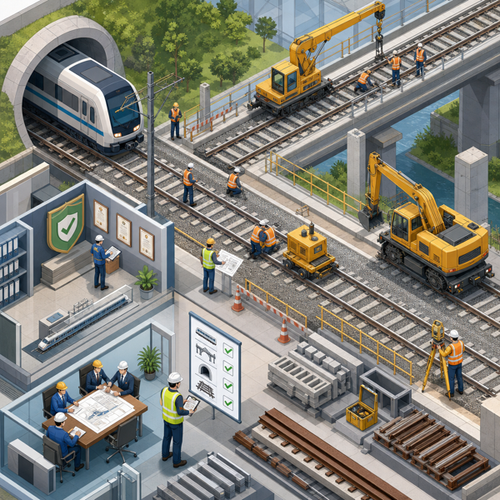
Railway Infrastructure and Safety Standards: May 2026 Rail Engineering Updates
In May 2026, the rail engineering sector saw the publication of three pivotal standards that reshape the technical landscape for modern railway infrastructure and operations. These updates target the design and deployment of ballastless track systems, integration of vibration attenuation technologies, and overhaul the criteria for safety-related electronic systems used in railway signalling. As the drive for safer, quieter, and more sustainable rail networks accelerates, keeping abreast of these standards is crucial for engineers, compliance officers, and infrastructure stakeholders alike.
Overview / Introduction
Rail transport infrastructure is an evolving field at the heart of civil engineering—driven by ever-higher demands for safety, resilience, and operational efficiency. International standards play a central role in ensuring that railways are designed and operated with predictable performance, interoperability, and minimal impact on communities and the environment.
This article provides rail industry professionals, engineers, and asset managers with an accessible yet in-depth exploration of three critical standards released in May 2026:
- The latest general requirements for ballastless track design and configuration
- Specifications for special systems mitigating vibration in railway applications
- Enhanced safety controls for electronic signalling systems
By unpacking the technical content and practical implications of each standard, readers will discover the benefits of compliance, key implementation considerations, and strategies to future-proof railway assets.
Detailed Standards Coverage
ISO 18379-1:2026 – General Requirements for Ballastless Track
Railway Infrastructure — Ballastless Track — Part 1: General Requirements
This international standard sets out the comprehensive requirements for designing ballastless track systems—railway tracks built without traditional ballast, offering greater stability, reduced maintenance, and compatibility with modern high-speed and urban rail systems.
The document details critical aspects of design, configuration, and required interfaces for ballastless track systems, including subsystems and components such as rails, fastening systems, prefabricated slabs, and substructure preparation. It addresses the application of permanent, variable, and exceptional loads, as well as environmental concerns like temperature extremes, seismic resilience, and electromagnetic compatibility (EMC) with traction and signalling systems.
Key requirements and specifications include:
- Track geometry and design life: Ensuring precise alignment and durable service over decades
- Stability and maintainability: Defining stiffness, settlement, and repair protocols
- Load management: Handling static, dynamic, and exceptional loads from train operations
- Compatibility: Addressing electrical interfaces and EMC for modern traction power and signalling
- Environmental sustainability: Criteria for drainage, fire response, chemical and UV resistance
Entities involved in the planning, specification, design, and construction of new or upgraded railway tracks—especially for high-speed lines, urban metros, and critical infrastructure bridges or tunnels—must comply with ISO 18379-1:2026.
Practical implications include improved track longevity, optimized maintenance intervals, and integration into multidisciplinary infrastructure projects. The revision incorporates updated references for regional standards, clarification on dynamic loads, and extended guidance on substructure and environmental interactions compared to previous editions.
Key highlights:
- Reinforces interface requirements for traction power, signalling, and EMC
- Expands on load management (vertical, lateral, longitudinal)
- Primary reference for sustainable, modern, maintenance-efficient rail infrastructure
Access the full standard:View ISO 18379-1:2026 on iTeh Standards
EN 16432-4:2026 – Ballastless Track Systems for Vibration Attenuation
Railway Applications – Ballastless Track Systems – Part 4: Special Ballastless Track Systems for Attenuation of Vibration
EN 16432-4:2026 establishes methods and requirements for designing and integrating special ballastless track systems aimed at attenuating vibration—a critical factor for railways operating in densely populated areas, near sensitive structures, or in environments with stringent vibration limits.
This standard provides a robust framework for the collaborative interface between acoustic and track design, specifying:
- System-level approaches to vibration and noise mitigation using resilient elements (such as mats, flexible supports, and mass-spring systems)
- Procedures for calculating and verifying system natural frequency and insertion loss (a key measure of vibration reduction)
- Criteria for selecting, testing, and integrating resilient track elements and special fastening systems
- Specifics for urban rail and complex civil settings, including tunnels and transitions
Entities involved in urban transit projects, high-speed rail design, or projects subject to environmental regulations on vibration and ground-borne noise should apply this standard. It ensures effective collaboration between acoustic engineers and civil designers, leading to track solutions calibrated for both structural and community needs.
Notable changes from earlier standards include more explicit workflows for interface management, expanded guidance on mass-spring system (MSS) configurations, updated testing methods (per EN 17495 and EN 17682), and enhanced provisions for transition and maintenance assessments.
Key highlights:
- Defines iterative design approach between acoustic and track engineers
- Details robust acceptance and verification procedures for mitigation systems
- Broadens applicability to all rail systems, with focus on urban and sensitive sites
Access the full standard:View EN 16432-4:2026 on iTeh Standards
EN 50129:2026 – Safety-Related Electronic Systems for Signalling
Railway Application – Communication, Signalling and Processing System – Safety Related Electronic Systems for Signalling
EN 50129:2026 delivers a detailed set of requirements for the functional safety of electronic systems used in railway signalling. Its scope spans both hardware and software, with a particular focus on critical safety functions (including generic and application-specific systems), and addresses the relevant life cycle phases from requirements specification to final acceptance.
Key requirements include:
- Quality and safety management processes: Emphasizing documentation, traceability, and safety life cycle planning
- System design for safety integrity: Establishing control over hazards, fault management, and verification/validation protocols
- Management of modifications and legacy systems: Guidelines for upgrades, partial modifications, and retrofits
- Independence in safety assessment: Roles for railway duty holders, suppliers, assessors, and authorities
- Cybersecurity in functional safety: Basic requirements at the interface with safety functions
Primarily aimed at railway signalling system developers, suppliers, integrators, and safety assessors, this standard is also relevant for operators and infrastructure owners introducing or modifying digital signalling (including ETCS and CBTC environments).
The 2026 edition features refined rules for cross-acceptance, expanded guidance on pre-existing systems/tools, upgrades to the safety life cycle model, and explicit references to cybersecurity, solidifying its alignment with the latest European and IEC standards (e.g., EN 61508, EN IEC 62443, EN ISO/IEC 27000 series).
Key highlights:
- Complete framework for safety management in electronic signalling
- New content on tool qualification, cybersecurity interface, and legacy system retrofits
- Reinforces safety case structure and independent assessment requirements
Access the full standard:View EN 50129:2026 on iTeh Standards
Industry Impact & Compliance
Adoption of these standards will drive new benchmarks for quality, reliability, and environmental performance across the rail sector. Key impacts for organizations include:
- Enhanced infrastructure resilience: Ballastless track upgrades allow for longer maintenance intervals, improved ride quality, and increased line capacity.
- Effective vibration control: Mitigation methods become mandatory for projects crossing sensitive areas, reducing risks of regulatory delay and community opposition.
- Improved safety case robustness: Modern requirements for signalling systems ensure compliance not only with functional safety but also evolving cybersecurity expectations.
- Procurement alignment: Standardized specifications streamline tendering, enable fair competition, and lower long-term asset risks.
Organizations facing regulatory reviews or major upgrades should develop internal compliance roadmaps, prepare for multi-disciplinary coordination, and integrate these requirements into digital asset management systems. Transition periods, where permitted, must be carefully managed—especially for modifications or expansions of legacy systems.
Failing to comply risks project delays, increased costs, and diminished safety credentials.
Technical Insights
Common Technical Themes Across the Standards
- Iterative Design Processes: Both track and safety systems standards emphasize multi-stage design and verification loops, requiring close coordination between disciplines (structural, acoustic, electrical, safety engineering).
- Lifecycle Safety Management: EN 50129:2026 and ISO 18379-1:2026 both stress the importance of considering safety and infrastructure integrity at every lifecycle stage—from early design through operation and decommissioning.
- Testing & Certification: There is a strong focus on testing rigid and resilient elements (EN 16432-4:2026), verifying EMI/EMC and electrical interfaces (ISO 18379-1:2026), and safe functional performance (EN 50129:2026). Organizations are urged to update testing protocols and ensure third-party certification is in place.
- Integration of Environmental Sustainability and Community Impact: Drainage, noise, vibration, and chemical exposure requirements reflect a holistic approach to environmental protection and stakeholder engagement.
Implementation Best Practices
- Early Multidisciplinary Collaboration: Engage all specialists—structural, mechanical, acoustic, safety engineers—at the concept stage
- Adopt Advanced Modelling: Use simulation tools for vibration response, load effects, and EMC performance
- Document Control: Maintain central records for requirements traceability and safety justification, especially for safety cases and acceptance evidence
- Regular Compliance Assessment: Structure audits and reviews to track alignment with new standards as projects and operating environments evolve
- Plan for Upgrades: Ensure modularity and upgrade paths for electronic systems, resilient elements, and asset management practices
Conclusion / Next Steps
The May 2026 release of ISO 18379-1, EN 16432-4, and EN 50129 marks a watershed moment for infrastructure professionals committed to best-in-class rail engineering. Adoption of these standards supports not only compliance and risk reduction but also drives engineering innovation, asset sustainability, and safer experiences for users and communities.
Key takeaways:
- Update project design and asset management systems to reflect new requirements
- Foster regular interdisciplinary communication and knowledge sharing within your organization
- Invest in staff training, supplier qualification, and robust testing methodologies
Organizations are encouraged to:
- Explore the full text of each standard for detailed technical clauses, annexes, and implementation guidance
- Leverage iTeh Standards as a trusted resource for up-to-date international and regional rail standards
- Stay active in standards development and review cycles to anticipate future changes
To stay at the forefront of railway engineering, visit the iTeh Standards platform, explore the full standards, and subscribe for future updates.
Categories
- Latest News
- New Arrivals
- Generalities
- Services and Management
- Natural Sciences
- Health Care
- Environment
- Metrology and Measurement
- Testing
- Mechanical Systems
- Fluid Systems
- Manufacturing
- Energy and Heat
- Electrical Engineering
- Electronics
- Telecommunications
- Information Technology
- Image Technology
- Precision Mechanics
- Road Vehicles
- Railway Engineering
- Shipbuilding
- Aircraft and Space
- Materials Handling
- Packaging
- Textile and Leather
- Clothing
- Agriculture
- Food technology
- Chemical Technology
- Mining and Minerals
- Petroleum
- Metallurgy
- Wood technology
- Glass and Ceramics
- Rubber and Plastics
- Paper Technology
- Paint Industries
- Construction
- Civil Engineering
- Military Engineering
- Entertainment