

September 2026: New Safety Standards for Tumble Dryers and Range Hoods
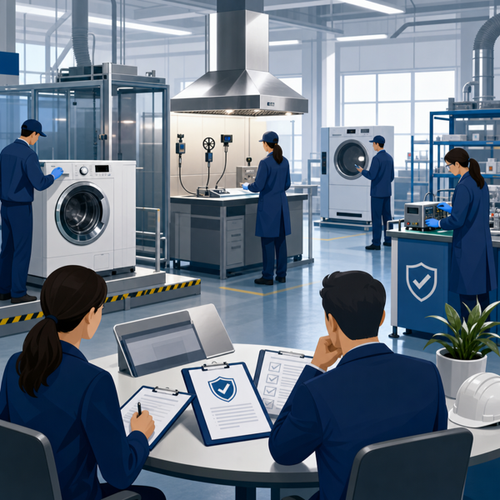
Major September 2026 Updates: Safety Standards for Household Appliances
A wave of significant changes is reshaping the landscape of environmental health protection and safety in the domestic appliances sector. In September 2026, two pivotal European safety standards were published, setting new requirements for the design, testing, and use of electric tumble dryers and range hoods (including other cooking fume extractors). These updates play a critical role in safeguarding users, streamlining industry compliance, and raising the benchmark for electrical appliance safety in both residential and similar settings.
Both documents, prEN IEC 60335-2-11:2025 and prEN IEC 60335-2-31:2026, reflect advancements in risk management, user safety, and technical manufacturing best practices. In this article, we’ll explore what these new standards mean for manufacturers, quality managers, engineers, compliance officers, and safety professionals across the appliance sector.
Overview / Introduction
The domestic electrical appliances sector is a cornerstone of both household convenience and occupant safety. As electrical and electronic products permeate daily life, ensuring their safe operation is paramount to prevent accidents, fires, electric shocks, or exposure to hazardous substances. Standards in this sector define minimum safety criteria, guide the design of safer products, and protect consumers while supporting manufacturers in achieving and demonstrating regulatory conformity.
In September 2026, two essential standards were released:
- New requirements for electric tumble dryers (prEN IEC 60335-2-11:2025)
- Updated specifications for range hoods and cooking fume extractors (prEN IEC 60335-2-31:2026)
This article demystifies these documents, helping professionals understand their scopes, core requirements, implementation implications, and compliance pathways.
Detailed Standards Coverage
prEN IEC 60335-2-11:2025 – Safety Requirements for Tumble Dryers
Household and similar electrical appliances – Safety – Part 2-11: Particular requirements for tumble dryers
This new edition sets forth comprehensive requirements for the safety of electric tumble dryers designed for household and similar uses. The standard is applicable to appliances with rated voltages up to 250 V (single-phase) and up to 480 V for other appliances, including direct current models. It also addresses appliances for light industry and launderette applications—but not those used exclusively for industrial purposes or in explosive/corrosive atmospheres.
Major areas covered include:
- Electrical safety: Protection against live parts, leakage currents, transient overvoltages, and endurance under different operational scenarios.
- Thermal safety: Heating limits, abnormal operation provisions, and maximum surface temperature rises based on precise testing methods.
- Mechanical robustness: Door safety interlocks, resistance to mechanical shock and tilting, especially for models with large drum volumes and heavy loads.
- User instructions and marking: Clear safety labeling, requirements for instructional content (e.g., handling of flammable materials, lint trap cleaning, exhaust considerations), and highly visible warnings for user awareness.
Key technical highlights in the 2025 edition include:
- Alignment with IEC 60335-1:2020 for fundamental safety requirements.
- New definitions for types of appliances (condensation-type, heat pump dryers).
- Strengthened remote operation safeguards—especially concerning smart home functionalities.
- Enhanced provisions for tumble dryers using flammable refrigerants (Annex AA), and additional fire prevention measures.
- More stringent maximum temperature rises for accessible surfaces, especially critical for units installed below 850mm.
- Special attention to machines used in communal/shared environments and recommendations regarding children’s safety.
- Marking requirements following ISO 7000-0790 for clear, international pictograms.
Implementation implications:
- Manufacturers and importers must review appliance designs, update technical files, and ensure conformity with the latest durability, fire safety, and electrical integrity requirements.
- New instructions and user warnings must be integrated into manuals and technical documentation.
- Organizations serving communal housing or semi-commercial settings need to assess compliance pathways for multi-user and heavy-duty units.
Key highlights:
- Broader scope: covers household, light industrial, and communal use appliances, including integrated washer-dryer cycles.
- Focus on abnormal operation safety, including blocked air flow and hot surfaces.
- Reinforced requirements for appliances with smart/remote operation.
Access the full standard:View prEN IEC 60335-2-11:2025 on iTeh Standards
prEN IEC 60335-2-31:2026 – Safety Requirements for Range Hoods and Cooking Fume Extractors
Household and similar electrical appliances – Safety – Part 2-31: Particular requirements for range hoods and other cooking fume extractors
This updated European standard addresses the safety of electric range hoods and similar cooking fume extractors installed above, beside, behind, or under household cooking appliances. It applies to equipment designed for use at voltages up to 250 V, covering both traditional homes and environments such as farm kitchens, workshops, and small shops.
Key areas of focus:
- Electrical protection: Protection against access to live parts, electric shock, insulation, and wiring integrity.
- Thermal hazards: Surface temperature limits to prevent user burns, even in abnormal conditions (including test layouts for down-draft systems).
- Mechanical and fire safety: Construction requirements to minimize risk from moving parts, sharp edges (IEC TR 62854 referenced for compliance in cases of doubt), and fire hazards associated with grease buildup or filter misuse.
- Comprehensive marking and instructions: Mandatory warnings, installation guidelines for fire safety (including safe distances and filter maintenance), and pictograms for risk communication.
Major 2026 edition improvements and updates:
- Fully aligned with IEC 60335-1:2020 base safety principles.
- Normative conversion of previous guidance notes, especially for remote operation and user safeguards.
- Expanded coverage for down-draft extraction systems—acknowledging new trends and technologies.
- Stricter accessible surface temperature requirements.
- Enhanced requirements for remote-controlled, smart, or WiFi-connected hoods, following the surge in connected appliance adoption.
- Integrates filter safety/maintenance with respect to both grease and odour extraction.
Practical effect on the industry:
- All manufacturers, importers, and retailers must update technical documentation and product designs to ensure compliance with new fire safety, insulation, and remote operation/IoT provisions.
- Installers must follow the revised guidelines for safe installation, especially above cooktops of varying fuel types (gas, electric, etc.).
- Maintenance schedules and instructions for commercial-style or shared kitchen applications are now more precisely defined.
Key highlights:
- New temperature rise limits safeguard against user burns.
- Explicit guidance for down-draft and advanced remote/connected hoods.
- Detailed requirements for filter design, safety labeling, and maintenance.
Access the full standard:View prEN IEC 60335-2-31:2026 on iTeh Standards
Industry Impact & Compliance
The publication of these updated standards offers both challenges and opportunities for businesses engaged in the manufacture, import, distribution, or maintenance of household electrical appliances.
How These Standards Affect Businesses
- Mandatory Conformity: Both standards serve as harmonized specifications guiding legal compliance within the European Economic Area and beyond. Products not meeting these standards could face market access barriers or liability risks.
- Product Development & Redesign: Engineering and development teams must revisit product architectures to address new technical and functional requirements, particularly around smart features, temperature controls, fire resistance, and user accessibility.
- Documentation & Labeling: User manuals, labels, and instructions must be updated to include new mandatory warnings, pictograms, and guidance essential for safe installation and use.
Compliance Considerations & Timelines
- Transitional Arrangements: Typically, organizations have 12–36 months from publication to transition fully to new or revised standards, as recommended by CENELEC and IEC committees.
- Testing & Certification: Testing facilities and notified bodies should use the latest versions for product evaluations, while manufacturers must secure up-to-date test reports and certificates.
- Ongoing Training: Staff across engineering, quality, and compliance functions may require fresh training on new requirements, especially relating to remote connectivity, fire safety, and labeling.
Benefits of Adoption
- Reduced recall risks and liabilities
- Enhanced consumer trust and product reputation
- Streamlined access to EU and international markets
- Alignment with state-of-the-art in environmental health and safety
Risks of Non-Compliance
- Enforcement actions, fines, and product recalls
- Loss of market access in Europe and other regulated regions
- Reputational harm and loss of consumer confidence
Technical Insights
Across these two standards, several technical requirements and trends stand out, reflecting both increased regulatory expectations and recent technological advancements:
- Remote & Smart Operations: Stricter criteria for safety in remotely controlled and smart appliances, including once-novel features like delayed-start or app-based activation, now must have robust fail-safes and clear manual override processes.
- Surface Temperature Measurement: Tests now leverage improved, standardized probes, strict temperature limits (with careful differentiation based on installation height and material), and enhanced simulations of user interaction.
- Marked attention to fire prevention: From limiting the blocking of lint filters to managing the risks of grease fires in range hoods, fire risk is addressed via both design and end-user instructions.
- Electrical Integrity: Requirements for leak-proof operation in moist environments (e.g., wet laundry in tumble dryers, water vapor around hoods), protections against overvoltage, and meticulous insulation distances are all refined.
- Component Quality: Only certified and technically robust components (capacitors, wiring, switches) are permitted, especially in appliances used in semi-commercial or communal settings.
Implementation Best Practices
- Gap Analysis: Compare your current products/processes to the latest standards to identify and prioritize compliance actions.
- Early Prototyping and Testing: Integrate new safety design features early–especially those affecting user interaction, such as interlocks and pictograms.
- Documentation: Ensure that all new manual content, installation instructions, and labeling reflect the revised specifications.
- Certification Readiness: Engage with accredited laboratories and certification bodies as early as possible to expedite approval and market entry.
- Post-Market Surveillance: Monitor for emerging interpretations and field feedback—standards may evolve as technology and use cases change.
Conclusion / Next Steps
The September 2026 publication of prEN IEC 60335-2-11:2025 and prEN IEC 60335-2-31:2026 marks a significant leap forward in household appliance safety across Europe and the global market. For industry professionals, timely adoption ensures both regulatory conformity and enhanced consumer protection.
Key takeaways:
- Both standards incorporate up-to-date technical safeguards and reflect the growing role of smart features and connected devices in domestic safety.
- Understanding and timely implementation of these specifications is critical to protecting users and maintaining competitive advantage.
- Begin reviewing internal procedures, product lines, and documentation now to ensure a smooth and compliant transition.
For full and detailed guidance, access the complete standards and supporting documents directly:
Stay informed. Stay compliant. Explore more expert resources and the latest safety standards at iTeh Standards.
Categories
- Latest News
- New Arrivals
- Generalities
- Services and Management
- Natural Sciences
- Health Care
- Environment
- Metrology and Measurement
- Testing
- Mechanical Systems
- Fluid Systems
- Manufacturing
- Energy and Heat
- Electrical Engineering
- Electronics
- Telecommunications
- Information Technology
- Image Technology
- Precision Mechanics
- Road Vehicles
- Railway Engineering
- Shipbuilding
- Aircraft and Space
- Materials Handling
- Packaging
- Textile and Leather
- Clothing
- Agriculture
- Food technology
- Chemical Technology
- Mining and Minerals
- Petroleum
- Metallurgy
- Wood technology
- Glass and Ceramics
- Rubber and Plastics
- Paper Technology
- Paint Industries
- Construction
- Civil Engineering
- Military Engineering
- Entertainment