


Surface Texture Measurement Advances: ISO 25178-606 Standard Released – May 2026 Update
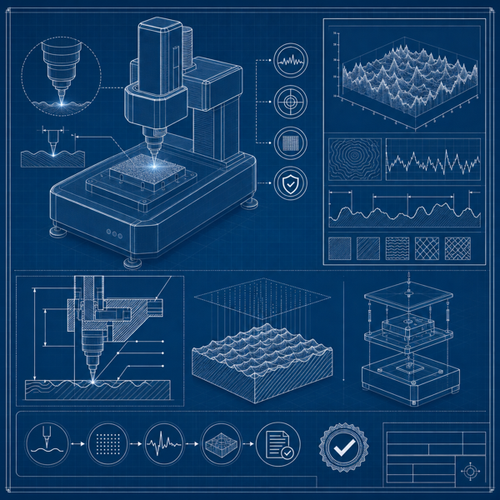
The science of precision surface measurement takes a significant stride forward this May 2026 with the publication of ISO 25178-606:2026. This latest international standard sets out detailed requirements for non-contact (focus variation) instruments used in the areal measurement of surface topography, delivering critical enhancements for professionals in metrology, manufacturing, and quality assurance. As the cornerstone of Part 2 of this month’s standards coverage for Metrology and Measurement of Physical Phenomena, the new standard reflects both the technological advances and evolving expectations for reliable, accurate surface texture evaluation.
Overview
Metrology and measurement of physical phenomena underpin quality, consistency, and innovation across modern industry sectors. Accurate surface characterization is vital in ensuring the functionality of everything from advanced optics to precision components in aerospace, automotive, and medical device manufacturing. Standards like ISO 25178-606 provide a trusted reference, enabling organizations to:
- Benchmark instrument performance
- Ensure consistency and repeatability
- Facilitate global trade through shared specifications
This article explores the key updates, technical specifics, and industry implications of the newly published standard, empowering professionals to grasp what’s new and how it impacts compliance and best practice.
Detailed Standards Coverage
ISO 25178-606:2026 – Design and Characteristics of Non-Contact (Focus Variation) Instruments
Geometrical product specifications (GPS) — Surface texture: Areal — Part 606: Design and characteristics of non-contact (focus variation) instruments
Publication Date: 2026-05-04
Organization: ISO
Scope and Purpose
This new standard specifies the essential design features, operational criteria, and metrological characteristics of focus variation instruments utilized in the areal measurement of surface topography. Unlike traditional contact methods, focus variation employs advanced optics and scanning algorithms to non-destructively map surface features in three dimensions. ISO 25178-606 is applicable to instruments with and without fixed pattern illumination, but explicitly excludes methods involving varying pattern illumination during measurement.
Key Requirements and Specifications
Professionals will find comprehensive definitions and requirements covering:
- Instrument architecture: The standard details the necessary components—focus variation sensor, optics, illumination system, and axial scanner—and their integration for optimal areal data acquisition.
- Axial scanning and focus information: Procedures ensure precise measurement of surface topography by leveraging the sharpness of acquired surface images at sequential positions along the optical axis.
- Illumination modes: Both coaxial and ring light configurations are specified, with parameters for angular ranges affecting measurable surface slopes and performance for optically smooth or rough surfaces.
- Metrological characteristics: Instruments must conform to the calibration and performance metrics established in ISO 25178-600, ensuring result validity and traceability.
- Design features: The new standard mandates considerations for polarization (using analysers and polarizers) to enhance specular reflection performance, color imaging for correlating visual features with topography, and advanced measurement algorithms for creating accurate focus information curves.
Target Audience
- OEMs and suppliers of focus variation and 3D optical measurement systems
- Quality assurance teams in precision engineering sectors
- Calibration and test laboratories for surface metrology
- Manufacturing engineers focused on advanced surface characterization
- Research institutions developing new surface technologies
Practical Implications and Implementation
- Adoption facilitates procurement consistency—organizations can directly specify instrument requirements using ISO terminology.
- Streamlined calibration and verification—by aligning with the latest definitions and error source analysis, traceability and uncertainty estimation are improved.
- Facilitates training and auditing—established definitions and measurement protocols enhance internal understanding and external regulatory compliance.
Notable Changes from Previous Edition
The 2026 revision introduces several substantial updates:
- Removal of outdated terms (now located in ISO 25178-600) and editorial improvements for clarity
- Expanded clauses on instrument requirements, design features, and metrological characteristics
- Enhanced error description and analysis in Annex B, supporting better measurement uncertainty evaluation
- Addition of information flow diagrams for clearer conceptual understanding
Key highlights:
- Detailed instrument and component specifications for focus variation systems
- Improved guidelines for illumination types and angular measurement capability
- Robust framework for performance validation and error source analysis
Access the full standard:View ISO 25178-606:2026 on iTeh Standards
Industry Impact & Compliance
The release of ISO 25178-606:2026 is expected to drive enhanced reliability, comparability, and productivity in sectors requiring precise areal surface measurements. For businesses and laboratories:
Compliance Considerations: Organizations deploying focus variation instruments will need to ensure their equipment, procedures, and documentation align with the updated standard. Audit trails and training modules should reflect the latest terminology and process sequences.
Transition Timelines: Early adoption ensures uninterrupted traceability and qualification status, particularly for contracts or certifications referencing the ISO 25178 series.
Benefits:
- Reduced measurement uncertainty and error
- Easier equipment procurement and qualification
- Clearer communication with clients, suppliers, and auditors
- Improved product and process quality, especially in regulated sectors
Risks of Non-Compliance: Failing to update to the latest specifications could result in:
- Inaccurate or non-traceable measurements
- Nonconformance findings during audits
- Lost business opportunities with standard-conscious clients
- Compromised product reliability
Technical Insights
Common Technical Requirements
ISO 25178-606:2026 builds a foundation on the following critical technical aspects:
- Optical System Calibration: The system must facilitate repeatable, high-resolution axial scanning, ensuring the full capture of feature depth.
- Illumination Control: Angular range, type (coaxial, ring light), and the use of fixed illumination patterns must be accurately managed for both rough and smooth surfaces.
- Polarization Components: Incorporating polarizers and analysers where required, especially for improving measurements on highly reflective surfaces.
- Measurement Algorithms: The focus variation technique relies on precise algorithms for constructing focus information curves and mapping 3D surface profiles.
Implementation Best Practices
- Instrument Selection and Validation: Choose equipment pre-qualified to ISO 25178-606 requirements, with documentation of conformity.
- Routine Calibration: Use certified artefacts and follow prescribed procedures for verifying metrological characteristics.
- Operator Training: Ensure staff are familiar with the focus variation method, especially definitions and workflows detailed in the standard.
- Data Management: Maintain records of surface measurement procedures, scan parameters, and calibration records as recommended by the ISO GPS framework.
Testing and Certification Considerations
- Traceable Calibration: Instruments must be periodically calibrated using traceable reference standards, supporting both internal quality and external customer demands.
- Software Validation: Any algorithm updates or configuration changes should be documented and validated against known reference surfaces.
- Documentation: Ensure all operational SOPs reference the latest edition of ISO 25178-606 for consistency in audits and certification reviews.
Conclusion / Next Steps
The debut of ISO 25178-606:2026 marks an important milestone for surface texture measurement and the broader discipline of areal metrology. By providing authoritative guidance on the design, operation, and validation of non-contact focus variation instruments, the standard supports higher precision, better repeatability, and simplified compliance for manufacturers and laboratories worldwide.
Key Takeaways:
- ISO 25178-606 defines modern best practices for focus variation profiling
- Enhanced clarity and expanded technical requirements align with contemporary metrology needs
- Early adoption is recommended to maximize quality assurance, market access, and regulatory alignment
Recommendations for Organizations:
- Review current instrument capabilities and documentation for alignment with the new standard
- Update internal training and SOPs to reference ISO 25178-606:2026
- Explore opportunities for process improvement and certification leveraging the new requirements
Stay informed and ahead of the curve—explore the full details and official text of the standard to ensure your organization remains at the forefront of measurement excellence.
Access the full standard:View ISO 25178-606:2026 on iTeh Standards
Categories
- Latest News
- New Arrivals
- Generalities
- Services and Management
- Natural Sciences
- Health Care
- Environment
- Metrology and Measurement
- Testing
- Mechanical Systems
- Fluid Systems
- Manufacturing
- Energy and Heat
- Electrical Engineering
- Electronics
- Telecommunications
- Information Technology
- Image Technology
- Precision Mechanics
- Road Vehicles
- Railway Engineering
- Shipbuilding
- Aircraft and Space
- Materials Handling
- Packaging
- Textile and Leather
- Clothing
- Agriculture
- Food technology
- Chemical Technology
- Mining and Minerals
- Petroleum
- Metallurgy
- Wood technology
- Glass and Ceramics
- Rubber and Plastics
- Paper Technology
- Paint Industries
- Construction
- Civil Engineering
- Military Engineering
- Entertainment