


June 2026: New Standards Advance Telecommunications, Audio, and Video Engineering
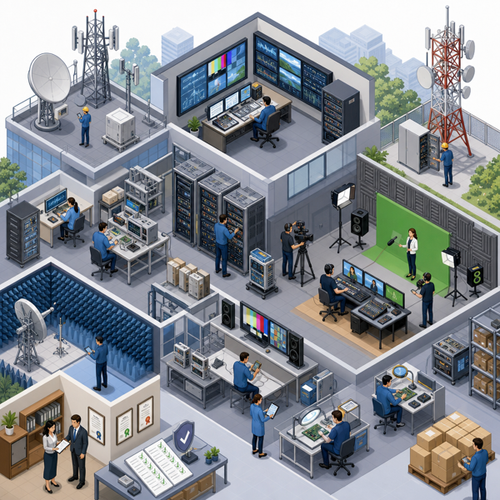
The telecommunications, audio, and video engineering landscape took another significant step forward in June 2026, with the publication of three pivotal international standards. Covering critical areas such as electromagnetic compatibility, underwater optical cable performance, and cybersecurity of power system management, these standards offer organizations a framework for higher performance, safety, and interoperability. As industry adoption accelerates, understanding these new requirements is vital for professionals focused on quality, compliance, and technical leadership in rapidly evolving connectivity environments.
Overview / Introduction
Telecommunications, audio, and video engineering underpin the global digital infrastructure—connecting homes, industries, and energy systems with robust and reliable networks. International standards in this field serve as foundational references, ensuring that devices, systems, and networks operate safely, effectively, and with minimal interference. With increasingly complex applications—from smart grid management to next-generation broadband—standards guide organizations through compliance, product development, and operational excellence.
In this article, you’ll gain:
- A concise overview of three new standards published in June 2026
- Key technical, compliance, and implementation details
- Practical insights for application and integration
- Direct links to full standards documentation
Detailed Standards Coverage
FprEN 50065-1:2026 – General EMC and Frequency Requirements for Signalling on Low-Voltage Electrical Installations
Signalling on low-voltage electrical installations in the frequency range 3 kHz to 526,5 kHz – Part 1: General requirements, frequency bands and electromagnetic disturbances
This comprehensive standard defines the framework for mains communicating equipment (MCE), specifying the requirements for transmitting information over low-voltage electrical installations within the frequency range 3 kHz to 526.5 kHz.
Scope and Purpose
FprEN 50065-1:2026 applies to a wide range of MCE, both within consumers’ premises and on the public electricity distribution network, including DC-operated separated installations (such as photovoltaic systems). The standard:
- Allocates specific frequency bands to different application domains to prevent mutual interference
- Defines limits for conducted and radiated emissions, including transmitter output signal voltage
- Details measurement methods for compliance evaluation
Key Requirements and Specifications
- Frequency Band Allocation: Clear designation of operational frequency bands (3 kHz to 95 kHz, 95 kHz to 148.5 kHz, and above 148.5 kHz to 526.5 kHz), each with its use-case restrictions (e.g., metering, home automation, building control)
- EMC Compliance: Strict limits for conducted and radiated disturbances, including specific methods for determining transmitter voltage and emission thresholds
- Access Protocols: Mandates protocols for certain sub-bands (e.g., 125–140 kHz) to ensure coexistence
- DC Installations: Annex G introduces tailored requirements for signalling in DC systems, such as those used for photovoltaic arrays
- Coexistence and Interference Mitigation: Guidance on coexistence frameworks and mitigation techniques for overlapping systems
Who Needs to Comply
- Manufacturers and integrators of smart meters, building automation systems, and MCE intended for residential, commercial, or industrial use
- Utilities and network operators managing low-voltage distribution infrastructure
- Contractors and installers for DC energy systems, especially photovoltaic installations
Practical Implications
Organizations must design, test, and label equipment in line with the precise emission limits and band restrictions specified. Implementing the right protocols and coexistence measures reduces the risk of interference and regulatory issues.
Notable Changes from Previous Version
- Expanded frequency range up to 526.5 kHz, with new requirements above 148.5 kHz
- Revised output voltage measurement and band allocation, aligned with CENELEC Guide 24
- Greater clarity on coexistence, measurement methods, and DC installation requirements
- Withdrawal of legacy safety and EV charging material for sharper EMC focus
Key highlights:
- Comprehensive EMC and emission limits for communication over power lines
- Detailed band-by-band application rules with coexistence measures
- Essential update for next-generation smart energy and automation networks
Access the full standard:View FprEN 50065-1:2026 on iTeh Standards
IEC 60794-1-210:2026 – Environmental Testing for Underwater Optical Fibre Cables
Optical fibre cables – Part 1-210: Generic specification – Basic optical cable test procedures – Environmental test methods – Underwater cable resistance to hydrostatic pressure, Method F10
Optical fibre networks are integral to telecommunications and critical infrastructure, often requiring subsea deployment. IEC 60794-1-210:2026 introduces rigorous, harmonized laboratory procedures to evaluate the resistance of optical fibre cables to underwater hydrostatic pressure.
Scope and Purpose
This standard establishes uniform environmental testing requirements for optical fibre cables with respect to their resistance to hydrostatic pressure encountered in underwater applications. It applies to all fiber optic cables used with telecommunications equipment, including hybrid cables (combining electrical conductors and optical fibres).
Key Requirements and Test Specifications
- Test Methods Structure: The standard uniquely separates and expands the hydrostatic pressure test methodology into three distinct methods: F10A (radial pressure), F10B (longitudinal pressure with two procedures), and F10C (longitudinal pressure for cables traversing test tanks)
- Sample Preparation: Detailed specifications for preparing samples, pressure apparatus, water properties, attenuation measurement systems, and leakage detection
- Procedural Details: Step-by-step guidance for each test, ensuring repeatability and comparability across labs
- Reporting and Compliance: Exactly what must be documented and reported for certification
Who Needs to Comply
- Cable manufacturers supplying underwater or submarine fibre optic products
- Telecommunications operators and utility network planners using underwater cable infrastructure
- Test laboratories and quality assurance engineers verifying product robustness for marine or critical infrastructure deployments
Practical Implications
By following these standardized test methods, manufacturers can demonstrate that their cables will withstand the hydraulic pressures typical of underwater environments, helping reduce failure rates and increase service reliability.
Notable Changes from Previous Edition
- Method F10 from IEC 60794-1-22:2017 is revised and expanded into three, more granular methods
- Updated apparatus and procedure descriptions for precision and consistency
- Enhanced documentation and result reporting requirements
Key highlights:
- Three distinct hydrostatic pressure test procedures for optical cables
- Improved reproducibility for cable qualification
- Foundation for reliable, long-term underwater deployments in telecom and energy sectors
Access the full standard:View IEC 60794-1-210:2026 on iTeh Standards
FprEN IEC 62351-8:2026 – Role-Based Access Control for Power Systems Cybersecurity
Power systems management and associated information exchange – Data and communications security – Part 8: Role-based access control for power system management
Modern power systems are increasingly digital and interconnected, requiring robust cybersecurity frameworks. FprEN IEC 62351-8:2026 delivers a sweeping update to security practices, establishing uniform, role-based access control (RBAC) for various power system management applications.
Scope and Purpose
This standard applies to data and communication security in power system management – especially for infrastructure that uses standardized protocols such as IEC 61850 and IEC 60870. The RBAC approach defined here manages access permissions across users and devices to enforce least-privilege and regulatory compliance.
Key Requirements and Specifications
- RBAC Process Model: Details the separation and assignment of subjects (users, devices), roles, and permissions, supporting fine-grained security management
- Role and Permission Definition: Standardized templates for common and custom roles across diverse protocols; includes predefined and user-defined role mapping
- Access Token Architecture: Specifies formats for tokens (such as X.509 certificates, JSON Web Tokens, LDAP, and RADIUS), content requirements, and extended meta-data fields
- Authorization Workflow: Supports both PUSH and PULL models for distributing and verifying access credentials, adaptable to on-premises or cloud-native architectures
- Security Event Handling: Annexes and core text detail auditing/monitoring requirements, token revocation, and best-practices for operational security
Who Needs to Comply
- Power system operators, utilities, and grid managers deploying networked control centers
- Product developers and integrators building or supporting IEC 62351-compliant systems
- IT cybersecurity professionals and compliance officers for critical infrastructure
Practical Implications
Adopting this standard means organizations can:
- Systematically restrict access to sensitive assets and actions
- Simplify and unify user management across multi-vendor environments
- Demonstrate compliance with utility, national, and international cybersecurity regulations
Notable Changes in This Edition
- Clearer, more detailed RBAC model separating role definition from data model specificity
- Inclusion of new access token distribution profiles (JWT, LDAP)
- Enhanced revocation, audit logging, and security event engineering
- Alignment with modern authentication practices (OAuth, PKI, etc.)
Key highlights:
- Comprehensive RBAC for digital power system management
- Multi-protocol access token definitions and distribution models
- Essential cybersecurity update, aligned with evolving grid modernization priorities
Access the full standard:View FprEN IEC 62351-8:2026 on iTeh Standards
Industry Impact & Compliance
How These Standards Affect Your Business
The new standards fundamentally raise expectations for electromagnetic compatibility, reliability under extreme environments, and cybersecurity in converged telecommunications, audio, and video engineering applications.
- Future-Proofing Infrastructure: Enforced emission limits and coexistence protocols (FprEN 50065-1:2026) prevent costly interference claims and service outages, particularly in increasingly dense equipment deployments.
- Reducing Field Failures: IEC 60794-1-210:2026 testing enables cable providers and network operators to guarantee longevity in harsh marine or riverine environments.
- Strengthening Security and Compliance: FprEN IEC 62351-8:2026 will become a touchstone for utility cybersecurity audits and cross-industry compliance, enabling consistent implementation of best-practice access control and event monitoring.
Compliance Considerations & Timelines
- Manufacturers and operators should review product and process documentation against new and revised requirements
- Lab testing protocols should be updated promptly to reflect new environmental and EMC test methods
- Organizations in regulated industries (utilities, energy, telecom) should consult legal and compliance teams for integration schedules to meet likely regulatory adoption deadlines
Benefits:
- Improved market acceptance and easier cross-border sales
- Reduced technical risk and liability from non-compliant products
- Streamlined audits and vendor management processes
Risks of Non-Compliance:
- Regulatory fines, liability for interference or security breaches
- Increased warranty costs, network downtime, and maintenance
- Reduced eligibility for public tenders or strategic initiatives (e.g., smart grids, EU energy modernization programs)
Technical Insights
Common Technical Requirements Across These Standards
- Emphasis on robust electromagnetic compatibility, emission limits, and validated test methods
- Guidance for coexistence of multiple systems/networks using shared media
- Implementation of security-by-design principles, particularly in critical infrastructure
Implementation Best Practices
- Engage Early With Compliance Teams: Integrate standards review into product lifecycle planning for design, procurement, and commissioning
- Upgrade Test Facilities and Procedures: Audit lab setups and update equipment as necessary to fulfill updated measurement and reporting requirements
- Plan for Interoperability: Where possible, choose components and configurations proven to meet these international requirements to lower integration risks
- Reevaluate Security Architecture: Adopting RBAC (FprEN IEC 62351-8:2026) may impact IT/OT integration, necessitating changes in user provisioning and access policy management
Testing and Certification
- Use the official test procedures and measurement setups detailed in each standard
- Maintain comprehensive test records and reports to satisfy external audits or market access regulators
- Coordinate with accredited certification and conformance bodies familiar with CLC and IEC protocols
Conclusion / Next Steps
The June 2026 standards release marks a pivotal advancement in telecommunications, audio, and video engineering. These documents facilitate a more reliable, secure, and interoperable infrastructure ecosystem. For organizations across the supply chain—manufacturers, installers, utilities, and integrators—prompt engagement with these standards is both a technical and competitive imperative.
Key takeaways:
- Significant expansions in EMC, environmental, and cybersecurity requirements
- Structured guidance for future-proofing both legacy and new deployments
- Streamlined, auditable compliance pathways for global markets
Recommendations:
- Download and review the full text of relevant standards
- Schedule internal training and compliance reviews for design, operations, and testing teams
- Monitor future updates and harmonized regulatory changes—iTeh Standards provides timely alerts and document access
Call to Action: Explore the detailed guidance, measurement methods, and compliance requirements in the new standards. Visit the iTeh Standards platform to access full versions, compare revisions, and stay ahead with expert support.
Categories
- Latest News
- New Arrivals
- Generalities
- Services and Management
- Natural Sciences
- Health Care
- Environment
- Metrology and Measurement
- Testing
- Mechanical Systems
- Fluid Systems
- Manufacturing
- Energy and Heat
- Electrical Engineering
- Electronics
- Telecommunications
- Information Technology
- Image Technology
- Precision Mechanics
- Road Vehicles
- Railway Engineering
- Shipbuilding
- Aircraft and Space
- Materials Handling
- Packaging
- Textile and Leather
- Clothing
- Agriculture
- Food technology
- Chemical Technology
- Mining and Minerals
- Petroleum
- Metallurgy
- Wood technology
- Glass and Ceramics
- Rubber and Plastics
- Paper Technology
- Paint Industries
- Construction
- Civil Engineering
- Military Engineering
- Entertainment