

September 2026: New Standard Sets Benchmark for Measurement Microphones in Telecommunications
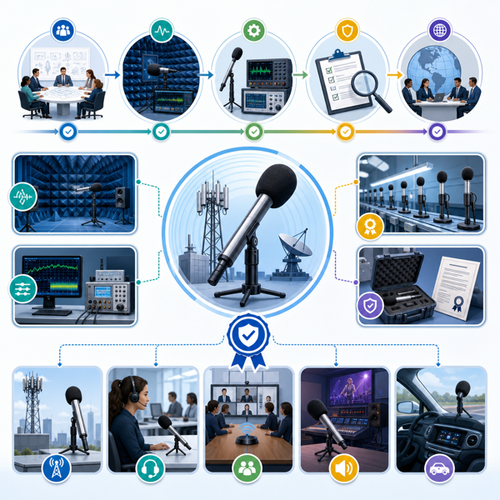
In September 2026, the field of telecommunications and audio and video engineering reached an important milestone with the publication of prEN IEC 61094-9:2025, introducing advanced specifications for transfer standard microphones. This standard, released by the European Committee for Electrotechnical Standardization (CLC), establishes rigorous benchmarks for measurement microphones designed to deliver reliable calibration and traceability in electroacoustic applications. With just one new—but highly significant—standard, professionals across acoustics laboratories, calibration facilities, and quality assurance in telecommunications now have a powerful tool for ensuring accuracy and consistency in sound measurement.
Overview
Telecommunications and audio engineering are rapidly evolving fields, highly dependent on precision measurements—especially when it comes to sound and audio signals. Standards like prEN IEC 61094-9:2025 ensure measurement microphones deliver repeatable, traceable results, creating the backbone for audio equipment calibration, regulatory compliance, and technological interoperability.
This article explores the new standard’s scope, technical requirements, and practical impact for industry professionals. Engineers, quality managers, compliance officers, and researchers will find actionable guidance on implementation, benefits, and industry implications.
Detailed Standards Coverage
prEN IEC 61094-9:2025 - Specifications for Transfer Standard Microphones
Electroacoustics - Measurement Microphones - Part 9: Specifications for Transfer Standard Microphones
What Does the Standard Cover?
This new edition of IEC 61094-9 sets comprehensive requirements for condenser microphones intended to serve as transfer standards. Transfer standard microphones are pivotal in establishing and maintaining measurement traceability between laboratory standards and day-to-day measurement microphones used in practical applications. The focus is on ensuring precise and reproducible calibration, especially for frequencies in the 10 Hz to 1,250 Hz range—critical for sound calibrators and level meters in telecommunications and audio engineering.
Key Requirements and Specifications:
- Geometrical Configuration: The standard introduces strict guidelines on microphone dimensions, including tolerance thresholds and grid design. Mechanical compliance ensures microphones can be interchanged without compromising calibration integrity.
- Electroacoustic Characteristics: Defines essential electroacoustic factors such as sensitivity, effective load volume, dynamic range (both upper and lower limits), and stability under varying environmental conditions (pressure, temperature, and humidity).
- Classification & Designation: Implements a mnemonic system to identify transfer standard types, integrating the 'TS' designation in line with previous IEC 61094 series conventions.
- Environmental References: Establishes reference calibration conditions (23 °C, 101,325 kPa static pressure, and 50% relative humidity) to guarantee consistency across different laboratories and geographical regions.
- Supplementary Norms: References related standards for calibrators and primary/secondary calibration methods, ensuring alignment throughout the measurement chain.
Who Needs to Comply?
- Calibration and metrology laboratories working with electroacoustic instruments
- Telecommunications R&D teams relying on precise signal verification
- Acoustic testing facilities supporting manufacturers, broadcasters, or regulatory authorities
- Quality assurance and compliance engineers in audio equipment manufacturing
Practical Implications:
- Laboratories and manufacturers must adopt these specifications to ensure compatibility and measurement comparability worldwide.
- Upgrades to calibration procedures and documentation may be required to align with these new definitions and tolerances, ensuring regulatory acceptance and international traceability.
- The extension of the mnemonic classification means devices labeled as TS2, for example, meet a new intermediate category between laboratory and working standard microphones, bridging a key industry gap.
Key highlights:
- Defines strict geometric and acoustic requirements for transfer standard microphones
- Focuses on frequency range critical for sound calibrators (10 Hz – 1,250 Hz)
- Establishes unified calibration and traceability practices aligning with IEC and ISO
Access the full standard:View prEN IEC 61094-9:2025 on iTeh Standards
Industry Impact & Compliance
How Will This Standard Affect Businesses?
The adoption of prEN IEC 61094-9:2025 brings significant changes for professionals working in audio measurement and telecommunications. The new specifications harmonize calibration processes globally, reducing uncertainty and variability between laboratories and testing centers. Organizations involved in designing, manufacturing, or testing professional audio equipment will benefit from more reliable calibration data, helping ensure product quality and exceed compliance expectations.
Compliance Considerations
- Implementation timelines: Laboratories and manufacturers should review current calibration procedures and plan incremental updates to equipment and protocols.
- Documentation: Updated specifications may require revising documentation, calibration certificates, and reference charts to reflect compliant protocols.
- Training: Technicians and engineers should be trained on the nuanced differences in test procedures and specifications introduced by the new standard.
Benefits of Adopting prEN IEC 61094-9:2025
- Enhanced international recognition and traceability for calibration activities
- Higher confidence in measurement data used for product design, validation, and field troubleshooting
- Reduction in cross-laboratory variability, supporting more consistent regulatory submissions and product quality claims
Risks of Non-Compliance
- Potential for calibration data to be rejected by regulatory authorities or clients
- Increased uncertainty in measurement, risking product recalls or field failures
- Missed opportunities for international trade and market access owing to lack of recognized traceability
Technical Insights
Common Technical Requirements
- Microphone Sensitivity: Establishes strict guidance around sensitivity under reference conditions and how it is influenced by variations in static pressure, temperature, and humidity.
- Dynamic Range: Clearly lays out acceptable upper and lower sound pressure limits for transfer microphones, promoting more accurate readings across intended applications.
- Effective Load Volume: Defines calculation and validation methods to maintain consistency between different microphones and setups.
- Mechanical and Electroacoustic Tolerances: Demands consistent manufacturing and performance characteristics so that transfer standard microphones can be used as reliable references—across equipment vendors and setups.
Implementation Best Practices
- Audit Existing Equipment: Compare current microphone inventories and calibration records to the new specifications to spot gaps.
- Upgrade or Replace: Where necessary, upgrade existing reference microphones or acquire new transfer standard types to ensure full compliance.
- Update Calibration Protocols: Realign measurement and comparison methods with the standardized frequency range and test conditions defined in prEN IEC 61094-9:2025.
- Ensure Traceability: Verify that all calibration references trace back to transfer standard microphones conforming to the new requirements.
- Continuous Training: Keep technical staff up to date on new performance and marking requirements, and on changes to test environments and measurement techniques.
Testing and Certification Considerations
- Use accredited laboratories that have updated their procedures to include the new transfer standard classification
- Check for updated calibration certificates explicitly referencing compliance with prEN IEC 61094-9:2025
- Participate in inter-laboratory comparison programs to benchmark measurement performance post-implementation
Conclusion / Next Steps
The release of prEN IEC 61094-9:2025 marks a critical step forward in precision measurement for telecommunications and audio engineering. By introducing detailed geometric and acoustic specifications for transfer standard microphones, the standard enables organizations to achieve unprecedented reliability in calibration processes and measurement traceability.
Key Takeaways:
- The standard sets a new global benchmark for transfer standard microphones.
- It impacts calibration laboratories, manufacturers, and quality assurance across the telecommunications and audio sectors.
- Full compliance ensures enhanced measurement confidence, global compatibility, and smoother regulatory acceptance.
Recommended Actions for Organizations:
- Download and study the full standard via iTeh Standards for detailed requirements.
- Conduct a compliance gap analysis and align internal procedures.
- Invest in training and equipment upgrades to maintain industry leadership and regulatory advantage.
Stay ahead of future developments in telecommunications and audio engineering standards by following authoritative coverage from iTeh Standards. For ongoing compliance and technical leadership, ensure your calibration chain starts with microphones conforming to the very latest international specifications.
Categories
- Latest News
- New Arrivals
- Generalities
- Services and Management
- Natural Sciences
- Health Care
- Environment
- Metrology and Measurement
- Testing
- Mechanical Systems
- Fluid Systems
- Manufacturing
- Energy and Heat
- Electrical Engineering
- Electronics
- Telecommunications
- Information Technology
- Image Technology
- Precision Mechanics
- Road Vehicles
- Railway Engineering
- Shipbuilding
- Aircraft and Space
- Materials Handling
- Packaging
- Textile and Leather
- Clothing
- Agriculture
- Food technology
- Chemical Technology
- Mining and Minerals
- Petroleum
- Metallurgy
- Wood technology
- Glass and Ceramics
- Rubber and Plastics
- Paper Technology
- Paint Industries
- Construction
- Civil Engineering
- Military Engineering
- Entertainment