


June 2026: New IEC Standard Defines Safer EMI Suppression in Telecom and AV Systems
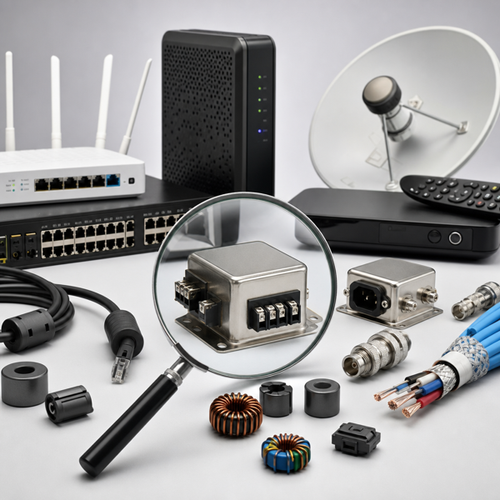
Electromagnetic interference (EMI) is a pivotal concern for professionals in telecommunications, audio, and video engineering. In June 2026, the International Electrotechnical Commission (IEC) published IEC 60940:2026—defining comprehensive general rules and safety requirements for components and filter units used in EMI suppression. This update marks a significant advancement in the safety and reliability of electronic systems connected to AC mains and other power supplies. This article provides a detailed breakdown of the new standard, explores its impact on industry practice, and offers actionable guidance for compliance and implementation.
Overview
Telecommunications, audio, and video engineering underpin global communications and digital media infrastructure. From broadband switches and base stations to AV receivers and studio hardware, the risk of electromagnetic and radio frequency interference can disrupt quality, reliability, and even regulatory compliance.
International standards in this field ensure devices and systems can safely suppress EMI and maintain performance across a variety of operating environments. With increasing device complexity and system integration, robust EMI management is crucial for product safety, effectiveness, and market access. This article covers the new approach brought by IEC 60940:2026, highlighting what professionals need to know.
Detailed Standards Coverage
IEC 60940:2026 – Application of Capacitors, Resistors, Inductors and Complete Filter Units for Electromagnetic Interference Suppression – General Rules and Safety Requirements
Full Title: Application of capacitors, resistors, inductors and complete filter units for electromagnetic interference suppression – General rules and safety requirements
Published: 2026-06-30 by the International Electrotechnical Commission (IEC)
IEC 60940:2026 sets forth the foundational rules and safety expectations for the deployment of capacitors, resistors, inductors, and specifically, complete passive filter units used to suppress electromagnetic interference in electrical and electronic applications. Covering nominal voltages up to 1,000 V AC (to 400 Hz), and up to 1,500 V DC, the standard applies to a vast array of products in telecommunications and AV engineering.
What This Standard Covers
- Scope: General and safety requirements for EMI suppression components installed on AC mains and other supply systems.
- Components Covered: Capacitors (including X and Y types), resistors (fixed and variable), inductors (air core, magnetic core, ferrite bead), and assembled filter units.
- Key Use Cases: Telecom base stations, broadcast transmitters, AV production equipment, consumer electronics, and all installations requiring EMI/RFI suppression for signal integrity and user safety.
Key Requirements and Specifications
IEC 60940:2026 is structured into several key components:
- Updated Title & Structure: The document is reframed from previous guidance into a set of enforceable general rules and mandatory safety requirements.
- Expanded Content: New detailed clauses (5 to 9) address safety aspects, component selection, installation requirements, and the nature of faults.
- Safety Provisions: Defines what constitutes an adequate protective provision using EMI suppression components—considering both intended use and reasonably foreseeable misuse.
- EMI and RFI Suppression Strategies: Outlines best practices for component selection, installation methods, voltage and current rating, and environmental qualification.
- Failure Modes and Fault Protection: Clearly describes assessment of hazards under single-fault conditions, specifically for components acting as protective provisions against electric shock.
- Earth Leakage Current Control: Specifies maximum tolerable levels for leakage current when EMI suppressor capacitors are used from line to earth.
- Component Integration: Describes best practices for combining capacitors, inductors, and resistors into effective EMI filters for both single-phase and three-phase systems.
- Distance Rules: New dimensioning rules for clearance and creepage distances for safe mounting and spacing (including detailed consideration for cased and surface-mount components).
- Passive and Active Flammability: Includes additional safety measures and recommendations for flammability characteristics of all components.
- X and Y Capacitors Usage: Dedicated clause on safe application of X and Y class capacitors up to 400 Hz, including guidance on voltage derating by frequency and limitations on capacitance (>10 µF).
Intended Audience and Compliance Needs
This standard is critical for:
- Manufacturers of telecommunications, audio, and video equipment
- Circuit and systems designers
- Product compliance officers and quality managers
- Service organizations and regulatory authorities
Implementation Means: The document guides technical committees drafting product standards, but also provides direct instructions for designers and manufacturers to apply necessary risk reduction measures and comply with relevant market regulations.
Practical Implications for Implementation
- Safety Risk Assessments: Designers must now explicitly account for both normal use and reasonably foreseeable misuse, applying clause-by-clause requirements from selection to integration.
- Product Testing and Approval: New and revised test requirements (referencing IEC 60384-14, IEC 60664-1, IEC 60939-3, IEC 61140) align with modern product safety regulations and EMC compatibility.
- Documentation and Marking: Enhanced documentation is required, including accurate marking, installation instructions, and data relevant to safe operation.
Notable Changes from Previous Editions
- Change of scope from "guidance" to enforceable "rules and safety requirements"
- Major expansion with new technical content across Clauses 5 to 9
- Clearer application of failure and single-fault conditions
- Increased focus on protection against electric shock and long-term reliability
Key highlights:
- Mandatory safety rules for EMI suppression in telecom/AV products
- Detailed instructions for component integration and installation
- New dimensioning, fault analysis, and flammability requirements
Access the full standard:View IEC 60940:2026 on iTeh Standards
Industry Impact & Compliance
Adopting IEC 60940:2026 is a critical step for firms working in telecommunications and audio/video engineering. The updated requirements:
- Increase safety and product reliability, safeguarding end users and system operators.
- Aid in international market access by demonstrating compliance with the latest IEC safety and EMC standards.
- Require manufacturers to review and likely update their component selection and system designs, particularly regarding fault protection, clearance/creepage distances, and capacitor usage.
- Accelerate certification and approvals, since following IEC’s harmonized requirements aligns with expectations in many global markets.
Compliance Considerations
- Transition Timelines: Regulatory authorities may begin referencing the new edition in product approvals and market surveillance within months, so early adoption is recommended.
- Documentation: Technical files and Conformity Declarations must reference the new requirements, especially for products using or updating EMI suppression filters/components.
- Training: Engineering, compliance, and quality assurance staff should be briefed on the revisions to mitigate implementation risks.
- Legacy Products: Existing designs should be reviewed for ongoing conformity during maintenance or upgrades.
Benefits of Adoption
- Reduced risk of EMI-related failures in high-availability systems
- Improved customer trust through compliance and product labelling
- Enhanced marketability—certified alignment with newest IEC guidance
Risks of Non-Compliance
- Field failures, product recalls, or enforcement action if unsafe or non-conforming EMI suppression approaches are maintained
- Loss of market access where IEC 60940:2026 becomes referenced in regulations or procurement specifications
- Reputational risk due to safety incidents or compliance gaps
Technical Insights
Common Technical Requirements:
- Component Ratings: Explicit rules for voltage, current, and environmental ratings must match real-world application and worst-case scenarios.
- Clearance and Creepage Distance: New tables and diagrams provide measurable requirements, crucial for multi-layer boards and power assemblies.
- Protective Provisions: Use of redundancy, enhanced insulation, or fault-tolerant layout is now formalized for products with EMI filter units spanning hazardous potentials.
Implementation Best Practices
- Early Design Involvement: Engage compliance teams at the start of new design or upgrade projects to avoid costly redesigns.
- Risk Assessment: Apply risk reduction methodologies as defined in IEC Guide 116, considering both intended and foreseeable misuse.
- Material and Construction: Choose components with proven approvals to reduce qualification effort—using pre-approved parts can streamline the certification process.
- Prototyping and Testing: Test products under both normal and fault conditions, simulating lead disconnection or short-circuit faults highlighted within the standard.
- Documentation: Maintain detailed records of conformity, installation instructions, and test reports for audits and market surveillance.
Testing and Certification
- Harmonized Testing: Many requirements reference harmonized standards (IEC 60384-14, IEC 60939-3, and others). Leveraging these simplifies third-party testing.
- Type and Routine Testing: Manufacturers must adjust type and routine testing protocols to align with the updated test requirements and ensure product line consistency.
Conclusion and Next Steps
IEC 60940:2026 is a milestone in advancing safety and reliability for electromagnetic interference suppression—essential for modern telecommunications and audio/video systems. The updated standard brings clarity, specificity, and enforceability to the integration of EMI suppression components, helping organizations protect users, ensure EMC compliance, and maintain product excellence.
Recommendations for organizations:
- Review and adopt IEC 60940:2026 for all new and updated designs involving EMI suppression
- Update compliance documentation, internal procedures, and staff training
- Engage with qualified testing providers to ensure conformity
To stay at the forefront of compliance and international market access, explore the full standard and integrate key requirements into your engineering, quality, and procurement processes.
For full access and ongoing updates, visit iTeh Standards.
Categories
- Latest News
- New Arrivals
- Generalities
- Services and Management
- Natural Sciences
- Health Care
- Environment
- Metrology and Measurement
- Testing
- Mechanical Systems
- Fluid Systems
- Manufacturing
- Energy and Heat
- Electrical Engineering
- Electronics
- Telecommunications
- Information Technology
- Image Technology
- Precision Mechanics
- Road Vehicles
- Railway Engineering
- Shipbuilding
- Aircraft and Space
- Materials Handling
- Packaging
- Textile and Leather
- Clothing
- Agriculture
- Food technology
- Chemical Technology
- Mining and Minerals
- Petroleum
- Metallurgy
- Wood technology
- Glass and Ceramics
- Rubber and Plastics
- Paper Technology
- Paint Industries
- Construction
- Civil Engineering
- Military Engineering
- Entertainment