


July 2026: New Leather and Textile Standards Advance Quality Control
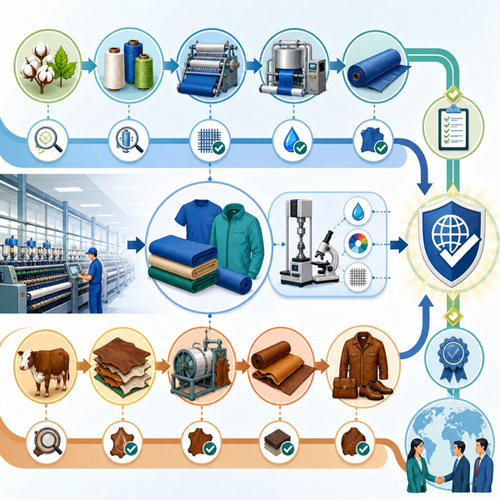
In July 2026, the textile and leather technology sector sees the arrival of two significant new international standards. Industry professionals, including engineers, quality managers, and compliance officers, should note the updates to leather soiling resistance testing and activated carbon fibre efficiency in iodine isotope removal. These developments offer enhanced methodologies for material evaluation and environmental protection, covering ISO 26082-1:2026 and ISO 24953:2026 respectively. Understanding these standards is essential for maintaining product quality, achieving regulatory compliance, and staying competitive in a rapidly evolving market.
Overview
Textile and leather technology is a cornerstone industry, touching everything from automotive interiors and apparel to protective fabrics used in industrial and environmental applications. As consumer expectations and regulatory demands escalate, robust standards underpin quality, safety, and innovation in this domain.
These latest July 2026 standards address pivotal testing methodologies: determining leather resistance to visible soiling and measuring the adsorption efficiency of activated carbon fibres for iodine isotopes. This article unpacks the content, requirements, and impacts of these standards, guiding professionals on practical adoption.
You'll gain insights on:
- Enhanced procedures for physical testing of leather durability against soiling
- Methodology for evaluating activated carbon fibres in environmental filtration
- Compliance steps and business benefits for textile and leather manufacturers
Detailed Standards Coverage
ISO 26082-1:2026 - Leather Resistance to Soiling (Martindale Method)
Leather — Physical and mechanical test methods for the determination of soiling — Part 1: Rubbing (Martindale) method
This standard specifies a robust procedure for assessing all types of leather for their resistance to visible soiling due to repeated contact with soiled objects. Especially valuable for manufacturers in automotive, furniture, fashion, and consumer goods, it details how to simulate real-world wear using the Martindale rubbing method.
The protocol covers:
- A pretreatment simulating typical usage or accelerated wear
- Rubbing test using a standard soiling cloth under controlled load and motion
- Objective evaluation of color changes
- Guidance for aftertreatment/cleaning to measure residual soiling
Key requirements and updates:
- Alignment with latest core standards: Updated to correspond with ISO 2418 (specimen preparation), ISO 2419 (conditioning), ISO 7906 (color fastness)
- Improved precision: Enhanced clarity in procedures, specifically in pre-aging and soiling steps, to boost reproducibility
- Comprehensive equipment specification: Mandates Martindale tester with specific load and abrasion settings (12 kPa pressure, 60 ± 1 mm stroke)
- Clear reporting instructions: Emphasizes thorough documentation of results, aiding comparability and compliance
Who should comply:
- Leather goods and automotive interior manufacturers
- Quality assurance and R&D laboratories
- Furniture, apparel, and footwear producers
Practical implications:
- Better differentiation of leather grades for end-use environments
- More reliable assessments for warranty claims and product guarantees
- Enhanced product documentation assists in global market access
Key highlights:
- Updated to harmonize with revised international test standards
- Precise protocol for soiling assessment using Martindale apparatus
- Includes aftercare/cleaning testing for full performance profile
Access the full standard:View ISO 26082-1:2026 on iTeh Standards
ISO 24953:2026 - Iodine Isotope Adsorption Efficiency of Activated Carbon Fibre
Textiles — Determination of iodine isotope adsorption efficiency of activated carbon fibre
Given the rising importance of industrial air filtration and environmental protection, this standard focuses on a precise method for testing the adsorption efficiency of activated carbon fibre (ACF) for removing iodine-131 isotopes from air or gas streams.
It is designed for ACF materials in forms such as nonwoven mats or fibrous felts less than 20 mm in thickness, widely used in safety filters for nuclear facilities, laboratory exhausts, and industrial cleanrooms.
Scope and core procedures:
- Preparation of disk-shaped ACF specimens (50 mm diameter, <20 mm thick)
- Controlled exposure to a humid air stream containing radioactive methyl iodide (I-131)
- Measurement of residual radioactivity after the test using calibrated gamma spectrometry
- Calculation of penetration rate, adsorption efficiency, and capacity metrics
Key requirements:
- Strict apparatus specification (stacking guides, labyrinth-type canisters, pressurizers, gamma ray detectors, precise environmental control)
- Detailed sample preparation and drying protocols
- Safety and facility requirements, referencing IAEA guidelines, personal dosimetry, and direct monitoring for operators
- Continuous monitoring of test conditions (temperature, humidity, pressure, flow rate)
Target users:
- Environmental filter and media manufacturers
- Quality labs supporting nuclear or hazardous material handling
- Organizations concerned with airborne radionuclide control
Practical implications:
- Facilitates comparison and benchmarking of different ACF products
- Vital for regulatory compliance in nuclear safety and environmental industries
- Provides end-users with data to select the best-performing filter materials
Key highlights:
- Comprehensive, reproducible method for testing ACF against I-131
- Detailed apparatus and operational procedures for accuracy
- Emphasis on health, safety, and reporting standards in test execution
Access the full standard:View ISO 24953:2026 on iTeh Standards
Industry Impact & Compliance
Adoption of these standards transforms quality control, product reliability, and regulatory confidence across textile and leather sectors:
- Market Access & Procurement: Buyers can verify material claims using globally harmonized methods. Complying suppliers gain easier access to international markets.
- Product Performance & Liability: Enhanced testing reduces risk of claims and elevates consumer trust in durability and safety.
- Competitive Differentiation: Firms can leverage certified test results to gain advantage in high-value contracts or regulated industries (e.g., OEM automotive, environmental mitigation).
- Compliance Timelines: Early adoption is beneficial. Given international harmonization, regulations and procurement criteria are likely to reference these test methods.
Risks of non-compliance:
- Market exclusions due to lack of recognized test evidence
- Warranty and liability issues if materials fail in service
- Increased testing costs due to mismatched specifications
Technical Insights
Common Requirements Across the Standards
- Precise sample preparation: Uniform specimen sizing/conditioning increases repeatability
- Detailed apparatus calibration: Ensures comparable, valid results across labs
- Comprehensive documentation: Both standards emphasize meticulous reporting
- Stringent environmental controls: Temperature, humidity, and pressure must all be tightly regulated
Implementation Best Practices
- Calibrate all equipment to the latest manufacturer and ISO guidelines before beginning tests.
- Prepare and condition specimens as specified to avoid skewed results.
- Document each stage with photographs, detailed notes, and instrument logs—critical for audits and quality reviews.
- Train personnel on safety protocol, especially where radioactive materials are involved (ISO 24953:2026).
Testing and Certification Considerations
- Engage with accredited laboratories where possible.
- Utilize the prescribed test reports for traceability and regulatory filings.
- Review referenced standards (like ISO 2418, ASTM D3803-91) for complementary test methods, ensuring holistic compliance.
Conclusion / Next Steps
With the release of ISO 26082-1:2026 and ISO 24953:2026, the textile and leather technology industry takes a step forward in rigorous, transparent product evaluation. Organizations are encouraged to:
- Review and integrate these standards into their internal QA and procurement specifications
- Collaborate with testing partners and suppliers to align on updated protocols
- Invest in staff training to maximize the efficiency and safety of new methodologies
- Stay updated: Regularly visit iTeh Standards for new publications, technical resources, and guidance.
By adhering to these robust guidelines, manufacturers and professionals ensure products excel in performance, safety, and market acceptance, fostering innovation and customer trust.
Categories
- Latest News
- New Arrivals
- Generalities
- Services and Management
- Natural Sciences
- Health Care
- Environment
- Metrology and Measurement
- Testing
- Mechanical Systems
- Fluid Systems
- Manufacturing
- Energy and Heat
- Electrical Engineering
- Electronics
- Telecommunications
- Information Technology
- Image Technology
- Precision Mechanics
- Road Vehicles
- Railway Engineering
- Shipbuilding
- Aircraft and Space
- Materials Handling
- Packaging
- Textile and Leather
- Clothing
- Agriculture
- Food technology
- Chemical Technology
- Mining and Minerals
- Petroleum
- Metallurgy
- Wood technology
- Glass and Ceramics
- Rubber and Plastics
- Paper Technology
- Paint Industries
- Construction
- Civil Engineering
- Military Engineering
- Entertainment