

Electric Tools Safety Standards: Essential Requirements for Modern Manufacturing
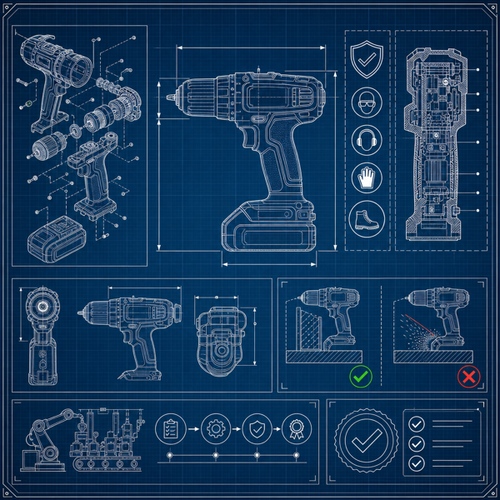
Electric tools are an indispensable part of modern manufacturing, construction, and landscaping operations. With the rise of innovative materials, automation, and connected technologies, the standards governing these tools are more critical than ever. Four recent International Electrotechnical Commission (IEC) standards—IEC 62841-2-16:2024, IEC 62841-3-17:2026, IEC 62841-4-10:2026, and IEC 62841-4-11:2026—offer precise safety and performance requirements for a wide range of electric tools. By integrating these standards, businesses enhance safety, increase productivity, ensure product reliability, and better manage security in dynamic workplace environments.
Overview / Introduction
The manufacturing industry is in a period of rapid transition. The adoption of electric tools has soared as organizations prioritize efficiency, safety, and sustainability. However, new technologies and changing manufacturing processes demand higher standards for safety, usability, and operational resilience. International standards are vital for addressing these needs, minimizing hazards, and ensuring global interoperability.
In this article, you will learn:
- What each standard covers and its key requirements
- Who needs to comply with these standards and why
- The strategic benefits of standard implementation
- Best practices and resources to simplify compliance
Whether you are a manufacturer, technology integrator, quality manager, or business leader, understanding these electric tool safety standards unlocks new levels of productivity, security, and long-term growth potential.
Detailed Standards Coverage
IEC 62841-2-16:2024 – Safety for Hand-Held Fastener Driving Tools
Electric motor-operated hand-held tools, transportable tools and lawn and garden machinery – Safety – Part 2-16: Particular requirements for hand-held fastener driving tools
This standard provides specific safety and performance requirements for electric hand-held fastener driving tools, which are widely used to drive fasteners—such as nails, staples, and pins—into materials like concrete, wood, plastics, and more. The scope excludes pneumatically or gas-driven tools, focusing solely on those powered directly or indirectly by electric motors or magnetic drives. It works in conjunction with IEC 62841-1:2014, adding or modifying requirements specific to fastener driving tools.
Key requirements and specifications:
- Detailed definitions of various actuation modes, such as contact actuation and full sequential actuation, ensuring operator safety
- Mechanical strength and endurance requirements to minimize risk during intensive, high-frequency use
- Protection from live parts, heat, fire, rust, and moisture; also includes noise and vibration emission limits
- Specific provisions for battery-operated models and safety labelling
Who must comply:
- Manufacturers of electric nailers, staplers, and other fastener drivers
- Industrial users in construction, carpentry, furniture, and packaging
Practical impact: Meeting this standard reduces accident rates and equipment failures. It also ensures continued safe tool operation alongside modern automation and IoT-powered maintenance programs.
Key highlights:
- Covers multiple actuation systems and fastener types (nails, staples, pins)
- Defines endurance and operational limits for intense industrial use
- Ensures robust labelling and instructions for safe operation
Access the full standard:View IEC 62841-2-16:2024 on iTeh Standards
IEC 62841-3-17:2026 – Safety for Transportable Table Masonry Saws
Electric motor-operated hand-held tools, transportable tools and lawn and garden machinery – Safety – Part 3-17: Particular requirements for transportable table masonry saws
This standard is fundamental for businesses utilizing table masonry saws to cut tiles, bricks, concrete blocks, and similar materials. Applicable only to saws equipped with diamond cutting wheels (not bonded abrasive wheels), the standard aims to prevent accidents during transport, set-up, and operation.
Key requirements and specifications:
- Specifies maximum diameters and construction requirements for cutting wheels (up to 600 mm)
- Addresses important features such as wheel guards, splash protection, and safety labelling
- Detailed performance and mechanical strength testing for saw tables, guards, and drive units
- Warning requirements for eye and hearing protection on the tool
Who must comply:
- Manufacturers of table masonry saws
- Construction, stone cutting, and tiling professionals
- Equipment rental companies
Practical impact: Standardization in tool dimensions and marking requirements ensures compatibility with global supply chains and lowers operational risk, even as advanced saws become integral to automated and semi-automated fabrication shops.
Key highlights:
- Machinery classification based on table types and wheel characteristics
- Enhanced safety features for operators, including labelling and protective guards
- Interoperability and compatibility for efficient scaling across facilities
Access the full standard:View IEC 62841-3-17:2026 on iTeh Standards
IEC 62841-4-10:2026 – Safety for Pole-Mounted Pruners
Electric motor-operated hand-held tools, transportable tools and lawn and garden machinery – Safety – Part 4-10: Particular requirements for pole-mounted pruners
This standard covers hand-held pole-mounted pruners used to cut tree branches, a tool especially valued in landscaping, forestry, and utilities. It covers pole pruners with saw chain or reciprocating blade configurations (excluding chain saws and other machines covered by separate standards).
Key requirements and specifications:
- Safety measures for operators using elongated tools to cut at a distance
- Impact and drop resistance for both fixed and detachable pole models
- Detailed safety marking requirements for glove, head, and eye protection
- Excludes battery-integral pruners for European compliance and addresses future iterations for other tool types
Who must comply:
- Manufacturers of pole-mounted electric pruners
- Arborists, landscapers, municipal and utility companies involved in tree maintenance
Practical impact: Electric pruners are increasingly integrated with smart sensors and battery systems. This standard keeps pace by dictating how these tools are tested, labelled, and used, protecting operators at all skill levels.
Key highlights:
- Coverage of both saw chain and reciprocating blade pruners
- Explicit exclusion/inclusion criteria for various types and accessories
- Guidance for clear operator instructions and safety signage
Access the full standard:View IEC 62841-4-10:2026 on iTeh Standards
IEC 62841-4-11:2026 – Safety for Edgers
Electric motor-operated hand-held tools, transportable tools and lawn and garden machinery – Safety – Part 4-11: Particular requirements for edgers
Edgers shape and maintain lawn and garden borders, with wide use in residential, commercial, and municipal sectors. This standard ensures only safe, compliant e-tools reach the market.
Key requirements and specifications:
- Applies to both hand-held and walk-behind edgers (with blades up to 305 mm diameter)
- Defines construction and performance benchmarks for all cutting accessories and drive units
- Specifies energy thresholds, ensuring only the suitable tools are classed as edgers
- Excludes trimmers, brush cutters, and scissor-type edgers (addressed under other standards)
Who must comply:
- Manufacturers of electric edgers
- Landscape maintenance companies, facility managers, and groundskeepers
Practical impact: Edgers are increasingly componentized and may be used by automated guided vehicles or remote operators. This standard’s requirements adapt as these new edge-cutting platforms enter the market.
Key highlights:
- Universal testing and marking requirements, regardless of regional context
- Distinction between machine classes ensures right-sized risk controls
- Strong alignment with future landscape equipment developments
Access the full standard:View IEC 62841-4-11:2026 on iTeh Standards
Industry Impact & Compliance
Benefits of Adopting Electric Tools Safety Standards
Implementing international safety standards in manufacturing and landscaping brings profound benefits:
- Operator safety: Reduces injury rates, liability risks, and health-related costs
- Productivity: With clearer labelling, training, and safer automation, uptime increases and rework declines
- Consistency: Harmonizes design, operation, and maintenance processes across multinational teams
- Security and scaling: Supports integration with digital maintenance logs, predictive analytics, and secure tool management
Compliance Considerations
Failing to comply with these standards risks regulatory penalties, workplace incidents, stakeholder mistrust, and loss of market access. Certification to IEC standards is recognized worldwide, smoothing supply chain friction. Demonstrating compliance is often required in large procurement and public contracts.
For full traceability and compliance resources, refer to your regional or national standards body and the iTeh Standards platform.
Implementation Guidance
Common Implementation Approaches
- Gap analysis: Audit existing tools, operating procedures, and infrastructure
- Training: Update operator, maintenance, and supervisory training to include new requirements
- Documentation: Ensure manuals, labels, and safety signs match current standards
- Validation: Conduct or commission testing as specified in the standards, including endurance, shock, and marking tests
- Continuous Improvement: Monitor for amendments and incorporate updates as technologies advance
Best Practices
- Embed standards requirements directly into procurement and quality control specifications
- Utilize checklists derived from IEC testing protocols
- Partner with accredited labs for conformity assessment
- Leverage digital asset management systems for traceable records
Resources for Organizations
- iTeh Standards platform for the latest documents and updates
- National or regional standardization bodies for implementation aid
- Industry association safety bulletins and best practice guides
Conclusion / Next Steps
As electric tools evolve—becoming smarter, more efficient, and more integrated—international safety and performance standards become mission-critical. Compliance ensures safer workplaces, supports digital transformation, and unlocks scalable, secure manufacturing and landscaping operations. Organizations should regularly review and update their tools and processes against the latest standards, using reliable platforms like iTeh Standards to access current requirements and guidance.
Key takeaways:
- Four IEC standards define essential safety for fastener drivers, masonry saws, pole pruners, and edgers
- Compliance delivers measurable gains: fewer accidents, higher productivity, and seamless integration with new tech
- Proactive implementation positions organizations for growth as regulatory and technology landscapes shift
Ready to take your operation to the next level?
- Review your tools against these standards
- Access the full text via iTeh Standards
- Stay proactive—maintain compliance for security, productivity, and global success
Categories
- Latest News
- New Arrivals
- Generalities
- Services and Management
- Natural Sciences
- Health Care
- Environment
- Metrology and Measurement
- Testing
- Mechanical Systems
- Fluid Systems
- Manufacturing
- Energy and Heat
- Electrical Engineering
- Electronics
- Telecommunications
- Information Technology
- Image Technology
- Precision Mechanics
- Road Vehicles
- Railway Engineering
- Shipbuilding
- Aircraft and Space
- Materials Handling
- Packaging
- Textile and Leather
- Clothing
- Agriculture
- Food technology
- Chemical Technology
- Mining and Minerals
- Petroleum
- Metallurgy
- Wood technology
- Glass and Ceramics
- Rubber and Plastics
- Paper Technology
- Paint Industries
- Construction
- Civil Engineering
- Military Engineering
- Entertainment