


Overlay Welding Standards: Understanding ISO 15614-7 and Its Value for Modern Manufacturing
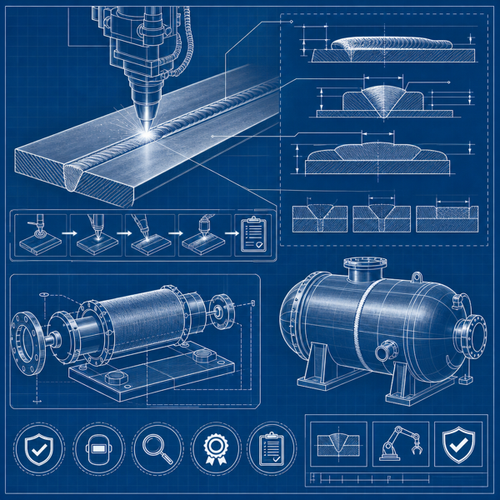
In today's competitive manufacturing environment, the integrity and quality of welded components are more critical than ever. Companies across sectors rely on robust specifications to ensure safety, reliability, and cost-effectiveness in their production processes. One internationally accepted standard—ISO 15614-7:2016, adopted in Europe as SIST EN ISO 15614-7:2017—provides a systematic approach to qualifying welding procedures for overlay welding of metallic materials. This article breaks down the essentials of overlay welding standards, explains why compliance is vital for modern manufacturers, and offers a user-friendly roadmap for effective adoption, whether in large-scale fabrication or routine maintenance operations.
Overview / Introduction
Welding underpins virtually every aspect of manufacturing, from constructing large pressure vessels to repairing vital machinery. As industrial markets become more demanding and globalized, the need for stringent, harmonized standards grows. Overlay welding—a technique commonly used to enhance surface properties, provide corrosion resistance, or rebuild worn parts—requires precise control and validation to guarantee results.
ISO 15614-7:2016 is the cornerstone international standard that details how companies must qualify their overlay welding procedures through rigorous testing. This standard, published as SIST EN ISO 15614-7:2017 in Slovenia, aligns with European Union directives and supports manufacturers in achieving both product excellence and regulatory compliance.
By understanding and implementing this welding specification, manufacturers not only safeguard product quality, but they also:
- Enhance operational productivity and reduce costly failures
- Meet customer requirements for safety and performance
- Scale production efficiently while maintaining global market access
- Mitigate security risks related to weld integrity and hazardous applications
This guide will:
- Demystify the scope and requirements of ISO 15614-7
- Highlight key terms and concepts for newcomers and industry veterans
- Outline clear compliance and implementation pathways
Detailed Standards Coverage
SIST EN ISO 15614-7:2017 – Overlay Welding Procedure Qualification
Specification and Qualification of Welding Procedures for Metallic Materials – Welding Procedure Test – Part 7: Overlay Welding (ISO 15614-7:2016)
Overlay welding—also called cladding or hardfacing—entails depositing a layer of material onto a parent metal's surface, often to improve corrosion resistance, rebuild dimensions, or achieve specific mechanical properties. SIST EN ISO 15614-7:2017 defines a rigorous qualification regime so manufacturers can be sure their overlay welding procedures deliver fit-for-purpose, repeatable results.
What the Standard Covers
- Scope: Applies to all welding processes suitable for overlay welding, including manual metal arc, submerged arc, gas-shielded arc, plasma, electroslag, and oxy-acetylene welding.
- Qualification Process: Specifies the use of a preliminary Welding Procedure Specification (pWPS), followed by actual welding of test pieces, and a combination of non-destructive and destructive testing.
- Relevant Applications: Used for both initial cladding and later repair of metallic components across industries (oil & gas, energy, manufacturing, shipbuilding, etc.).
- Versatility: Applies to a wide range of parent metals and filler materials, with clear guidelines for joining dissimilar metals ("buttering").
- Compliance with European Directives: Supports essential safety and conformity requirements per EU Directive 2014/68/EU for pressure equipment.
Key Requirements & Specifications
- Test Piece Preparation: Detailed instructions on shape, size, and welding of sample pieces to reflect real-world conditions.
- Testing Procedures:
- Non-Destructive Testing: Visual inspection, penetrant testing, magnetic particle testing, ultrasonic testing
- Destructive Testing: Macroscopic examination, hardness testing, side-bend testing, chemical analysis, ferrite content measurement
- Acceptance Criteria: Quantifiable limits for defects, mechanical properties, chemical composition, and surface finish
- Recordkeeping: Mandates creation and maintenance of a Welding Procedure Qualification Record (WPQR) for audit and traceability purposes
- Qualification Validity: Previous qualifications remain valid, but additional tests may be required for compliance with new version.
- Linking Requirements: Clearly references associated standards (ISO 15607, ISO 15609, ISO 15613, ISO 15614-1, and others) for full integration with quality management systems
Who Needs to Comply?
- Manufacturers of pressure vessels, pipelines, structural assemblies, and components using overlay welding
- Fabrication shops performing repairs or upgrades involving clad surfaces
- Maintenance departments restoring worn equipment in process industries
- Quality assurance, production, and welding engineering professionals responsible for procedure validation
Practical Implications for Implementation
Adopting this standard ensures that all overlay welds are qualified using representative procedures, tested to international benchmarks, and supported by documentary evidence. For businesses, this translates to predictable performance in critical service, lower risk of failure, and alignment with customer and regulatory demands.
Notable Features
- Explicit coverage of corrosion-resistant overlays and hardfacing
- Detailed instructions for qualifying both new and existing welding procedures
- Mandatory testing regime for both initial qualification and ongoing compliance
Key highlights:
- Covers all overlay welding processes and parent/filler material combinations
- Ensures compliance with EU safety directives and market access requirements
- Supports both new weld procedure qualifications and updates to existing certifications
Access the full standard:View SIST EN ISO 15614-7:2017 on iTeh Standards
Industry Impact & Compliance
Successful welding is at the heart of safe and durable industrial products. Adhering to ISO 15614-7 brings not only technical advantages, but also strategic business benefits:
How These Standards Affect Businesses
- Legal and Regulatory Compliance: Overlay welding is integral to pressure equipment, piping, and structural frameworks. Demonstrable compliance with proven standards like ISO 15614-7 is often mandated in contracts and regulatory approvals.
- Global Competitiveness: Certified procedures open doors to international markets by providing proof of manufacturing quality and due diligence.
- Documentation and Traceability: Integration of WPQR and pWPS records satisfies both internal audits and external inspections, crucial for high-visibility projects.
Benefits of Adopting these Standards
- Risk Reduction: Minimizes the likelihood of weld failures, safety incidents, or costly rework
- Productivity Gains: Standardized, repeatable welding methods speed up qualification and production cycles
- Security and Integrity: Guards against hidden flaws or defects, ensuring peace of mind for owners and operators
- Scalability: Standardized procedures are easily transferred across sites and teams, enabling rapid scaling of fabrication
- Customer Confidence: Demonstrates a culture of safety, quality, and professionalism to clients and partners
Risks of Non-Compliance
- Project delays, hefty fines, or contract losses due to failed audits
- Increased risk of in-service failures, leading to safety hazards and unplanned outages
- Restricted access to lucrative export markets or regulated sectors
- Damage to brand reputation and stakeholder trust
Implementation Guidance
Making overlay welding standards work for your business is about more than passing an audit; it’s about building robust foundations for consistent, high-quality output.
Common Implementation Approaches
- Gap Analysis: Review existing welding procedures and compare them to ISO 15614-7 requirements.
- Skills & Training: Ensure all welding and inspection staff are trained to the relevant standards and testing methods.
- Test Piece Production: Produce sample welds under controlled conditions, mirroring real production parameters as closely as possible.
- Testing and Documentation: Carry out all specified non-destructive and destructive tests, documenting results in the required format (WPQR).
- Quality Review: Submit all data for technical review and management sign-off, ensuring traceability.
Best Practices
- Early Engagement: Involve quality, production, and design teams from the earliest project phase
- Regular Audits: Conduct periodic checks to ensure continued alignment with the latest standard edition and associated directives
- Continuous Improvement: Use test data and inspection feedback to update and refine welding procedures
- Integration with Broader QMS: Align ISO 15614-7 implementation with certifications like ISO 9001 for holistic quality management
Resources for Organizations
- Access to accredited testing laboratories for NDT and destructive testing
- Training programs offered by welding institutes and recognized bodies
- Consultation with standards professionals via platforms like iTeh Standards
- Regular updates from standardization committees and professional societies
Conclusion / Next Steps
As manufacturing continues to grow in complexity and competitiveness, the need for technically sound and internationally recognized welding procedures cannot be overstated. ISO 15614-7:2016 (SIST EN ISO 15614-7:2017) provides a trusted pathway to ensure every overlay weld meets the highest benchmarks for quality, integrity, and safety.
Whether you are a large EPC contractor, a specialized fabrication shop, or a quality manager seeking to future-proof your operations, understanding and implementing overlay welding standards is a crucial step.
Key Takeaways:
- ISO 15614-7 provides comprehensive guidelines for overlay welding procedure qualification
- Adoption boosts productivity, enhances security, and supports business scaling and market access
- Compliance shields organizations from legal and reputational risks
- Effective implementation requires rigorous testing, staff training, and ongoing review
Recommendations for Organizations:
- Review your current welding procedures and compare them to ISO 15614-7 requirements
- Invest in appropriate training, documentation, and testing resources
- Leverage standards platforms like iTeh to access up-to-date guidance and full-text standards
Stay ahead in the evolving manufacturing landscape—integrate overlay welding standards into your quality and production systems today.
Categories
- Latest News
- New Arrivals
- Generalities
- Services and Management
- Natural Sciences
- Health Care
- Environment
- Metrology and Measurement
- Testing
- Mechanical Systems
- Fluid Systems
- Manufacturing
- Energy and Heat
- Electrical Engineering
- Electronics
- Telecommunications
- Information Technology
- Image Technology
- Precision Mechanics
- Road Vehicles
- Railway Engineering
- Shipbuilding
- Aircraft and Space
- Materials Handling
- Packaging
- Textile and Leather
- Clothing
- Agriculture
- Food technology
- Chemical Technology
- Mining and Minerals
- Petroleum
- Metallurgy
- Wood technology
- Glass and Ceramics
- Rubber and Plastics
- Paper Technology
- Paint Industries
- Construction
- Civil Engineering
- Military Engineering
- Entertainment