


A Practical Guide to Earth-Moving Machinery Standards: Productivity, Safety, and Compliance Essentials
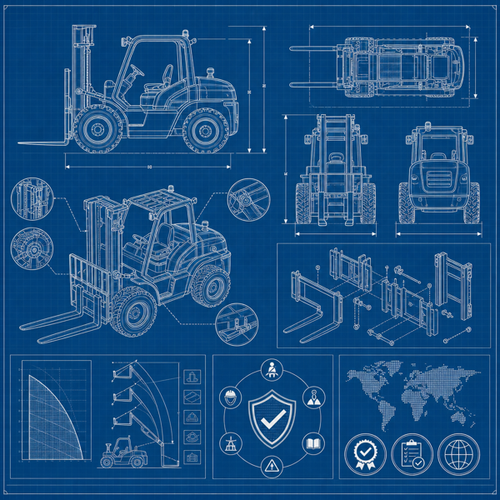
A Practical Guide to Earth-Moving Machinery Standards: Productivity, Safety, and Compliance Essentials
Earth-moving machinery is the powerhouse of modern construction, infrastructure, and civil engineering projects. As technology advances and regulatory requirements grow more complex, organizations in the materials handling sector face increasing pressure to implement robust and up-to-date international standards. This article explores four essential ISO standards that impact the safety, performance, and operational effectiveness of earth-moving machinery. By understanding and adopting these standards, businesses not only achieve regulatory compliance but dramatically improve productivity, safety, security, and scalability in their day-to-day operations.
Overview / Introduction
Earth-moving machinery—such as excavators, mobile drill rigs, and piling equipment—forms the backbone of construction, mining, and infrastructure projects worldwide. The efficient and safe operation of these machines is crucial for timely project completion, minimizing downtime, and safeguarding workers.
Why are international standards essential in this field?
As machines grow more advanced and are integrated with new technologies like automation, real-time diagnostics, and telematics, the risks and complexities increase. International standards provide a harmonized framework for:
- Commercial specifications and interoperability
- Preventing fire risks and ensuring equipment safety
- Ensuring operator protection (seat belts, protective structures)
- Standardizing operator manuals, documentation, and training
This guide walks you through the four leading standards for earth-moving machinery, offering practical insight into their scope, requirements, and the tangible benefits of compliance for businesses of all sizes.
Detailed Standards Coverage
ISO 11886:2025 - Drilling and Foundation Machinery Specifications
Drilling and foundation machinery — Soil or soil and rock mixture drilling and foundation machines — Commercial specifications
ISO 11886:2025 sets out the detailed commercial specifications for a wide array of drilling and foundation machines, including mobile drill rigs used in civil and geotechnical engineering, piling machines, diaphragm walling equipment, jetting, grouting, injection equipment, and interchangeable auxiliaries. The standard excludes machines designed for mining (like jumbo drills) and horizontal directional drilling (covered separately).
Key requirements and scope:
- Standardizes terminology, concepts, and methods related to drilling and foundation machines.
- Specifies components, working methods, and important machine features.
- Describes commercial specification content: engine parameters, power transmission, feed and travel systems, slewing, steering, hydraulic system, fluid systems, tire and undercarriage details, operating and shipping mass, dimensions, and safety features.
- Includes special sections for different machine families: mobile drill rigs, piling equipment, diaphragm walling, and jetting/grouting units.
- Provides comprehensive nomenclature and annexes with details on dimensions and attachments.
Who needs to comply:
- Civil and geotechnical engineering contractors
- Manufacturers and suppliers of earth-moving machines
- Equipment leasing and commissioning companies
- Project owners requiring standardized bids and machine comparability
Implementation benefits:
- Simplifies tendering and procurement through unambiguous machine specifications
- Enhances equipment compatibility and interchangeability
- Reduces the risk of errors or omissions during equipment selection or commissioning
Key highlights:
- Unified structure for commercial documentation
- Specifies core and auxiliary equipment in detail
- Supports modular equipment selection and integration
Access the full standard:View ISO 11886:2025 on iTeh Standards
ISO 13649:2024 - Fire Prevention Guidance for Earth-Moving Machinery
Earth-moving machinery — Fire prevention guidance
Fire risks pose a consistent threat to earth-moving machinery, especially as newer, more complex machines introduce additional fuel and ignition sources. ISO 13649:2024 provides comprehensive guidance to reduce fire hazards through improved machine design, maintenance, and operational instructions.
Key requirements and scope:
- Outlines fire risk analysis steps—identifying hazards, estimating and evaluating risks, applying risk reduction strategies.
- Details typical fuel and ignition sources in earth-moving machines (machinery components, fluids, environmental debris, hot surfaces, electrical faults, friction-related heat).
- Specifies design measures: insulation of hot surfaces, robust cable routing and protection, correct circuit protection, and segregation of fuel and ignition points.
- Includes operational guidance: maintenance best practices, safe fueling, inspection routines, and operator awareness training.
- Excludes fire prevention specifics for modern battery/electric systems but offers general strategies relevant to all powertrains.
Who needs to comply:
- Construction and mining firms operating earth-moving machinery
- Original Equipment Manufacturers (OEMs)
- Maintenance and service companies
- Safety officers and regulatory compliance teams
Implementation benefits:
- Reduces fire incidents, machine downtime, and accident costs
- Enhances the safety of personnel and critical infrastructure
- Adapts to evolving powertrain and fuel technologies
Key highlights:
- Preventive actions from design through decommissioning
- Covers mechanical, electrical, thermal, and external fire risks
- Integrates with overall risk management (see ISO 12100)
Access the full standard:View ISO 13649:2024 on iTeh Standards
ISO 6683:2025 - Seat-Belt Assemblies and Anchorages
Earth-moving machinery — Seat-belt assemblies and seat-belt anchorages — Performance requirements and tests
Occupant protection is a top priority for any vehicle operator. ISO 6683:2025 establishes minimum performance and testing standards for seat-belt assemblies and anchorages in earth-moving machines—ensuring that operators remain safely within roll-over or tip-over protection structures in the event of accidents.
Key requirements and scope:
- Defines mandatory performance criteria for seat-belt assemblies, including static load testing
- Specifies anchorage strength and location parameters to ensure secure restraint
- Provides for compliance with UNECE and SAE requirements to streamline global adoption
- Covers only seat-belt assemblies manufactured after standard publication (future-oriented)
- Bridges operator safety with machine design—applicable to both manufacturers and retrofitters
Who needs to comply:
- OEMs and after-market seat-belt suppliers
- Construction equipment fleet managers
- Health and safety regulators and inspectors
Implementation benefits:
- Minimizes operator injuries and fatalities in rollover/tip-over incidents
- Promotes consistent and effective seat-belt installation and maintenance
- Fulfills regulatory requirements, helping meet global and local safety mandates
Key highlights:
- Tested to simulate actual overturning loads
- Aligns with international automotive safety standards
- Applicable to a broad range of earth-moving machinery
Access the full standard:View ISO 6683:2025 on iTeh Standards
ISO/TR 6750-2:2025 - Operator's Manual Reference List
Earth-moving machinery — Operator's manual — Part 2: List of references
Comprehensive, up-to-date operator manuals are key to the safe, effective use of earth-moving equipment. ISO/TR 6750-2:2025 compiles authoritative references—standards, technical specifications, reports, and publicly available specifications—mandating the content and requirements of operator’s manuals.
Key requirements and scope:
- Provides a curated list of standards and documents with provisions for operator’s manuals
- Applies to all earth-moving machinery as defined by ISO 6165
- Ensures operator manuals are complete, accurate, and harmonized with regulatory expectations
- Facilitates continuous updates to reflect changes in associated standards and practices
Who needs to comply:
- Machine manufacturers and manual authors
- Equipment lessors and fleet managers
- Operators seeking best-practice documentation
Implementation benefits:
- Guarantees operator manuals support regulatory and operational requirements
- Simplifies training, onboarding, and daily use for equipment operators
- Reduces liability and operational risk by ensuring all safety and user guidance is up to date
Key highlights:
- Exhaustive, regularly updated reference list
- Source of content for compliant operator’s manuals
- Supports safety, usability, and ease of maintenance
Access the full standard:View ISO/TR 6750-2:2025 on iTeh Standards
Industry Impact & Compliance
Successfully adopting these international standards transforms how businesses approach earth-moving operations, offering benefits that reach far beyond regulatory box-ticking.
Business Impacts:
- Improved Productivity: Standardized specifications and documentation reduce ambiguity during equipment procurement, training, and operation. Streamlined workflows lead to fewer errors, less downtime, and faster project delivery.
- Enhanced Safety: Modern fire prevention strategies, robust occupant protection, and clear operator manuals drastically reduce risk, keeping workers and assets safe and secure.
- Regulatory Compliance: Adopting recognized ISO standards future-proofs your business against evolving local, regional, and global regulations. Avoid costly fines, project delays, and shutdowns.
- Technological Scalability: Standards are tailored to support the latest developments—automation, digital diagnostics, connected systems—making them crucial for organizations embracing new technologies.
Compliance Considerations:
- Ensure procurement policies require compliance with the latest ISO standards
- Maintain rigorous training and auditing procedures for operators and maintenance teams
- Stay updated as standards are revised to anticipate compliance gaps
Risks of Non-Compliance:
- Regulatory penalties and project shutdowns
- Increased safety incidents and insurance costs
- Lower competitiveness in bids for international projects
Implementation Guidance
Practical adoption of these earth-moving machinery standards involves coordinated efforts across technical, training, and management domains. Here are proven strategies and best practices:
1. Policies and Procurement
- Require proof of conformity with ISO standards during all equipment purchases or leases
- Work closely with suppliers to ensure documentation and specifications match project requirements
2. Training and Documentation
- Incorporate standard requirements into operator training programs
- Ensure that operator’s manuals reference current ISO/TR 6750-2 guidance
- Use real-world case studies to reinforce fire safety and proper equipment use
3. Maintenance and Auditing
- Schedule regular inspections based on fire prevention and safety guidelines (e.g., ISO 13649)
- Test seat-belt anchorages and assemblies for compliance as part of preventive maintenance (see ISO 6683)
4. Technology Integration
- Leverage digital tools to track compliance status and machine updates
- Integrate new technologies, such as telematics and diagnostics, in compliance with harmonized specifications
5. Continuous Improvement
- Assign responsibility for monitoring updates to ISO standards, ensuring procedures and documentation remain current
- Participate in industry forums and feedback loops to influence future standard revisions
Resources and Support
- Stay connected with leading standards publishing platforms like iTeh Standards for updates, guidance documents, and case studies
- Engage with local safety councils and ISO member bodies for interpretation and clarification of standards
Conclusion / Next Steps
In today’s fast-evolving industrial landscape, implementing international standards for earth-moving machinery is not just a matter of compliance—it’s a strategic imperative. From commercial specification clarity (ISO 11886) to proactive fire prevention (ISO 13649), industry-leading occupant protection (ISO 6683), and gold-standard documentation practices (ISO/TR 6750-2), these standards are proven enablers of higher productivity, greater safety, and sustainable growth.
For organizations seeking to thrive as technology, regulations, and market expectations advance:
- Audit your current practices and assets against the latest ISO standards covered above
- Invest in ongoing staff training, leveraging up-to-date manuals and reference lists
- Prioritize safety, reliability, and compliance in equipment procurement and leasing
- Use standards-driven processes to scale operations, reduce risk, and win new business
Explore the full text of each standard, stay informed, and make standards an everyday part of your organization’s DNA. iTeh Standards provides easy access to authoritative documents and expert guidance—helping your business stay safe, compliant, and competitive in the world of earth-moving machinery.
Categories
- Latest News
- New Arrivals
- Generalities
- Services and Management
- Natural Sciences
- Health Care
- Environment
- Metrology and Measurement
- Testing
- Mechanical Systems
- Fluid Systems
- Manufacturing
- Energy and Heat
- Electrical Engineering
- Electronics
- Telecommunications
- Information Technology
- Image Technology
- Precision Mechanics
- Road Vehicles
- Railway Engineering
- Shipbuilding
- Aircraft and Space
- Materials Handling
- Packaging
- Textile and Leather
- Clothing
- Agriculture
- Food technology
- Chemical Technology
- Mining and Minerals
- Petroleum
- Metallurgy
- Wood technology
- Glass and Ceramics
- Rubber and Plastics
- Paper Technology
- Paint Industries
- Construction
- Civil Engineering
- Military Engineering
- Entertainment