


August 2026: New Water Quality and Nanotechnology Standards Released
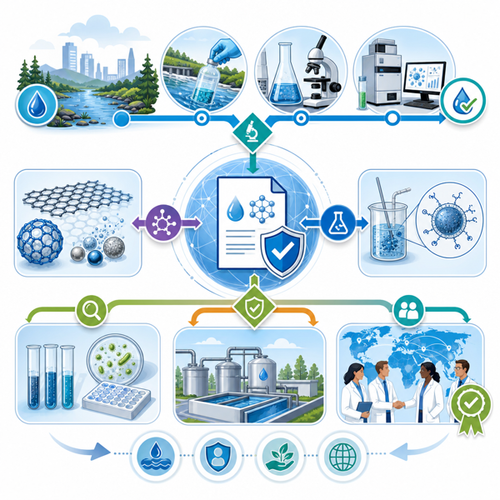
In August 2026, important new international standards were published for the field of natural and applied sciences, encompassing advances in water quality monitoring, fine bubble technology, and nanomanufacturing. Five significant standards are covered in this update, setting the foundation for improved testing, compliance, and product performance across industries ranging from water treatment to display manufacturing. These developments offer professionals in quality assurance, engineering, and scientific research new tools, proven methodologies, and a clearer path to regulatory compliance.
Overview / Introduction
The natural and applied sciences sector is evolving rapidly, driven by innovation and a growing emphasis on reliable methodologies and product quality. Standards in this space are essential for ensuring the reproducibility of scientific research, the safety and effectiveness of water treatment processes, and the advancement of cutting-edge technologies like nanophotonics and ultrafine bubble applications.
The August 2026 standards release shines a spotlight on these priorities by introducing improved guidelines for water microbiology, state-of-the-art test methods for fine bubble dispersions, and robust technical specifications for quantum dot-based photonic components. This article unpacks each new standard, illustrating their scope, industry application, and the transformative benefits they offer for compliance, testing, and innovation.
Detailed Standards Coverage
ISO 20304-4:2026 - Fine Bubble Technology for Antifouling in Crossflow Membrane Filtration
Fine bubble technology — Water treatment applications — Part 4: Test method for evaluating the antifouling performance of fine bubble water in crossflow membrane filtration systems
This standard introduces a comprehensive method to assess the antifouling effects of ultrafine bubbles (UFBs) in membrane filtration systems. By comparing the fouling behavior of untreated versus UFB-enriched wastewater under crossflow conditions, the standard sets a scientifically robust framework for evaluating membrane performance improvements due to fine bubble technology.
The test method utilizes the Crossflow Membrane Fouling Index (CMFI), measured under constant transmembrane pressure, as a benchmark. It covers dispersions containing both UFBs and microbubbles (MBs), making it relevant across ultrafiltration, nanofiltration, and reverse osmosis applications. The evaluation is particularly valuable for industries managing challenging wastewaters—with particulates, colloids, and organics—looking to reduce operational costs and downtime associated with membrane fouling.
Key highlights:
- Establishes the CMFI as the standard metric for membrane fouling in crossflow systems
- Allows benchmarking of UFB/MB technologies against conventional water treatment methods
- Supports process optimization and industrial design improvements in water treatment
Access the full standard:View ISO 20304-4:2026 on iTeh Standards
IEC TS 62607-3-5:2026 - Light Conversion Efficiency of Quantum Dot Films
Nanomanufacturing - Key control characteristics - Part 3-5: Nanophotonic products - Light conversion efficiency of quantum dot enabled light conversion films: luminance meter
This technical specification introduces a standardized process for measuring light conversion efficiency (LCE) in quantum dot enabled light conversion films (Q-LCFs) using a luminance meter. Quantum dots, with their size-tunable emission and high color purity, are critical components of next-generation display technologies such as LCD televisions and monitors.
IEC TS 62607-3-5:2026 lays out laboratory conditions, sample preparation, measurement procedures, and reporting formats to ensure consistent and repeatable LCE assessment—key for purchasing, quality control, and R&D in display manufacturing and advanced photonic devices. Professionals utilizing or supplying Q-LCFs will find this standard invaluable for benchmarking product performance, optimizing manufacturing, and facilitating supplier-buyer dialogue.
Key highlights:
- Defines luminance meter-based method for reliable LCE measurement of Q-LCFs
- Aligns photonic product evaluation with industry requirements for display applications
- Supports quality assurance and competitive benchmarking for manufacturers and supply chains
Access the full standard:View IEC TS 62607-3-5:2026 on iTeh Standards
EN ISO 13647:2026 - Water Quality: Enumeration of Culturable Microorganisms (CEN Edition)
Water quality - Enumeration of culturable microorganisms - Colony count by spread plate inoculation on R2A medium (ISO 13647:2026)
Published as a European implementation of the ISO standard, EN ISO 13647:2026 provides the foundational method for counting culturable microorganisms in water, with applications to tap water, well water, bottled water, and water from treatment processes. The standard specifies the use of a low-nutrient agar (R2A medium) and a 7-day incubation at 22 °C, enabling the detection of both fast- and slow-growing microbes crucial for verifying overall water microbiological safety and system cleanliness.
The spread plate technique avoids heat shock, offers greater colony visualization, and is compatible with a wide range of water matrices—provided laboratory validation confirms performance. Public health agencies, water utilities, bottled water producers, and laboratories will find this standard essential for regulatory compliance, operational monitoring, and incident response.
Key highlights:
- Standardizes culturable microorganism enumeration for all potable water types
- Emphasizes detection of slow growers often missed in rich-nutrient quick tests
- Strengthens water safety surveillance and contamination event investigation
Access the full standard:View EN ISO 13647:2026 on iTeh Standards
ISO 25549:2026 - Shear Viscosity of Ultrafine Bubble Dispersions
Fine bubble technology — Evaluation method for determining the shear viscosity of ultrafine bubble dispersions
ISO 25549:2026 establishes detailed procedures for determining the shear viscosity of ultrafine bubble (UFB) dispersions using three main devices: parallel-plate rotational shear, cone-plate rotational shear, and coaxial-cylinder rotational shear. This standard is vital for water treatment, agriculture, food processing, and other sectors harnessing UFBs to enhance process performance or manipulate fluid properties.
By specifying requirements for equipment, sampling methods, temperature controls, and test reporting, the standard enables reproducible, accurate viscosity characterization—an essential input for fluid transport, process optimization, and product formulation. The procedures account for the unique behaviors of UFB dispersions, including interaction and storage effects that can impact viscosity by as much as 90% in some applications.
Key highlights:
- Standardizes shear viscosity measurement for precise control of UFB dispersions
- Details sample preparation, test execution, and data reporting
- Serves diverse industrial and research applications from water treatment to materials science
Access the full standard:View ISO 25549:2026 on iTeh Standards
ISO 13647:2026 - Water Quality: Spread Plate Enumeration of Culturable Microorganisms (ISO Edition)
Water quality — Enumeration of culturable microorganisms — Colony count by spread plate inoculation on R2A medium
Mirroring the CEN edition, this ISO standard codifies global best practice for reliable enumeration of culturable microorganisms in drinking water and related matrices. The test procedure involves inoculating sample dilutions onto R2A agar plates, incubating for 7 days at 22 °C, and counting visible colonies (cfu/ml). The approach is designed to detect subtle water quality shifts, offering early warning of biofilm development or water treatment process failures.
Applicable to public water supply operators, bottled water firms, regulators, and any organization responsible for water quality, the standard also supports laboratory accreditation and operational monitoring systems.
Key highlights:
- Provides validated, repeatable method for microbial testing in all potable water sources
- Facilitates regulatory compliance and due diligence for water industry stakeholders
- Enables detection of low-level, slow-growing microorganisms affecting water safety
Access the full standard:View ISO 13647:2026 on iTeh Standards
Industry Impact & Compliance
The introduction of these standards carries substantial implications for a wide range of sectors:
- Water treatment facilities and environmental labs must update laboratory procedures, training, and reporting systems to ensure ongoing regulatory compliance and accurate risk mitigation.
- Manufacturers of membranes, fine bubble generators, and nanomaterials can leverage these standards to validate product effectiveness, enhance customer trust, and streamline procurement and qualification processes.
- Product developers and researchers gain trusted methodologies for benchmarking innovations, supporting peer-reviewed publication, and facilitating regulatory approvals.
- Regulatory agencies and quality managers have new baselines for enforcement and assurance, streamlining audits and third-party certifications.
Compliance with these standards should be prioritized as part of a continuous improvement strategy. Organizations are encouraged to:
- Review new requirements and cross-check existing procedures.
- Communicate changes and training needs to technical staff.
- Integrate standard updates into quality management systems and supplier contracts.
- Establish timelines for phased compliance—typically 6–12 months post-publication—aligned with national or regional regulatory frameworks.
Failure to adopt new standards risks non-conformity, increased operational costs, and the loss of market competitiveness. Conversely, early adopters position themselves as leaders in safety, sustainability, and product performance.
Technical Insights
Across these standards, several technical themes emerge:
- Emphasis on Methodological Rigor: Calibration, sample preparation, and environmental controls are consistently highlighted to ensure reproducibility and precision across laboratories and production sites.
- Measurement Best Practices: For effective implementation, organizations should:
- Carefully follow equipment maintenance and calibration protocols
- Use validated sampling techniques to avoid contamination or bias
- Ensure staff are trained and, where required, certified in relevant laboratory or process operations
- Testing and Certification: Third-party or internal lab accreditation to ISO/IEC 17025 or similar standards is recommended, particularly for ongoing water quality monitoring and supplier qualification.
- Process Optimization: Especially in membrane and fine bubble technologies, systematic data recording—such as turbidity, TSS, or CMFI—enables continuous process improvement.
Conclusion / Next Steps
The August 2026 publication of these five international standards marks a pivotal moment for natural and applied sciences professionals. From state-of-the-art nanophotonics to the trusted microbiological assessment of drinking water, each standard offers practical value and a robust framework for improved measurement, compliance, and innovation.
Key takeaways:
- Embrace new standards to drive operational excellence and regulatory alignment
- Update quality management and laboratory procedures as a priority
- Leverage new methods for competitive advantage and continual improvement
Recommendation: Organizations should explore the full standards on iTeh Standards, integrate relevant procedures into internal training, and consult with technical specialists to ensure best-in-class compliance and process optimization.
Stay proactive and informed by subscribing to standard update alerts and engaging with industry working groups—ensuring your organization remains at the forefront of science and technology best practices.
Categories
- Latest News
- New Arrivals
- Generalities
- Services and Management
- Natural Sciences
- Health Care
- Environment
- Metrology and Measurement
- Testing
- Mechanical Systems
- Fluid Systems
- Manufacturing
- Energy and Heat
- Electrical Engineering
- Electronics
- Telecommunications
- Information Technology
- Image Technology
- Precision Mechanics
- Road Vehicles
- Railway Engineering
- Shipbuilding
- Aircraft and Space
- Materials Handling
- Packaging
- Textile and Leather
- Clothing
- Agriculture
- Food technology
- Chemical Technology
- Mining and Minerals
- Petroleum
- Metallurgy
- Wood technology
- Glass and Ceramics
- Rubber and Plastics
- Paper Technology
- Paint Industries
- Construction
- Civil Engineering
- Military Engineering
- Entertainment