


A Practical Guide to Standards for Bolts, Screws, and Studs: Requirements, Benefits, and Implementation
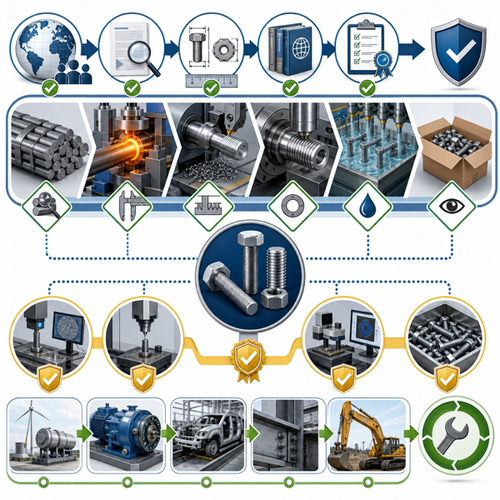
In today's fast-paced world of mechanical systems and manufacturing, the role of standardized fasteners such as bolts, screws, and studs has never been more crucial. This guide explores two foundational international standards—SIST EN ISO 7380-1:2011 and SIST ISO 8992:1996—detailing their technical requirements, the reasons for their widespread adoption, and how businesses can leverage these standards for improved performance, quality assurance, and global competitiveness.
Standing at the intersection of engineering innovation and manufacturing consistency, these standards help organizations achieve repeatable quality, reduce risks, streamline supply chains, and bolster customer trust. For operations ranging from automotive assembly to industrial equipment manufacturing, applying these standards is a direct pathway to enhanced productivity, increased security, and scalable growth.
Overview / Introduction
Mechanical fasteners—bolts, screws, studs, and nuts—are integral to virtually every industry, including automotive, construction, electronics, machinery, and aerospace. The performance, safety, and reliability of mechanical assemblies depend heavily on the correct specification, manufacturing, and use of these fasteners.
International standards for fasteners define key aspects such as dimensions, tolerances, materials, performance characteristics, and quality control processes. The importance of these standards extends beyond mere specification—they underpin industrial productivity, global trade, safety compliance, and the ability to scale manufacturing operations efficiently.
In this article, you’ll gain a thorough understanding of:
- The scope and application of two core standards: SIST EN ISO 7380-1:2011 and SIST ISO 8992:1996
- Why standardization is vital for quality, safety, and scalability
- How adopting these standards can benefit your organization
- Best practices for compliance and implementation
Detailed Standards Coverage
SIST EN ISO 7380-1:2011 - Button Head Screws: Hexagon Socket Design
Button head screws - Part 1: Hexagon socket button head screws (ISO 7380-1:2011)
Scope and Purpose: This standard specifies the characteristics of hexagon socket button head screws with metric threads from M3 up to and including M16, categorized as product grade A (high dimensional precision) and characterized by reduced loadability. The product is commonly used in applications where a smooth, low-profile head is preferred for safety, aesthetics, or space-saving assemblies.
Hexagon socket button head screws are prevalent in industries where compact design, a clean finish, and moderate strength requirements are essential—for example, consumer electronics, machinery covers, furniture, automotive panels, and other engineering assemblies where protruding fastener heads may be undesirable or hazardous.
Key Requirements and Specifications:
- Thread Range: M3 to M16 (metric sizes)
- Product Grade: A, indicating tight dimensional tolerances for precision fits
- Mechanical Properties: Based on reduced loadability, acknowledging the button head’s design limitations compared to standard socket head cap screws
- Dimensional Characteristics: Requirements for head radius, height, diameter, and socket geometry, ensuring interchangeability and tool compatibility
- Reference to Other Standards: For properties or cases not covered (e.g., materials, coatings), cross-references are made to standards such as ISO 261 (general purpose metric threads), ISO 965-2 (tolerances), ISO 898-1 (mechanical properties for steel), and ISO 3506-1 (stainless steels)
- Marking Requirements: Ensures traceability and identification for quality assurance
- Application Scope: Typically not designed for high tensile loading, making them well-suited for covers, enclosures, panels, and areas where aesthetics or injury prevention are important
Who Should Comply?
- Manufacturers and suppliers of mechanical fasteners
- Engineering firms specifying fasteners in product designs
- Industries where button head appearance, clearance, and moderate-strength requirements are vital
Practical Implications: By following this standard, organizations ensure:
- Interchangeability of screws from different sources
- Reliable performance in compliant designs
- Simplified sourcing due to harmonized product definitions
Key highlights:
- Covers hexagon socket button head screws, M3–M16, grade A
- Specifies key dimensions, tolerances, and reduced loadability
- Cross-references crucial materials and thread standards for comprehensive compliance
Access the full standard:View SIST EN ISO 7380-1:2011 on iTeh Standards
SIST ISO 8992:1996 - General Requirements for Bolts, Screws, Studs, and Nuts
Fasteners -- General requirements for bolts, screws, studs and nuts
Scope and Purpose: This foundational standard outlines the universal general requirements for standardized fasteners—specifically bolts, screws, studs, and nuts. It consolidates and references essential international requirements for mechanical properties, product grade tolerances, material specifications, and surface coatings. The purpose is to ensure that fasteners used globally, regardless of the manufacturer, meet a consistent baseline for quality, functionality, and fit.
SIST ISO 8992:1996 acts as an umbrella specification, complementing standards that define fastener dimensions and mechanical properties. It is also recommended for use with non-standard (custom) fasteners to guarantee a minimum level of performance and interoperability.
Key Requirements and Specifications:
- Mechanical Properties: Ensures materials, heat treatment, and mechanical strength meet referenced standards (e.g., ISO 898-1 for steels, ISO 3506 for corrosion-resistant fasteners)
- Product Grade & Tolerances: Defines how closely the dimensions of fasteners must adhere to specified norms (grade A: close tolerance for high-precision uses; grade B: medium; grade C: coarse tolerance)
- Surface Coatings: Standardizes specification and methods for coatings such as electroplating, enhancing corrosion resistance, durability, or functional performance
- Special Requirements: Allows for additional properties or performance (e.g., magnetic permeability, temperature resistance) where agreed between supplier and customer
- Reference System: Provides guidance on using the correct ISO/IEC standards for specific fastener types, materials, treatments, and tests
Who Should Comply?
- Manufacturers of bolts, screws, studs, and nuts for all industries
- Distributors and suppliers involved in global trade
- Quality control personnel and procurement specialists
- Designers specifying fastener types in product engineering
Practical Implications: Adopting this standard enables:
- Universal quality assurance in fastener procurement
- Reliable and safe mechanical assemblies
- Simplified cross-border sourcing and interoperability for multi-source supply chains
Key highlights:
- Sets baseline requirements for all fastener types (bolts, screws, studs, nuts)
- Ensures mechanical, dimensional, and finish quality
- Applicable to both standardized and custom mechanical fasteners
Access the full standard:View SIST ISO 8992:1996 on iTeh Standards
Industry Impact & Compliance
Implementing standardized requirements for bolts, screws, studs, and nuts offers measurable advantages across all sectors using mechanical assemblies. The standards highlighted here drive not only conformance and legal compliance but directly influence a company’s ability to deliver safe, scalable, and trustworthy products.
Benefits of Adopting These Standards:
- Increased Productivity: Streamlined procurement and assembly due to consistent part specifications and reduced need for rework or custom adjustments
- Enhanced Security & Safety: Fasteners that meet internationally recognized standards perform predictably under load, reducing the risk of failure or accidents in service
- Supply Chain Efficiency: Interchangeable parts simplify multilingual sourcing and allow greater flexibility in supplier choices, contributing to resilient global supply chains
- Quality Assurance: Reliable conformance to standards supports certifications like ISO 9001, demonstrating best practices to customers and regulatory bodies
- Risk Mitigation: Reduces liability exposure by minimizing the potential for mechanical failures, recalls, or defective products
- Facilitates Scaling: As production or market footprint grows, standardized fasteners make it easier to maintain consistent quality across multiple sites or regions
Risks of Non-Compliance:
- Increased likelihood of product recalls or failures
- Loss of customer trust and market access, especially in regulated industries (automotive, aerospace, machinery)
- Greater expenses from warranty claims, product redesigns, or supplier disputes
Implementation Guidance
Organizations aiming to align with SIST EN ISO 7380-1:2011 and SIST ISO 8992:1996 should follow a systematic approach to ensure effective, sustainable compliance and maximize business value.
Common Implementation Steps
- Conduct Gap Analysis: Review your current designs and procurement processes against the standard’s requirements to identify discrepancies.
- Supplier Engagement: Collaborate with suppliers to confirm that all sourced fasteners are certified to relevant international standards—request documentation and test certificates.
- Documentation & Training: Update engineering drawings, purchase specifications, and staff training materials to incorporate standard-compliant terminology and requirements.
- Quality Control Integration: Adapt or enhance your quality management systems to include in-process and incoming inspections aligned with the latest fastener standards.
- Continuous Monitoring: Regularly review supplier quality, industry updates, and product conformance through audits and sample testing.
Best Practices
- Use Only Certified Suppliers: Always source fasteners from manufacturers who can demonstrate third-party compliance (e.g., ISO, EN certificates)
- Update Specifications Regularly: Stay current—the standards landscape evolves. Subscribe to notifications on updates or revisions through platforms like iTeh Standards
- Standardize Company-Wide: Enforce these requirements across all global operations for consistency
- Keep Records: Document compliance, test results, and supplier certifications for audits and traceability
Helpful Resources
- iTeh Standards: A comprehensive, searchable database for viewing and obtaining the latest fastener standards, reference documents, and implementation guides
- Industry Associations: Engage with technical groups, quality forums, or professional societies for peer-learning and sharing best practices
Conclusion / Next Steps
Consistent, high-quality mechanical assemblies rely on more than just good design—they require fasteners that meet the world’s most recognized technical standards. SIST EN ISO 7380-1:2011 and SIST ISO 8992:1996 provide robust blueprints for manufacturers, supply chain professionals, and engineers alike.
Key Takeaways:
- Universal standards for bolts, screws, studs, and nuts are a must-have for quality, safety, supply chain security, and efficient scaling
- Detailed definitions for mechanical properties, dimensions, tolerances, and coatings underpin global interoperability and customer trust
- Businesses that proactively implement these standards enjoy productivity gains, risk reduction, and easier global expansion
Recommendations:
- Review and align your fastener specs and procurement sources with the latest versions of these standards
- Train staff and partners on the importance and practicalities of compliance
- Use resources such as iTeh Standards to keep your knowledge and documentation up to date
Taking these proactive steps will position your company to lead in quality, safety, and operational efficiency—now and into the future.
Categories
- Latest News
- New Arrivals
- Generalities
- Services and Management
- Natural Sciences
- Health Care
- Environment
- Metrology and Measurement
- Testing
- Mechanical Systems
- Fluid Systems
- Manufacturing
- Energy and Heat
- Electrical Engineering
- Electronics
- Telecommunications
- Information Technology
- Image Technology
- Precision Mechanics
- Road Vehicles
- Railway Engineering
- Shipbuilding
- Aircraft and Space
- Materials Handling
- Packaging
- Textile and Leather
- Clothing
- Agriculture
- Food technology
- Chemical Technology
- Mining and Minerals
- Petroleum
- Metallurgy
- Wood technology
- Glass and Ceramics
- Rubber and Plastics
- Paper Technology
- Paint Industries
- Construction
- Civil Engineering
- Military Engineering
- Entertainment