


Corrosion of Metals: Key International Standards for Reliable Protection and Performance
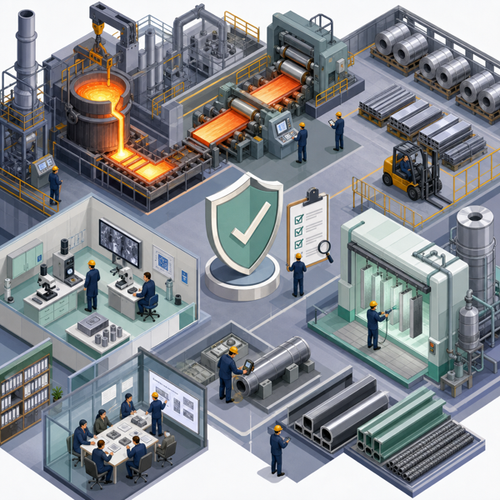
Protecting metals from corrosion is vital in our technology-driven world—impacting everything from industrial infrastructure and energy systems to electronics and consumer goods. The recent updates to international standards equip professionals and companies with the tools and protocols necessary to comprehensively assess, monitor, and minimize corrosion risks in a variety of environments and operational contexts. Four core ISO standards stand out in supporting businesses to increase productivity, ensure operational safety, and scale new technologies with confidence.
Overview / Introduction
Metallurgy has always faced the persistent issue of corrosion, a natural process that can undermine the reliability, safety, and efficiency of metal components and systems. As industries embrace new technologies and scale innovations across manufacturing, energy, transportation, and more, the potential impact of unchecked corrosion grows. This is especially critical as systems become more complex, integrate diverse materials, and operate under challenging conditions—including exposure to aggressive industrial media or electrical currents.
International standards for corrosion of metals present industry-wide, validated methods for testing performance, monitoring real-world conditions, and qualifying materials and surface treatments. These guidelines are pivotal for:
- Ensuring products meet consistent quality and durability benchmarks
- Supporting risk management and safety
- Enhancing long-term cost efficiency
- Enabling precise selection of materials and coatings in new applications
In this article, you will discover:
- An overview of four leading ISO standards for corrosion in metals and alloys
- Key requirements, scope, and practical applications of each standard
- Why compliance is now a business-critical priority
- How adopting these guidelines supports scaling, productivity, and asset uptime
- Practical guidance for implementation and leveraging standards as strategic tools
These insights are essential whether you are a materials engineer, quality assurance specialist, asset manager, or business leader guiding your company through technological transformation.
Detailed Standards Coverage
ISO 14993:2026 - Accelerated Cyclic Salt Mist, Dry and Wet Testing
Corrosion of metals and alloys — Accelerated testing involving cyclic exposure to salt mist, dry and wet conditions
ISO 14993:2026 defines advanced apparatus and procedures for accelerated corrosion testing by subjecting metallic materials (bare or coated) to repeated cycles of neutral salt mist, drying, and wetting—making it far more representative of real-world, salt-contaminated outdoor conditions than traditional tests.
Scope & Purpose:
- Applies to: Metal substrates, anodic/cathodic metallic coatings, conversion and anodic oxide coatings, and organic coatings on metals
- Replicates corrosive action found in atmospheric environments (such as near coastal or winter roads)
- Enables comparative evaluation of material or coating quality
- Complements, but does not replace, field exposure
Key Requirements:
- Preparation of a 50g/L sodium chloride spray, pH adjusted for neutrality
- Cyclic exposures structured in salt mist, drying (controlled humidity/temperature), and wet periods
- Meticulous cleaning and preparation of specimens (no abrasives or damaging solvents)
- Material of test cabinets and equipment must be inert to prevent test interference
- Specific guidance for handling scribed and un-scribed coated samples
- Comprehensive documentation: test conditions, results, and compliance notes
Who Should Comply:
- Manufacturers of metals and alloys
- Surface coating suppliers
- Automotive, aerospace, construction, and marine industries
- R&D labs evaluating material innovations
Practical Implications:
- Supports design of more durable products for harsh outdoor exposure
- Enables benchmarking and quality assurance for corrosion-resistant coatings
- Reduces risk of premature material failure in service
Notable Features:
- Superior real-life simulation compared to classic Salt Spray (NSS) tests
- Accommodates a wide range of metallic and coated systems
- Referenced for automotive, infrastructure, and electronics reliability testing
Key highlights:
- Realistic simulation of salt-laden outdoor corrosion
- Applicable to both coated and uncoated metals
- Guidelines for test apparatus, specimen prep, and reporting
Access the full standard:View ISO 14993:2026 on iTeh Standards
ISO 18971:2026 - Monitoring Corrosion of Stainless Steel in Industrial Cooling Water
Corrosion of metals and alloys — Monitoring method for corrosion states of stainless steel in industrial cooling water
ISO 18971:2026 introduces a precise online monitoring methodology for detecting corrosion in stainless steel components operating in industrial cooling water systems—where localized issues like pitting can escalate rapidly and invisibly.
Scope & Purpose:
- Customized for monitoring pipes, heat exchangers, and plates made from stainless steel
- Uses combined electrochemical techniques (polarization resistance and corrosion potential measurements) for real-time, non-destructive evaluation
- Applicable to cooling water sourced from natural, tap, or reclaimed water
- Suits water systems with pH 5–11, 0–60°C, and >20 μS/cm conductivity
Key Requirements:
- Use of three-electrode monitoring probes (working, reference, counter)
- Data acquisition systems capable of tracking, storing, and analyzing electrochemical signals
- On-site calibration and placement at corrosion-prone locations
- Scheduled maintenance and six-monthly recalibration
- Detailed reporting and data validation procedures
Who Should Comply:
- Operators of industrial cooling systems (chemical, power plants, HVAC, food processing)
- Facility managers aiming for predictive maintenance
- Quality engineers responsible for uptime and longevity
Practical Implications:
- Early detection of pitting or passivity loss prevents catastrophic failures
- Quantifies effects of water chemistry, treatment, and operational changes
- Streamlines predictive maintenance and process optimization
Notable Features:
- Real-time, in-situ corrosion monitoring
- Versatile for various cooling water types and operational contexts
- Supports networked data processing for large-scale facilities
Key highlights:
- Data-driven risk control for stainless steel assets
- Immediate feedback on water treatment effectiveness
- Prevents unplanned outages caused by corrosion failures
Access the full standard:View ISO 18971:2026 on iTeh Standards
ISO 25018:2026 - Stress Corrosion Cracking Resistance in Copper/Copper-Zinc Alloys
Corrosion of metals and alloys — Determination of resistance to stress corrosion cracking of copper and copper-zinc alloys in ammonia vapour
This standard defines laboratory methods for determining resistance to stress corrosion cracking (SCC) in copper and copper-zinc alloys—especially critical in ammonia-rich environments where SCC can cause sudden, unanticipated failures.
Scope & Purpose:
- Applies to copper and copper-zinc (brass) alloys in products and fabricated parts
- Specifies methods for exposing samples to ammonia vapour (in coexistence with aqueous ammonia)
- Supports performance ranking and material selection in hazardous atmospheres
- Not an absolute qualification—should be part of a broader material assessment process
Key Requirements:
- Controlled sampling, preparation, and identification of specimens
- Loading under either constant total strain or constant load (methods detailed)
- Testing environment tightly regulated for ammonia concentration, humidity, and exposure time
- Interpretation guidelines for assessing intergranular, transgranular, or ductile/brittle crack modes
- Excludes more advanced slow strain-rate testing, referencing related standards for broader coverage
Who Should Comply:
- Component and materials suppliers for HVAC, industrial valves, piping, and heat exchangers
- Product designers assessing SCC risk in ammonia-exposed service
- Metallurgical R&D and failure analysis professionals
Practical Implications:
- Ensures safe application of brass/copper alloys in ammonia-prone environments
- Facilitates material comparison for enhanced durability
- Reduces potential for catastrophic crack-induced failures in the field
Notable Features:
- Two alternative loading methods to suit part geometry and service simulation
- Informs both product qualification and material development efforts
- Standardized reporting for performance benchmarking
Key highlights:
- Focused on high-risk, ammonia-based service scenarios
- Detailed sampling, preparation, and environment protocols
- Simple criteria for ranking and selection
Access the full standard:View ISO 25018:2026 on iTeh Standards
ISO/TR 22801:2026 - Testing AC-Induced Corrosion of Conducting Alloys
Corrosion of metals and alloys — Testing methods for corrosion of conducting alloys in AC electric current condition
Reflecting the realities of modern high-voltage AC power transmission, ISO/TR 22801:2026 describes bespoke test procedures for exploring and ranking the corrosion behavior of conducting materials (aluminium, copper, and their alloys) when exposed to alternating electric current.
Scope & Purpose:
- Comparative testing in simulated atmospheric exposure with superimposed AC electrical currents
- Models corrosion rates as influenced by: magnetic fields, induced electric fields, and associated Joule heating
- Critical for transmission line connectors, busbars, and energy sector components
Key Requirements:
- Structured sample assembly for salt spray and electrochemical polarization under AC conditions
- Test protocols that account for current density, environmental factors, and material microstructure
- Measurement and calculation of corrosion rates for comparative material evaluation
- Guidance for interpreting and reporting results in an R&D and quality assurance context
Who Should Comply:
- Electrical utilities and power transmission infrastructure stakeholders
- Manufacturers and suppliers of conducting components
- Test laboratories supporting materials approval and certification
Practical Implications:
- Informs material selection for durability and reliability in power infrastructure
- Reduces risks of field failures due to corrosion-induced overheating or breakdown
- Enables innovation in new, higher-conductivity or composite alloys compared based on real-world performance
Notable Features:
- Emphasizes simulation of real AC operational stresses—not just static exposures
- Addresses limitations of classic corrosion testing for conducting metals
- Bridges testing with practical field reliability issues in the growing electric grid sector
Key highlights:
- Engineer-specific for electric utilities, transmission and materials R&D
- Adaptable to industry-driven test requirements
- Facilitates competitive benchmarking across suppliers and material types
Access the full standard:View ISO/TR 22801:2026 on iTeh Standards
Industry Impact & Compliance
Adhering to these updated corrosion standards is not just about regulatory obligation—it is a competitive necessity. As businesses deploy advanced technologies (such as smart energy grids, lighter materials for mobility, or distributed manufacturing), the risks posed by corrosion are amplified by novel operating environments, increased system complexity, and elevated performance expectations.
How These Standards Affect Businesses
- Risk Reduction: Systematic testing and monitoring prevent catastrophic failures that can halt operations.
- Productivity Gains: Early identification and mitigation of corrosion threats mean increased uptime and asset availability.
- Safety and Liability: Compliance ensures that industries meet international best practices for product safety and reduces reputational and financial risks from field failures.
- Market Access: Certification to ISO requirements demonstrates due diligence to global clients, regulators, and partners.
Compliance Considerations
- Regular review and updating of in-house test labs and monitoring systems to match the latest ISO requirements
- Integration of standard-based protocols into design, procurement, and product validation cycles
- Efficient documentation and reporting demonstrate conformity—and support client and regulatory audits
Benefits of Adopting Corrosion Standards
- Extends asset life and supports total lifecycle cost management
- Standardizes supplier quality and optimizes sourcing across borders
- Provides scalable, adaptable frameworks as your technology evolves
Risks of Non-Compliance
- Increased maintenance and unexpected repair costs
- Higher rates of unscheduled downtime and throughput loss
- Exposure to environmental and workplace safety violations
- Negative impact on product quality, brand reputation, and bottom-line performance
Implementation Guidance
Common Implementation Approaches
- Gap Analysis: Assess current corrosion testing and monitoring setups against standard requirements.
- Training: Ensure personnel are familiar with laboratory protocols, data handling, and calibration outlined in each ISO standard.
- Equipment Upgrade: Invest in compliant test chambers, sensors, and instrument systems where needed.
- Pilot Testing: Run sample tests or monitoring cycles to validate methods and reporting in line with ISO protocols.
- Documentation: Maintain thorough, standard-aligned reports for both internal quality assurance and external audits.
Best Practices for Adopting These Standards
- Embed corrosion resistance assessment in the design and procurement phase—not just as an afterthought
- Collaborate with material suppliers for test data sharing and certifications
- Use data from ISO-standard monitoring to drive proactive maintenance
- Integrate monitoring outputs into predictive maintenance and digital asset management platforms
- Stay updated with revisions and supplementary ISO references
Resources for Organizations
- iTeh Standards Platform: The authoritative resource for the latest ISO, IEC, and other international standards
- Industry consortia: For shared best practices and peer benchmarking
- Accredited testing labs: For outsourcing specialized corrosion testing and monitoring
Conclusion / Next Steps
Implementing updated international standards for corrosion management is an essential part of scaling modern technology and assuring quality and reliability in a rapidly changing world. Whether you manage metal components in manufacturing, energy, infrastructure or equipment design, understanding and leveraging these standards offers clear advantages:
- Increased productivity and safety
- Improved system reliability and lower life-cycle costs
- Scalable approaches fit for digital and global supply chains
Key Takeaways:
- Each standard addresses unique but complementary aspects of metal corrosion—from accelerated testing to field monitoring and high-stress operational environments
- Adopting these standards enables effective risk management and supports future-oriented innovation
- The linked documents on iTeh Standards provide the full requirements, guidance, and application details
Next Steps: Explore the standards referenced above, connect with your quality and engineering teams, and develop a roadmap to integrate ISO-aligned corrosion protection into your current and future operations. Stay informed, stay compliant, and stay ahead.
Categories
- Latest News
- New Arrivals
- Generalities
- Services and Management
- Natural Sciences
- Health Care
- Environment
- Metrology and Measurement
- Testing
- Mechanical Systems
- Fluid Systems
- Manufacturing
- Energy and Heat
- Electrical Engineering
- Electronics
- Telecommunications
- Information Technology
- Image Technology
- Precision Mechanics
- Road Vehicles
- Railway Engineering
- Shipbuilding
- Aircraft and Space
- Materials Handling
- Packaging
- Textile and Leather
- Clothing
- Agriculture
- Food technology
- Chemical Technology
- Mining and Minerals
- Petroleum
- Metallurgy
- Wood technology
- Glass and Ceramics
- Rubber and Plastics
- Paper Technology
- Paint Industries
- Construction
- Civil Engineering
- Military Engineering
- Entertainment