


Mechanical Testing of Metals: Essential Standards for Hardness and Crack Arrest
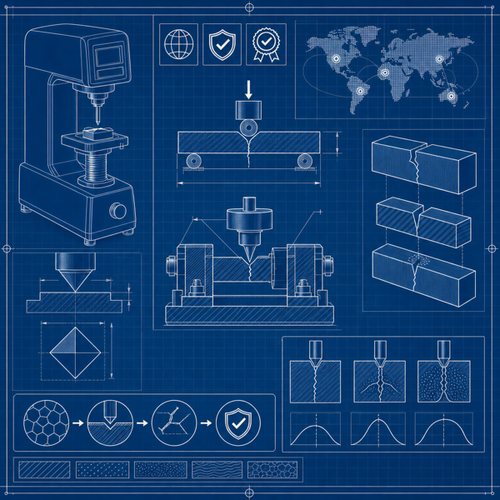
Metallurgy and materials engineering are foundational to countless industries, from automotive and aerospace to construction and advanced manufacturing. At the heart of metal production and component design lies the challenge of ensuring that materials perform safely and consistently under stress. International standards play a vital role in setting out the test methods, calibration routines, and reporting practices that enable organizations to accurately determine properties like hardness and crack resistance. This article explores three critical standards that define the state of the art for mechanical testing of metals: ISO 14577-1:2026, ISO 14577-3:2026, and ISO 20198:2026. By adopting these standards, businesses not only align with global best practices but also enhance security, productivity, and scalability in their operations.
Overview / Introduction
Mechanical testing in metallurgy is indispensable for understanding how metals behave under load, determining if they’ll withstand operational environments, and ensuring quality throughout the supply chain. As products and structures get lighter, stronger, and more complex, the consequences of using untested or subpar materials have never been greater. International standards, like those developed by the International Organization for Standardization (ISO), provide harmonized methods and precise requirements for:
- Measuring properties such as hardness at macro, micro, and nano scales
- Calibrating and verifying testing equipment and reference blocks
- Establishing methods for brittle crack arrest and structural reliability
Professionals in materials testing, manufacturing, quality assurance, and engineering management will benefit from an in-depth understanding of these standards. This article demystifies the technical content of the selected standards — making them accessible and actionable for both technical and non-technical audiences.
Detailed Standards Coverage
ISO 14577-1:2026 - Instrumented Indentation Hardness Testing: Test Method
Metallic materials — Instrumented indentation test for hardness and materials parameters — Part 1: Test method
ISO 14577-1:2026 is the cornerstone for determining hardness and related material parameters in metals using instrumented indentation testing. Rather than relying on traditional methods that measure residual impressions, this standard specifies procedures that continuously record the force and indentation depth during both the loading and unloading phases. This dynamic approach enables users to evaluate not just hardness but also additional properties like modulus of elasticity, creep, and more.
Key aspects include:
- Test Ranges: Covers macro (2 N ≤ F ≤ 30 kN), micro (2 N > F, h > 0,2 µm), and nano (h ≤ 0,2 µm) indentation testing. Each range is tailored for specific sample sizes, forces, and precision needs.
- Calibration: Emphasizes the crucial role of precise calibration, especially at the nano scale, where the indenter’s geometry and the testing machine’s compliance directly affect measurement reproducibility.
- Sample Preparation: Details requirements for surface cleanliness, roughness, and thickness to avoid test errors, and highlights the need for non-magnetic, well-supported samples.
- Test Procedures: Allows both force-controlled and depth-controlled cycling, including guidance on drift correction, data logging, and error estimation.
- Indenter Geometry: Specifies types and shapes (e.g., Vickers, Berkovich) and their use for different testing scenarios.
This standard’s procedures apply to thin coatings and non-metallic materials, with caveats about following corresponding standards for best practice.
Who should comply?
- Metal and alloy manufacturers
- Quality assurance specialists
- Research and development laboratories
- Any organization performing hardness testing
Key highlights:
- Unified procedures for macro, micro, and nano-scale hardness measurement
- Codifies detailed calibration and drift correction steps for accuracy
- Includes recommendations for challenging test scenarios (e.g., thin coatings)
Access the full standard:View ISO 14577-1:2026 on iTeh Standards
ISO 14577-3:2026 - Calibration of Reference Blocks for Indentation Testing
Metallic materials — Instrumented indentation test for hardness and materials parameters — Part 3: Calibration of reference blocks
Accurate mechanical testing relies not just on high-quality test procedures but also on the reliability of the reference blocks used to calibrate and verify indentation equipment. ISO 14577-3:2026 sets forth the method for preparing, calibrating, and verifying these essential reference materials for the indirect verification of instrumented indentation test machines.
Main components:
- Block Manufacture and Homogeneity: Specifies stringent requirements for uniformity, structure, and surface quality. Only blocks with certified hardness over the specified indentation range qualify.
- Calibration Machine Accuracy: Dictates the calibration and verification schedule, error tolerance, and traceability to SI units for equipment used to calibrate reference blocks. For example, force uncertainty must be ±0.25% (macro), ±0.5% (micro), or ±0.5%/±10 µN (nano), adhering to ISO 376 and ISO 14577-2.
- Test Surface Preparation: Demands high surface finish, non-magnetic properties, and strict dimensional tolerances to minimize measurement variability.
- Documentation and Traceability: Calibration details, block thickness, and unique identifying marks are mandated, promoting transparency and repeatability.
ISO 14577-3 ensures that hardness measurement across different labs and industries remains consistent and globally comparable — a necessity for businesses operating international supply chains.
Who needs this standard?
- Calibration service providers
- Testing machine manufacturers
- Quality control departments in metallurgy
Key highlights:
- Guarantees reliability and comparability of hardness tests via calibrated reference materials
- Defines uniform procedures for block production, marking, and maintenance
- Ensures traceable and periodic calibration for long-term accuracy
Access the full standard:View ISO 14577-3:2026 on iTeh Standards
ISO 20198:2026 - Determination of Brittle Crack Arrest Temperature (CAT)
Metallic materials — Steel — Method of test for the determination of brittle crack arrest temperature (CAT)
Structural safety depends on a material’s ability to resist fast catastrophic cracks, especially in heavy steel plates used in ships, bridges, and critical infrastructure. ISO 20198:2026 provides a procedural framework for determining the brittle crack arrest temperature (CAT) of ferritic and bainitic steels exhibiting ductile-to-brittle transition behavior.
Clarity on what it covers:
- Applicability: Designed for rolled steel plates with a tensile strength up to 950 MPa and thicknesses from 6 mm to 200 mm.
- Temperature Range: CAT is determined for temperatures between −196 °C and +100 °C, simulating extreme service conditions.
- Test Methodology: Outlines detailed procedures for sample preparation, temperature control, notch creation, and initiation of cracks via impact or tension methods.
- Test Equipment and Validation: Requires calibrated machines, precise force application, proper alignment of samples, and careful assessment of fracture surfaces and crack propagation paths.
By establishing a systematic way to determine the lowest temperature at which a running brittle crack is arrested, ISO 20198:2026 enables engineers to design safer structures that perform reliably in cold environments and under dynamic loads.
Who should use this standard?
- Structural steel manufacturers
- Construction and shipbuilding firms
- Regulatory and classification bodies
- Research labs focused on fracture mechanics
Key highlights:
- Provides a harmonized, validated method for CAT determination
- Ensures robust testing across a wide range of temperatures and steel grades
- Essential for critical infrastructure where brittle failure is unacceptable
Access the full standard:View ISO 20198:2026 on iTeh Standards
Industry Impact & Compliance
Adopting internationally recognized mechanical testing standards such as ISO 14577-1, ISO 14577-3, and ISO 20198 delivers substantial operational and strategic advantages:
- Productivity Gains: Consistent test protocols reduce retesting, streamline training, and speed up product development, driving leaner operations.
- Enhanced Security: Standardized approaches reduce the risk of undetected defects, ensuring safer products and structures in the field.
- Regulatory Compliance: Meeting ISO standards is often a legal or contractual requirement, especially in defense, infrastructure, and international markets.
- Market Access and Global Scaling: Demonstrating compliance with these standards strengthens a business’s reputation and opens doors for global trade and certification.
- Risk Mitigation: Transparent, standardized testing minimizes the likelihood of cost overruns, recalls, or reputational damage linked to material failures.
Risks of non-compliance:
- Increased liability from undetected material weaknesses
- Higher rates of batch rejection and costly production delays
- Reduced credibility with clients and regulators
- Potential exclusion from premium or international markets
Implementation Guidance
Transitioning to full adherence with these standards requires a systematic approach to both technical and organizational change. Here’s how businesses can effectively implement them:
- Review and Gap Analysis: Audit current testing practices and compare them with standard requirements. Identify needed resources, gaps in equipment accuracy, and staff competencies.
- Training and Competency Development: Equip engineering, laboratory, and quality personnel with up-to-date knowledge through seminars, workshops, and hands-on training sessions.
- Calibration and Equipment Upgrade: Ensure that testing machines, reference blocks, and environmental controls meet the specifications of the relevant standards.
- Documentation and Traceability: Implement robust procedures for recording calibration, measurement uncertainty, and test results, ensuring full traceability and easy auditability.
- Continuous Improvement: Monitor advances in ISO standards and metallurgy best practices. Plan for periodic recalibration and regular process reviews.
Best practices:
- Consult with accredited calibration service providers
- Participate in inter-laboratory comparison studies
- Use certified reference materials and traceable procedures
- Leverage digital tools for data logging and analysis
Resources for organizations:
- Accredited ISO training providers
- International forums and technical committees (ISO/TC 164)
- iTeh Standards platform for access to the latest documents and updates
Conclusion / Next Steps
The landscape of metallurgy and mechanical testing is evolving rapidly — and mastery of key standards is now essential for any organization committed to safety, performance, and market leadership. ISO 14577-1:2026, ISO 14577-3:2026, and ISO 20198:2026 together set the gold standard for instrumented hardness testing and brittle crack arrest evaluation. By embracing these frameworks, businesses can drive productivity, ensure compliance, and build safer, more reliable products and infrastructure at scale.
Key takeaways:
- International standards enable reliable, reproducible material characterization
- Consistent adoption increases operational efficiency and security
- Ongoing compliance is crucial for competitiveness and risk management
Recommendations:
- Assess your organization’s current practices and invest in standard-compliant equipment and training
- Incorporate regular calibration and documentation routines
- Stay updated on evolving standards through platforms like iTeh Standards
Ready to take your metallurgy testing to the next level?
- Explore the full standards via the provided links
- Connect with standards experts and accredited training providers
- Make compliance integral to your business strategy
For the latest in mechanical metal testing standards, policy changes, and global best practices, visit iTeh Standards — your trusted source for standards-driven quality and innovation.
Categories
- Latest News
- New Arrivals
- Generalities
- Services and Management
- Natural Sciences
- Health Care
- Environment
- Metrology and Measurement
- Testing
- Mechanical Systems
- Fluid Systems
- Manufacturing
- Energy and Heat
- Electrical Engineering
- Electronics
- Telecommunications
- Information Technology
- Image Technology
- Precision Mechanics
- Road Vehicles
- Railway Engineering
- Shipbuilding
- Aircraft and Space
- Materials Handling
- Packaging
- Textile and Leather
- Clothing
- Agriculture
- Food technology
- Chemical Technology
- Mining and Minerals
- Petroleum
- Metallurgy
- Wood technology
- Glass and Ceramics
- Rubber and Plastics
- Paper Technology
- Paint Industries
- Construction
- Civil Engineering
- Military Engineering
- Entertainment