


May 2026 Metallurgy Standards: New Corrosion Testing Methods for Alloys
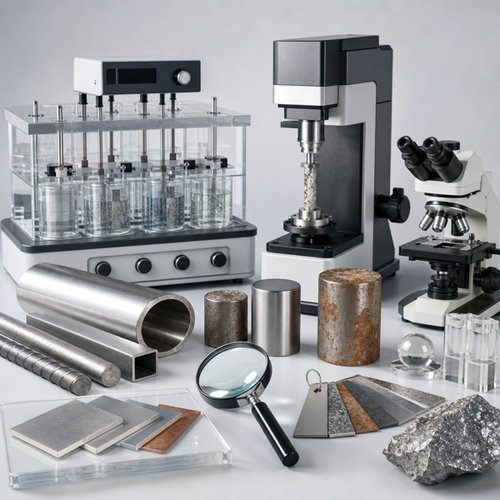
Metallurgy professionals have a reason to take note this May 2026, as two pivotal international standards have been released, defining the future of corrosion testing for metals and alloys. With the unveiling of ISO/TR 22801:2026 and the new edition of ISO 14993:2026, organizations in power transmission, manufacturing, coatings, and quality assurance are equipped with advanced methodologies to ensure the resilience and quality of metallic materials in challenging environments. This update marks an important step in standardization, enhancing both the accuracy and relevance of corrosion assessments globally.
Overview / Introduction
The field of metallurgy is the backbone of material durability and product reliability across a vast range of industries—from energy infrastructure to automotive manufacturing. International standards in metallurgy are essential for defining best practices, safeguarding performance, and ensuring products meet both regulatory and market demands. This May 2026 update focuses on cutting-edge corrosion testing protocols, enabling professionals to adapt to modern materials and real-world environments.
In this article, you will:
- Gain a clear understanding of the new corrosion testing standards
- Learn practical details about test apparatus, procedures, and report requirements
- Discover the impact on industry compliance and product quality
- Access expert insights into implementation and technical best practices
Detailed Standards Coverage
ISO/TR 22801:2026 - Corrosion Of Metals And Alloys Under AC Electric Current Conditions
Corrosion of metals and alloys — Testing methods for corrosion of conducting alloys in AC electric current condition
The newly published ISO/TR 22801:2026 delivers the first comprehensive protocol for evaluating AC-electric-current-induced corrosion in conducting metals and alloys. The main focus is on materials used in high-voltage power transmission systems, such as aluminium, copper, and their alloys, which are particularly vulnerable to field-induced corrosion mechanisms not addressed by traditional test methods.
Scope and Applicability
This standard is designed for assessing corrosion behavior in conducting alloys subjected to alternative current (AC) environments. Unlike standard salt spray and electrochemical tests, it factors in the effects of magnetic and electric fields produced by current-carrying conductors—a critical consideration for infrastructure operating above 10 kV.
The document outlines:
- Test specimen requirements, including preparation and assembly for both salt spray and electrochemical tests
- Simulation of service conditions, particularly for overhead transmission lines and electrical connectors
- Data reporting and interpretation, enabling comparative analysis across alloy types and environments
Key Requirements and Specifications
- Dual test methods: Salt spray under AC conditions and electrochemical polarization
- Current density determined by application context (e.g., transmission line loads)
- Reporting must include detailed calculation of corrosion rates and contextual factors
- Includes guidance on assembling specimens and specifying environmental parameters
Target Audience
- Power transmission manufacturers
- Electrical utility engineers
- Alloy producers and materials scientists
- Quality assurance and compliance officers
Practical Implications & Implementation
Organizations can now:
- Select optimal materials for use in high-voltage settings based on measurable, relevant corrosion resistance
- Integrate current-induced corrosion simulation into everyday quality assurance workflows
- Predict field performance and optimize maintenance based on laboratory data
Notable Changes
- Bridges the gap left by conventional corrosion tests (which ignore current effects)
- Facilitates more relevant material selection and product design for modern energy infrastructure
Key highlights:
- First-time formal testing methodology for AC-induced corrosion in conducting alloys
- Direct application for utility infrastructure and transmission systems
- Enables data-driven material optimization and lifecycle management
Access the full standard:View ISO/TR 22801:2026 on iTeh Standards
ISO 14993:2026 - Accelerated Corrosion Testing with Cyclic Salt Mist, Dry, and Wet Exposure
Corrosion of metals and alloys — Accelerated testing involving cyclic exposure to salt mist, dry and wet conditions
The revised ISO 14993:2026 presents a modern, harmonized procedure for assessing the corrosion resistance of metallic materials, coated or uncoated, through cyclic environmental exposure. Unlike the Neutral Salt Spray (NSS) test, this method simulates outdoor conditions more realistically by alternating salt mist, drying, and humid periods.
Scope and Applicability
This standard applies to:
- Bare metals and alloys
- Metallic coatings (anodic and cathodic)
- Conversion and anodic oxide coatings
- Organic coatings on metallic substrates
Key industries benefiting include:
- Automotive
- Construction
- Marine engineering
- Coatings and surface treatment
Key Requirements and Specifications
- Detailed guidance for preparing sodium chloride solutions (50 ± 5 g/l), pH adjustment (6.5 – 7.2), and apparatus setup
- Cyclic procedure: Specimens are exposed in turn to neutral salt mist, drying cycles, and humid conditions
- Flexible exposure duration and specimen types, allowing adaptation to a range of products and specifications
- Evaluation and reporting: Methods for post-test specimen treatment and result evaluation are outlined for both organic and inorganic coatings
Practical Implications & Implementation
- Reliable simulation of real-world outdoor, salt-contaminated environments
- Supports comparative quality assessments for corrosion protection measures
- Compatible with existing reference methods (e.g., ISO 11997-1 for scribe tests on coatings)
Notable Changes from Previous Edition
- Enhanced safety information for laboratory use
- Revised guidance on apparatus, now harmonized with ISO 16151 for greater procedural consistency
Key highlights:
- Most realistic accelerated corrosion test for outdoor salt exposure
- Applies to metals, metallic coatings, and organic finishes
- Updated for laboratory safety and apparatus harmonization
Access the full standard:View ISO 14993:2026 on iTeh Standards
Industry Impact & Compliance
Both ISO/TR 22801:2026 and ISO 14993:2026 provide powerful tools for industries where the integrity, safety, and predictability of metallic materials are critical. Adopting these standards will:
- Elevate product reliability: By simulating field-relevant corrosion modes, organizations can identify vulnerabilities before deployment, reducing costly failures
- Enhance regulatory compliance: Meeting the latest ISO standards is essential for market access, customer audits, and public sector procurement
- Streamline quality assurance: With clear, internationally recognized protocols, material qualification and supplier vetting become more objective and comparable
Compliance Considerations:
- Assess current test protocols against new standards promptly
- Update internal documentation, laboratory training, and supplier requirements
- Plan for a transition period—especially where revalidation of legacy products is needed
Risks of Non-Compliance:
- Increased probability of in-service failures, accidents, and warranty claims
- Competitive disadvantage in global tenders
- Risk of recalls, regulatory sanctions, or loss of market trust
Technical Insights
Shared Technical Requirements Across Standards
- Test environment replication: Both standards emphasize the importance of simulating realistic operating environments (whether AC-induced or cyclic salt/humidity exposure)
- Comprehensive specimen preparation: Proper sample assembly, material conditioning, and protocol adherence are essential for reproducibility and data integrity
- Detailed reporting requirements: Each standard requires full documentation of parameters, conditions, results, and contextual information for every test
Implementation Best Practices
- Laboratory Readiness:
- Update apparatus to meet new ISO requirements (especially for salt mist and AC corrosion simulation)
- Train laboratory personnel on both safety (hazardous chemicals, electric current) and procedure specifics
- Specimen Selection and Preparation:
- Carefully select samples that reflect real-world uses
- Document all preparation processes, including cleaning, coating, and scribing (where relevant)
- Data Analysis and Interpretation:
- Employ comparative data analysis to support material selection, product improvement, and supplier qualification
- Use the standardized test reports to communicate results to stakeholders
Testing and Certification Considerations
- ISO conformity is a growing requirement for international projects and cross-border trade
- Third-party certification bodies can validate compliance with ISO/TR 22801:2026 and ISO 14993:2026
- Maintain calibration records, training logs, and reference material documentation to streamline certification
Conclusion / Next Steps
The May 2026 metallurgy standards package delivers a leap forward for corrosion testing. By embracing ISO/TR 22801:2026 and the updated ISO 14993:2026, organizations can align quality assurance processes with the demands of modern infrastructure and customer expectations.
Key takeaways:
- New standards address the complex realities of AC-induced corrosion and outdoor salt exposures better than ever before
- Adoption will boost reliability, trust, and compliance for any organization relying on metallic materials and coatings
Recommendations:
- Review the full text of each standard to understand detailed requirements
- Audit current practices and initiate updates where necessary
- Train teams in new testing procedures and documentation protocols
- Monitor updates at iTeh Standards to stay ahead in global compliance
The future of metallurgy depends on rigorous, relevant standards—ensure your organization is prepared for the challenges and opportunities ahead.
Categories
- Latest News
- New Arrivals
- Generalities
- Services and Management
- Natural Sciences
- Health Care
- Environment
- Metrology and Measurement
- Testing
- Mechanical Systems
- Fluid Systems
- Manufacturing
- Energy and Heat
- Electrical Engineering
- Electronics
- Telecommunications
- Information Technology
- Image Technology
- Precision Mechanics
- Road Vehicles
- Railway Engineering
- Shipbuilding
- Aircraft and Space
- Materials Handling
- Packaging
- Textile and Leather
- Clothing
- Agriculture
- Food technology
- Chemical Technology
- Mining and Minerals
- Petroleum
- Metallurgy
- Wood technology
- Glass and Ceramics
- Rubber and Plastics
- Paper Technology
- Paint Industries
- Construction
- Civil Engineering
- Military Engineering
- Entertainment