


Electricity Metering Equipment Standards: Enhancing Accuracy, Security, and Productivity in Modern Energy Management
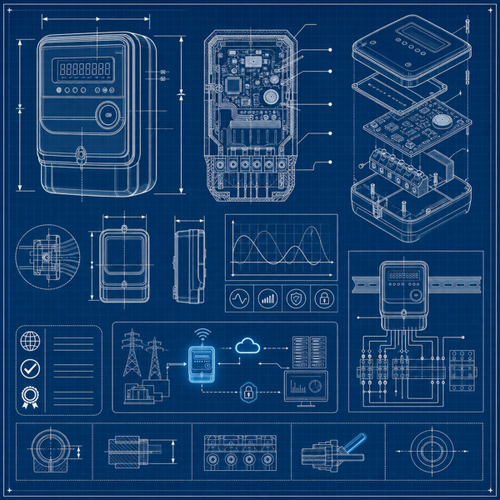
Electricity metering equipment is the unseen backbone of modern energy management, enabling fair billing, system efficiency, and reliable energy distribution in homes, businesses, and public infrastructure. As our world becomes more electrified and demands on energy grids increase, the need for consistent, secure, and highly accurate metering solutions is ever more critical. International standards serve as the foundation for trust and interoperability, ensuring not only precise measurement but also system security and scalability. In this guide, we delve into three pivotal standards—oSIST prEN ISO 12135:2026, SIST EN 50470-3:2022, and SIST EN 62053-23:2004—that collectively strengthen quality, compliance, and innovation across the electricity metering sector.
Overview / Introduction
From the power plants that generate our electricity to the meters that record our consumption, metrology and measurement standards play a pivotal role in ensuring accurate and consistent accountability of energy flows. These standards are vital for governments, utility operators, manufacturers, and end-users alike. As energy markets globalize, regulators and industry leaders increasingly require recognized compliance with international standards to enable data-driven management, competitive markets, and system reliability.
This article presents a comprehensive overview of three crucial standards in the electricity metering equipment landscape and allied sectors:
- oSIST prEN ISO 12135:2026 – Metallic materials – Unified method of test for the determination of quasistatic fracture toughness (ISO 12135:2021)
- SIST EN 50470-3:2022 – Electricity metering equipment, Part 3: Particular requirements – Static meters for AC active energy (class indexes A, B, and C)
- SIST EN 62053-23:2004 – Electricity metering equipment (a.c.) – Particular requirements – Part 23: Static meters for reactive energy (classes 2 and 3)
You’ll learn about each standard’s core requirements, benefits of implementation, industry impact, practical deployment strategies, and why adherence is now indispensable for businesses seeking to increase productivity, ensure data integrity, safeguard systems, and support scalable growth.
Detailed Standards Coverage
oSIST prEN ISO 12135:2026 – Unified Test Method for Metallic Fracture Toughness
Metallic materials – Unified method of test for the determination of quasistatic fracture toughness (ISO 12135:2021)
The integrity and longevity of metallic components in energy infrastructure—from meter housings to transmission towers—depend critically on their ability to withstand mechanical stresses and resist fracture. The oSIST prEN ISO 12135:2026 standard defines a comprehensive, unified methodology for determining the fracture toughness of homogeneous metallic materials under quasistatic (i.e., slow and steadily increasing) loading.
This standard is essential for:
- Manufacturers of metering equipment,
- Energy sector OEMs,
- Testing laboratories,
- Utilities maintaining safety-critical infrastructure.
Scope & Key Requirements
- Tested properties: Focuses on fracture toughness parameters—Stress Intensity Factor (K), Crack-Tip Opening Displacement (δ), J-Integral (J), and resistance (R) curves.
- Material coverage: Homogeneous metallic materials, especially in load-bearing applications.
- Specimen preparation: Defines notching, fatigue pre-cracking, precise measurement of crack lengths, and displacement monitoring.
- Testing modes: Suitable for both stable ductile crack extension (resistance curve measurement) and unstable (cleavage) fractures. Includes special guidance for ferritic steels, where fracture modes change based on temperature and microstructure.
- Data analysis: Specifies methods for record interpretation, qualification, and statistical analysis. However, it leaves the application/interpreting of results (number of tests or acceptance criteria) to the user or regulatory framework.
- Weldment testing: Provides cross-reference to ISO 15653 for welded joints and complex assemblies, expanding relevance for meter housings and grid hardware.
Implementation & Practical Implications
For metering equipment manufacturers and industry operators, implementing this standard:
- Guarantees that components withstand operational mechanical stresses and environmental factors.
- Aids in material selection and quality control, directly impacting product robustness and lifecycle.
- Empowers risk-averse sectors (e.g., utilities, grid operators) to quantify ductile-brittle fracture transition, supporting safety assessments and predictive maintenance.
Key highlights:
- Unified methodology for consistent toughness testing worldwide.
- Minimizes catastrophic failure risk via standardized evaluation.
- Lays the groundwork for cross-border acceptance of product safety assessments.
Access the full standard:View oSIST prEN ISO 12135:2026 on iTeh Standards
SIST EN 50470-3:2022 – Static Meters for AC Active Energy (Classes A, B, and C)
Electricity metering equipment - Part 3: Particular requirements - Static meters for AC active energy (class indexes A, B and C)
Static meters are the heart of modern energy metering, found in households, commercial buildings, industrial settings, and utility substations. SIST EN 50470-3:2022 specifies the particular requirements for static (electronic) meters that measure and record AC active energy.
This standard underpins:
- Smart metering rollouts and digital utility infrastructure,
- Commercial and industrial metering applications,
- Compliance with European regulatory directives (e.g., MID: Measuring Instruments Directive),
- National and cross-border energy settlements.
Scope & Applicability
- Accuracy classes: Covers meters in classes A, B, and C—ensuring choice and flexibility for residential, commercial, and industrial accuracy needs.
- Type testing: Applies to product type-testing for voltage up to 1000 V AC (line-to-neutral).
- Functionality: Encompasses both integrated and detachable displays, single and poly-phase variants, and meters with potential additional features (e.g., data communication, load control).
- Exclusions: Excludes meters above 1000 V, portable meters, non-permanently connected devices, and certain specialized meter types such as rolling stock or laboratory equipment.
Key Technical Specifications
- Standardizes the reference electrical values and acceptable ranges for voltage, current, and frequency (aligned with EN IEC 62052-11:2021/A11:2022).
- Sets stringent marking/documentation, meter constant, initial start-up, and test protocols (no-load, repeatability, starting current, etc.).
- Defines maximum permissible errors (MPE) for each accuracy class in real operational conditions (including voltage/current variations, influence of environmental factors, temperature drift, frequency deviation).
- Strong focus on data protection, software integrity, and defense against measurement corruption—a response to modern threats in smart energy systems.
- Additional annexes address error calculation, accuracy classes, and EU legislative alignment.
Practical Implementation
For businesses, utilities, and energy service providers, compliance with SIST EN 50470-3:2022 means:
- Ensuring customer trust through precise, tamper-resistant billing.
- Enabling integration with advanced smart grid functions (e.g., remote reading, time-of-use pricing).
- Aligning with legal metrology frameworks and meeting audit/inspection requirements for both regulators and corporate energy management.
- Enhancing competitiveness through recognized performance benchmarks and cross-border interoperability.
Key highlights:
- Harmonizes meter performance and testing across Europe and beyond.
- Encourages advanced features: power quality, load profiling, secure communications.
- Supports industry-wide shift to digital, scalable energy management.
Access the full standard:View SIST EN 50470-3:2022 on iTeh Standards
SIST EN 62053-23:2004 – Static Meters for Reactive Energy (Classes 2 and 3)
Electricity metering equipment (a.c.) - Particular requirements - Part 23: Static meters for reactive energy (classes 2 and 3)
Management of reactive power is increasingly important as power grids face higher loads, renewable integration, and dynamic demands. SIST EN 62053-23:2004 specifies the type-testing and performance criteria for static (electronic) meters used to measure reactive energy in alternating current systems—critical for network stability, power factor billing, and energy efficiency.
This standard is relevant for:
- Utility meter manufacturers,
- Grid operators,
- Major energy consumers (commercial and industrial),
- Laboratories conducting conformity assessment.
Scope and Coverage
- Meter classes: Defines performance for accuracy classes 2 and 3 meters, suitable for a range of utility and industrial settings.
- Type: Applies to newly manufactured, static var-hour (reactive energy) meters for indoor and outdoor use.
- Frequency: Covers 50 Hz and 60 Hz systems, embracing global market requirements.
- Meter configuration: Addresses integrated meters (measuring element and register(s) in the same housing), with allowance for multi-energy meters and meters with extended features (as long as corresponding standards are also observed).
- Exclusions: Does not apply to portable, high-voltage (>600 V), or reference meters, nor data interfaces.
Key Requirements and Specifications
- Mandates precise limits for power consumption, mechanical robustness, and resistance to environmental and electrical influences (short-time overcurrents, self-heating, etc.).
- Prescribes accuracy limits under varying operational conditions, including current/voltage fluctuations and environmental stresses (temperature, humidity).
- Details test methodologies for starting current, no-load conditions, and output characteristics.
- Provides clear reference conditions, error interpretation, and alignment with broader IEC 62052 and 62059 dependability requirements.
- Requires clear documentation, marking, and traceable calibration features.
Implementation Implications
For grid and utility professionals, adopting SIST EN 62053-23:2004 ensures:
- Accurate accounting of reactive energy, crucial for billing, demand-side management, and network planning.
- Ability to implement power factor correction schemes and avoid penalties.
- Enhanced reliability and traceability of metering data—supporting compliance and future grid automation.
Key highlights:
- Establishes solid accuracy and dependability benchmarks for reactive energy metering.
- Supports fair, transparent network tariffing and energy efficiency programs.
- Encourages robust meter design for diverse environments.
Access the full standard:View SIST EN 62053-23:2004 on iTeh Standards
Industry Impact & Compliance
The practical effects of these standards ripples across the entire energy value chain:
Why Standards are Essential Today
- Trust & Transparency: Standards deliver confidence to regulators, customers, and business partners via traceable and repeatable performance.
- Global Trade & Interoperability: Adherence to internationally recognized specifications (ISO, IEC, EN) opens markets and streamlines procurement for utilities and vendors across borders.
- Risk Mitigation: Structured methodologies (such as those in ISO 12135) reduce catastrophic failure—preventing recalls, outages, and safety incidents.
- Security & Data Integrity: As smart metering expands, standards help defend against fraud, tampering, and cyber-attacks with explicit provisions for software protection and metrological data reliability.
- Scalability: Enforcement of unified, legally recognized methods (e.g., via SIST EN 50470-3) supports mass deployment and easy upgrades within smart grid and digital utility infrastructures.
Compliance Considerations
- Legal requirements: Many jurisdictions make compliance with these standards mandatory for market access, utility procurement, and regulatory acceptance.
- Audit/Inspection readiness: Adoption ensures preparedness for routine audits, product certifications, and independent verification.
- Insurance & Warranty: Insurers increasingly require proof of adherence to standards for liability and warranty coverage.
Benefits of Adoption
- Increased productivity: Reduced risk of operational downtime, easier integration of new data analytics and automation tools, straightforward training and onboarding.
- Enhanced security: Verified software/firmware controls and secure measurement data defend against malfeasance and system breaches.
- Future-proofing: Standards support scalable and modular upgrades—adapting to next-generation technologies and evolving regulatory requirements.
Consequences of Non-Compliance
- Market exclusion or product bans
- Liability for inaccurate billing or network failures
- Loss of trust and reputational harm
- Increased operational costs due to inefficiency and remediation
Implementation Guidance
Navigating the adoption and deployment of these standards requires a deliberate, structured approach. Here are best practices and resources to support organizations:
Common Implementation Approaches
- Gap Analysis: Compare existing equipment, processes, or product specifications against the standards’ requirements. Identify non-conformities and create an action plan.
- Staff Training: Ensure engineering, quality assurance, and compliance teams understand the scope and requirements.
- Documentation & Traceability: Maintain clear records of materials, test results, calibration, and software versions—crucial for type approval and future audits.
- Supplier and Partner Alignment: Require that vendors and OEM partners maintain compliance; request certifications and independent lab reports where applicable.
- Internal Testing/Verification: Use accredited labs for type-testing (for metering hardware) and regularly validate field-deployed equipment for ongoing conformance.
Best Practices
- Regular Standard Review: Keep abreast of updates or technical corrigenda (e.g., oSIST prEN ISO 12135:2026 includes formula corrections and improved definitions).
- Holistic View: Integrate metering equipment standards with broader operational and ICT security policies for smart meters and infrastructure.
- Participate in Standards Communities: Join relevant national and international technical committees to anticipate changes and influence future revisions.
Resources
- Access standards directly via the iTeh Standards portal for full, authoritative documentation.
- Utilize manufacturer guidance and independent laboratory services for specialized interpretation or certification needs.
- Engage with professional bodies, online forums, and training organizations specializing in metrology, legal compliance, and smart grid technology.
Conclusion / Next Steps
In the era of smart grids, sustainable energy, and heightened operational demands, adherence to international standards for metrology and electricity metering equipment is not merely recommended—it is essential. The three standards highlighted—oSIST prEN ISO 12135:2026, SIST EN 50470-3:2022, and SIST EN 62053-23:2004—provide a cohesive framework for robust, secure, and accurate measurement solutions across the energy sector.
Key takeaways:
- Standards enforce accuracy and fairness in billing, enable compliance, and foster operational excellence.
- They protect against both technical and security risks, future-proofing organizations against evolving threats and system demands.
- Immediate action—through training, process alignment, and procurement strategies—positions organizations to benefit from increased productivity, security, and scalable deployment.
Recommendations:
- Conduct a standards compliance review for your current metering operations or product lineup.
- Engage stakeholders from engineering, compliance, and IT/OT security to ensure holistic adoption.
- Leverage authoritative resources such as iTeh Standards for up-to-date, reliable access to global standard documents.
Ready to enhance your metering systems or product offerings? Explore the detailed content of these standards and stay a step ahead in accurate, secure, and reliable energy measurement with iTeh Standards.
Categories
- Latest News
- New Arrivals
- Generalities
- Services and Management
- Natural Sciences
- Health Care
- Environment
- Metrology and Measurement
- Testing
- Mechanical Systems
- Fluid Systems
- Manufacturing
- Energy and Heat
- Electrical Engineering
- Electronics
- Telecommunications
- Information Technology
- Image Technology
- Precision Mechanics
- Road Vehicles
- Railway Engineering
- Shipbuilding
- Aircraft and Space
- Materials Handling
- Packaging
- Textile and Leather
- Clothing
- Agriculture
- Food technology
- Chemical Technology
- Mining and Minerals
- Petroleum
- Metallurgy
- Wood technology
- Glass and Ceramics
- Rubber and Plastics
- Paper Technology
- Paint Industries
- Construction
- Civil Engineering
- Military Engineering
- Entertainment