


Electricity Metering Equipment Standards: Ensuring Accuracy, Reliability, and Business Optimization
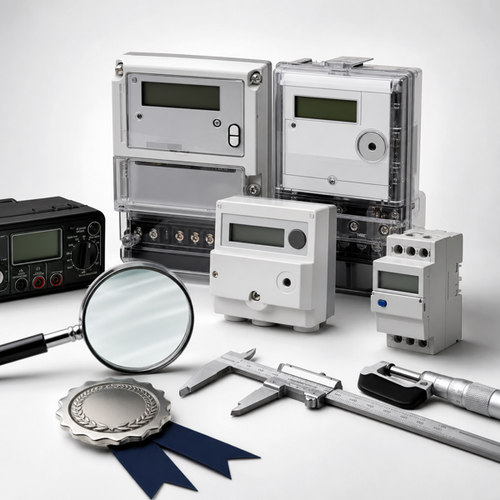
Electricity Metering Equipment Standards: Ensuring Accuracy, Reliability, and Business Optimization
In today’s data-driven and efficiency-focused world, businesses rely more than ever on accurate and secure measurement of electricity. The standards governing electricity metering equipment are the backbone of trust, security, and operational excellence across the energy sector and related industries. Whether you’re a utility provider, an equipment manufacturer, an industrial operator, or an energy-intensive business, understanding and implementing the right metering standards is critical. This article explores three foundational international standards—oSIST prEN ISO 12135:2026, SIST EN 50470-3:2022, and SIST EN 62053-23:2004—highlighting how they optimize operations, ensure scaling capacity, and deliver security and productivity benefits for organizations of all sizes.
Overview / Introduction
The accurate measurement and management of electricity underpin everything from residential billing to industrial power quality. International standards for electricity metering equipment cover a spectrum of requirements, from the mechanics of fracture toughness in meter materials to stringent protocols for active and reactive energy measurement. Compliance with such metrology standards is not just a regulatory checkbox—it’s a business imperative that enhances productivity, builds customer trust, improves security, and supports scalable business models.
In this comprehensive guide, you’ll discover:
- The core requirements and benefits of each featured standard
- Who needs to apply these standards
- How standards facilitate business scaling, productivity, and security
- Practical steps and best practices for adopting standards
By the end of this article, professionals and the wider public will understand why electricity metering standards must be at the heart of any modern energy operation or manufacturing business.
Detailed Standards Coverage
oSIST prEN ISO 12135:2026 – Unified Method of Test for the Determination of Quasistatic Fracture Toughness
Full Standard Title:Metallic materials – Unified method of test for the determination of quasistatic fracture toughness (ISO 12135:2021)
This international standard specifies a comprehensive, unified method to determine the quasistatic fracture toughness of homogeneous metallic materials. It addresses how materials used within metering equipment react under slowly applied, steadily increasing loads, focusing on how cracks initiate and propagate. The core of the standard lies in measurement of fracture toughness parameters (K, δ, J, and R-curves), which are fundamental for understanding material durability and product lifetime—critical factors for businesses supplying or maintaining energy measurement devices.
Scope and Applicability
- Covers testing of notched and fatigue-precracked specimens under quasistatic loading.
- Applicable to metallic materials in electricity meters, including weldments with special requirements (see ISO 15653).
- Focuses on stable and unstable crack extension in ductile and ferritic materials.
- Provides guidance (though not precise requirements) on using statistical techniques to capture variance in fracture toughness results, particularly for reliability-critical applications.
- Does NOT specify how to interpret or apply test results—users must reference application-specific requirements.
Key Requirements & Features
- Specimen Preparation: Notching, fatigue precracking, and geometric specifications for test samples.
- Test Execution: Control of displacement rate, environmental conditions, calibration, force and displacement measurement.
- Measurement Parameters: Defines symbols, test variables, and exact calculation methods for parameters like CTOD (crack tip opening displacement), J-integral, and resistance curves.
- Data Qualification: Procedures for accurate and repeatable results, including post-test measurements, record keeping, and qualification of results.
- Analysis Procedures: Guidelines for both multiple-specimen and single-specimen resistance curve methods.
Who Should Comply?
- Manufacturers of metallic components for metering equipment and test laboratories.
- Utilities, regulators, and large-scale power operators evaluating meter or infrastructure durability.
- Welding and joining specialists supplying parts for meter casings or internals.
Practical Implications
Implementing this standard drives higher reliability, longevity, and safety for metering equipment. Test methods allow organizations to reduce risk of costly product failures, improve quality control, and assure robust mechanical properties—a crucial foundation for accurate and trustworthy energy metering.
Key highlights:
- Unified, internationally accepted methodology for fracture toughness testing
- Enhances trust in metering device durability and integrity
- Supports risk reduction and product reliability for scaling operations
Access the full standard:View oSIST prEN ISO 12135:2026 on iTeh Standards
SIST EN 50470-3:2022 – Static Meters for AC Active Energy (Class Indexes A, B and C)
Full Standard Title:Electricity metering equipment – Part 3: Particular requirements – Static meters for AC active energy (class indexes A, B and C)
As the bedrock metrology standard for billing electricity consumption, SIST EN 50470-3:2022 lays down the particular requirements for static watt-hour meters measuring active energy in AC networks. It applies broadly to meters used in commercial, industrial, and residential settings, ensuring that such meters provide accurate, reliable data that supports both fair billing and robust grid management.
Scope and Applicability
- Applies to static (electronic) watt-hour meters of accuracy classes A, B, and C for use on 50 Hz or 60 Hz AC networks up to 1,000V.
- Covers both direct-connected and transformer-operated meters (with LPITs, if tested together).
- Includes specifications for meter construction, integrated or remote displays, and matching installation equipment.
- Recognizes that modern meters often include auxiliary functions (communications, power quality, recording), but focuses only on active energy measurement for billing.
- Excludes portable meters, laboratory equipment, reference meters, metering systems with remote components, vehicle/rolling stock meters, and detection of meter tampering (but highlights broader system-level fraud controls).
Key Requirements & Features
- General Construction: Physical enclosure, environmental durability, marking/documentation, and user interface requirements for easy and unambiguous reading.
- Accuracy and Verification: Defines acceptable error margins under normal and varied operating conditions (current, voltage, frequency, and temperature), classifying meters into A, B, or C for tighter tolerances.
- Type Tests: Rigorous type test procedures to verify compliance, including start-up, no-load, repeatability, and durability assessments.
- Influencing Quantities: Evaluation of performance under varying electrical and environmental states (e.g., power factor, temperature ranges, voltage fluctuation).
- Software Integrity: Requirements for metrologically relevant software features, data protection, and parameter security.
Who Should Comply?
- Manufacturers and suppliers of electricity metering equipment for homes, commercial buildings, and industry.
- Utilities, grid operators, and energy service companies deploying metering infrastructure.
- Installers and certifying bodies responsible for ensuring metrology compliance.
Practical Implications
Compliance with SIST EN 50470-3:2022 is often a regulatory prerequisite for market access and is critical in ensuring fair and transparent billing. The strict verification process reduces disputes, enables efficient energy management, and supports scalable rollouts of advanced metering infrastructure (AMI or smart meters).
Key highlights:
- Ensures trustworthy, accurate measurement for billing and management
- Supports grid modernization and smart metering
- Reduces fraud and billing disputes, enhancing customer confidence
Access the full standard:View SIST EN 50470-3:2022 on iTeh Standards
SIST EN 62053-23:2004 – Static Meters for Reactive Energy (Classes 2 and 3)
Full Standard Title:Electricity metering equipment (a.c.) – Particular requirements – Part 23: Static meters for reactive energy (classes 2 and 3)
Reactive energy—essential for efficient operation of electric grids and accurate accounting of energy flows—requires its own specialized meters. SIST EN 62053-23:2004 sets the requirements for static (electronic) meters used to measure alternating current (AC) reactive energy in utility networks.
Scope and Applicability
- Applies only to newly manufactured static var-hour (reactive energy) meters of accuracy classes 2 and 3.
- Focuses on meters used for billing, energy balancing, and load analysis in AC systems (50 Hz or 60 Hz).
- Applicable for both indoor and outdoor installations with integrated measuring and display functions.
- Excludes portable meters, meters for voltages above 600V, reference standard meters, data interfaces, and systems with remote display or data modules.
Key Requirements & Features
- Electrical Requirements: Precise limits on power consumption (for voltage and current circuits), electrical safety, and electromagnetic compatibility.
- Performance Under Environmental Conditions: Standards for mechanical, climatic, and operational durability to ensure year-round reliable performance.
- Accuracy: Strict error tolerance guidelines for various environmental conditions and load profiles.
- Testing: Type tests for error limits, influence quantities (e.g., harmonics, voltage imbalance), starting and no-load conditions, and reference test conditions.
- Standards Integration: Intended for use with broader metrology and dependability standards (e.g., IEC 62052-11, IEC 62059).
Who Should Comply?
- Meter manufacturers and system integrators for grid operators and energy providers.
- Utilities managing network power factor and reactive power costs.
- Industrial sites requiring detailed reactive energy data for compliance or optimization.
Practical Implications
With the transition to smarter grids and dynamic energy billing, accurate reactive metering is vital for proper load control, network fee allocation, and efficient utilization of grid capacity. By setting transparent, internationally harmonized requirements, this standard supports utilities in reducing losses, optimizing grid operation, and integrating advanced power quality management.
Key highlights:
- Establishes robust, repeatable criteria for reactive energy meter performance
- Supports accurate network balancing, grid optimization, and fair cost distribution
- Ensures compatibility with international grid and power quality frameworks
Access the full standard:View SIST EN 62053-23:2004 on iTeh Standards
Industry Impact & Compliance
Why Implementing These Standards Matters
Modern businesses in the energy generation, distribution, and heavy industrial sectors face regulatory scrutiny, high cost pressure, and rising expectations for transparency. Implementing the latest electricity metering standards delivers measurable benefits:
- Increased Productivity: Accurate measurement allows precise billing, demand-side management, and reduced losses, improving bottom-line results.
- Enhanced Security: Built-in data integrity, test protocols, and software protections safeguard against tampering and fraudulent conversion, protecting both providers and consumers.
- Scalability: Harmonized protocols support rapid, reliable deployment of new metering infrastructure, whether scaling local networks or deploying smart meters in multi-national operations.
- Customer Trust & Dispute Reduction: Transparent, internationally recognized standards minimize billing disputes, strengthen regulatory compliance, and differentiate providers in a competitive market.
- Risk Mitigation: Through robust mechanical and electrical requirements, standards reduce recall and maintenance costs, helping organizations avoid costly compliance failures and public relations issues.
Compliance Considerations
- Utilities and industrial operators are often mandated by law to use metering equipment compliant with relevant international standards.
- Periodic type tests and certifications are required to ensure ongoing meter performance.
- Non-compliance can lead to regulatory penalties, commercial disputes, and loss of customer trust.
- Regular staff training, process audits, and equipment upgrades are necessary to maintain compliance.
Implementation Guidance
Common Implementation Approaches
Implementing electricity metering equipment standards requires a structured approach:
- Gap Assessment: Review existing metering equipment, practices, and policies against standard requirements. Identify non-conformances and set priorities for upgrade or replacement.
- Procurement & Vendor Selection: Ensure new equipment, components, and software come with third-party certification or evidence of compliance.
- Staff Training: Train metering technicians, engineers, and compliance officers on requirements, type testing, installation, maintenance, and ongoing verification.
- Operational Integration: Embed compliance in standard operating procedures for installation, calibration, data collection, and reporting.
- Monitoring & Auditing: Set up periodic audits, remote diagnostics, and reporting mechanisms to verify ongoing compliance and quickly address issues.
Best Practices for Adopting These Standards
- Collaborate with accredited laboratories or certified testing companies for performance verification.
- Adopt smart metering software solutions that are regularly updated for security and standards compliance.
- Develop a document management system to track certifications, calibration records, and compliance documentation.
- Engage in industry forums or user groups to stay abreast of evolving requirements and emerging best practices.
- Consider lifecycle planning, factoring in the durability and obsolescence periods of metering hardware.
Resources
- Links to authoritative standards publications (such as iTeh Standards)
- Training providers and metrology institutes
- Industry webinars, whitepapers, and regulatory guidance
Conclusion / Next Steps
Electricity metering goes far beyond simple measurement—it’s at the core of modern, scalable, and transparent energy management. The standards surveyed in this article—covering fracture toughness, active energy, and reactive energy measurements—together underpin the accuracy, reliability, and security demanded by today’s businesses and utilities.
Key takeaways:
- Implementing current metrology standards is essential for cost-effective, compliant, and trusted operations.
- These standards support productivity improvements, risk mitigation, and digital transformation—all while enabling scalability and maintaining customer trust.
- Ongoing compliance requires careful equipment selection, regular training, and proactive monitoring.
Recommendations:
- Audit your current metering equipment and processes for compliance gaps.
- Prioritize adoption of certified metering solutions and staff training on the relevant standards.
- Explore the full text of the featured standards for detailed requirements and implementation support.
- Stay updated by subscribing to regulatory updates and participating in industry associations.
Explore the latest metrology and electricity metering equipment standards at iTeh Standards to unlock the next level in operational excellence and regulatory confidence.
Categories
- Latest News
- New Arrivals
- Generalities
- Services and Management
- Natural Sciences
- Health Care
- Environment
- Metrology and Measurement
- Testing
- Mechanical Systems
- Fluid Systems
- Manufacturing
- Energy and Heat
- Electrical Engineering
- Electronics
- Telecommunications
- Information Technology
- Image Technology
- Precision Mechanics
- Road Vehicles
- Railway Engineering
- Shipbuilding
- Aircraft and Space
- Materials Handling
- Packaging
- Textile and Leather
- Clothing
- Agriculture
- Food technology
- Chemical Technology
- Mining and Minerals
- Petroleum
- Metallurgy
- Wood technology
- Glass and Ceramics
- Rubber and Plastics
- Paper Technology
- Paint Industries
- Construction
- Civil Engineering
- Military Engineering
- Entertainment