


Measurement of Electrical and Magnetic Quantities: Key Standards for Modern Businesses
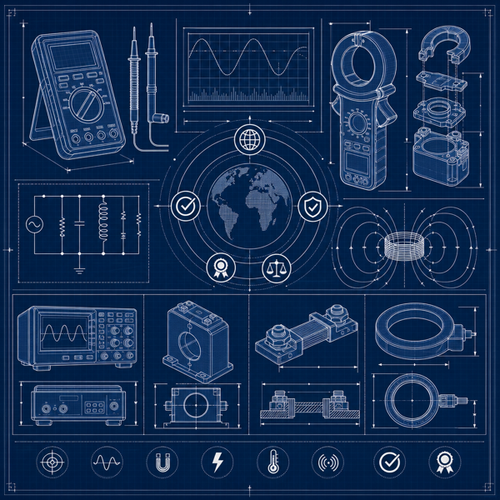
Ensuring accurate measurement of electrical and magnetic quantities is foundational in today’s energy, industrial, and technology sectors. With businesses facing rising demands for efficiency, scalability, and safety, aligning with globally recognized standards is no longer optional—it’s a strategic necessity. This article provides an overview of four pivotal international standards in metrology and measurement, shedding light on their role in enhancing productivity, fortifying security, and enabling organizations to scale with confidence. Whether you’re a utility provider, manufacturer, or innovator, understanding and implementing these standards can drive operational excellence and foster robust compliance in a rapidly evolving landscape.
Overview / Introduction
In modern industry, the measurement of electrical and magnetic quantities underpins operational success, safety, and innovation. Accurate measurements not only ensure technical performance but also support regulatory compliance and customer trust. The rapid growth of smart grids, high-voltage installations, superconducting technologies, and advanced safety equipment places even more emphasis on rigorous, approved measurement procedures. As businesses increasingly strive for global competitiveness and secure operations, adopting international standards has become mission-critical.
In this guide, you will:
- Discover the foundations and benefits of four essential IEC standards in measurement and metrology.
- Learn who should comply, how implementation works in practice, and what features set these standards apart.
- Gain actionable advice for leveraging these standards to increase productivity, ensure safety, and support business scaling.
Whether you are new to electrical measurement standards or looking to deepen your expertise, this resource is designed to be both practical and accessible.
Detailed Standards Coverage
IEC 60060-3:2006 – High-voltage Test Techniques: On-site Testing Requirements
High-voltage test techniques – Part 3: Definitions and requirements for on-site testing
High-voltage equipment forms the backbone of modern electricity infrastructure, ensuring efficient power transmission and system stability. IEC 60060-3:2006 lays out the essential requirements for conducting on-site high-voltage tests on electrical apparatus, complementing the factory-based protocols detailed in earlier parts of the IEC 60060 series.
This standard specifically addresses tests using:
- Direct voltage
- Alternating voltage
- Lightning impulse voltage (aperiodic or oscillating)
- Switching impulse voltage (aperiodic or oscillating)
- (For special applications: very low frequency and damped alternating voltage)
The procedures ensure that equipment has not suffered degradation during transportation, installation, or repair, and that insulation and operational integrity meet specified thresholds. Maintaining consistent measurement practices for diverse voltage waveforms is challenging, given the influence of environmental factors at on-site locations. IEC 60060-3 provides:
- Definitions of critical concepts such as "on-site test", "impulse voltage", and insulation types
- Requirements for measuring systems (including accuracy, performance checks, and calibration records)
- Detailed test procedures for various voltage types, including withstand voltage tests and diagnostic measurements
- Guidelines for classification of insulation (self-restoring vs. non-self-restoring) and their implications
Industries and utilities operating high-voltage apparatus above 1 kV, such as transmission and distribution companies, large industrial plants, and power generation facilities, are the primary users. Integrating these rigorous test techniques helps organizations avoid costly failures, ensure personnel safety, and comply with both regulatory and contractual expectations.
Key highlights:
- Standardizes on-site high-voltage test procedures, reducing measurement errors
- Covers tests for multiple voltage waveforms under real-world conditions
- Provides requirements for measuring system approval and calibration traceability
Access the full standard:View IEC 60060-3:2006 on iTeh Standards
IEC 61788-4:2001 – Measurement of Residual Resistance Ratio for Nb-Ti Superconductors
Superconductivity – Part 4: Residual Resistance Ratio Measurement – Residual resistance ratio of Nb-Ti composite superconductors
Superconductors are at the forefront of modern applications such as medical imaging, high-field magnets, and quantum computing. The residual resistance ratio (RRR) is a vital quality parameter for Nb-Ti composite superconductors: it reflects material purity and the ability of the copper matrix to conduct heat and electricity at cryogenic temperatures.
IEC 61788-4:2001 specifies a reference measurement method for determining the RRR of Nb-Ti superconductors with:
- Filaments of Nb-Ti embedded in matrices of Cu, Cu-Ni, or Cu/Cu-Ni
- Cross-sectional area less than 3 mm² and RRR below 350
- Rectangular or round conductor cross-sections
All measurements are performed in the absence of a magnetic field to avoid confounding effects. The standard outlines:
- Four-probe measurement techniques at room temperature and just above the superconducting transition (using liquid helium)
- Requirements for specimen handling (avoiding mechanical strains)
- Corrections for bending strain
- Calculation procedures for RRR, including accuracy requirements (coefficient of variation ≤ 5%)
Researchers, labs, and manufacturers involved in superconductor development and quality assurance benefit from this standardized approach. It ensures data consistency, enables valid inter-laboratory comparisons, and underpins reliable, high-performance devices for industry and research.
Key highlights:
- Defines a reference RRR measurement method for Nb-Ti composite superconductors
- Describes best practices for specimen preparation, measurement, and data reporting
- Ensures global comparability of superconductivity test data
Access the full standard:View IEC 61788-4:2001 on iTeh Standards
IEC 62792:2015 – Measurement of Electroshock Weapon Output
Measurement method for the output of electroshock weapons
Electroshock weapon (ESW) technology plays a central role in security, law enforcement, and personal self-defense. Differing measurement techniques and parameters have historically led to confusion, making it difficult for stakeholders to compare devices, assess safety, and ensure consistent regulation.
IEC 62792:2015 provides a unified measurement method for the electrical outputs—both current and voltage—delivered by electroshock weapons. The standard is applicable to all ESWs—including contact, wired, and wireless types—used by law enforcement, military, manufacturers, researchers, and policy makers.
What sets this standard apart is its comprehensive scope, which covers:
- Minimum performance characteristics for measurement instrumentation (accuracy, bandwidth, traceability)
- Calibration and environmental guidelines for reproducible results
- Obligations for waveform acquisition, including impulse amplitude, pulse duration, energy per pulse, and peak-to-peak values
- Standardization of terminology, parameters, and measurement procedures
By promoting precise, reliable measurement and clear communication, IEC 62792 helps:
- Manufacturers to validate and market compliant products
- Regulatory authorities to develop enforceable safety standards
- Users and researchers to objectively compare device performance and assess physiological impact
Key highlights:
- Unifies output measurement methods across ESW types for global comparability
- Lays the foundation for safe-use regulations and product certifications
- Reduces ambiguity in reporting and interpretation of ESW performance data
Access the full standard:View IEC 62792:2015 on iTeh Standards
IEC TS 62056-6-9:2016 – Smart Meter Data Exchange between CIM and DLMS/COSEM Systems
Electricity metering data exchange – The DLMS/COSEM suite – Part 6-9: Mapping between the Common Information Model message profiles (IEC 61968-9) and DLMS/COSEM (IEC 62056) data models and protocols
In the era of smart grids and advanced metering infrastructure, seamless data exchange between enterprise resource planning (ERP), control systems, and diverse metering devices is critical for operational agility and utility innovation. IEC TS 62056-6-9:2016 delivers a technical specification for mapping information between CIM-based ERP or third-party systems and DLMS/COSEM-based metering systems.
This specification enables:
- Consistent exchange of messages related to metering (e.g., meter readings, tariffs, remote connect/disconnect commands)
- Interoperability between systems using different data models and protocols
- Support for critical smart grid use cases, such as demand management, real-time reporting, load control, firmware updates, and quality of service monitoring
The standard describes general architecture and provides detailed mapping tables for:
- CIM message constructs, verbs, nouns, and data type mapping
- Object and interface class correspondence between systems
- Common use cases and scenarios for utilities and third-party vendors
The primary audience is utility IT architects, vendors of data management and meter-reading solutions, and organizations deploying smart metering networks. Reliable, standardized data exchange simplifies integration, ensures data integrity and security, and drives digital transformation at scale.
Key highlights:
- Bridges the gap between ERP/business systems and advanced metering devices
- Enables robust, secure, and scalable smart grid communications
- Facilitates automation of metering and energy management functions
Access the full standard:View IEC TS 62056-6-9:2016 on iTeh Standards
Industry Impact & Compliance
Compliance with these measurement standards is more than a check-box exercise—it unlocks tangible value across diverse industries:
Enhanced Productivity: Rigorous test procedures reduce downtime, prevent asset failures, and optimize maintenance cycles. This keeps production lines, power infrastructure, and device development projects running smoothly.
Operational Security: User safety, asset protection, and regulatory compliance are strengthened by universally accepted test methods and measurement techniques outlined in these standards.
Scalability: With harmonized data models (like CIM and DLMS/COSEM) and clear measurement criteria, organizations can expand or upgrade operations without compatibility or quality concerns.
Innovation Enablement: New applications—from advanced superconducting magnets to AI-driven smart grids—require robust validation and communication protocols. Only with standardization can businesses realize these opportunities reliably.
International Acceptance: Adoption of IEC standards ensures interoperability and simplifies access to global markets.
Risks of non-compliance include equipment failures, regulatory penalties, increased liability exposure, and loss of customer confidence. For mission-critical infrastructure and high-reliability applications, following these standards is essential.
Implementation Guidance
Adopting international measurement standards requires a structured, phased approach:
Gap Assessment: Analyze your current testing, measurement, and data exchange practices versus standard requirements. Identify tools, skills, and processes that need adjustment.
Training and Competence: Invest in staff training to ensure correct interpretation and application of measurement protocols. Leverage resources from standardization bodies and platforms like iTeh Standards.
Instrument Selection and Calibration: Procure approved measuring instruments and ensure traceability of calibration (as per IEC 60060-3 and IEC 62792). Maintain performance records and periodic verification routines.
Procedural Documentation: Document procedures following the detailed requirements laid out in each standard—including test record keeping (as described in IEC 60060-3 and IEC 61788-4).
Systems Integration: For smart metering, map existing data flows to the CIM and DLMS/COSEM models. Use IEC TS 62056-6-9 as a reference to configure interfaces, automate reporting, and enable remote device control.
Continuous Review and Improvement: Stay updated with amendments, new editions, and emerging best practices. Use platforms like iTeh Standards to monitor changes and ensure ongoing compliance.
Best practices:
- Engage with standardization communities and user forums for peer support
- Use pilot projects to test compliance before large-scale rollouts
- Establish clear lines of responsibility for measurement, validation, and reporting
- Secure management commitment for sustained resource allocation
For further resources, templates, or training sessions, refer to iTeh Standards and the official IEC technical documentation for each standard listed above.
Conclusion / Next Steps
As electrical systems evolve, the accurate measurement of electrical and magnetic quantities will remain a foundation for innovation, safety, and operational excellence. The four IEC standards explored here each address a vital aspect of measurement, from high-voltage testing to smart grid integration. By embedding these standards into their processes, organizations can:
- Increase productivity by minimizing error and maximizing system availability
- Enhance operational security, safety, and regulatory compliance
- Scale confidently with interoperable systems and validated devices
To stay ahead, regularly audit your measurement protocols, invest in ongoing competence development, and leverage authoritative standards from iTeh Standards to ensure best-in-class practices.
Explore these and other international standards on iTeh Standards for authoritative guidance on measurement, metrology, and beyond.
Categories
- Latest News
- New Arrivals
- Generalities
- Services and Management
- Natural Sciences
- Health Care
- Environment
- Metrology and Measurement
- Testing
- Mechanical Systems
- Fluid Systems
- Manufacturing
- Energy and Heat
- Electrical Engineering
- Electronics
- Telecommunications
- Information Technology
- Image Technology
- Precision Mechanics
- Road Vehicles
- Railway Engineering
- Shipbuilding
- Aircraft and Space
- Materials Handling
- Packaging
- Textile and Leather
- Clothing
- Agriculture
- Food technology
- Chemical Technology
- Mining and Minerals
- Petroleum
- Metallurgy
- Wood technology
- Glass and Ceramics
- Rubber and Plastics
- Paper Technology
- Paint Industries
- Construction
- Civil Engineering
- Military Engineering
- Entertainment