


July 2026: Metrology and Measurement Standards Advance Accuracy and Sustainability
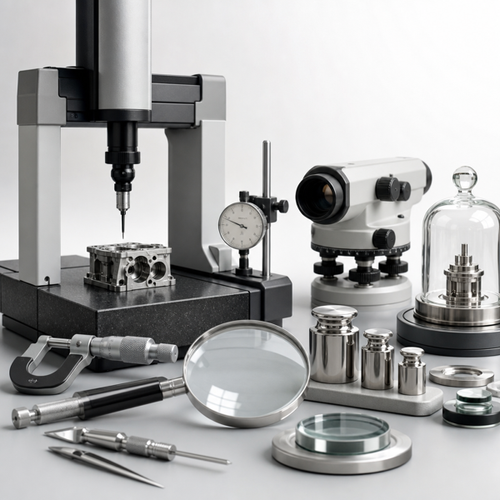
Key Advances in Metrology and Measurement Standards: July 2026 Roundup
July 2026 marks a significant milestone for professionals in metrology and measurement of physical phenomena. This month, three pivotal international standards were released, reshaping best practices for power measurement, environmental sustainability, and measurement uncertainty management. Each standard introduces new requirements and practical guidance critical for sectors that rely on precision, efficiency, and transparency.
This comprehensive overview demystifies the new standards, spotlighting their requirements, operational impact, and the essential compliance factors for industry leaders, quality managers, compliance officers, engineers, and researchers.
Overview / Introduction
Metrology and measurement underpin nearly every aspect of modern industry—from product development and manufacturing, to regulatory compliance and sustainability reporting. The accuracy of measurements, the efficiency of devices in standby modes, and the management of environmental impact have all become key performance indicators in a globally competitive landscape.
July 2026 sees the publication of three new standards that address:
- Energy efficiency and power consumption measurement in appliances
- Environmental aspects and lifecycle assessment of measuring equipment
- Robust and practical examples for evaluating measurement uncertainty
This article will empower you to:
- Understand the practical scope of each new standard
- Prepare your organization for compliance and certification processes
- Leverage technical updates for business and quality outcomes
Detailed Standards Coverage
EN IEC 62301:2026 – Measurement of Standby Power for Appliances and Equipment
Measurement of standby power for appliances and equipment
This standard provides systematic methods to measure the standby and off-mode power consumption of a wide variety of electrical and electronic equipment. It applies to products powered by mains AC, extra low voltage supplies (both AC and DC), or internal batteries, and covers devices ranging from household appliances to IT, audio, video, and multimedia systems.
Building on previous editions, EN IEC 62301:2026 expands its reach, offering greater precision and alignments to current technology trends:
- Expanded Scope: Includes battery- and DC-powered devices, not just AC-powered equipment.
- Rich Definitions: Comprehensive revision and expansion of terms for accurate measurement classifications and reporting.
- Alignment with Other Standards: Explicit distinction between non-active modes (covered here) and networked standby (covered in IEC 63474).
- Improved Measurement Requirements:
- Enhanced requirements for data logging and test data integrity
- Removal of older measurement methods in favor of more robust, representative techniques (such as the new moving average method)
- Clarified conditions for test environments, power measuring instruments, and product setup.
Key product categories:
- Household appliances
- IT, audio, video, multimedia equipment
- Electrical and gas-burning equipment with standby or non-active modes
Practical implications:
Organizations can now benchmark and minimize standby energy, directly supporting both cost reduction goals and regulatory compliance, including energy labeling and eco-design directives. Test labs and manufacturers must ensure their equipment and procedures conform to these updated requirements.
Key highlights:
- Scope expanded to all non-active modes; battery and DC devices included
- Measurement uncertainty and data integrity requirements strengthened
- Alignment and harmonization with terminology across related IEC standards
Access the full standard:View EN IEC 62301:2026 on iTeh Standards
IEC 63580:2026 – Measuring Equipment for Electrical and Electromagnetic Quantities – Environmental Aspects
Measuring equipment for electrical and electromagnetic quantities - Environmental aspects
IEC 63580:2026 signals a jump forward in environmentally conscious design (ECD) for measuring equipment—a category that includes devices such as PMDs, power quality instruments, transducers, and data management systems. It serves as a vital guide for manufacturers aiming to assess and improve the environmental impacts of their products across the entire lifecycle.
Standard scope and coverage:
The standard is focused on fixed installed measuring equipment, including:
- IEC 61557-12: Power metering and monitoring devices (PMD)
- IEC 62586-1: Power quality instruments (PQI)
- IEC 60688: Transducers (TRD)
- IEC 62974-1: Devices for data management (DDM)
Key requirements and recommendations:
- Life Cycle Assessment (LCA) Rules: Framework for quantifying and reporting environmental impacts at every stage: raw material extraction, manufacturing, use, and end-of-life treatment.
- Product-Specific Rules (PSR): Detailed procedures for each device type, ensuring consistency in how environmental footprint is calculated and communicated.
- Material Efficiency and Declaration: Guidance on materials used, hazardous substance reduction, recyclability, and clear reporting obligations for manufacturers.
- End-of-Life (EOL) Recommendations: Procedures for disassembly, recycling, and minimizing environmental burdens after the product’s working life.
- Alignment with Global Directives: Supports ISO 14040, ISO 14044, and regional programs such as the European Union’s Ecodesign Directive.
Who needs to comply?
- Manufacturers of instruments covered under the outlined IEC series
- B2B customers and procurement officers seeking eco-friendly solutions
- LCA practitioners and verification bodies
- Program operators issuing environmental declarations
Practical implications:
This standard enables manufacturers to meet rising market and regulatory demand for sustainable products. It helps streamline environmental data collection and communication across the supply chain, facilitates Green Public Procurement (GPP), and enhances competitive differentiation.
Key highlights:
- Comprehensive LCA rules and environmental data management
- Standardized communication on product environmental performance
- Rigorously defined end-of-life and material efficiency requirements
Access the full standard:View IEC 63580:2026 on iTeh Standards
ISO/IEC Guide 98-5:2026 – Guide to the Expression of Uncertainty in Measurement — Part 5: Examples
Guide to the expression of uncertainty in measurement — Part 5: Examples
This new guide adds practical depth to the internationally recognized Guide to the Expression of Uncertainty in Measurement (GUM). Part 5 is a robust compilation of real-world examples detailing how to apply the methods and principles from previous parts, making the evaluation and reporting of measurement uncertainty more accessible and actionable.
What does this part provide?
- Hands-on Case Studies: Covering diverse measurements—including chemical, physical, and environmental metrics
- Step-by-Step Applications: Demonstrates the use of both the traditional Law of Propagation of Uncertainty (LPU) and advanced Monte Carlo method (MCM) in uncertainty estimation
- Coverage of Key Scenarios: Examples span pH measurement, benzo[a]pyrene analysis, gravimetric mixture prep, gauge block calibration, GHG emission inventories, and more
- Conformity Assessment Guidance: Illustrates decision rules, risk assessments, and interpretation of results under uncertainty—especially valuable for regulated and accredited labs
Who should use it?
- Metrologists and quality managers developing or reviewing uncertainty budgets
- Laboratory professionals conducting traceable measurements
- Researchers and accreditation bodies auditing measurement procedures
Practical benefits:
The guide makes the GUM framework operational, helping organizations embed international best practices in daily workflows. It supports more transparent, defensible, and globally harmonized test reports and calibration.
Key highlights:
- Complete, detailed uncertainty evaluation examples for core measurement scenarios
- Bridges theory and practice—essential for training, audits, and inter-laboratory comparisons
- Supports laboratories and businesses seeking accreditation or regulatory approval
Access the full standard:View ISO/IEC Guide 98-5:2026 on iTeh Standards
Industry Impact & Compliance
The publication of these three standards signals an evolutionary shift for organizations working in the metrology and measurement of physical phenomena. Their adoption will:
- Drive measurable improvements in energy efficiency, environmental performance, and technical competence
- Support compliance with global and regional regulations, including eco-design, energy labeling, and sustainability reporting
- Reduce operational risk through harmonized, robust approaches to measurement, reporting, and uncertainty management
Compliance considerations:
- Organizations must update internal procedures and training materials to reflect revised measurement and documentation requirements (especially for labs seeking ISO/IEC 17025 accreditation or similar)
- Procurement teams should prioritize instrument suppliers adhering to IEC 63580 for material and end-of-life declarations
- Effective from July 2026, these standards may be referenced or mandated by regulators and in procurement specifications
Benefits of early adoption:
- Competitive differentiation through leadership in sustainability and technical credibility
- Reduced risk of non-conformity in audits, market surveillance, and technical disputes
- Better support for customer and regulatory demands
Risks of non-compliance:
- Regulatory penalties, market exclusion, or customer disqualification
- Increased cost and delays in certification or market access
- Reputational damage due to poor measurement or environmental practices
Technical Insights
Common technical requirements:
- Adoption of advanced methods for power measurement accuracy, e.g., enhanced data logging, uncertainty handling, and precision instrumentation (EN IEC 62301)
- Embedded life cycle thinking and quantitative environmental impact modeling, with requirements for material traceability and communication (IEC 63580)
- Application of structured uncertainty evaluation in conformity assessment, calibration, and quality control (ISO/IEC Guide 98-5)
Implementation best practices:
- Audit devices and labs for compliance with new measurement setup, instrument calibration, and test report rules
- Incorporate environmental data collection and reporting into your product development or procurement process
- Educate staff on new definitions and testing procedures—especially engineers and laboratory technicians
- Integrate uncertainty evaluation examples from ISO/IEC Guide 98-5:2026 into internal SOPs, training documents, and quality manuals
Testing and certification considerations:
- Engage accredited labs familiar with the updated procedures for compliance testing
- Use the key guidance on decision rules and uncertainty buffers from ISO/IEC Guide 98-5 in assessment protocols
- Ensure end-of-life material declarations and recycle handling procedures are traceable and auditable as per IEC 63580
Conclusion / Next Steps
The July 2026 update to metrology and measurement standards brings actionable, globally relevant improvements to accuracy, transparency, and sustainability. By proactively understanding the requirements in EN IEC 62301:2026, IEC 63580:2026, and ISO/IEC Guide 98-5:2026, organizations can establish themselves as leaders in measurement integrity and environmental responsibility.
Key takeaways:
- These standards introduce rigorous expectations for performance, environmental stewardship, and technical documentation
- Early engagement ensures smoother audits, enhanced reputation, and reduced operational risks
- Exploring the full texts—available via iTeh Standards—enables detailed planning and implementation
Recommendations for organizations:
- Review internal and supplier practices for alignment with the new requirements
- Update your compliance and training materials without delay
- Monitor regulatory updates that may reference or incorporate these standards
- Leverage the standards’ guidance to create measurable business and technical value
Stay up to date on all future releases and explore the full range of standards at iTeh Standards
Categories
- Latest News
- New Arrivals
- Generalities
- Services and Management
- Natural Sciences
- Health Care
- Environment
- Metrology and Measurement
- Testing
- Mechanical Systems
- Fluid Systems
- Manufacturing
- Energy and Heat
- Electrical Engineering
- Electronics
- Telecommunications
- Information Technology
- Image Technology
- Precision Mechanics
- Road Vehicles
- Railway Engineering
- Shipbuilding
- Aircraft and Space
- Materials Handling
- Packaging
- Textile and Leather
- Clothing
- Agriculture
- Food technology
- Chemical Technology
- Mining and Minerals
- Petroleum
- Metallurgy
- Wood technology
- Glass and Ceramics
- Rubber and Plastics
- Paper Technology
- Paint Industries
- Construction
- Civil Engineering
- Military Engineering
- Entertainment