


May 2026: Updated Standby Power Measurement Standard for Appliances and Equipment
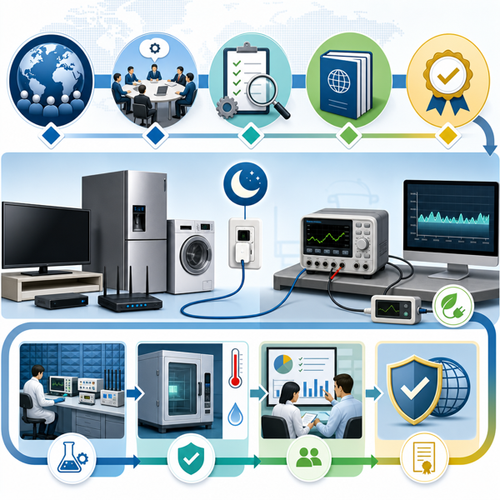
In May 2026, the field of Metrology and Measurement of Physical Phenomena advances with the publication of a crucial standard for energy efficiency: IEC 62301:2026, covering the measurement of standby power for appliances and electronic equipment. This update reflects industry shifts, regulatory needs, and emerging technologies, impacting manufacturers, quality managers, engineers, and compliance professionals globally.
Overview
Energy measurement and efficiency are foundational concerns across industries—from consumer electronics to household appliances, industrial controls, and smart technologies. Precise, standardized testing procedures not only support regulatory requirements but also drive innovation and sustainability initiatives. The latest edition of IEC 62301 ensures consistent power measurement in "standby" and other non-active modes, minimizing energy waste and supporting reliable product comparison.
Professionals reading this article will learn about the scope, methods, and implications of the IEC 62301:2026 revision, with actionable guidance for ensuring compliance and maximizing the benefits of rigorous measurement practices.
Detailed Standards Coverage
IEC 62301:2026 – Measurement of Standby Power for Appliances and Equipment
Full Title: Measurement of standby power for appliances and equipment
Scope and Purpose:
IEC 62301:2026 is the authoritative international standard specifying how to measure electrical power consumption in standby and other non-active modes (such as off mode) for a wide range of electrical and electronic equipment. This includes:
- Household appliances
- Consumer electronic devices (IT, audio, video, and multimedia systems)
- Gas-burning appliances with electrical components
The standard applies to products powered by:
- Low Voltage AC (≤ 1,000 V)
- Low Voltage DC (≤ 1,500 V, ripple-free)
- Extra Low Voltage AC (≤ 50 V)
- Extra Low Voltage DC (≤ 120 V, ripple-free)
- Internal batteries, external power supplies, or separate DC sources
Out of Scope:
- Active modes performing primary product functions
- Networked standby (covered by IEC 63474:2026)
- Battery charging (except maintenance mode)
- Disconnected equipment
Key Requirements and Technical Specifications:
- Precise Measurement Methods: Defines rigorous procedures for testing power draw in non-active modes, including setup, data collection, and stability assessment.
- Expanded Device Inclusion: Now covers battery-powered, DC-powered, and auxiliary battery-equipped devices.
- Aligned Definitions: Updates terminology to align with related standards (notably IEC 63474:2026) and new technology frameworks.
- Instrument Uncertainty Limits: Sets strict requirements for the accuracy (uncertainty) of power measurement instruments, accounting for differing load profiles and power factors.
- Mandatory Data Logging: Requires 1-second interval data logging and prohibits data loss during test intervals.
- Test Environment Control: Specifies ambient temperature, illuminance, power supply, and network configuration settings for reliable, repeatable measurement.
- New Stability Criteria: Introduces linear regression, moving average, and cyclical analysis methods for validating measurement stability and accuracy.
- Removal of Outdated Methods: Eliminates average and direct meter reading methods from approved procedures.
Who Needs to Comply:
- Manufacturers of household appliances and electronic equipment
- Testing laboratories and calibration service providers
- Product design and R&D teams seeking energy efficiency certification
- Quality assurance and regulatory compliance professionals
- Procurement specialists and sustainability officers tracking “low energy” product claims
Practical Implications: Organizations must adopt revised test setups, update laboratory practices, and ensure their equipment accurately captures and reports standby/non-active mode consumption—vital for regulatory submissions, eco-labeling, and market access.
Notable Changes from Previous Editions:
- Broadened scope for technology inclusivity (battery/DC-powered)
- Enhanced and clarified definitions and terminology
- Expanded data requirements and stricter control of measurement uncertainty
- Precise specification for room lighting conditions (illuminance)
- Mandatory 1-second data logging (with robust error/dataloss handling)
- Alternative stability assessment methods (linear regression, moving average, cyclical analysis)
Key highlights:
- Inclusive coverage of battery, DC-powered, and traditional AC-powered devices
- New, robust data collection and stability methods
- Alignment with latest standards on networked standby (IEC 63474:2026)
Access the full standard:View IEC 62301:2026 on iTeh Standards
Industry Impact & Compliance
Adopting IEC 62301:2026 is vital for any enterprise designing, manufacturing, or certifying appliances and electrical equipment sold on the international market.
How Do These Changes Affect Businesses?
- Regulatory Compliance: Many regional/country energy efficiency laws now reference IEC 62301. Using compliant measurement procedures is essential for CE marking, ENERGY STAR, and various energy labeling schemes.
- Market Access: Noncompliance can delay or block products in regions with strict enforcement (EU, North America, Asia-Pacific).
- Product Development: R&D and engineering teams need to account for the full range of new test requirements, especially for emerging product categories (e.g., IoT devices, hybrid appliances).
- Brand & Sustainability: Reliable, standardized power measurement underpins energy efficiency claims, supporting green branding and customer trust.
Compliance Considerations & Timelines
- Internal Audit: Review current product assessment procedures against the new requirements—especially for data logging, uncertainty control, and applicable device classes.
- Test Lab Updates: Ensure laboratories use properly calibrated equipment, capable of required logging and uncertainty verification.
- Documentation: Revamp technical files and test reports to align with new mandatory data elements and analysis protocols.
- Training: Update training for engineers and technicians on new measurement, analysis, and result validation methods.
- Transition Period: Check regulatory guidance for transition/grace periods to migrate from the old (2011) to the new (2026) edition.
Benefits of Adoption
- Increased accuracy and repeatability in standby/non-active mode measurement
- Broader product applicability for rapidly evolving technology categories
- Enhanced support for regulatory reporting and eco-labeling
- Reduced risks of non-compliance penalties and market access roadblocks
Risks of Non-Compliance
- Failed regulatory submissions or market surveillance audits
- Product recalls or re-testing mandates
- Reputation damage from inaccurate energy claims
Technical Insights
Common Technical Requirements
- Environmental Controls: Measurement rooms must maintain temperature (23 ± 5°C) and limit airflow to prevent test condition drift. Illuminance must be documented and, where relevant, strictly controlled.
- Power Supply Specifications: AC and DC power must be within tight tolerance, with supply waveform and harmonics capped.
- Instrument Calibration: Power measurement instruments must be calibrated to conform to the maximum permitted uncertainty formulas detailed in the standard, accounting for crest factor and power factor.
- Data Collection and Analysis: All logging must occur at intervals ≤ 1 second, with robust handling to prevent or flag any data loss or out-of-range values.
- Mode Classification: Devices must be explicitly tested in identified non-active modes (standby, off, maintenance), with careful documentation and alignment with referenced product standards.
- Measurement Stability: Analysis must confirm measurement stability using prescribed methods—linear regression (for consistent loads), moving average (for gradual drift), or periodic/cyclical analysis (for variable loads like heaters or battery maintenance circuits).
Implementation Best Practices
- Preparation: Follow manufacturer’s instructions for setup or use default conditions if none are available. Document every setup step for traceability.
- Instrument Selection: Choose modern, high-resolution meters capable of the specified logging and uncertainty management. Confirm multi-phase capabilities if needed.
- Data Logging: Store raw data securely and implement secondary checks for completeness and error-free logging.
- Uncertainty Calculations: Use the full range of specified formulas and ensure the laboratory workflow is capable of dynamic calculation per data point, especially where loads are highly variable or non-linear.
- Analysis Protocols: Train analysts to select and justify the appropriate stability assessment methodology for the device under test.
- Reporting: Include all mandated parameters in technical files; maintain clear, traceable audit trails for all test procedures.
Certification and Testing Considerations
- Third-Party Verification: For self-declaration or certification programs (e.g., ENERGY STAR, eco-labels), products must demonstrate measurement compliance through accredited labs.
- Product Committees: Many sectoral product standards (dishwashers, TVs, computers) reference IEC 62301 for their non-active mode protocols.
- Documentation: Ensure test reports, uncertainty analyses, power profiles, and configuration rationales are available for regulatory review.
- Continuous Improvement: Lab managers should keep up with instrument and data management advancements—future editions may further tighten requirements.
Conclusion and Next Steps
IEC 62301:2026 represents a major advance in consistent, accurate standby power measurement, reflecting both technological evolution and growing regulatory demands for greater energy efficiency. Organizations should:
- Conduct a gap analysis of their current measurement protocols against the new standard
- Update laboratory instruments and staff training
- Revise documentation and reporting methods
- Integrate the new requirements into product development and compliance workflows
Staying current with international standards like IEC 62301 is essential for competitiveness, sustainability, and market access.
Explore IEC 62301:2026 and all the latest Metrology and Measurement standards directly on iTeh Standards. Stay updated with authoritative insights and guidance for industry professionals.
Categories
- Latest News
- New Arrivals
- Generalities
- Services and Management
- Natural Sciences
- Health Care
- Environment
- Metrology and Measurement
- Testing
- Mechanical Systems
- Fluid Systems
- Manufacturing
- Energy and Heat
- Electrical Engineering
- Electronics
- Telecommunications
- Information Technology
- Image Technology
- Precision Mechanics
- Road Vehicles
- Railway Engineering
- Shipbuilding
- Aircraft and Space
- Materials Handling
- Packaging
- Textile and Leather
- Clothing
- Agriculture
- Food technology
- Chemical Technology
- Mining and Minerals
- Petroleum
- Metallurgy
- Wood technology
- Glass and Ceramics
- Rubber and Plastics
- Paper Technology
- Paint Industries
- Construction
- Civil Engineering
- Military Engineering
- Entertainment