

A Complete Guide to Vibration, Shock, and Condition Monitoring Standards for Industry
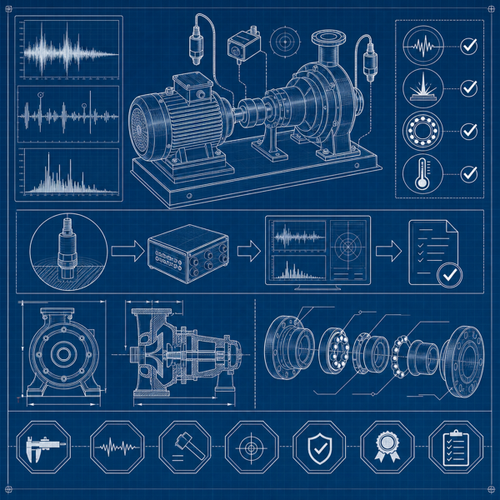
In today's world of rapid industrial and technological transformation, effective management of vibrations, shock, and machine conditions is not just an engineering necessity—it's a business imperative. From manufacturing and energy to transportation and utilities, adopting international standards for vibration, shock, and condition monitoring unlocks significant advantages for safety, reliability, and operational excellence. This article explores four crucial ISO standards shaping the field: ISO 13379-1:2025, ISO 13381-1:2025, ISO 20816-21:2025, and ISO 29821:2026. Together, they provide a comprehensive framework for condition monitoring, diagnostics, prognostics, vibration measurement, and ultrasound-based assessment—key pillars for digital transformation and smart manufacturing.
Overview of Industrial Vibration and Condition Monitoring
Metrology and measurement—especially in the areas of mechanical vibration, shock, and diagnostic monitoring—are foundational to modern industry. Machines are becoming more complex, interconnected, and data-driven. Whether it's fault detection in rotating machinery, predictive maintenance for wind turbines, or early anomaly detection in critical equipment, standardized approaches ensure consistent, reliable, and actionable results.
Standards like those covered in this article provide:
- Shared vocabulary and clear technical guidelines for users, developers, and manufacturers
- Improved accuracy and comparability of machine health data across organizations
- Reduced risk of downtime, accidents, and unplanned costs
- Scalability and integration with new technologies, such as IoT and AI-driven maintenance
By understanding and implementing these standards, organizations can boost productivity, enhance safety, and position themselves for future growth and innovation.
This guide will help you:
- Understand what each standard covers and why it matters
- Identify key implementation requirements
- See how compliance drives competitive advantage
Detailed Standards Coverage
ISO 13379-1:2025 – General Guidelines for Condition Monitoring Diagnostics
Condition monitoring and diagnostics of machine systems — Data interpretation and diagnostics techniques — Part 1: General guidelines
What this standard covers and its scope: ISO 13379-1:2025 sets the foundation for condition monitoring and diagnostics, focusing on the structured interpretation of data and the systematic determination of machine faults. It applies to any machine system where the state can be described by measuring or observing operational parameters—making it universally relevant from industrial pumps to advanced manufacturing lines.
Key requirements and specifications:
- Defines universal concepts and terminology for machine condition monitoring
- Provides a process model for identifying anomalies, diagnosing causes, and making corrective recommendations
- Guides users in setting up effective condition monitoring and diagnostics systems, including life-cycle considerations and failure mode analysis (FMSA)
- Covers both data-driven and knowledge-based diagnostic approaches
- Details for documenting procedures and confidence levels in diagnosis
Who needs to comply:
- Industry sectors relying on rotating machinery, automation, manufacturing systems
- Users, manufacturers, and service providers designing or operating condition monitoring solutions
Practical implications: Implementing this standard helps ensure consistency in diagnostic processes, better communication between stakeholders, and supports integration with predictive maintenance programs. It also aligns with AI- and data-driven maintenance models by providing a robust, auditable foundation.
Notable features:
- Emphasis on iterative diagnostics for high confidence results
- Clear steps for root cause analysis and documentation
- Applicability across varied industries and machinery types
Key highlights:
- Standardizes communication for diagnostics across teams
- Introduces Failure Mode Symptoms Analysis (FMSA) methodology
- Supports transition to advanced predictive maintenance
Access the full standard:View ISO 13379-1:2025 on iTeh Standards
ISO 13381-1:2025 – Prognostics in Condition Monitoring
Condition monitoring and diagnostics of machine systems — Prognostics — Part 1: General guidelines and requirements
What this standard covers and its scope: ISO 13381-1:2025 delivers a comprehensive framework for prognostics—the forward-looking branch of health monitoring that predicts future machine condition and remaining useful life (RUL). Prognostics are vital for moving from reactive and preventive maintenance to truly predictive, optimized operations that maximize uptime and asset value.
Key requirements and specifications:
- Outlines the data requirements, characteristics, and behaviours essential for prognosis
- Defines failure mode modelling, deterioration progression, and influence factors affecting equipment health
- Recommends alert, alarm, and shutdown (trip) threshold practices for early intervention
- Supports both statistical and AI/machine learning-based prediction methods
- Stipulates the creation of prognosis reports and confidence level documentation
Who needs to comply:
- Asset-intensive industries: power generation, oil and gas, manufacturing, utilities
- Maintenance planners, reliability engineers, and technology providers implementing predictive models
Practical implications: Adopting ISO 13381-1:2025 allows organizations to:
- Transition from corrective to predictive maintenance
- Leverage operations data for longer equipment life and optimized resource allocation
- Facilitate digital transformation by standardizing data, definitions, and quality metrics
Notable features:
- Explicit requirements for data gathering and model validation
- Integration of AI/ML for advanced prognostic capabilities
- Recommendations for combining diagnostics and prognostics for holistic management
Key highlights:
- Establishes RUL and predictive horizons for assets
- Encourages use of multi-parameter data and advanced analytics
- Enables cost savings through planned interventions
Access the full standard:View ISO 13381-1:2025 on iTeh Standards
ISO 20816-21:2025 – Vibration Measurement for Horizontal Axis Wind Turbines
Mechanical vibration — Measurement and evaluation of machine vibration — Part 21: Horizontal axis wind turbines
What this standard covers and its scope: ISO 20816-21:2025 is a specialized standard for measuring and evaluating mechanical vibration in horizontal axis wind turbines. With renewable energy capacity and machine complexity growing, this standard is essential for ensuring safe, reliable wind farm operations and equipment longevity.
Key requirements and specifications:
- Covers both wind turbines with gearbox-based drives (Group 1) and direct-drive (Group 2) installations, each above 200 kW
- Defines standard measurement positions, sensor types, and mounting protocols for towers, nacelles, main shafts, gearboxes, and generators
- Establishes evaluation criteria and recommended vibration limits (alert, alarm, trip) for continuous operation
- Includes methods for forming standard vibration assessment quantities and dealing with site-specific factors
- Provides annexed datasets from thousands of turbines for robust, evidence-based evaluation
Who needs to comply:
- Wind farm operators, manufacturers of wind turbines and components
- Service providers involved in commissioning, operation, and maintenance of wind turbines
- Renewable energy project managers and asset managers
Practical implications: Applying this standard:
- Reduces the risk of unplanned downtime and catastrophic equipment failures
- Provides a common foundation for vibration condition assessment and fault tracking
- Facilitates early detection of operational anomalies and supports transparent discussion between manufacturers and operators
Notable features:
- Differentiates evaluation for turbines with and without gearboxes
- Aligns measurements for benchmarking and regulatory compliance
- Sources large empirical datasets for improved recommendations
Key highlights:
- Ensures vibration safety for wind turbines above 200 kW
- Supports long-term wind energy asset protection
- Integrates with other condition monitoring techniques (e.g., ultrasound, bearing fault detection)
Access the full standard:View ISO 20816-21:2025 on iTeh Standards
ISO 29821:2026 – Ultrasound Methods for Machine Condition Monitoring
Condition monitoring and diagnostics of machine systems — Ultrasound — General requirements, guidelines, procedures and validation
What this standard covers and its scope: ISO 29821:2026 establishes best practices for the use of airborne and structure-borne ultrasound methods in condition monitoring and diagnostics. These techniques are increasingly valued for their non-invasive, rapid detection of leaks, friction, impact, improper lubrication, electrical discharges, and other anomalies across diverse industrial equipment.
Key requirements and specifications:
- Guidelines for setting severity assessment criteria for detected anomalies
- Details on setting up, using, and calibrating ultrasound sensors—covering both airborne and contact (structure-borne) types
- Protocols for data collection, error sources, accuracy, repeatability, and reporting
- Guidance for comparative and baseline ultrasound approaches, as well as multi-modal integration with other technologies
- Safety recommendations and training standards for personnel
Who needs to comply:
- Maintenance teams and reliability engineers in manufacturing, processing, energy, and utilities
- Asset owners seeking to implement non-destructive evaluation techniques
- Companies providing ultrasound-based inspection and monitoring services
Practical implications: By applying ISO 29821:2026:
- Organizations increase their ability to detect issues before catastrophic failure
- Maintenance costs drop due to more precise interventions
- Operations achieve higher reliability and less energy waste
Notable features:
- Covers both portable and online (permanently installed) ultrasound systems
- Integrates with modern AI/IoT-enabled predictive maintenance programs
- Includes protocols for documentation, operator training, and error mitigation
Key highlights:
- Provides full lifecycle support for ultrasound-based condition monitoring
- Enhances operator safety through early hazard detection
- Aligns with international standards for holistic condition monitoring programs
Access the full standard:View ISO 29821:2026 on iTeh Standards
Industry Impact & Compliance
Why Compliance Is Crucial in Vibrations and Condition Monitoring
Adopting these standards amplifies several critical business benefits:
Productivity Boost: Standardized measurement, diagnostics, and prognostics enable more accurate maintenance planning, reduced downtime, and faster response to issues. Data-driven approaches support lean operations and resource optimization.
Security & Safety: Consistent assessment and early fault detection significantly lower risks of accidents, catastrophic failures, and unplanned outages. Especially in sectors like renewables, utilities, and manufacturing, compliance helps meet regulatory requirements and safety targets.
Digital Transformation & Scaling: These standards form a vital part of modern, scalable maintenance ecosystems. Integration with IoT sensors, analytics, and machine learning becomes straightforward, unlocking new levels of operational intelligence and automation.
Market Trust & Customer Confidence: Demonstrating adherence to international measurement and diagnostic standards increases stakeholder trust, helps in market access, and may be essential for contractual and certification purposes.
Risks of Non-Compliance:
- Increased likelihood of undetected faults and costly breakdowns
- Higher liability and safety incidents
- Data inconsistency hampering long-term analysis/sharing
- Difficulty in integrating new technologies due to lack of standard definitions and data
Implementation Guidance
Approaches and Best Practices for Adopting Vibration and Condition Monitoring Standards
1. Assess Current Capability and Gap Analysis
- Benchmark existing processes against each standard’s requirements
- Identify gaps in data collection, analysis methods, and reporting
2. Develop a Standards-Compliant Program
- Train personnel on the vocabulary, procedures, and best practices outlined
- Update or acquire necessary instrumentation for vibration/ultrasound measurement
- Establish robust data governance for diagnostics and reporting
3. Integrate with Digital Technologies
- Pair sensor data with cloud or edge analytics for real-time insight
- Implement AI/ML frameworks as described in ISO 13381-1:2025 for advanced prognostics
- Use IoT connectivity to enable continuous data acquisition
4. Continuous Improvement and Validation
- Regularly review and update diagnostic approaches and monitoring thresholds
- Run validation protocols (see ISO 29821:2026) to ensure measurement accuracy
- Stay engaged with standards updates for state-of-the-art practices
5. Documentation and Stakeholder Communication
- Maintain thorough records as recommended in each standard
- Facilitate clear communication with equipment suppliers, service providers, and regulatory agencies
Key Resources for Organizations:
- Access standards documents directly from iTeh Standards
- Use sample templates and worksheets (as found in various annexes) for FMSA, diagnostic reports, and sensitivity validation
- Leverage training programs and technical committees for ongoing skill development
Conclusion and Next Steps
Vibration measurement, shock analysis, and advanced condition monitoring—including both diagnostics and prognostics—are at the core of resilient, future-ready businesses. Adopting the latest ISO standards in these areas—ISO 13379-1:2025, ISO 13381-1:2025, ISO 20816-21:2025, and ISO 29821:2026—ensures organizations are equipped to maximize uptime, safety, and operational intelligence.
Wherever you are in your reliability journey, now is the time to:
- Review these standards, benchmark your practices, and identify areas for improvement.
- Train teams, upgrade systems, and embed standards-based processes across your organization.
- Leverage iTeh Standards as your authoritative resource for up-to-date documentation and ongoing compliance support.
Stay competitive. Stay safe. Scale confidently.
Explore and implement these vital standards today to secure your assets and drive operational excellence.
Categories
- Latest News
- New Arrivals
- Generalities
- Services and Management
- Natural Sciences
- Health Care
- Environment
- Metrology and Measurement
- Testing
- Mechanical Systems
- Fluid Systems
- Manufacturing
- Energy and Heat
- Electrical Engineering
- Electronics
- Telecommunications
- Information Technology
- Image Technology
- Precision Mechanics
- Road Vehicles
- Railway Engineering
- Shipbuilding
- Aircraft and Space
- Materials Handling
- Packaging
- Textile and Leather
- Clothing
- Agriculture
- Food technology
- Chemical Technology
- Mining and Minerals
- Petroleum
- Metallurgy
- Wood technology
- Glass and Ceramics
- Rubber and Plastics
- Paper Technology
- Paint Industries
- Construction
- Civil Engineering
- Military Engineering
- Entertainment