


Essential Packaging Standards: Improve Sustainability, Security, and Efficiency
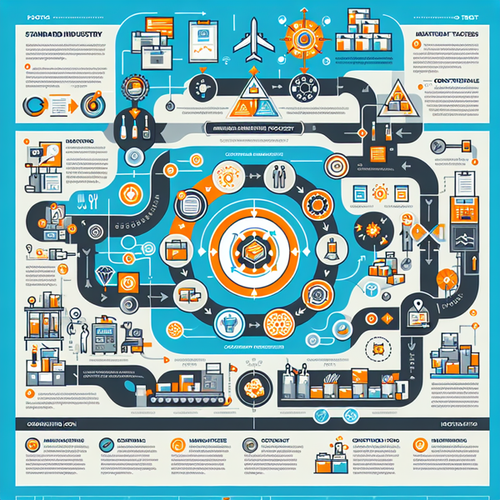
Modern businesses face unprecedented demands to deliver secure, sustainable, and efficient packaging solutions. From the safety of health IT systems to eco-friendly packaging design and advanced data exchange for heavy machinery, the right standards are non-negotiable for ensuring consistent quality, security, and productivity. In this comprehensive guide, we review four essential international packaging standards, each pivotal for compliance, performance, and global competitiveness. Whether you’re a manufacturer, supplier, or part of a technical team, understanding and implementing these standards empowers your organization to scale, innovate, and serve contemporary markets with confidence.
Overview / Introduction
Today’s packaging industry sits at the crossroads of technology, environmental responsibility, and operational excellence. Rapid advancements in automation, digitalization, and supply chain complexity demand high standards for quality, security, and resource efficiency. For organizations across healthcare, construction, and industrial sectors, packaging standards are a strategic cornerstone—ensuring that products are safe, data is secure, and processes are environmentally responsible.
This article explores how adopting internationally recognized packaging standards enhances:
- Sustainability and environmental stewardship
- Security and confidentiality of health and worksite data
- Operational efficiency and system interoperability
We break down the scope, requirements, and practical benefits of each standard, showing how compliance leads to measurable improvements in productivity, risk reduction, and market scalability.
Detailed Standards Coverage
IEC/TS 81001-2-2:2025 – Health Software Security and Communication Standards
Health software and health IT systems safety, effectiveness and security — Part 2-2: Guidance for the implementation, disclosure and communication of security needs, risks and controls
Increasing digitization in healthcare amplifies the risks and complexity facing IT infrastructures. IEC/TS 81001-2-2:2025 offers a comprehensive, lifecycle-based approach to managing security for health software and IT systems. This standard addresses how health software manufacturers, medical device producers, and healthcare delivery organizations (HDOs) can collaborate to implement, communicate, and maintain robust security controls.
What does it cover?
- A high-level set of security-related capabilities, including risk management, safety, effectiveness, and disclosure protocols.
- Guidance for communication and implementation of security controls across the product lifecycle, enabling manufacturers and healthcare organizations to share responsibilities.
- Includes mappings to major security frameworks (such as ISO/IEC 27002, NIST 800-53), making it easier to align with global best practices.
Key requirements:
- Catalogues of technical, administrative, and organizational security controls
- Emphasis on transparency and shared responsibility between manufacturers and health service providers
- Frequent referencing and harmonization with related IEC and ISO standards
Who should comply?
- Health IT software developers
- Medical device manufacturers
- Healthcare delivery organizations
- System integrators and procurement teams managing health IT infrastructure
Practical impact:
- Protects sensitive health data by requiring security features like audit controls, authorization, encryption, software bill of materials (SBOM), and robust data transmission protocols
- Streamlines procurement and deployment by defining clear, comparable security expectations
- Offers scalable security management strategies for organizations of all sizes, supporting compliance with regional frameworks
Key highlights:
- Clear structure for implementing and disclosing security controls
- Mappings to widely used international security standards
- Promotes ongoing communication among stakeholders
Access the full standard:View IEC/TS 81001-2-2:2025 on iTeh Standards
ISO/TR 18607:2025 – Environmentally Conscious Packaging Design
Packaging and the environment — Information on environmentally conscious packaging design
Sustainability is a growing business imperative, and ISO/TR 18607:2025 equips organizations to design packaging with minimal environmental impact, without compromising key functional requirements. The technical report synthesizes best practices with references to supporting standards (ISO 18601 through ISO 18606), offering a holistic framework for every player in the packaging supply chain.
Scope and structure:
- Supports suppliers, brands, and manufacturers placing packaging or packaged goods on the market
- Provides step-by-step guidance on reducing the environmental footprint at every stage of packaging—from selection of materials to optimization, reuse, recycling, energy recovery, and organic recycling
- Includes real-world case studies and checklists for compliance and continuous improvement
Key requirements and recommendations:
- Assess and optimize packaging systems for material and volume, without sacrificing product protection
- Ensure hazardous substances (such as heavy metals: lead, cadmium, mercury, hexavalent chromium) are minimized and compliant with regulatory limits
- Document and review environmental impact and performance over the packaging life cycle
- Assess for reuse, recycling, and energy recovery standards as per ISO 18602, ISO 18603, ISO 18604, ISO 18605, and ISO 18606
Target audience:
- Packaging designers, manufacturers, and suppliers
- Procurement professionals
- Sustainability managers
- Regulatory compliance officers
Practical benefits:
- Cost savings through material reductions and improved efficiency
- Enhanced brand reputation through demonstrable environmental stewardship
- Supports market access and compliance with evolving regulations globally
Key highlights:
- Step-by-step guidance on system optimization
- Integration with other global packaging and recycling standards
- Practical case studies and checklist-based approach
Access the full standard:View ISO/TR 18607:2025 on iTeh Standards
ISO/TR 5757:2025 – Electric Rechargeable Energy Storage in Earth-Moving Machinery
Earth-moving machinery — Machines utilizing electric rechargeable energy storage systems (RESS)
With the construction and industrial machinery sectors rapidly shifting toward electrification, ISO/TR 5757:2025 addresses the integration and management of rechargeable energy storage systems (RESS) in earth-moving machinery.
Standard scope:
- Covers batteries, modules, power circuitry, and battery management systems (BMS)
- Defines key terminology and system architecture relevant for electrified machinery
- Identifies harmonized standards and supporting documentation necessary for safe and efficient use of RESS
- Focuses on components mounted directly on earth-moving machinery—excluding external infrastructure or chargers
Core requirements and recommendations:
- Outlines best practices for battery design, integration, and safety systems
- Encourages harmonization with IEC and other ISO standards, supporting both machinery manufacturers and system integrators
- Discusses safety protocols for high-hazard voltage management and battery safety systems
Who should use it?
- Manufacturers of earth-moving and road construction machinery
- Component suppliers (battery systems, BMS)
- Safety and compliance teams
Practical implications:
- Supports the safe adoption of electric and hybrid machinery
- Reduces design and operational risks related to battery storage and electrical safety
- Simplifies compliance for organizations transitioning toward greener, low-emission machinery fleets
Key highlights:
- Definitions, diagrams, and examples for practical understanding
- Focus on on-machine systems; excludes off-site elements
- Enables compliance with rapidly evolving global requirements for electric earth-moving equipment
Access the full standard:View ISO/TR 5757:2025 on iTeh Standards
ISO/TS 15143-4:2025 – Data Exchange for Earth-Moving Machinery and Worksite Management
Earth-moving machinery and mobile road construction machinery — Worksite data exchange — Part 4: Worksite topographical data
As construction and infrastructure projects become more data-driven, ISO/TS 15143-4:2025 provides indispensable guidelines for the seamless exchange of critical topographical and project data between machinery and worksite information systems. This standard is vital for ensuring that earth-moving and road construction machinery can efficiently share, access, and process operational data across vendors and platforms.
Scope:
- Defines data interfaces for project management, topography, and asset tracking specifically for earth-moving and road construction machinery
- Specifies methods for standardizing local position correction (such as Real Time Kinematic [RTK] corrections), localization techniques, and the implementation of a shared design model
- Addresses APIs and data exchange methods between servers, focusing on project, as-built, and production data; excludes direct machine-to-machine and field-equipment-server data transfer
Requirements and features:
- Structured APIs for project, as-built, and production data exchange, enabling interoperability in multi-vendor environments
- Details normative references for data formats, security protocols, and system-of-record data streams
- Provides foundational support for grade control, localization, and topographical data management
Target audience:
- Equipment manufacturers and software vendors in construction machinery
- Project and site managers
- IT and operational teams managing fleet and site data systems
Practical impact:
- Boosts productivity by streamlining data capture, processing, and analysis across complex worksites
- Reduces risks associated with data silos and incompatible systems
- Enables real-time decision making and precise asset tracking
Key highlights:
- High-level interoperability for modern, digital-enabled worksites
- Standardization of essential data types and data exchange methods
- Forward-looking support for integration with BIM and other industry platforms
Access the full standard:View ISO/TS 15143-4:2025 on iTeh Standards
Industry Impact & Compliance
The rapid evolution of packaging materials, accessories, and industrial assets places greater demands on business compliance and operational agility. Key industry impacts of adopting these standards are:
Enhanced Security and Risk Management: Especially in health IT and medical device fields, adherence to comprehensive standards like IEC/TS 81001-2-2:2025 is critical to protect sensitive data and to ensure system effectiveness against cyber-threats.
Sustainability and Regulatory Alignment: ISO/TR 18607:2025 enables organizations to meet environmental regulations and customer expectations for eco-friendly packaging, minimizing resource consumption and hazardous waste.
Productivity and Market Competitiveness: Machinery standards (ISO/TR 5757:2025, ISO/TS 15143-4:2025) support safe adoption of new technologies (such as electric vehicles and digital data exchange), helping companies optimize performance while reducing downtime.
Compliance Benefits:
- Increased market access, especially in regions with strict regulatory requirements
- Streamlined product development and procurement, thanks to clear and standardized requirements
- Greater customer trust and business partner confidence
Risks of Non-Compliance:
- Legal penalties and market restrictions
- Data breaches or unsafe products
- Reputational damage and lost business opportunities
Implementation Guidance
Transitioning to compliance with international packaging standards requires structured planning and ongoing collaboration:
Common Implementation Approaches
- Gap Analysis:
- Assess existing practices against standard requirements
- Internal Training and Awareness:
- Educate design and operational teams on standard specifications and benefits
- Process Update and Documentation:
- Modify workflows to align with new documentation, assessment, and communication protocols
- Supplier Engagement:
- Ensure the entire supply chain is informed and compliant with relevant standards
- Monitor, Audit, and Continuously Improve:
- Use checklists (as recommended by ISO/TR 18607 and others) and regular audits to maintain compliance and adapt to regulatory changes
Best Practices for Successful Adoption
- Cross-Functional Teams: Involve engineering, quality assurance, IT, and procurement in implementation
- Stakeholder Communication: Share security capabilities and environmental criteria clearly with partners and clients
- Leverage Case Studies: Use examples provided in the standards for learning and benchmarking
- Digital Tools: Utilize software and automated systems to manage documentation, data exchange, and compliance workflows
- Explore Third-Party Audits: External verification enhances credibility and identifies hidden gaps
Helpful Resources
- Standards bodies and official documentation (via iTeh Standards)
- Industry associations for sector-specific interpretation and training
- Environmental management systems and compliance toolkits
Conclusion / Next Steps
Adopting up-to-date international standards in packaging materials and accessories is not just about compliance—it’s about positioning your organization for long-term success, security, and sustainability. Whether focused on protecting sensitive data, reducing environmental impact, or leveraging electric-powered machinery, these four authoritative standards are essential tools for scaling operations, engaging global markets, and building resilient, future-ready processes.
Key Takeaways:
- Standards drive security, sustainability, and market access
- Implementation brings measurable productivity and efficiency gains
- Non-compliance can expose organizations to significant risks—legal, operational, and reputational
Next Steps for Organizations:
- Review the relevant standards for your sector
- Conduct a compliance audit or gap analysis
- Implement best practices, using provided checklists and examples
- Monitor regulatory updates and continue employee training
- Stay engaged with iTeh Standards for the latest resources, guidance, and authoritative documents
Unlock higher productivity, better security, and true sustainability in your packaging and manufacturing operations by exploring these standards in detail.
https://standards.iteh.ai/catalog/standards/iso/25a40142-54e0-436b-9b3b-0553c5bc73d7/iec-ts-81001-2-2-2025https://standards.iteh.ai/catalog/standards/iso/7218b217-1043-4d6a-bb71-7de7d6f550dc/iso-tr-18607-2025https://standards.iteh.ai/catalog/standards/iso/2ae126b2-e548-4d0d-9ac8-3788678036ef/iso-tr-5757-2025https://standards.iteh.ai/catalog/standards/iso/54330054-994d-4afa-a6e0-823a4fb28a7b/iso-ts-15143-4-2025
Categories
- Latest News
- New Arrivals
- Generalities
- Services and Management
- Natural Sciences
- Health Care
- Environment
- Metrology and Measurement
- Testing
- Mechanical Systems
- Fluid Systems
- Manufacturing
- Energy and Heat
- Electrical Engineering
- Electronics
- Telecommunications
- Information Technology
- Image Technology
- Precision Mechanics
- Road Vehicles
- Railway Engineering
- Shipbuilding
- Aircraft and Space
- Materials Handling
- Packaging
- Textile and Leather
- Clothing
- Agriculture
- Food technology
- Chemical Technology
- Mining and Minerals
- Petroleum
- Metallurgy
- Wood technology
- Glass and Ceramics
- Rubber and Plastics
- Paper Technology
- Paint Industries
- Construction
- Civil Engineering
- Military Engineering
- Entertainment