


Certification Standards for Jewellery: Ensuring Quality and Trust in Precious Metals and Diamonds
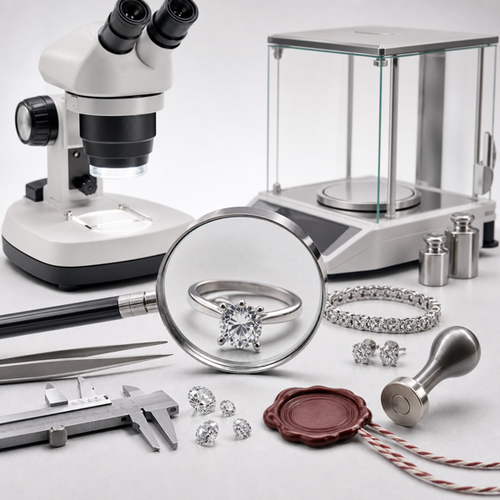
As the demand for authentic, high-quality jewellery continues to rise, so does the need for rigorous assessment, reliable certification, and global harmonization in the industry. Four leading international standards—ISO 11427:2024, ISO 13756:2024, ISO 6893:2024, and ISO 9202:2026—form the backbone of precise measurement, batch inspection, and fineness determination for silver, diamonds, and precious metal alloys. Adopting these standards ensures that businesses in the jewellery sector operate efficiently, safeguard consumer trust, and meet both legal and market expectations worldwide.
Overview: The Importance of Jewellery Certification Standards
Jewellery and precious metals form the heart of the luxury goods market—a sector defined by trust, authenticity, and consistent quality. With the global jewellery trade facing intensified scrutiny, regulation, and competition, implementing internationally recognized standards is no longer optional but essential.
These standards—for silver determination, diamond inspection, and precious metal fineness—enable:
- Greater productivity and process efficiency
- Enhanced product security and fraud prevention
- Scalable operations that meet global market needs
- Reliable certification and quality assurance, fostering consumer confidence
This article introduces the four latest ISO standards central to jewellery certification. Whether you are a manufacturer, retailer, laboratory technician, or a curious consumer, you will discover how each standard supports best practices and sustainable business development.
Detailed Standards Coverage
ISO 11427:2024 - Silver Determination via Potentiometry Using Potassium Bromide
Jewellery and precious metals — Determination of silver — Potentiometry using potassium bromide
ISO 11427:2024 specifies a highly accurate volumetric method for determining the silver content in homogeneous materials, typically within the range of 100 – 999.0 parts per thousand (‰) by mass. This potentiometric technique, which utilizes potassium bromide, is the reference method for inspecting fineness in silver alloys, particularly those referenced by ISO 9202.
Key steps in the methodology include:
- Precise preparation of sample and standard solutions
- Elimination of interfering substances (notably palladium)
- Potentiometric titration to identify endpoint and quantify silver
- Expression of results, repeatability requirements, and comprehensive test reporting
Manufacturers, assay laboratories, certifiers, and even consumer protection organizations rely on this standard to ensure that the silver content in jewellery and precious metals aligns with declared values and international norms.
Key highlights:
- Highly reliable reference method for silver fineness determination
- Enables uniformity and transparency across global markets
- Supports regulatory compliance and customer trust
Access the full standard:View ISO 11427:2024 on iTeh Standards
ISO 13756:2024 - Silver Determination via Potentiometry Using Sodium or Potassium Chloride
Jewellery and precious metals — Determination of silver — Potentiometry using sodium chloride or potassium chloride
Similar in purpose to ISO 11427, ISO 13756:2024 outlines a volumetric approach for analyzing silver levels in homogeneous materials using either sodium chloride or potassium chloride in the titration process. Covering samples with silver content from 100 to 999.0 parts per thousand (‰) by mass, it further allows for differentiation when fineness exceeds these thresholds, with reference to advanced spectroscopy.
The procedure includes:
- Rigorous sample preparation ensuring elimination of palladium
- Titration sequence, calibration, and determination using standard solutions
- Calculation protocols for establishing precise silver content
Organizations within the jewellery and precious metals sector can implement this standard as a reference method for commercial, quality, and export purposes. Adherence to these guidelines enables consistent fineness verification and transparency throughout the supply chain.
Key highlights:
- Flexible titration options using sodium or potassium chloride
- Expands fineness analysis capability across silver alloys and finished goods
- Facilitates trustworthy certification for national and cross-border trade
Access the full standard:View ISO 13756:2024 on iTeh Standards
ISO 6893:2024 - Inspection of Batches of Small Diamonds: Terminology, Classification and Test Methods
Jewellery and precious metals — Inspection of batches of small diamonds — Terminology, classification and test methods
ISO 6893:2024 is the authoritative guide for examining batches of unmounted, polished colourless diamonds, each with a single mass of 0.25 carats or less. This standard moves beyond individual stone grading, focusing instead on methodology for batch inspection, which is critical in large-scale jewellery manufacture, trade, and certification.
The standard covers:
- Uniform terminology for describing small diamonds, batches, and their characteristics
- Classification criteria including cut, colour, clarity, shape, mass, and dimensions
- Accepted test and inspection methods: sieving, weight estimation, measurement, and sampling plans
- Grading protocols for batch attributes: polish grade, symmetry, proportion, cut, and fluorescence
- Comprehensive requirements for inspection reports for transparency and traceability
This harmonized approach minimizes subjective differences, establishes consumer confidence, and ensures consistency across diverse global markets, benefiting both diamantaires and manufacturers.
Key highlights:
- Defines clear and consistent parameters for batch grading
- Ensures transparency in diamond sourcing and trade
- Enables scalable inspection and certification for high-volume operations
Access the full standard:View ISO 6893:2024 on iTeh Standards
ISO 9202:2026 - Fineness of Precious Metal Alloys
Jewellery and precious metals — Fineness of precious metal alloys
ISO 9202:2026 provides a clearly defined range of recommended fineness levels for precious metal alloys in jewellery production. Covering gold, silver, platinum, and other noble metals, it sets out internationally accepted designations and requirements for composition marking and stamping of finished articles.
Key facets include:
- Official classification of precious metal alloy fineness
- Guidance for analytical determination and marking
- Links with national legal requirements for hallmarking, ensuring cross-border compatibility
- Ensures accuracy and integrity in labelling, preventing fraud and consumer deception
This standard is indispensable for manufacturers, assay offices, and marketers who wish to demonstrate conformance to high-quality benchmarks and enhance both reputational and material value of the finished product.
Key highlights:
- Establishes trusted framework for fineness across all precious metal jewellery
- Supports traceability, anti-counterfeiting, and consumer protection
- Aligns businesses with international market access and legal certainty
Access the full standard:View ISO 9202:2026 on iTeh Standards
Industry Impact & Compliance
Adopting these jewellery certification standards cannot be overstated for businesses operating locally or internationally. The modern jewellery industry is built on reputation, assurance, and traceable value. Non-compliance may result in market exclusion, legal sanctions, or irreparable damage to consumer trust.
How These Standards Affect Businesses
- Quality Assurance: Demonstrating adherence to recognized standards reassures buyers and partners, directly influencing purchasing decisions.
- Market Access: Many international markets demand conformity to ISO standards as a prerequisite for trade, especially regarding metal fineness and diamond batch consistency.
- Reputation Management: Certified compliance mitigates risks of fraud, mislabelling, or substandard materials, which could otherwise lead to public recalls or brand deterioration.
Compliance Considerations
- Legal Compliance: Many countries require hallmarking or certification against ISO or aligned local standards.
- Cost Efficiency: Using standardized test and inspection methods reduces waste, minimizes errors, and streamlines supply chains.
- Risk Reduction: Reliable fineness and inspection processes reduce exposure to counterfeit goods and uphold security in the precious metals market.
Benefits of Adoption
- Improved efficiency from uniform analytical methods
- Faster certification and product release cycles
- Enhanced consumer confidence and increased brand value
- Easier scalability as businesses expand across borders and product lines
Risks of Non-Compliance
- Regulatory fines, recalls, and trade bans
- Loss of licenses or accreditations
- Reduced customer trust and negative publicity
Implementation Guidance
Transitioning to or maintaining compliance with these jewellery standards requires methodical planning and commitment across the business’s operational processes.
Common Implementation Approaches
- Gap Assessment: Conduct a thorough review of current practices versus requirements of each ISO standard.
- Staff Training: Educate laboratory analysts, production staff, and quality managers on standard-specific procedures, such as proper titration protocols and batch sampling plans.
- Equipment Calibration: Invest in standardized and regularly calibrated equipment in line with method requirements (potentiometry, precision balances, sieves, etc.).
- Documentation: Maintain clear, standardized records as per ISO test report and inspection formats.
- External Auditing: Engage third-party certifiers or consultants to verify and validate implementation, especially for international certification.
Best Practices for Adopting Jewellery Standards
- Stay updated with the latest standard revisions from iTeh Standards
- Incorporate internal audits and external quality control assessments
- Foster a culture of transparency and continuous improvement
- Network with industry associations and regulatory bodies for knowledge sharing
Resources for Organizations
- Training materials and seminars relevant to jewellery standards
- Access to the full text of standards via iTeh Standards’ official website
- Technical committees and professional bodies (ISO/TC 174)
Conclusion and Next Steps
Adhering to international standards for jewellery and precious metals certification is the foundation for enduring success, security, and consumer confidence in today’s dynamic marketplace. By understanding and applying ISO 11427:2024, ISO 13756:2024, ISO 6893:2024, and ISO 9202:2026, businesses can streamline certification, elevate product quality, and unlock new levels of efficiency and scalability. Investment in compliance not only reduces risk but establishes authority, trust, and long-term market relevance.
Recommendations:
- Begin with a gap analysis and training to align existing operations with the relevant ISO standards.
- Integrate standard-compliant methods into daily workflows to achieve practical and visible gains in quality and efficiency.
- Stay proactive—use iTeh Standards to source the latest updates and implementation guidance, ensuring your jewellery business always leads in quality and compliance.
Explore these standards in detail via the links below, and secure your organization’s place at the forefront of quality and trust in the jewellery industry.
https://standards.iteh.ai/catalog/standards/iso/c4a1f25e-e257-44d4-bd8e-3e730901d203/iso-11427-2024
https://standards.iteh.ai/catalog/standards/iso/c71673ca-ba6d-4c33-a7d5-f4a918aa4a06/iso-13756-2024
https://standards.iteh.ai/catalog/standards/iso/cb6ecf4c-648c-4dc2-9841-5ee8cb949a56/iso-6893-2024
https://standards.iteh.ai/catalog/standards/iso/4be7c47f-72b6-4914-984e-68587e8412f1/iso-9202-2026
Categories
- Latest News
- New Arrivals
- Generalities
- Services and Management
- Natural Sciences
- Health Care
- Environment
- Metrology and Measurement
- Testing
- Mechanical Systems
- Fluid Systems
- Manufacturing
- Energy and Heat
- Electrical Engineering
- Electronics
- Telecommunications
- Information Technology
- Image Technology
- Precision Mechanics
- Road Vehicles
- Railway Engineering
- Shipbuilding
- Aircraft and Space
- Materials Handling
- Packaging
- Textile and Leather
- Clothing
- Agriculture
- Food technology
- Chemical Technology
- Mining and Minerals
- Petroleum
- Metallurgy
- Wood technology
- Glass and Ceramics
- Rubber and Plastics
- Paper Technology
- Paint Industries
- Construction
- Civil Engineering
- Military Engineering
- Entertainment