


Jewellery Certification Made Easy: Key Standards for Silver, Diamonds, and Precious Metal Alloys
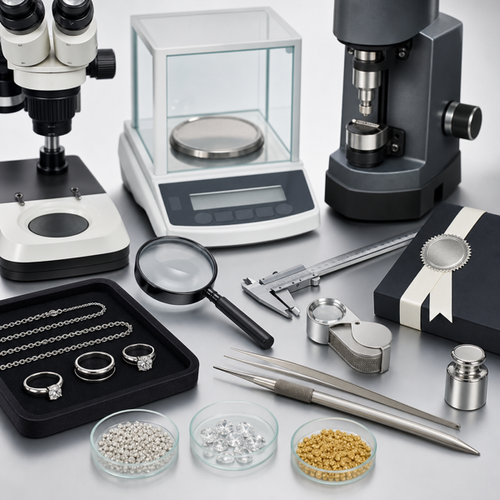
Modern jewellery businesses face growing demands for product integrity, purity, and traceability. As consumer expectations rise and global markets expand, precise certification processes based on internationally recognized standards have become essential for business success, security, and scalability. This comprehensive guide explores four central ISO standards for jewellery and precious metals—critical tools ensuring quality, transparency, and compliance. Implementing these standards can elevate productivity and boost customer trust while streamlining certification in the jewellery sector.
Overview / Introduction
The jewellery and precious metals industry is renowned for its attention to beauty and craftsmanship, but beneath the surface lies a world defined by precision, science, and global compliance. As technology and trade networks evolve, so do the expectations for accountability in the sourcing and quality of jewellery components—from the determination of silver content to the standardized inspection of batches of diamonds.
International standards underpin each stage of the certification process, helping jewellers, assay offices, manufacturers, and regulators speak a common language. For businesses, adopting these standards isn’t just a formality: it’s a strategic move that drives better inventory control, protects reputations, supports regulatory compliance, and enables scaling into new markets. In this article, we break down four key ISO standards:
- ISO 11427:2024: Determination of silver using potassium bromide
- ISO 13756:2024: Determination of silver using sodium or potassium chloride
- ISO 6893:2024: Terminology, classification, and test methods for batches of small diamonds
- ISO 9202:2026: Fineness of precious metal alloys
You will gain clear, actionable insights into what each standard covers, who must comply, and why certification aligned with these standards is a must-have for today’s precision jewellery businesses.
Detailed Standards Coverage
ISO 11427:2024 – Accurate Silver Determination Using Potassium Bromide
Jewellery and precious metals — Determination of silver — Potentiometry using potassium bromide
ISO 11427:2024 sets the international benchmark for determining the silver content in homogeneous materials, typically alloys, with silver concentration ranging from 100 to 999 parts per thousand (‰) by mass—a span covering nearly all silver articles produced for jewellery.
This standard specifies a volumetric analytical method—potentiometric titration—using potassium bromide as the titrant. Its robust and repeatable methodology ensures laboratories and manufacturers can accurately certify the fineness (purity) of silver items. For examples exceeding 999.0‰, a more advanced spectroscopy technique, as referenced in other ISO standards, is recommended.
Key requirements include:
- Use of high-purity potassium bromide
- Calibrated titration apparatus
- Strict sample preparation and elimination of interfering elements (e.g., palladium)
- Reliable calculation protocols for silver content determination
Who must comply?
- Jewellery assay offices
- Precious metal refiners and manufacturers
- Third-party testing laboratories
- Regulatory bodies needing a reference method for silver fineness
Practical implications: Implementing ISO 11427 empowers businesses to demonstrate the accuracy of their silver content claims, satisfy legal fineness requirements, and provide assurance to both regulators and customers. Its use as a reference method means results can stand up to external audits or disputes about product authenticity.
Key highlights:
- Reference method for silver fineness in jewellery alloys
- Applicable for a wide range of silver concentrations
- Detailed test report structure for certification
Access the full standard:View ISO 11427:2024 on iTeh Standards
ISO 13756:2024 – Alternative Potentiometric Methods for Silver Analysis
Jewellery and precious metals — Determination of silver — Potentiometry using sodium chloride or potassium chloride
ISO 13756:2024 provides another internationally accepted technique for assessing silver content in homogeneous materials via potentiometric titration. Unlike ISO 11427, this method allows for the use of sodium chloride or potassium chloride, offering flexibility for different laboratory setups or regulatory preferences. The scope remains focused on silver concentrations between 100 and 999.0‰ by mass, with higher fineness measured through spectroscopy.
Central requirements:
- Preparation of silver standards and sample solutions
- Precise titration using sodium or potassium chloride
- Elimination of sample impurities affecting the result (notably, palladium)
- Robust repeatability and reporting standards
Who must comply?
- Lab technicians in jewellery and precious metals industries
- Organisations certifying or verifying silver article purity
- Quality assurance departments for silver product lines
Practical business benefits: By implementing ISO 13756, companies can match or exceed strict regulatory expectations and smoothly integrate global supply chains—especially useful when specific chemicals are more readily available or allowed by local legislation. Consistency across the certification process also protects brands from counterfeits and mislabeling.
Key highlights:
- Equally robust to ISO 11427 but adaptable to local conditions
- Supports certification and legality of silver claims
- Clear sampling, calculation, and documentation requirements
Access the full standard:View ISO 13756:2024 on iTeh Standards
ISO 6893:2024 – Inspection of Batches of Small Diamonds
Jewellery and precious metals — Inspection of batches of small diamonds — Terminology, classification and test methods
ISO 6893:2024 addresses a unique challenge in the gem and jewellery industry: the systematic inspection, classification, and terminology for batches of small, unmounted, colourless diamonds (each less than or equal to 0.25 carats). This standard is indispensable for those procuring, sorting, or selling large quantities of small stones, as it establishes a universally accepted benchmark for terminology and testing.
What does the standard cover?
- Definitions for diamonds, batch, cut, polish, symmetry, proportion grade, finish grade, and more
- Sample preparation and batch specifications
- Batch inspection methods: mass estimation, sieving by diameter, measurement techniques
- Testing and grading of cut, proportion, polish, symmetry, colour, fluorescence, and clarity
- Detailed sampling plans, reporting protocols, and quality control
Who must comply?
- Diamond traders and cutters
- Jewellery manufacturers and retailers
- Watchmaking companies using batch-set diamonds
- Gem laboratories and certification agencies
Why implement it? Precise, standard-driven grading and sampling procedures minimize costly disputes and strengthen trust between diamond suppliers, jewellery manufacturers, and end consumers. This is especially vital in high-volume production environments where consistency and speed are critical to profitability and quality assurance.
Key highlights:
- Focuses on batches of small, natural colourless diamonds
- Standardizes grades for cut, clarity, polish, and more
- Ensures inspection reliability for large-scale suppliers
Access the full standard:View ISO 6893:2024 on iTeh Standards
ISO 9202:2026 – Fineness of Precious Metal Alloys in Jewellery
Jewellery and precious metals — Fineness of precious metal alloys
ISO 9202:2026 defines the accepted international ranges and benchmarks for fineness (purity) in precious metal alloys used in jewellery and related products. Fineness, expressed in parts per thousand (‰) by mass, underpins country-specific legal requirements for the marking, labeling, and certification of gold, silver, platinum, and other alloy products.
Main features:
- Specific minimum and maximum fineness for various precious metals
- Analytical methods for determining fineness (with references to standards like ISO 11427 and ISO 13756)
- Acknowledgement of national legal requirements for designation, marking, and stamping
Who is impacted?
- Jewellery designers and manufacturers
- National assay offices and hallmarking organizations
- International and regional regulatory authorities
Business necessity: Selling, exporting, or advertising jewellery items without certified compliance to recognized fineness grades exposes businesses to legal sanctions, market exclusion, and reputational risks. ISO 9202 forms a cornerstone for product certification, company scaling, and cross-border trade.
Key highlights:
- Authoritative list of precious metal fineness grades
- Connects analytical methods to certification requirements
- Recognizes interplay with national regulations
Access the full standard:View ISO 9202:2026 on iTeh Standards
Industry Impact & Compliance
Transforming Business with Standardized Certification
Adopting these jewellery standards brings multiple advantages for businesses at every scale:
- Productivity gains: By standardizing methods and processes, organizations reduce ambiguity and rework, shortening the certification and production cycle.
- Higher security and trust: Consistent fineness and batch grading reinforce consumer confidence and protect market reputation against counterfeit or misrepresented goods.
- Legal compliance: Meeting prescriptive ISO standards aligns products with local and international regulations, preventing costly legal disputes and facilitating smooth cross-border trade.
- Scalability and market access: Certification against global standards makes it easier to expand into new geographies where such compliance is required or expected.
Risks of non-compliance include regulatory penalties, product recalls, lost market access, decreased customer trust, and damaged business reputation. In addition, lack of standardized certification methods exposes a business to internal inefficiencies and quality control shortfalls.
Implementation Guidance
Certifying products according to these jewellery standards has never been more accessible. Here are tried-and-true approaches to successful implementation:
1. Training and Upskilling
- Train laboratory, manufacturing, and quality control staff on standard-specific test procedures and protocols
- Regularly update internal manuals and conduct refresher courses as standards evolve
2. Investment in Equipment
- Maintain calibration and traceability of titration and measurement apparatus (crucial for silver determination and diamond grading)
- Invest in reliable sample preparation tools as specified in each standard
3. Stepwise Compliance
- Map your current processes and identify gaps against the detailed requirements of ISO 11427, ISO 13756, ISO 6893, and ISO 9202
- Prioritize areas with highest customer, regulatory, or business risk
- Create or refine documentation practices (e.g., sample logs, test reports, batch records)
4. Quality Management Integration
- Incorporate jewellery testing standards into broader quality management systems (such as ISO 9001 or ISO/IEC 17025) for organizational consistency
- Set up regular internal or third-party audits to assess ongoing compliance
5. Leverage Resources and Partnerships
- Utilize certified reference materials and participate in inter-laboratory comparisons
- Partner with accredited testing laboratories or consultants for complex or high-stakes certification processes
- Reference the latest versions of standards on platforms like iTeh Standards for accurate, up-to-date guidance
Conclusion / Next Steps
Globalized jewellery markets demand more than exquisite design—they require meticulous certification grounded in internationally recognized standards. ISO 11427, ISO 13756, ISO 6893, and ISO 9202 form the backbone of modern jewellery testing and certification. Organizations that adopt, implement, and stay proactive with these standards position themselves as credible, compliant, and ready to scale in a competitive world.
Key takeaways:
- Certification based on ISO standards assures purity, authenticity, and quality.
- Clear, standardized processes enhance productivity, security, and market reach.
- Compliance is a business enabler, not a mere regulatory hurdle.
Ready to enhance your certification process? Explore each standard in detail through the authoritative links below, review your internal controls, and make international compliance your competitive advantage.
https://standards.iteh.ai/catalog/standards/iso/c4a1f25e-e257-44d4-bd8e-3e730901d203/iso-11427-2024https://standards.iteh.ai/catalog/standards/iso/c71673ca-ba6d-4c33-a7d5-f4a918aa4a06/iso-13756-2024https://standards.iteh.ai/catalog/standards/iso/cb6ecf4c-648c-4dc2-9841-5ee8cb949a56/iso-6893-2024https://standards.iteh.ai/catalog/standards/iso/4be7c47f-72b6-4914-984e-68587e8412f1/iso-9202-2026
Categories
- Latest News
- New Arrivals
- Generalities
- Services and Management
- Natural Sciences
- Health Care
- Environment
- Metrology and Measurement
- Testing
- Mechanical Systems
- Fluid Systems
- Manufacturing
- Energy and Heat
- Electrical Engineering
- Electronics
- Telecommunications
- Information Technology
- Image Technology
- Precision Mechanics
- Road Vehicles
- Railway Engineering
- Shipbuilding
- Aircraft and Space
- Materials Handling
- Packaging
- Textile and Leather
- Clothing
- Agriculture
- Food technology
- Chemical Technology
- Mining and Minerals
- Petroleum
- Metallurgy
- Wood technology
- Glass and Ceramics
- Rubber and Plastics
- Paper Technology
- Paint Industries
- Construction
- Civil Engineering
- Military Engineering
- Entertainment