


Railway Track Geometry Quality: Understanding EN 13848-6 for Better Rail Performance
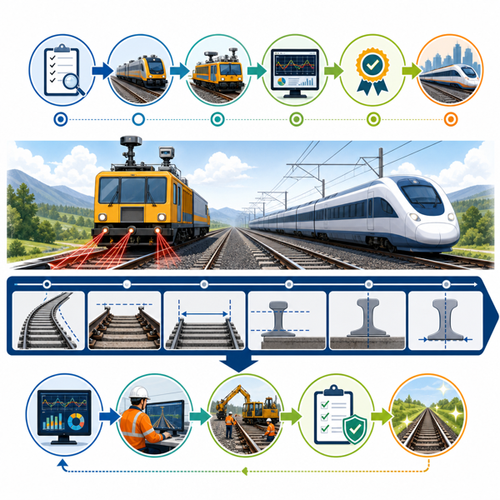
As global railway networks expand and become ever more essential to modern logistics and travel, ensuring consistent safety, cost-efficiency, and performance is critical. The quality of track geometry underpins a railway's reliability, particularly in high-capacity corridors and intercity routes. One key standard shaping this landscape is EN 13848-6:2026 – Characterization of Track Geometry Quality, which provides standardized methods for assessing and classifying track geometry. For businesses, infrastructure managers, and engineering professionals, adopting this standard can drive significant improvements in safety, operational productivity, and long-term scalability of rail assets.
Overview: The Importance of Track Geometry Standards in Railway Engineering
Track geometry – the precise alignment, level, and gauge of rails – directly impacts train speed, ride comfort, and most importantly, safety. Subtle deviations can lead to increased wear, higher maintenance costs, and elevated risks of derailment or service delays. As rail networks age and expand, systematic approaches to measuring, monitoring, and classifying track quality have become indispensable.
International railway standards, such as those in the EN 13848 series, provide universally accepted frameworks for monitoring and maintaining track quality. These standards help ensure interoperability between different rail networks, facilitate compliance with safety regulators, and enable performance benchmarking. This article presents a comprehensive, public-friendly overview of EN 13848-6:2026, explaining its key concepts, compliance requirements, and the practical benefits of implementation.
Detailed Standards Coverage
EN 13848-6:2026 - Characterization of Track Geometry Quality
Full Title: Railway applications – Track – Track geometry quality – Part 6: Characterization of track geometry quality
Published by CEN, 2026-05-26
Scope and Application:
EN 13848-6:2026 is part of the broader EN 13848 series, which standardizes the evaluation and monitoring of railway track geometry. This part specifically focuses on how to characterize and classify the quality of track geometry based on measured parameters. It sets out consistent, reproducible methods to assign track geometry classes, providing a basis for network-wide quality control and maintenance strategies. Note:
- This standard is not applicable to tracks with a nominal gauge below 1435 mm.
- It excludes urban rail systems (e.g., metro or tram lines).
Key Requirements and Specifications:
EN 13848-6:2026 stipulates:
- Parameters and Metrics: Quality assessment must use parameters defined in EN 13848-1 (such as alignment, cross level, gauge, longitudinal level, and twist), ensuring consistency across measurement systems and national rail networks.
- Track Quality Index (TQI): The reference method for representing geometry quality is the standard deviation (SD) of key parameters, providing a straightforward, quantitative measure over a specified length (most commonly 200 m). TQI reflects the dispersion of geometry data compared to the average, allowing for network-wide benchmarking.
- Track Quality Classes (TQCs): The standard introduces TQCs, which categorize track sections based on their TQI. These classes are assigned considering operational speed and intended usage, guiding maintenance prioritization and operational decisions.
- Alternative and Advanced Methods: EN 13848-6 also describes supplementary evaluation methods, including
- Point Mass Acceleration (PMA)
- Combined Standard Deviation (CoSD)
- Defect counting (number of isolated defects per km)
- Vehicle Response Analysis (VRA) for assessing the impact of geometry deviations on different rolling stock
- Documentation and Reproducibility: Assessment algorithms must be publicly documented and their application should yield reproducible results, facilitating transparency for audits and cross-network comparisons.
Who Should Comply:
- Infrastructure managers (railway owners and operators)
- Engineering departments responsible for asset condition and maintenance
- Contractors and service providers engaged in track renewal or measurement
- National regulators seeking to harmonize track quality management
Implementation Implications: Adopting EN 13848-6 brings numerous practical benefits:
- Enables objective and comparable reporting of track condition across different regions, contractors, and time periods.
- Supports targeted investment and maintenance by highlighting critical sections (using TQCs).
- Provides a defensible, standardized methodology for responding to regulator audits or customer inquiries.
- Enhances planning for high-speed lines, where minor geometry deviations have significant safety and comfort impacts.
Notable Features:
- Integrates traditional statistics (standard deviation) with advanced methods (vehicle simulation, PMA).
- Transparent algorithms expected; fits with digital asset management systems.
- Harmonized terminology and methods aid cross-border rail operations.
Access the full standard:View EN 13848-6:2026 on iTeh Standards
Industry Impact & Compliance
Why Track Geometry Quality Standards Matter
Implementing EN 13848-6 helps organizations maintain a high-performing and safe rail network. Track geometry problems are a key cause of speed restrictions, excessive maintenance costs, and service disruption. Standardized measurement and reporting mean that:
- Risk is reduced: Early detection and classification of defects helps prevent derailments and accidents.
- Regulatory compliance is easier: By following a harmonized standard, railway organizations can easily meet legal and industry audit requirements.
- Interoperability is enhanced: Shared definitions and measurements allow for seamless interconnection between national and international rail systems.
- Cost-efficiency improves: Accurate classification enables predictive maintenance and better budget allocation.
Benefits of Compliance
- Productivity: Focuses maintenance resources on sections of line that generate the highest risk, creating efficiencies in manpower and materials.
- Security: Reduces the likelihood of unplanned failures—improving safety for passengers, cargo, and staff.
- Scalability: Makes it easier to expand or upgrade networks by using consistent, compatible data and processes.
- Credibility: Demonstrates adherence to international best practice when bidding for contracts or interacting with public authorities.
Risks of Non-Compliance
- Exposure to legal and financial penalties in the event of audit or incident
- Inconsistent data, undermining investment and maintenance planning
- Missed opportunities for performance improvement or new business
- Potential incompatibility with future digital asset management systems or automation tools
Implementation Guidance
Common Approaches
- Invest in Track Geometry Measurement Systems: Use track recording vehicles and sensors that meet EN 13848-1 standards, ensuring reliable data for TQI and TQC calculations.
- Deploy Digital Asset Management: Integrate geometry data into maintenance planning systems for real-time quality evaluation and effort targeting.
- Establish Data Recording and Updating Processes: Regular measurement campaigns (at least annually) covering all main lines, with focus on high-traffic and high-speed routes.
- Train Staff: Ensure engineers, inspectors, and data analysts understand the calculation and interpretation of TQIs and TQCs from EN 13848-6.
Best Practices
- Consistent Data Collection: Always use the same section lengths (e.g., 200m, 1km) to allow comparison.
- Transparent Algorithms: Maintain open documentation of calculation processes for audits and benchmarking.
- Use Advanced Analysis: Apply PMA and VRA methods where vehicle dynamics are critical, such as on new high-speed lines.
- Prioritize by TQC: Direct maintenance to the lowest quality classes first; align inspection cycles accordingly.
- Report Regularly: Dashboards and summary reports should be available to both technical teams and management.
Resources for Implementation
- Software tools for TQI and TQC calculation (often supplied by measurement vehicle vendors)
- Technical workshops or webinars from standards organizations (e.g., CEN/TC 256)
- Consultancies specializing in railway asset management
- iTeh Standards platform (standards.iteh.ai) for the latest text and updates
Conclusion and Next Steps
EN 13848-6:2026 represents a crucial step toward safer, more reliable, and efficient railways, both within Europe and internationally. By standardizing how track geometry quality is measured and classified, organizations gain the tools to implement data-driven maintenance, boost network performance, and anticipate future regulatory and operational demands.
Key Takeaways:
- Adhering to EN 13848-6 improves safety, productivity, and cost management in rail operations.
- Implementation is straightforward with appropriate measurement tools and staff training.
- Non-compliance exposes infrastructure managers to both safety and business risks.
Recommended Next Steps:
- Review your organization's existing track geometry measurement and reporting processes against EN 13848-6.
- Invest in up-to-date measurement vehicles and digital systems to automate data collection and analysis.
- Leverage the latest version of the standard from trusted sources such as iTeh Standards.
Explore the standard, optimize your rail network, and position your organization for long-term success in the increasingly competitive and safety-conscious rail sector.
Categories
- Latest News
- New Arrivals
- Generalities
- Services and Management
- Natural Sciences
- Health Care
- Environment
- Metrology and Measurement
- Testing
- Mechanical Systems
- Fluid Systems
- Manufacturing
- Energy and Heat
- Electrical Engineering
- Electronics
- Telecommunications
- Information Technology
- Image Technology
- Precision Mechanics
- Road Vehicles
- Railway Engineering
- Shipbuilding
- Aircraft and Space
- Materials Handling
- Packaging
- Textile and Leather
- Clothing
- Agriculture
- Food technology
- Chemical Technology
- Mining and Minerals
- Petroleum
- Metallurgy
- Wood technology
- Glass and Ceramics
- Rubber and Plastics
- Paper Technology
- Paint Industries
- Construction
- Civil Engineering
- Military Engineering
- Entertainment