


Understanding Track Geometry Quality: A Guide to EN 13848-6 Standards in Railway Engineering
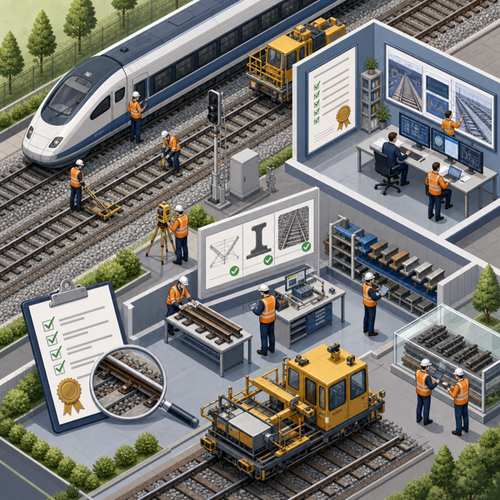
In the fast-evolving world of railway engineering, the quality of track geometry has never been more central to ensuring operational safety, service reliability, and scalable network performance. As global transportation demands increase, businesses must rely on robust, recognized standards to maintain infrastructure integrity, reduce risks, and achieve cost efficiencies. Covering the latest updates to EN 13848-6:2026, this article provides vital information for companies, engineers, and anyone interested in understanding why implementing such standards is essential today. With comprehensive insights into track geometry quality specifications, you’ll see how standardized practices can boost productivity, enhance security, support risk management, and facilitate network scaling for modern railways.
Overview / Introduction
Railway infrastructure forms the backbone of modern transportation, connecting cities, countries, and continents with efficiency and safety. At the heart of this complex system lies the precision of track geometry—the alignment, level, gauge, and twist of rails that together ensure smooth operation. Track geometry impacts not just the safety and comfort of travel but also the lifespan of rolling stock and the economic viability of railway operations.
In this landscape, international railway engineering standards like EN 13848-6:2026 play a critical role. These standards offer comprehensive, harmonized methods for evaluating, characterizing, and classifying track geometry parameters. For railway operators, infrastructure managers, and service providers, staying compliant with such standards is more than a regulatory obligation—it is a strategic necessity. This guide will introduce you to EN 13848-6:2026, explain its purpose and application, and provide best practices for effective adoption.
Detailed Standards Coverage
EN 13848-6:2026 – Characterization of Track Geometry Quality
Railway Applications – Track – Track Geometry Quality – Part 6: Characterization of Track Geometry Quality
EN 13848-6:2026 is a European standard developed by CEN’s Technical Committee 256, aimed at specifying uniform methods to characterize and classify the quality of track geometry. This standard is an integral part of the more extensive EN 13848 series, focusing here on the evaluation and classification aspects needed to determine whether a rail track section meets performance, reliability, and safety expectations.
This document outlines:
- Methods to quantitatively characterize the physical quality of track geometry (using parameters set in EN 13848-1)
- Procedures for assigning tracks to specific quality classes based on the Track Quality Index (TQI)
- Common calculation approaches, including standard deviation, number of isolated defects, combined standard deviation, and other advanced assessment models such as Point Mass Acceleration (PMA) and Vehicle Response Analysis (VRA)
What the Standard Covers and Its Scope
EN 13848-6:2026 provides a consistent, systematic approach to assessing track geometry on mainline railways (with a nominal gauge of 1,435 mm or more). Key technical tools include:
- Standard deviation methods for key parameters (longitudinal level, alignment, twist, gauge, cross-level)
- Use of TQI as a central index for classifying tracks
- Advanced models for nuanced analysis (including multi-parameter and vehicle-based response metrics)
Notably, this standard does not cover urban rail systems or tracks with nominal gauges under 1,435 mm, focusing instead on conventional and high-speed mainlines.
Key Requirements and Specifications
- Track Quality Index (TQI): Central measure calculated—typically as a standard deviation—across defined track sections (commonly 200 m for maintenance, up to 1 km or entire networks for strategic analysis)
- Parameters Monitored: Longitudinal level, alignment (both D1 and D2 wavelength ranges), twist, gauge, and cross-level. All data is collected according to EN 13848-1.
- Quality Classes (TQC): Definition of track segments' performance levels, tied directly to operational speed and parameters' measured values
- Assessment Methods: Beyond standard deviation, includes counting isolated defects, using combined standard deviation (CoSD) of multiple parameters, and employing dynamic assessment via Point Mass Acceleration (PMA) or simulation of Vehicle Response Analysis (VRA)
Who Needs to Comply
This standard is mandatory for:
- Railway infrastructure managers responsible for mainline tracks
- Maintenance organizations contracted for network upkeep
- Engineering consultants evaluating existing or planned rail sections
- Regulatory or certifying bodies assessing conformance with European safety and quality directives
- Rolling stock owners/operators who require assurance on ride quality and safety
- Contractors and equipment suppliers involved in track construction, renewal, or assessment
Practical Implications for Implementation
Implementing EN 13848-6:2026 requires regular measurement and analysis of track geometry using approved systems and following prescribed calculation methods. It ensures track sections are systematically classified for targeted maintenance, investment planning, and safety management. Leveraging consistent indices such as the TQI, managers can:
- Identify sections with deteriorating quality
- Prioritize interventions to minimize risk and maximize network uptime
- Measure the effectiveness of maintenance regimes
- Meet legal and contractual obligations for safety and performance
- Facilitate transparent communication with stakeholders, regulators, and service users
Notable Features
- Provides a harmonized methodology for pan-European benchmarking of track quality
- Encourages data-driven asset management, improving predictive maintenance
- Supports integration of advanced assessment models like PMA and VRA (extending beyond traditional static indicators)
Key highlights:
- Centralizes track geometry assessment using quantitative methods
- Directly ties track classification to operational safety and ride quality
- Supports data-driven decision-making for optimized rail network management
Access the full standard:View EN 13848-6:2026 on iTeh Standards
Industry Impact & Compliance
How EN 13848-6:2026 Affects Businesses
Modern railway operations are more competitive and regulated than ever. Adherence to EN 13848-6:2026 boosts credibility and operational efficiency for railway undertakings and infrastructure managers. Implementing this standard provides:
- A common language for benchmarking track quality across international networks
- Improved network safety and protection against asset deterioration
- Better risk management by identifying potential derailment threats early
- Enhanced productivity as maintenance investments are targeted where most effective
Compliance Considerations
- Regulatory Pressure: Many European and international authorities require conformance with harmonized track geometry standards as part of safety and performance certification.
- Audits & Inspections: Routine monitoring, combined with periodic third-party audits, ensures compliance and helps companies avoid costly penalties or service suspensions.
- Transparency: Documented assessment and reporting underpin trust among regulators, operators, customers, and suppliers.
Benefits of Adopting EN 13848-6:2026
- Boosts Safety: Early detection of faults mitigates derailment and accident risks
- Drives Operational Efficiency: Enables predictive maintenance and reduced downtime
- Facilitates Scalability: Standardized reporting and assessment streamline integration of additional tracks or interoperability across borders
- Enables Strategic Planning: Clear, standardized data supports better investment decisions and optimal resource allocation
- Promotes Continuous Improvement: Ongoing measurement and analysis help organizations refine processes and adopt new maintenance technologies
Risks of Non-Compliance
- Exposure to safety incidents and infrastructure failures
- Increased likelihood of regulatory sanctions and service limitations
- Higher maintenance costs due to reactive (rather than proactive) strategies
- Lost opportunities for cross-border cooperation and access to international funding
Implementation Guidance
Common Implementation Approaches
- Systematic Measurement: Use track-recording vehicles or approved manual/lighter systems to capture geometry data at regular intervals.
- Standardized Calculation: Apply EN 13848-6’s algorithms (such as standard deviation or combined indices) for computation of TQI and assignment of TQC.
- Data Management: Utilize digital asset management platforms for long-term storage, trending, and predictive analytics.
- Integration: Embed measurement protocols and quality reporting in operational workflows—maintenance planning, capital project appraisal, and safety management.
Best Practices for Adoption
- Training: Equip engineering, maintenance, and operational staff with the knowledge to accurately interpret geometry results and respond to flagged issues.
- Calibration & Validation: Regularly calibrate measurement systems and validate computed indexes, leveraging cross-references with certified data.
- Transparency: Maintain clear records of algorithms, parameter settings, and track section definitions to facilitate both internal reviews and external audits.
- Stakeholder Communication: Use standardized reports to foster collaboration and informed discussion among maintenance teams, asset managers, and senior leadership.
- Continuous Improvement: Monitor industry developments—such as updates in the EN 13848 series—and participate in knowledge-sharing forums to stay at the forefront of best practices.
Resources for Organizations
- Official Documentation: Acquire the latest EN 13848-6:2026 standard and related parts from trusted platforms such as iTeh Standards.
- Industry Associations: Engage with sector bodies and working groups for lessons learned and benchmarking data.
- Technology Vendors: Work with suppliers certified in rail measurement and data analytics tools for up-to-date solutions.
Conclusion / Next Steps
Standardizing track geometry quality assessment is no longer optional; it is fundamental to business success in railway infrastructure management. EN 13848-6:2026 provides a robust, validated, and harmonized approach to ensure safety, uptime, and cost efficiency while supporting strategic growth and cross-border operations.
Key takeaways:
- Consistent geometry classification is vital to risk reduction and performance optimization
- Data-driven compliance streamlines reporting, maintenance, and investment cycles
- EN 13848-6:2026 offers actionable methodologies used by leading European networks and accepted by regulators worldwide
Recommendations:
- Invest in acquiring the standard and associated measurement tools
- Embed EN 13848-6:2026 protocols into your asset management and maintenance planning
- Stay current—monitor updates and contribute to industry best practices
For organizations seeking to future-proof operations, adopting EN 13848-6:2026 is an essential step—unlocking both efficiency and innovation across the railway sector.
Explore the full standard and more railway engineering specifications at iTeh Standards.
Categories
- Latest News
- New Arrivals
- Generalities
- Services and Management
- Natural Sciences
- Health Care
- Environment
- Metrology and Measurement
- Testing
- Mechanical Systems
- Fluid Systems
- Manufacturing
- Energy and Heat
- Electrical Engineering
- Electronics
- Telecommunications
- Information Technology
- Image Technology
- Precision Mechanics
- Road Vehicles
- Railway Engineering
- Shipbuilding
- Aircraft and Space
- Materials Handling
- Packaging
- Textile and Leather
- Clothing
- Agriculture
- Food technology
- Chemical Technology
- Mining and Minerals
- Petroleum
- Metallurgy
- Wood technology
- Glass and Ceramics
- Rubber and Plastics
- Paper Technology
- Paint Industries
- Construction
- Civil Engineering
- Military Engineering
- Entertainment