


Key Standards for Commercial Vehicle Tanks: Safety, Design, and Equipment Compliance
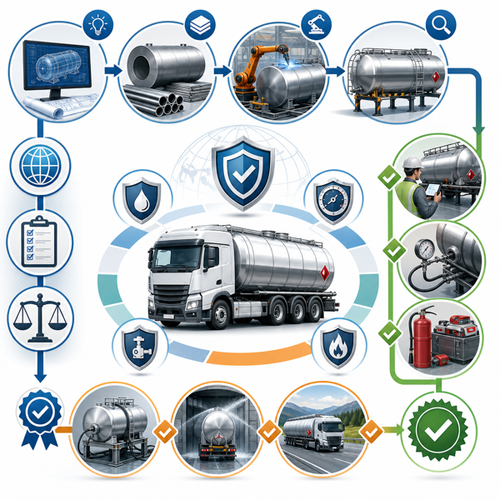
The transportation of dangerous goods by road demands strict compliance with internationally recognized standards to ensure both public safety and business efficiency. In commercial vehicle operations—especially those involving hazardous materials—modern standards underpin every aspect from vehicle tank design to critical equipment such as manhole covers. This article provides an accessible yet comprehensive overview of two pivotal standards: SIST EN 14025:2024/AC:2025 (design and construction of metallic pressure tanks) and SIST EN 14512:2007 (hinged manhole covers and neckrings for liquid chemical transport). We will explain why these standards are indispensable for today’s businesses, how implementation drives productivity, security, and scalability, and what practical steps are required for adherence.
Overview / Introduction
Commercial vehicles are at the heart of worldwide logistics, carrying everything from essential chemicals to consumer products. When it comes to transporting dangerous goods, specialized tanks and equipment are subject to exacting international standards that ensure every journey is as safe as possible—from the vehicle itself to each component attached to it.
- Why Standards Matter:
- They establish a universal benchmark for safety, reliability, and environmental protection.
- They help businesses meet regional and international legal requirements.
- They streamline operations, minimize risk, and enable seamless cross-border activities.
In this article, you’ll learn:
- The scope and requirements of key commercial vehicle tank standards.
- How these guidelines improve operational security and business productivity.
- What implementation means in practice for transporters, manufacturers, and those overseeing fleet safety.
Detailed Standards Coverage
SIST EN 14025:2024/AC:2025 – Metallic Pressure Tank Design & Construction
Full Standard Title:Tanks for the transport of dangerous goods – Metallic pressure tanks – Design and construction
The SIST EN 14025:2024/AC:2025 standard sets out the requirements for designing and constructing metallic pressure tanks used in the road transport of dangerous goods. This incorporates requirements for tank body integrity, structural robustness, materials, manufacturing processes, testing, and documentation. The standard aims to minimize the risks associated with pressurized transportation—including leaks, ruptures, and mechanical failures—by demanding rigorous safety measures across design and fabrication.
What This Standard Covers:
- Scope: Applies to all metallic pressure tanks designed for hazardous goods transport with specific attention to pressurization factors and structural details.
- Requirements: Details on strength calculations, allowable stress values, types of permissible materials, and welding procedures. Specifies mandatory tests for new tanks and periodic inspections.
- Who Needs to Comply: Tank manufacturers, commercial vehicle body builders, chemical and petrochemical logistics providers, and fleet operators.
- Practical Implementation: Meeting this standard requires collaboration between engineers, quality control personnel, and fleet managers. Proper documentation, traceability of materials, and adherence to certified manufacturing practices are critical.
- Notable Features: The corrigendum ensures alignment with the latest European directives and reflects updates from industry feedback and incident analysis.
Key highlights:
- Comprehensive safety framework for design, construction, and material selection.
- Mandates regular inspection, re-certification, and thorough record-keeping.
- Ensures compatibility with European and international transport regulations.
Access the full standard:View SIST EN 14025:2024/AC:2025 on iTeh Standards
SIST EN 14512:2007 – Hinged Manhole Covers & Neckrings for Tank Equipment
Full Standard Title:Tanks for the transport of dangerous goods – Tank equipment for the transport of liquid chemicals – Hinged manhole covers and neckrings with pivoting bolts
SIST EN 14512:2007 specializes in the safety and performance requirements for one of the most crucial components on a chemical tanker: the manhole cover and its supporting neckring. Used on tanks operating at working pressures above 50 kPa, these covers are engineered to provide robust, leak-proof closure even under challenging transit conditions. The standard sets out detailed parameters for materials, mechanical design, sealing capability, pressure testing, and operational functionality.
What This Standard Covers:
- Scope: Applies to tanks for liquid chemicals equipped with hinged manhole covers using pivoting bolts, commonly seen on road and rail tankers.
- Requirements: Outlines strict protocols for design geometry, material selection (resistance to chemical attack, physical loads), sealing methods, as well as hydraulic and pneumatic pressure testing.
- Who Needs to Comply: Equipment manufacturers, tanker builders, road/rail operators transporting hazardous chemicals, and third-party maintenance providers.
- Practical Implementation: This involves integrating robust hinged covers, ensuring correct installation, and conducting initial and ongoing type and production testing (including pressure resistance and function checks).
- Notable Features: Provides an alternative empirical approval method for verification and sets criteria for marking and product documentation to ensure full traceability.
Key highlights:
- Guarantees containment integrity at pressure, minimizing risk of spills during transit.
- Encompasses both type and production testing—comprehensive quality assurance.
- Simplifies cross-border operations by aligning with European Transport Directives (RID/ADR).
Access the full standard:View SIST EN 14512:2007 on iTeh Standards
Industry Impact & Compliance
How Standards Affect Businesses
- Legal Compliance: Meeting these standards is not just about best practice—it’s a legal requirement for commercial carriers in the EU and most international jurisdictions.
- Safety Assurance: Properly implemented, these protocols protect drivers, the public, and the environment from hazardous spills or accidents.
- Competitive Advantage: Consistent compliance demonstrates professionalism to clients and regulators, making it easier to win contracts and gain market trust.
- Risk Management: Failure to comply can result in legal action, expensive recalls, insurance claim denials, and loss of business license.
Benefits of Adopting These Standards
- Enhanced operational efficiency through reduced downtime and fewer incidents.
- Easier access to international markets due to harmonized certification.
- Lower insurance costs by minimizing liability risks.
- Improved corporate reputation and customer confidence.
Implementation Guidance
Common Implementation Approaches
- Gap Analysis:
- Review current tank vehicles and components against standard requirements.
- Training:
- Ensure all technical and operational staff understand the purpose and technical aspects of the standards.
- Supplier Vetting:
- Source from certified manufacturers for tanks and equipment (manhole covers, neckrings).
- Quality Control:
- Maintain robust inspection, testing, and documentation procedures.
- Continuous Improvement:
- Stay updated with amendments (such as corrigenda) and adapt your process regularly.
Best Practices
- Documentation: Keep thorough records of inspections, modifications, and testing per standard clauses.
- Preventive Maintenance: Use checklists derived from these standards for planned maintenance rounds.
- Periodic Audits: Perform internal and external audits to assess compliance and pinpoint improvement areas.
Resources for Organizations
- Utilize technical support from standardization bodies and professional consultants.
- Refer to training modules offered by logistics and chemical transport associations.
- Make iTeh Standards your information hub for latest updates, full publications, and compliance checklists.
Conclusion / Next Steps
Implementing SIST EN 14025:2024/AC:2025 and SIST EN 14512:2007 is more than a regulatory checkbox—it’s an investment in the resilience, safety, and productivity of your commercial vehicle fleet. Adhering to these key standards helps your organization scale operations, enter new markets, and assure stakeholders of your commitment to best practice and continuous improvement.
Next steps for organizations:
- Regularly review your compliance with evolving standards.
- Train personnel on the nuances and importance of tank and equipment standards.
- Explore detailed requirements and practical guidance by accessing the full standards on iTeh Standards.
Future-proof your business, safeguard your assets, and lead the industry in reliability and safety by adopting internationally recognized commercial vehicle standards today.
Categories
- Latest News
- New Arrivals
- Generalities
- Services and Management
- Natural Sciences
- Health Care
- Environment
- Metrology and Measurement
- Testing
- Mechanical Systems
- Fluid Systems
- Manufacturing
- Energy and Heat
- Electrical Engineering
- Electronics
- Telecommunications
- Information Technology
- Image Technology
- Precision Mechanics
- Road Vehicles
- Railway Engineering
- Shipbuilding
- Aircraft and Space
- Materials Handling
- Packaging
- Textile and Leather
- Clothing
- Agriculture
- Food technology
- Chemical Technology
- Mining and Minerals
- Petroleum
- Metallurgy
- Wood technology
- Glass and Ceramics
- Rubber and Plastics
- Paper Technology
- Paint Industries
- Construction
- Civil Engineering
- Military Engineering
- Entertainment