


Fuel System Standards for Road Vehicles: Enhancing Safety, Performance, and Innovation
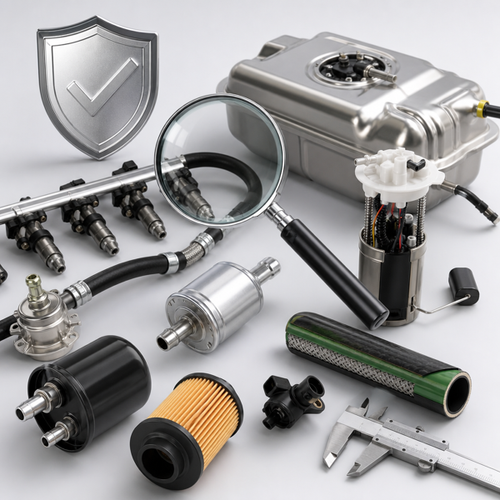
Fuel System Standards for Road Vehicles: Enhancing Safety, Performance, and Innovation
Safer, cleaner, and more efficient mobility is transforming how businesses and consumers interact with road vehicles. From diesel and gasoline to hydrogen and liquefied natural gas (LNG), rapid advances in propulsion technologies make robust fuel system standards absolutely essential. This comprehensive guide explores four cornerstone international standards shaping the future of fuel systems in road vehicles. Whether you are a manufacturer, fleet operator, engineer, or business leader, understanding and implementing these standards enables greater productivity, security, and scaling when deploying advanced automotive solutions.
Overview / Introduction
The automotive industry is amid an unprecedented technological revolution. Fuel systems are at the heart of this evolution, powering everything from heavy-duty diesel trucks to clean hydrogen-powered vehicles. As vehicles become more complex and new fuels enter the mainstream, the need for harmonized international standards has never been more pressing. Standards ensure not only safety and performance but also enable interoperability, global market access, and sustainable business growth.
By integrating the latest state-of-the-art requirements from the International Organization for Standardization (ISO), companies can future-proof their products and processes. This article breaks down:
- The importance of fuel systems standards
- Key requirements of four leading ISO standards
- Practical ways to implement these standards
- The business case for compliance in a rapidly changing market
Whether your focus is on diesel engines, hydrogen, LNG, or gasoline direct injection (GDI) technologies, these standards are the bedrock for safe and scalable innovation.
Detailed Standards Coverage
ISO 12251:2026 – Diesel Engines — Clamp Mounted CR Fuel Injectors — Mounting Dimensions
Diesel engines — Clamp mounted CR fuel injectors — Mounting dimensions
ISO 12251:2026 specifies the dimensional requirements for clamp-mounted common rail (CR) fuel injectors and their corresponding cylinder head features in diesel engines. It distinguishes between injectors with straight capnuts (Type A) and stepped capnuts (Type B), each coming in various sizes suited to different applications.
The scope covers:
- Standardized mounting interfaces for reliable installation
- Guidance for engineers designing diesel engine components
- Specifications that aid in reducing injector body distortion and enhancing fuel system durability
Key requirements include correct alignment, guiding diameters, and concentricity to ensure precise fuel injection. The standard also updates and clarifies measurements related to sealing (washer diameter, transition radii, and washer thickness), reflecting the latest advancements in injector design and combustion efficiency.
Who needs to comply?
- Diesel engine manufacturers
- Tier-one injector suppliers
- Automotive and off-highway equipment OEMs
Practical implications:
- Simplifies new engine development and retrofitting
- Reduces risk of vibration and leakage
- Enables global compatibility across suppliers
Key highlights:
- Covers mounting dimensions for both Type A (straight capnut) and Type B (stepped capnut) injectors
- Emphasizes installation to prevent deformation and leakage
- Ensures injector-to-cylinder head compatibility for various engine designs
Access the full standard:View ISO 12251:2026 on iTeh Standards
ISO 13984:2026 – Liquid Hydrogen — Land Vehicle Fuelling Protocol
Liquid hydrogen — Land vehicle fuelling protocol
ISO 13984:2026 lays out the fuelling protocols and safety requirements for transferring liquid hydrogen (LH₂) from station to vehicle. This standard guides the design, installation, and operation of hydrogen fuel stations serving vehicles equipped with cryogenic (LH₂) storage as per ISO 13985. Given the increasing uptake of hydrogen-powered mobility for both light-duty and commercial vehicles, this is a critical resource for industry stakeholders.
The standard covers:
- Station and vehicle fuelling interfaces
- Piping materials and layout
- Precautions to prevent hydrogen venting, fire, or explosion
It addresses the full spectrum of the fuelling process: pre-fuelling checks, safe and efficient hydrogen transfer, and post-fuelling assessment. The protocol is currently tailored for vehicle storage systems sized between 0.6 and 4 cubic meters, with broader relevance as hydrogen applications expand.
Who needs to comply?
- Hydrogen station designers and installers
- Automotive OEMs integrating hydrogen fuel systems
- Utilities and clean energy companies developing fuelling infrastructure
Practical implications:
- Ensures fuelling speed and interoperability
- Minimizes fire and explosion risk during transfer
- Clarifies roles and responsibilities for safety and operational training
Key highlights:
- Defines fuelling rates, pressure, and temperature control
- Includes earthing, remote control, and relief devices
- Mandates emergency plans and conformity validation
Access the full standard:View ISO 13984:2026 on iTeh Standards
ISO 19723-2:2025 – Road Vehicles — LNG Fuel Systems — Part 2: Test Methods
Road vehicles — Liquefied natural gas (LNG) fuel systems — Part 2: Test methods
ISO 19723-2:2025 specifies comprehensive test methods for evaluating the safety and performance of LNG fuel system components in accordance with ISO 15403 and ISO 3833. The document serves manufacturers, test laboratories, and regulators overseeing original production and retrofitted vehicles utilizing LNG propulsion systems.
Areas covered include:
- Mechanical strength of LNG tanks and mounting systems
- Leak detection and receptacle testing
- Functional validation of valves and venting systems
- Bonfire and hold time tests for pressure stability
This standard is crucial for verifying compliance before components reach the market and as part of ongoing quality assurance programs.
Who needs to comply?
- LNG system designers and installers
- Testing facilities for vehicle certification
- Fleet operators implementing natural gas solutions
Practical implications:
- Guarantees safety under real-world incident scenarios
- Supports new fuel system adoption and market expansion
- Provides benchmarking for global LNG regulations
Key highlights:
- Inertia and static load testing for tank mounts
- Detailed leak and bonfire testing procedures
- Standardized marking and documentation requirements
Access the full standard:View ISO 19723-2:2025 on iTeh Standards
ISO 21042:2026 – Gasoline Engines with Direct Fuel Injection (GDI Engines) — Installation of the High-Pressure Fuel Pump to the Engine
Gasoline engines with direct fuel injection (GDI engines) — Installation of the high-pressure fuel pump to the engine
ISO 21042:2026 standardizes essential dimensions for integrating high-pressure fuel pumps into gasoline direct injection (GDI) engines. As GDI engines become the norm for achieving fuel efficiency and emission reduction, precise installation of high-pressure pumps is paramount for optimal engine performance and reliability.
Coverage includes:
- Required mounting interface dimensions
- Key tolerances for sealing and fitting
- General guidance for accommodating manufacturing differences
While the external shape and connection locations are left application-specific, this standard ensures baseline compatibility and ease of assembly during both original equipment manufacture and service operations.
Who needs to comply?
- Gasoline engine and pump manufacturers
- Vehicle OEMs standardizing powertrain platforms
- Component suppliers supporting engine assembly lines
Practical implications:
- Reduces risk of installation errors and pump failure
- Enhances compatibility in global supply chains
- Supports modular engine architecture for scaling production
Key highlights:
- Defines pump-to-engine mounting geometry
- Ensures lubricated and pressure-tight connections
- Leaves flexibility for custom application needs
Access the full standard:View ISO 21042:2026 on iTeh Standards
Industry Impact & Compliance
International fuel system standards provide much more than a checklist for compliance—they are strategic enablers for the entire automotive ecosystem. For businesses, adherence to ISO standards:
- Opens access to global markets where regulatory convergence is essential
- Demonstrates commitment to safety, which can lower insurance and liability costs
- Facilitates seamless adoption of emerging technologies (hydrogen, LNG, GDI)
Key compliance considerations:
- Documentation: Maintain up-to-date records of testing, installation, and protocol adherence
- Training: Ensure personnel are equipped with current best practices (especially for hazardous fuels)
- Continual Improvement: Track revisions and update processes to comply with the latest editions
Benefits at a glance:
- Higher safety margins for operators and end-users
- Supply chain transparency and component interoperability
- Faster product development cycles through harmonized specifications
- Resilience and scalability as new engine and fuel technologies are deployed
Risks of non-compliance include:
- Increased potential for fire, explosion, or fuel system failures
- Regulatory fines or loss of certification
- Lost business opportunities in international markets
- Damage to brand reputation from safety incidents
Implementation Guidance
Successfully integrating these standards involves a combination of robust process design, up-to-date technical knowledge, and teamwork across departments. To get the most from the road vehicle fuel systems standards:
Common Implementation Approaches
- Gap Analysis – Compare current processes, equipment, and documentation to standard requirements.
- Staff Training and Certification – Provide targeted education for engineering, production, and safety staff.
- Document Management – Implement a system for version control and access to standards.
- Supplier Engagement – Audit and align supplier specifications using relevant ISO references.
Best Practices:
- Start implementation during new product development (NPD) phases
- Engage cross-functional teams: engineering, quality, operations, and safety
- Use standards as a baseline for local regulatory submissions
- Regularly review and audit for compliance; update systems as standards evolve
Resources for Organizations:
- Access authoritative standards documents on iTeh Standards
- Leverage support from industry associations and regulatory agencies
- Partner with third-party testing and certification bodies for impartial validation
Conclusion / Next Steps
The future of mobility and fuel systems is unfolding rapidly—and only organizations with a solid grasp of standards can keep pace. By adopting leading ISO standards governing fuel injectors, hydrogen fuelling, LNG systems, and GDI engine fuel pumps, companies position themselves for unrivaled safety, efficiency, and scalability.
Key takeaways:
- Fuel system standards are the foundation of safe and innovative road vehicle technologies
- Implementing these standards ensures compliance, reduces risks, and enhances productivity
- Access to reliable, vetted specifications is essential for scaling up new fuel technologies
Recommendations:
- Review current systems for alignment with ISO 12251, ISO 13984, ISO 19723-2, and ISO 21042
- Invest in training and documentation systems
- Regularly consult iTeh Standards for updates to maintain leadership in a changing industry
Take your next step—explore each standard in detail, evaluate your organization’s readiness, and ensure your fuel systems are built on a foundation of safety, performance, and global best practices.
Categories
- Latest News
- New Arrivals
- Generalities
- Services and Management
- Natural Sciences
- Health Care
- Environment
- Metrology and Measurement
- Testing
- Mechanical Systems
- Fluid Systems
- Manufacturing
- Energy and Heat
- Electrical Engineering
- Electronics
- Telecommunications
- Information Technology
- Image Technology
- Precision Mechanics
- Road Vehicles
- Railway Engineering
- Shipbuilding
- Aircraft and Space
- Materials Handling
- Packaging
- Textile and Leather
- Clothing
- Agriculture
- Food technology
- Chemical Technology
- Mining and Minerals
- Petroleum
- Metallurgy
- Wood technology
- Glass and Ceramics
- Rubber and Plastics
- Paper Technology
- Paint Industries
- Construction
- Civil Engineering
- Military Engineering
- Entertainment