


Fuel Systems Standards for Road Vehicles: Ensuring Safety, Efficiency, and Innovation
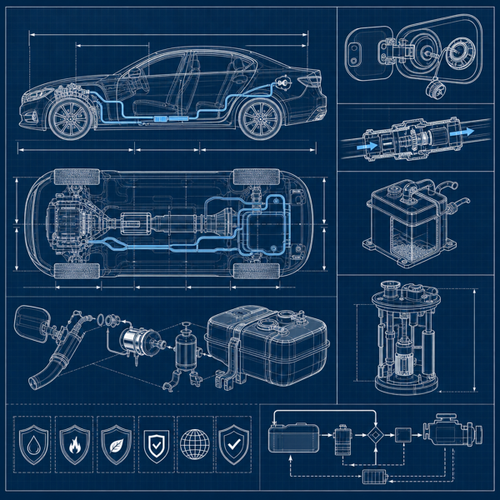
Today’s road vehicles are engines of innovation in both a literal and figurative sense. The technologies that power them—diesel, gasoline, hydrogen, and liquefied natural gas (LNG)—are advancing at an unprecedented pace. In this environment, fuel systems standards aren’t mere technicalities; they are crucial guidelines that ensure efficiency, safety, and compatibility as new automotive technologies are rapidly adopted. This article explores four pivotal international standards, outlining their scope and importance, and providing practical insights for organizations navigating the changing landscape of road vehicle fuel systems.
Overview / Introduction
The automotive industry is undergoing significant transformation as the world seeks sustainable, efficient, and safe transportation solutions. New propulsion technologies—from common rail (CR) diesel injection systems to hydrogen and LNG fuel systems and advanced gasoline direct injection (GDI) engines—require precise engineering to meet performance and regulatory expectations. Standards such as ISO 12251:2026, ISO 13984:2026, ISO 19723-2:2025, and ISO 21042:2026 play a vital role in this context by providing a common language, safety benchmarks, and interoperable frameworks for manufacturers, suppliers, and fuel infrastructure providers.
Why do these standards matter more than ever? As vehicles and fueling systems become increasingly complex and integrated, adopting universally recognized specifications is essential for scaling production, ensuring compatibility, and streamlining operations across international markets. Compliance doesn’t just reduce risks; it boosts productivity, optimizes resource use, and underpins innovation.
In this guide, you’ll discover:
- The essential requirements and scope of each standard
- How they address the unique challenges of different fuel systems
- The business and operational benefits of adopting best-in-class standards
- Practical steps for successful implementation
Detailed Standards Coverage
ISO 12251:2026 - Diesel Engines — Clamp Mounted CR Fuel Injectors — Mounting Dimensions
Diesel engines — Clamp mounted CR fuel injectors — Mounting dimensions
What does this standard cover?
ISO 12251:2026 is a critical specification for diesel engine designers and manufacturers. It focuses specifically on dimensional requirements for clamp mounted common rail (CR) fuel injectors and how they interact with cylinder head features. This helps to ensure precise installation, optimal fuel atomization, and robust performance, whether you are about to implement a straight (Type A) or stepped (Type B) injector configuration.
Key requirements and specifications:
- Defines two types of nozzle capnuts for injectors: Type A (straight) and Type B (stepped)
- Provides a series of dimensional tables to standardize guide diameters, shaft diameters, and sealing washer sizes
- Prescribes concentricity, mounting tolerances, and interface features to assure repeatable installation
- Aligns with updated references: now referencing ISO 21920-1 for surface texture and adding parameters for sealing washer outer diameter and thickness
Who needs to comply?
- Diesel engine manufacturers
- Injector suppliers and cylinder head designers
- Automotive OEMs producing or integrating diesel engine systems
Practical implications: A unified set of mounting dimensions minimizes risk of misalignment or deformation—a particular issue for injectors that must withstand high internal pressures. Standardization ensures that global supply chains can deliver interchangeable parts and facilitates scaling production.
Notable features:
- Comprehensive dimensional tables and diagrams
- Clear subdivision by capnut type and injector size
- Updated to address recent engineering and design practices
Access the full standard:View ISO 12251:2026 on iTeh Standards
ISO 13984:2026 - Liquid Hydrogen — Land Vehicle Fuelling Protocol
Liquid hydrogen — Land vehicle fuelling protocol
What does this standard cover?
ISO 13984:2026 is at the cutting edge of clean vehicle technology, providing the design, installation, and operational requirements for safely fueling land vehicles with liquid hydrogen (LH2). The standard sets out the protocols required for transferring hydrogen from fueling stations to vehicle storage systems, with a keen focus on interoperable, fast, and safe refueling operations.
Key requirements and specifications:
- Sets limits for vehicle storage systems (internal volume from 0.6 m³ to 4 m³)
- Details requirements for material compatibility at cryogenic temperatures, safety systems, and interfaces
- Specifies pressure and temperature controls, hydrogen quality, and fuelling rates
- Mandates robust safety, training, emergency response planning, and inspection procedures
- Aligns with related hydrogen tank standards (ISO 13985), ensuring interoperable storage and fueling
Who needs to comply?
- Hydrogen fueling station designers and operators
- Vehicle manufacturers integrating LH2 storage
- Safety engineers and regulatory authorities in hydrogen infrastructure
Practical implications: For businesses exploring hydrogen mobility, this standard is essential to ensure that fueling operations are not only quick and interoperable but also meet safety and environmental obligations, reducing risks of explosion or leaks.
Notable features:
- Comprehensive process controls and verification protocols
- Integration with global hydrogen fuel quality standards
- Emphasis on interoperability between stations and a wide range of hydrogen vehicles
Access the full standard:View ISO 13984:2026 on iTeh Standards
ISO 19723-2:2025 - Road Vehicles — Liquefied Natural Gas (LNG) Fuel Systems — Part 2: Test Methods
Road vehicles — Liquefied natural gas (LNG) fuel systems — Part 2: Test methods
What does this standard cover?
ISO 19723-2:2025 elaborates a suite of test methods and performance criteria for components within a road vehicle’s LNG fuel system. From tank mounting strength to leak testing and safety checks, this standard provides assurance that LNG systems in new or converted vehicles meet stringent operational and regulatory expectations.
Key requirements and specifications:
- Prescribes tank mounting strength (both inertia and static tests, including acceptance criteria)
- Requires leak tests for tanks, valves, and piping
- Specifies functional tests for valves, hold time, venting, and accumulation systems
- Includes bonfire tests for safety in extreme conditions
- Covers receptacle clearance and mounting for safe fueling interface
- Adopts up-to-date terminology, references, and compatibility with related standards (e.g., ISO 3833 for vehicles, ISO 15403 for fuel)
Who needs to comply?
- Automotive OEMs and LNG system integrators
- Testing laboratories and vehicle converters
- Regulatory agencies certifying alternative fuel vehicles
Practical implications: Following ISO 19723-2:2025 means significant reductions in failure modes or safety incidents caused by improper tank installation or component leaks—vital for LNG’s acceptance as a viable vehicle fuel.
Notable features:
- Clear sequential test methodologies
- Safety-focused acceptance criteria and marking requirements
- Compatibility with mono-fuel, bi-fuel, and dual-fuel applications
Access the full standard:View ISO 19723-2:2025 on iTeh Standards
ISO 21042:2026 - Gasoline Engines with Direct Fuel Injection (GDI Engines) — Installation of the High-Pressure Fuel Pump to the Engine
Gasoline engines with direct fuel injection (GDI engines) — Installation of the high-pressure fuel pump to the engine
What does this standard cover?
ISO 21042:2026 defines the essential dimensions and installation requirements for integrating the high-pressure fuel pump onto a GDI (gasoline direct injection) engine. Although the outside housing and connector location are application-specific, installation points and interface features are standardized to promote compatibility and ease of assembly.
Key requirements and specifications:
- Specifies the interface dimensions for high-pressure fuel pump mounting
- Covers the mechanical connection to the engine block
- Defines requirements for lubrication and both low- and high-pressure fuel connectors
- Ensures that pump integration does not compromise safety or performance
Who needs to comply?
- Engine manufacturers developing GDI platforms
- Tier 1 and Tier 2 suppliers of high-pressure fuel pumps
- Automotive design and packaging engineers
Practical implications: A standardized installation interface streamlines engine assembly, facilitates modular production, and helps ensure robust performance even as direct injection fueling pressures increase. This is particularly important for system durability and emissions compliance.
Notable features:
- Robust guidance for installation tolerances
- Flexibility to accommodate application-specific connector locations
- Focused on maximizing reliability and interchangeability across new engine platforms
Access the full standard:View ISO 21042:2026 on iTeh Standards
Industry Impact & Compliance
Adopting recognized fuel systems standards is more than a matter of regulatory compliance—it's a strategic necessity. As automotive businesses navigate tighter emissions legislation and increasing technological complexity, harmonized standards bridge the gap between innovation and robust, scalable production.
Business benefits of compliance include:
- Streamlined global supply chains as components become interoperable
- Reduced warranty claims due to standardized testing and performance expectations
- Faster onboarding of new technologies (hydrogen, LNG, GDI, advanced diesel)
- Enhanced safety and environmental responsibility—meeting both legal and consumer demands
Risks of non-compliance:
- Increased likelihood of product recalls and safety incidents
- Lost market opportunities due to lack of international acceptance
- Difficulty scaling up production or integrating new technologies
- Legal and regulatory penalties
By making these standards a foundational part of your product design and production, you future-proof your business and reinforce consumer and regulator trust.
Implementation Guidance
Implementing road vehicle fuel system standards involves systematic changes in product development, testing, and quality assurance processes. Here’s how organizations typically approach compliance:
- Gap Assessment: Compare current designs, procedures, and testing against each standard’s requirements.
- Design Integration: Embed dimension and interface guidelines directly into CAD, manufacturing, and assembly documentation.
- Supplier Collaboration: Work with component and systems suppliers to confirm all parts meet the same standards (especially vital in modular or global supply chains).
- Testing and Validation: Implement the prescribed test methods (leak, mounting strength, functional, etc.), document the outcomes, and adjust processes as needed.
- Training: Educate engineering, assembly, and quality control teams using the standard’s documentation and industry best practices.
- Continuous Improvement: Regularly review updates or technical revisions of the standards to stay ahead of new requirements.
Best practices include:
- Using digital tools for requirements tracking
- Participating in ISO or industry working groups to anticipate upcoming changes
- Retaining third-party certification for higher market acceptance
- Aligning safety and emergency protocols with standardized expectations
Resources for advancement:
- Full standard documentation via standards.iteh.ai
- Technical committees and OEM guidance documents
- Industry seminars, workshops, and webinars on fuel systems compliance
Conclusion / Next Steps
Fuel system standards are the backbone of safe, innovative, and efficient road vehicle technology. Whether you’re focused on advanced diesel injectors, cutting-edge hydrogen refueling, LNG fuel systems validation, or the next generation of GDI gasoline engines, these international standards ensure your business remains competitive, compliant, and ready to meet future demands.
Key takeaways:
- Embrace standards early to stay ahead of regulations and unlock international markets
- Leverage them as enablers for productivity, security, and scalability as new fuels are introduced
- Regularly update internal processes to reflect the latest revisions for enduring compliance
Automotive stakeholders serious about advancing vehicle technology and market reach should explore these standards in full, integrating their guidance into every level of product and process development.
Ready to lead innovation in vehicle fuel systems? Explore the full standards portfolio at iTeh Standards and keep your organization at the forefront of safe, efficient, and future-proof mobility.
Categories
- Latest News
- New Arrivals
- Generalities
- Services and Management
- Natural Sciences
- Health Care
- Environment
- Metrology and Measurement
- Testing
- Mechanical Systems
- Fluid Systems
- Manufacturing
- Energy and Heat
- Electrical Engineering
- Electronics
- Telecommunications
- Information Technology
- Image Technology
- Precision Mechanics
- Road Vehicles
- Railway Engineering
- Shipbuilding
- Aircraft and Space
- Materials Handling
- Packaging
- Textile and Leather
- Clothing
- Agriculture
- Food technology
- Chemical Technology
- Mining and Minerals
- Petroleum
- Metallurgy
- Wood technology
- Glass and Ceramics
- Rubber and Plastics
- Paper Technology
- Paint Industries
- Construction
- Civil Engineering
- Military Engineering
- Entertainment