


Fibre Optic Interconnecting Devices: Key Standards for Modern Telecommunications
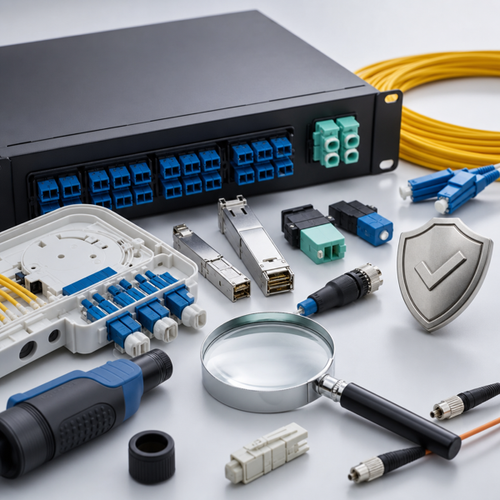
In the fast-paced world of telecommunications, fibre optic interconnecting devices and their associated passive components are foundational to high-speed, secure, and reliable network infrastructures. As demand for robust data transmission grows, applying the right standards isn’t just technical hygiene—it’s essential for productivity, security, and scalability. This article unpacks four essential international standards shaping the quality and reliability of fibre optic networks today, making global communication possible at scale. We’ll explain what these standards mean, how they help organizations, and why adopting them is a smart move for every business invested in future-ready telecommunications.
Overview
The telecommunications industry has undergone massive change in recent years, powered by advances in fibre optic technology. As businesses, governments, and consumers move to cloud-based services, high-definition media, and IoT-driven data streams, fibre networks need to be not only fast but also dependable and secure.
Why do standards matter? Without global standards, fibre optic systems would lack interoperability, leading to frequent failures, increased costs, and security vulnerabilities. Internationally recognized standards help businesses:
- Guarantee the reliability and safety of fibre networks
- Ensure compatibility between devices from different vendors
- Reduce downtime and maintenance expenses
- Support seamless scaling as business needs evolve
By mastering these standards, organizations can future-proof their infrastructure, mitigate risks, and unlock significant improvements in productivity, security, and scalability. In this article, you’ll discover:
- What each key standard covers and why it matters
- Best practices for implementation
- The positive impact on business operations
Detailed Standards Coverage
EN 61300-2-55:2017 – Testing the Strength of Mounted Fibre Optic Adaptors
Full Standard Title: Fibre optic interconnecting devices and passive components – Basic test and measurement procedures – Part 2-55: Tests – Strength of mounted adaptor
When installing fibre optic networks, ensuring that adaptors remain steadfastly mounted is critical. EN 61300-2-55:2017 defines the standardized procedure to assess the mounting strength of optical adaptors or receptacles when affixed to a fixture. This is vital in minimizing points of mechanical failure, especially in mission-critical telecom installations.
Scope and Key Requirements:
- Provides the methodology and apparatus needed to test the mounting strength of adaptors
- Specifies force application methods (such as Method A and Method B for mounting)
- Details pre-conditioning, measurement procedures, loading techniques, and post-test examination
- Recommends severity values by adaptor type (e.g., SC, LC, MPO)
Who Should Comply?
- Manufacturers of fibre optic adaptors and couplings
- Network integrators and infrastructure installers
- Data centers, telecom providers, and anyone dealing with high-density optical cabling
Practical Implications: Testing to EN 61300-2-55:2017 helps organizations prevent physical disconnects and network outages caused by mechanical stress or improper mounting. This is particularly relevant in environments with frequent cable moves, adds, or changes.
Key highlights:
- Ensures durability of mounted fibre optic adaptors
- Specifies clear mechanical load testing and safety margins
- Reduces maintenance intervention by preventing fixture failures
Access the full standard:View EN 61300-2-55:2017 on iTeh Standards
EN 61300-3-26:2002 – Measurement of the Angular Misalignment Between Fibre and Ferrule Axes
Full Standard Title: Fibre optic interconnecting devices and passive components – Basic test and measurement procedures – Part 3-26: Examinations and measurements – Measurement of the angular misalignment between fibre and ferrule axes
The precise alignment of fibre cores within connector ferrules is key to minimizing signal losses and preserving data integrity. EN 61300-3-26:2002 sets the standard for how to measure angular misalignment—a common source of insertion loss and reflection issues in singlemode connectors.
Scope and Key Requirements:
- Defines apparatus (ferrule holder, light source, screen) and calibration for measurement
- Outlines the step-by-step procedure for evaluating the angle between the fibre and ferrule axes
- Includes calculation formulas and best practices for data analysis
- Provides guidelines for both compliant manufacturing and in-field quality assurance
Who Should Comply?
- Connector manufacturers and quality control engineers
- Fibre optic assembly service providers
- Network operators concerned with loss minimization
Practical Implications: Adhering to this standard enables organizations to achieve consistent connector quality, leading to more reliable connections and fewer network disruptions due to poor alignment.
Key highlights:
- Standardizes angular misalignment measurement for higher performance
- Helps reduce connector losses and back reflections
- Promotes manufacturing consistency and easier troubleshooting
Access the full standard:View EN 61300-3-26:2002 on iTeh Standards
EN 61753-101-2:2006 – Performance for Fibre Management Systems in Controlled Environments
Full Standard Title: Fibre optic interconnecting devices and passive components performance standard – Part 101-2: Fibre management systems for category C – Controlled environment
Fibre management systems are the backbone of organized, high-density optical infrastructures. EN 61753-101-2:2006 defines the performance benchmarks—including mechanical, environmental, and optical criteria—needed to qualify a fibre management product for use in controlled (Category C) environments (such as data centers or central offices).
Scope and Key Requirements:
- Specifies minimum test severities—like vibration, temperature cycling, and mechanical load—for fibre management systems
- Covers product marking, traceability, documentation, and sample size for compliance verification
- Directs performance and durability testing that matches real-world operational and environmental stressors
- Allows for stricter criteria by agreement between customer and supplier
Who Should Comply?
- Manufacturers and suppliers of fibre management trays, closures, and hardware
- Enterprises deploying fibre networks in controlled indoor environments
- Certification bodies and systems integrators who validate product reliability
Practical Implications: Complying with this standard ensures that fibre management systems operate safely and reliably over their expected service life—reducing downtime and simplifying network expansions or changes.
Key highlights:
- Guarantees mechanical and environmental robustness
- Defines a clear test regimen to prove quality and reliability
- Supports network scalability and future upgrades
Access the full standard:View EN 61753-101-2:2006 on iTeh Standards
EN IEC 61977:2020 – Generic Specification for Fibre Optic Fixed Filters
Full Standard Title: Fibre optic interconnecting devices and passive components – Fibre optic fixed filters – Generic specification
Optical filters are pivotal for controlling signal wavelengths in DWDM systems, CATV, and sensing applications. EN IEC 61977:2020 sets the comprehensive requirements for fibre optic fixed filters. These passive components selectively allow or block certain wavelengths—whether for signal routing, noise reduction, or amplification flattening.
Scope and Key Requirements:
- Applies to all passive fibre optic fixed filters, including band-pass, short-wave pass, long-wave pass, notch, and gain-flattening types
- Covers device performance, environmental durability, marking, documentation, and safety
- Defines uniform terminology and test protocols for industry-wide compatibility
- Includes interface classification (by function, technology, and connection style) and detailed guidance on filter construction and application
Who Should Comply?
- Manufacturers and specifiers of optical filters for telecom and data transmission
- System engineers designing multi-wavelength or amplified networks
- Procurement professionals sourcing optical components
Practical Implications: Following this standard ensures that filters work reliably within larger network systems, providing the desired spectral shaping with minimal insertion loss or signal degradation.
Key highlights:
- Establishes consistent specifications for diverse filter categories
- Ensures compatibility across devices for network scaling
- Supports safe deployment and lifecycle management of passive components
Access the full standard:View EN IEC 61977:2020 on iTeh Standards
Industry Impact & Compliance
Implementing these comprehensive fibre optic standards transforms networks from vulnerable, patchwork solutions into secure, high-performance infrastructures. Here’s how they affect businesses:
Impact Areas:
- Operational reliability: Each standard minimizes physical or optical faults, ensuring dependable data transmission
- Interoperability: Devices from different manufacturers can be used in the same network
- Regulatory compliance: Meeting these standards may be a requirement for legal or contractual obligations
- Risk mitigation: Reduces the likelihood of costly outages, legal issues, or reputational damage
Business Benefits:
- Higher productivity: Less unplanned downtime and easier troubleshooting
- Greater security: Standards help avoid interface errors and vulnerabilities
- Ease of scaling: Future changes, capacity expansions, or upgrades are simplified
Risks of Non-Compliance:
- Increased risk of network failures or safety incidents
- Difficulty in vendor integration or sourcing spare parts
- Potential penalties for not meeting contract terms or regulatory requirements
Implementation Guidance
Adopting these fibre optic interconnecting device standards is achievable for networks of any size with the right approach.
Common Approaches:
- Gap Analysis: Start by assessing current infrastructure and comparing to standard requirements
- Staff Training: Educate technical teams on the specific testing, measurement, and documentation protocols
- Supplier Qualification: Choose vendors who supply fully compliant components—and verify certifications
- Deployment Testing: Utilize manufacturer and third-party testing services to ensure products meet specifications
- Ongoing Monitoring: Regular inspections and tests to maintain long-term compliance and performance
Best Practices:
- Work with certified, reputable suppliers who list compliance clearly
- Keep all documentation (certificates, test results) up-to-date and easily accessible
- Include regular standards reviews as part of your network operations strategy
- Budget for periodic upgrades as standards evolve
Resources:
- Detailed guidance and access to standards: iTeh Standards
- Industry webinars and tutorials on fibre testing, installation, and maintenance
- Partnerships with accredited labs for specialized measurements or certifications
Conclusion / Next Steps
From data centers to core telecom backbones, fibre optic interconnecting device standards define the performance, reliability, and safety expectations in our digital world. Complying with EN 61300-2-55:2017, EN 61300-3-26:2002, EN 61753-101-2:2006, and EN IEC 61977:2020 sets the foundation for productive, secure, and easily scalable networks.
Key takeaways:
- These standards address the strength, alignment, performance, and spectral management needs of fibre optic networks
- Implementation protects organizations from unexpected downtime, compliance risks, and scaling challenges
- Access to global, up-to-date standards is critical for future-proof operations
Recommendations:
- Audit your current fibre network components and management practices
- Engage with certified suppliers and workforce training initiatives
- Regularly consult authoritative sources like iTeh Standards to stay ahead of evolving best practices
Ready to transform your telecommunications infrastructure? Explore the full library of fibre optic interconnecting device standards on iTeh Standards and ensure your business is built on a foundation of quality, security, and scalability.
Categories
- Latest News
- New Arrivals
- Generalities
- Services and Management
- Natural Sciences
- Health Care
- Environment
- Metrology and Measurement
- Testing
- Mechanical Systems
- Fluid Systems
- Manufacturing
- Energy and Heat
- Electrical Engineering
- Electronics
- Telecommunications
- Information Technology
- Image Technology
- Precision Mechanics
- Road Vehicles
- Railway Engineering
- Shipbuilding
- Aircraft and Space
- Materials Handling
- Packaging
- Textile and Leather
- Clothing
- Agriculture
- Food technology
- Chemical Technology
- Mining and Minerals
- Petroleum
- Metallurgy
- Wood technology
- Glass and Ceramics
- Rubber and Plastics
- Paper Technology
- Paint Industries
- Construction
- Civil Engineering
- Military Engineering
- Entertainment