


Electromagnetic Compatibility in Telecommunications: Key Standards for Reliability and Growth
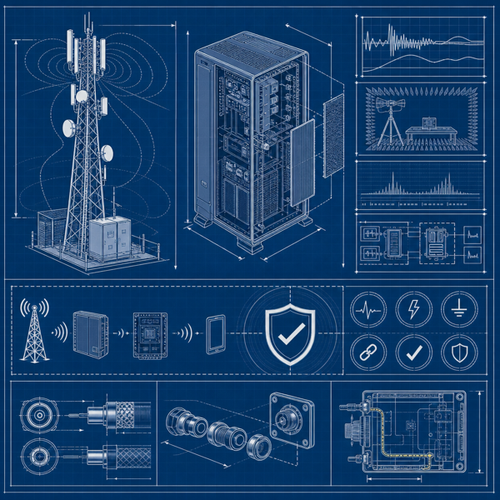
In today’s dynamic telecommunications landscape, ensuring seamless connectivity and device safety is a top business priority. At the core of dependable and scalable telecommunications infrastructures are international standards for electromagnetic compatibility (EMC) and fiber optic performance. This article breaks down three vital standards—SIST EN 12829:1997, SIST EN 301 489-35 V1.1.2:2013, and SIST EN 62149-1:2012—explaining their requirements, industry impact, and why their adoption is essential for both regulatory compliance and long-term business success. Whether you’re an industry professional or a curious reader, this guide will clarify how implementing these standards can boost security, enable scaling, and safeguard your organization’s future in a rapidly evolving sector.
Overview / Introduction
Telecommunications has become the backbone of the modern digital economy. With the explosion of wireless devices, medical implants, and advanced fiber optic networks, electromagnetic compatibility (EMC) and signal integrity are more crucial than ever. Adhering to robust standards is no longer optional—it is a legal, operational, and competitive must.
This article explores:
- What each standard covers and why it’s necessary
- Key EMC and fiber optic requirements in telecommunications
- Who needs to comply and best practices for implementation
- How compliance supports business productivity, security, and scalability
Along the way, you’ll discover practical guidance for integrating these standards into your organization, ensuring you remain agile and reliable in a connected world.
Detailed Standards Coverage
SIST EN 12829:1997 – Preparation of Water with Known Calcium Hardness
Surface active agents - Preparation of water with known calcium hardness (ISO 2174:1990 modified)
This standard specifies a reliable method for preparing water of known calcium hardness, which is essential for the accurate testing of surface active agents. Surface active agents (also known as surfactants) are widely used in the cleaning, cosmetics, and chemical industries. Their performance, for example, in detergents and emulsifiers, can be heavily influenced by water hardness. Consistency in water hardness ensures the repeatability and comparability of laboratory results, which is vital for both research and product development.
Key requirements and specifications:
- Provides detailed procedures to achieve precise calcium hardness in test water
- Supports reproducibility in laboratory testing of products containing surface active agents
- Involves careful measurement, mixing, and quality control steps to maintain standardization
Who needs to comply:
- Laboratories performing performance testing on detergents, cleaners, shampoos, and other surfactant products
- Manufacturers of surface-active products seeking consistency in quality checks
- Regulatory bodies and certifiers ensuring product safety and efficiency
Practical implications:
Implementing SIST EN 12829:1997 enables businesses to assure regulators and customers that their testing methods are scientifically valid. This boosts brand reputation and facilitates international market access by ensuring products meet comparable benchmarks.
Key highlights:
- Guarantees accuracy and reproducibility in surfactant testing
- Supports regulatory and certification requirements
- Enhances product quality control measures
Access the full standard:View SIST EN 12829:1997 on iTeh Standards
SIST EN 301 489-35 V1.1.2:2013 – EMC for Low Power Active Medical Implants
Electromagnetic compatibility and Radio spectrum Matters (ERM) - Electromagnetic Compatibility (EMC) standard for radio equipment and services - Part 35: Specific requirements for Low Power Active Medical Implants (LP-AMI) operating in the 2 483,5 MHz to 2 500 MHz bands
As modern medicine increasingly relies on wireless implants—such as pacemakers, neurostimulators, and insulin pumps—ensuring their uninterrupted, interference-free operation is literally a matter of life and death. SIST EN 301 489-35 V1.1.2:2013 lays out stringent EMC requirements specific to low power active medical implants (LP-AMIs) and associated peripheral devices, enhancing patient safety and the overall effectiveness of medical telemetry.
Scope and technical requirements:
- Covers EMC test conditions, performance assessments, and criteria for radio transceivers used with LP-AMIs
- Focuses on the 2.4835 to 2.500 GHz frequency range, which is reserved for short-range medical device communications
- Outlines necessary immunity to electromagnetic disturbance and limits emissions to prevent interference with other wireless devices
- Specifies precise testing for implantable and peripheral (external) components
- Addresses exclusion bands, modulation schemes, and communication error checks
Who must comply:
- Medical device manufacturers producing implantable and associated communication devices
- Healthcare providers and clinics using wireless implant technology
- Regulatory bodies and notified laboratories performing device approvals
Practical implementation:
Compliance with this EMC standard is critical for regulatory approval in the EU and globally. Applying these requirements reduces the risk of cross-device interference, increases patient safety, and allows healthcare providers to confidently deploy next-generation medical technologies.
Key highlights:
- Provides essential EMC immunity and emission limits for LP-AMIs
- Supports public health and patient safety in medical technology
- Required for market access and regulatory compliance within the EU
Access the full standard:View SIST EN 301 489-35 V1.1.2:2013 on iTeh Standards
SIST EN 62149-1:2012 – Fibre Optic Active Components and Devices: General and Guidance
Fibre optic active components and devices - Performance standards - Part 1: General and guidance (IEC 62149-1:2011)
Fiber optic communications are the backbone of high-speed internet, data centers, and advanced networking. SIST EN 62149-1:2012 establishes fundamental performance references, definitions, and guidance for writing and implementing standards specific to active fiber optic devices (such as transmitters, receivers, and amplifiers). This first part provides a foundation for consistent approach and future standards development, supporting reliability across diverse telecom and data infrastructure.
What this standard covers:
- Offers general guidelines and terminology for evaluating fiber optic active device performance
- Details requirements for setting up reliable test regimens and creating further standards by component type
- Includes rules for product definitions, sample sizes, grouping/sequencing of tests, and establishing pass/fail criteria
- Addresses environmental aspects relevant to fiber optic installations (controlled, uncontrolled, outside plant, extreme)
Target industries and users:
- Designers and manufacturers of fiber optic devices and systems
- Labs and organizations performing conformity testing
- Network operators and infrastructure engineers implementing fiber optics
Practical implications:
Implementing this standard ensures interoperability and global market compatibility for fiber optic components—reducing deployment costs, simplifying testing, and fostering innovation in broadband, telecommunications, and data services.
Key highlights:
- Lays groundwork for advanced fiber optic device standards
- Ensures clear terminology and robust, universally applicable test methods
- Facilitates scalable, cost-effective broadband and telecom infrastructure
Access the full standard:View SIST EN 62149-1:2012 on iTeh Standards
Industry Impact & Compliance
Why EMC and Performance Standards Matter for Businesses
In today’s converged telecommunications environment, electromagnetic compatibility and device performance standards are non-negotiable for robust operations. These standards provide:
- Regulatory compliance: Meeting national and international directives (such as the EU Radio Equipment Directive) is mandatory for market access
- Operational reliability: Preventing interference ensures uninterrupted communications and critical service delivery
- Security: Adherence to security-focused EMC standards helps shield sensitive medical and network equipment from intentional and unintentional disruptions
- Market reputation: Products that pass rigorous standardized testing inspire customer trust and brand loyalty
Risks of Non-Compliance
Ignoring or cutting corners on standards can have dire consequences:
- Legal penalties, product recalls, and exclusion from major markets
- Increased vulnerability to cyberattacks or environmental interference
- Loss of business due to reputational problems and customer dissatisfaction
Benefits of Early Adoption
Implementing EMC and device standards from the outset leads to:
- Faster time-to-market and easier international certification
- Lower long-term costs via reduced troubleshooting and recalls
- Scalability through future-proof product design and system upgrades
- Higher productivity and system uptime for end-users and enterprises
Implementation Guidance
Common Approaches
- Gap Analysis: Begin with a detailed assessment to compare current practices against the latest standards.
- Training: Educate design, production, and quality assurance teams on EMC and fiber optic performance requirements.
- Laboratory Testing: Use accredited labs to perform necessary tests with validated procedures.
- Documentation: Keep meticulous records for audits, certifications, and continuous improvement.
- Continuous Monitoring: Regularly review and adapt processes to accommodate evolving standards and technology.
Best Practices
- Choose accredited partners: Rely on laboratories and certification bodies with a proven track record in EMC and optical component testing.
- Embed compliance early: Incorporate EMC and performance checks at the design stage, rather than as a last-minute hurdle.
- Plan for upgrades: Design products and systems that can be easily updated to meet stricter future standards.
- Leverage international standards: Utilizing harmonized standards like those developed by SIST, ETSI, and IEC simplifies global deployment and reduces the risk of costly re-engineering.
Resources for Organizations
- iTeh Standards (https://standards.iteh.ai) for official documents and updates
- Industry webinars and training on EMC and fiber optic requirements
- Regulatory authority communication channels for ongoing compliance support
Conclusion / Next Steps
Electromagnetic compatibility and device performance standards such as SIST EN 12829:1997, SIST EN 301 489-35 V1.1.2:2013, and SIST EN 62149-1:2012 are foundational for any business or organization operating in the telecommunications and medical technology sectors. Adhering to these standards is not just about compliance—it’s a strategic investment in productivity, reliability, and scalable growth.
Key takeaways:
- Implementing these standards assures quality, interoperability, and market access
- Compliance enhances security and user safety—especially in mission-critical sectors such as healthcare
- Early, thorough adoption enables organizations to scale, innovate, and stay ahead in a competitive global market
Recommendation: Review your internal processes, collaborate with accredited testing partners, and make these standards a part of your organizational culture. For complete details and regular updates, explore iTeh Standards as your trusted resource.
Stay informed, stay compliant, and lead your industry with confidence.
Categories
- Latest News
- New Arrivals
- Generalities
- Services and Management
- Natural Sciences
- Health Care
- Environment
- Metrology and Measurement
- Testing
- Mechanical Systems
- Fluid Systems
- Manufacturing
- Energy and Heat
- Electrical Engineering
- Electronics
- Telecommunications
- Information Technology
- Image Technology
- Precision Mechanics
- Road Vehicles
- Railway Engineering
- Shipbuilding
- Aircraft and Space
- Materials Handling
- Packaging
- Textile and Leather
- Clothing
- Agriculture
- Food technology
- Chemical Technology
- Mining and Minerals
- Petroleum
- Metallurgy
- Wood technology
- Glass and Ceramics
- Rubber and Plastics
- Paper Technology
- Paint Industries
- Construction
- Civil Engineering
- Military Engineering
- Entertainment