


Understanding Emission Standards in Telecommunications: Ensuring Productivity, Security, and Scalable Compliance
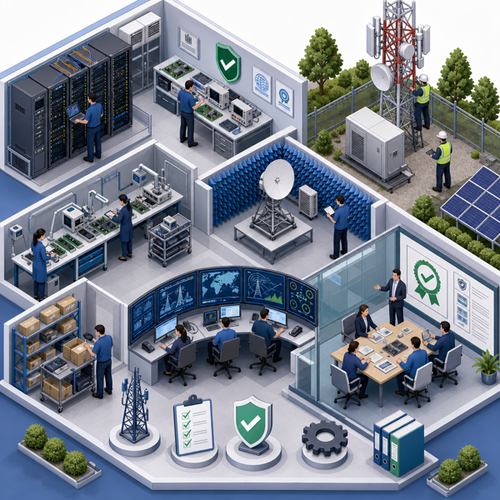
Safeguarding telecommunications infrastructure from electromagnetic interference is now critical for advancing global connectivity and business scalability. Emission standards define frameworks that limit radio disturbance, enhance security, and maintain operational continuity across industries—from automotive to information technology. This in-depth guide covers four of the most influential international emission standards in telecommunications, offering essential insights for both technical professionals and the general public. Explore their requirements, benefits, and practical implementation, and understand why these standards are a must-have for future-proofing any organization.
Overview / Introduction
The world is more interconnected than ever, with telecommunications infrastructure underpinning virtually every aspect of modern business and daily life. As networks proliferate, so do the risks associated with emissions—unwanted electromagnetic energy that can disrupt communications, compromise data, and jeopardize the safety of people and equipment.
Emission standards in telecommunications have evolved to address these risks. Developed by esteemed organizations like the IEC and CISPR, these standards establish measurement procedures, define acceptable emission levels, and offer guidance for mitigation. Adopting these standards ensures:
- Enhanced reliability and uptime
- Greater cybersecurity and data integrity
- Scalable operations, even in complex environments
- Alignment with regulatory requirements and international best practices
This article delves into four core standards—CISPR 12:1978, CISPR 16-2-3:2016/AMD1:2019, CISPR 16-4-2:2011/AMD2:2018, and IEC 61000-4-7:2002+AMD1:2008—explaining their role, scope, and why they're indispensable for any organization leveraging telecommunications.
Detailed Standards Coverage
CISPR 12:1978 - Radio Interference of Vehicles, Motor Boats, and Engine-Driven Devices
Limits and methods of measurement of radio interference characteristics of vehicles, motor boats, and spark-ignited engine-driven devices
What it covers: CISPR 12:1978 sets forth the fundamental limits and test procedures for measuring radio frequency emissions from moving vehicles (including cars and motor boats) as well as spark-ignited engine devices. The primary focus is to prevent undue interference with radio services, ensuring safety and compliance in both the automotive and marine sectors.
Key requirements and specifications:
- Specifies test setups, frequency ranges, and measurement distances for different vehicle types
- Defines maximum permissible emission limits in the radio frequency spectrum
- Outlines procedures for type testing and conformity assessment
- Covers emissions created during both operation and start-up phases
Who needs to comply:
- Automotive manufacturers
- Marine craft builders
- Makers of spark-ignited engine-driven tools or machinery
- Testing laboratories
Practical implications: Organizations must implement robust design and shielding practices in engines and on-board electronics, conduct compliance testing, and document results. This reduces the risk of product recalls or regulatory penalties while ensuring smooth cross-border market access.
Notable features:
- Applies broadly to non-fixed, mobile devices
- Foundational for later EMC standards
- Encourages harmonization across countries
Key highlights:
- Protects radio communications in public and private domains
- Ensures emission limits are met during normal and likely operational modes
- Aligns with evolving regulatory requirements in the transport sector
Access the full standard:View CISPR 12:1978 on iTeh Standards
CISPR 16-2-3:2016/AMD1:2019 - Methods of Measurement of Disturbances and Immunity: Radiated Disturbance
Amendment 1 - Specification for radio disturbance and immunity measuring apparatus and methods - Part 2-3: Methods of measurement of disturbances and immunity - Radiated disturbance measurements
What it covers: This amendment refines and updates the procedures for measuring radiated electromagnetic disturbances. It is central to verifying that equipment—from communication gear to consumer electronics—does not exceed established emission limits and remains immune to ambient interference.
Key requirements and specifications:
- Defines detailed test site requirements (such as open-area test sites, semi-anechoic chambers, and loop antenna setups)
- Specifies measurement equipment (antennas, receivers, loop systems) and configurations for accurate results
- Clarifies criteria for equipment under test (EUT) volume, layout, and cabling during measurements
- Introduces terminology and definitions (such as far-field, near-field, compliance test site) aligning modern testing procedures
Who needs to comply:
- Manufacturers of electrical/electronic equipment (consumer, industrial, IT, automotive)
- EMC (electromagnetic compatibility) testing laboratories
- Regulatory compliance professionals
Practical implications: Implementing this standard ensures emissions are systematically evaluated in controlled environments, directly supporting global market authorization and minimizing the possibility of costly product failures.
Notable features:
- Expanded coverage of measurement uncertainty and test site validation
- Recognized as a basic electromagnetic compatibility (EMC) publication
- References updated best practices for both radiated emission and immunity assessments
Key highlights:
- Supports reliable, reproducible radiated emission measurement
- Aligns test procedures for different frequency bands and EUT sizes
- Directly supports conformance with national and international EMC requirements
Access the full standard:View CISPR 16-2-3:2016/AMD1:2019 on iTeh Standards
CISPR 16-4-2:2011/AMD2:2018 - Measurement Instrumentation Uncertainty
Amendment 2 - Specification for radio disturbance and immunity measuring apparatus and methods - Part 4-2: Uncertainties, statistics and limit modelling - Measurement instrumentation uncertainty
What it covers: CISPR 16-4-2 is dedicated to quantifying and managing measurement uncertainty in EMC testing. Amendment 2 bolsters the standard by introducing updated methods and formulas, statistical models, and practical corrections for uncertainty sources in both conducted and radiated measurements.
Key requirements and specifications:
- Details how to evaluate and reduce uncertainty in EMC measurements, across various test configurations (including artificial networks, loop antennas, and voltage probes)
- Clarifies input quantities and their probability distributions for uncertainty evaluations
- Adds definitions (such as "small EUT") and expands the list of abbreviations to reflect evolving testing practice
- Provides formulas and budget tables helping to estimate uncertainty in real-world setups
Who needs to comply:
- EMC test laboratories
- Product compliance managers
- Calibration facilities
- Electronics and telecommunications manufacturers
Practical implications: By rigorously applying uncertainty budgets, organizations can ensure their measurements are both reliable and verifiable—critical for regulatory submission and product certification. This reduces risk, improves reproducibility, and strengthens trust with clients and authorities.
Notable features:
- Comprehensive approach to both conducted and radiated interference assessment
- Extends coverage for new measurement tools (e.g., large loop antenna systems, delta artificial networks)
- Directly referenced by other CISPR and IEC emission standards
Key highlights:
- Enables traceable, accredited EMC testing
- Improves consistency in global electromagnetic compliance
- Mitigates risk by proactively addressing measurement variance
Access the full standard:View CISPR 16-4-2:2011/AMD2:2018 on iTeh Standards
IEC 61000-4-7:2002+AMD1:2008 CSV - General Guide on Harmonics and Interharmonics Measurements and Instrumentation
Electromagnetic compatibility (EMC) - Part 4-7: Testing and measurement techniques - General guide on harmonics and interharmonics measurements and instrumentation, for power supply systems and equipment connected thereto
What it covers: IEC 61000-4-7 is the global reference for measuring harmonics and interharmonics—unintended frequencies that can interfere with telecommunications and power system operations. It specifies the methods and instrumentation required for reliable spectral analysis up to 9 kHz, supporting both compliance testing and operational monitoring.
Key requirements and specifications:
- Defines instrumentation accuracy, sampling methods, and signal processing guidelines
- Details grouping and smoothing algorithms for harmonic and interharmonic analysis
- Specifies how to set up measurement circuits (single and three-phase, artificial mains networks)
- Harmonizes practices for assessing both equipment emissions and supply system quality
- Includes guidance for measurements above the 40th harmonic, covering emerging challenges as power electronics proliferate
Who needs to comply:
- Utility providers and grid operators
- Equipment manufacturers for IT, communications, or industrial electronics
- Testing and certification labs
- Facilities engineers
Practical implications: Organizations use this standard to design and certify products that don’t interfere with grid communications, protect sensitive telecom equipment, and comply with international regulations. This leads to improved reliability, better energy quality, and enhanced equipment safety.
Notable features:
- Focuses on modern instrumentation, including discrete Fourier transform approaches
- Covers transient fluctuation handling in power supplies
- Ensures compatibility between equipment, networks, and communications services
Key highlights:
- Up to 9 kHz frequency coverage for a comprehensive emission profile
- Embedded best practices for harmonizing cross-national testing
- Direct linkage to emission limits like those in IEC 61000-3-2
Access the full standard:View IEC 61000-4-7:2002+AMD1:2008 CSV on iTeh Standards
Industry Impact & Compliance
Adhering to emission standards is not just about legal compliance; it’s now a strategic necessity.
Impact on Business Operations
- Productivity: By limiting electromagnetic interference, organizations avoid costly downtimes and boost overall operational efficiency.
- Security: Robust emission controls minimize the risk of data corruption and malicious interference in critical communications networks.
- Scaling: Standardized test and measurement protocols allow for seamless expansion into new markets and easy integration of new equipment.
Compliance Considerations
Failing to meet emission standards can result in:
- Product recalls and reputational harm
- Regulatory fines and legal action
- Market access restrictions
- Interference with key telecom services
Meanwhile, organizations that proactively comply enjoy:
- Smooth certification processes (mandatory for many product types)
- Reduced customer support incidents due to interference
- Enhanced brand reputation and customer trust
Implementation Guidance
Common Implementation Approaches
- Design for EMC: Integrate shielding, filtering, and grounding from the earliest product stages.
- Pre-compliance Testing: Use standard-referenced measurement setups and procedures throughout development.
- Formal Compliance Assessment: Engage accredited laboratories with expertise in the referenced standards.
- Continuous Monitoring: Track field performance for new emission threats as manufacturing processes or network environments evolve.
Best Practices
- Stay Updated: Emission standards evolve to address emerging risks—regularly revisit requirements and incorporate amendments.
- Cross-functional Collaboration: Engage regulatory, engineering, and quality assurance teams in compliance efforts.
- Document Everything: Maintain thorough records of test procedures, configurations, and results to readily demonstrate compliance.
- Leverage External Resources: Utilize trusted standards platforms (like iTeh Standards) for the latest documents, updates, and interpretations.
Resources
- Training from EMC organizations and standards bodies
- Access to accredited test labs and industry forums
- Ongoing membership in relevant technical committees
Conclusion / Next Steps
Emission standards are central to the reliability, security, and scalability of telecommunications infrastructure. Whether your organization designs vehicles, builds IT equipment, manages power systems, or tests new technologies, understanding and applying these four key standards is essential.
Key Takeaways:
- Emission standards protect your business, your partners, and your customers from harmful interference
- Proactive implementation increases competitive edge, market agility, and brand reputation
- Access to up-to-date standards documents from reputable sources like iTeh Standards is invaluable for ongoing compliance
Recommendations:
- Review the full standards linked in the sections above for your application area
- Validate your current compliance processes against the latest requirements
- Foster a culture of EMC and emission management throughout your organization
Stay informed, stay compliant, and set your organization apart as a scalable, secure, and productive participant in the rapidly evolving telecommunications landscape.
Categories
- Latest News
- New Arrivals
- Generalities
- Services and Management
- Natural Sciences
- Health Care
- Environment
- Metrology and Measurement
- Testing
- Mechanical Systems
- Fluid Systems
- Manufacturing
- Energy and Heat
- Electrical Engineering
- Electronics
- Telecommunications
- Information Technology
- Image Technology
- Precision Mechanics
- Road Vehicles
- Railway Engineering
- Shipbuilding
- Aircraft and Space
- Materials Handling
- Packaging
- Textile and Leather
- Clothing
- Agriculture
- Food technology
- Chemical Technology
- Mining and Minerals
- Petroleum
- Metallurgy
- Wood technology
- Glass and Ceramics
- Rubber and Plastics
- Paper Technology
- Paint Industries
- Construction
- Civil Engineering
- Military Engineering
- Entertainment