

A Practical Guide to Key Leather Standards: Ensuring Quality, Performance, and Compliance
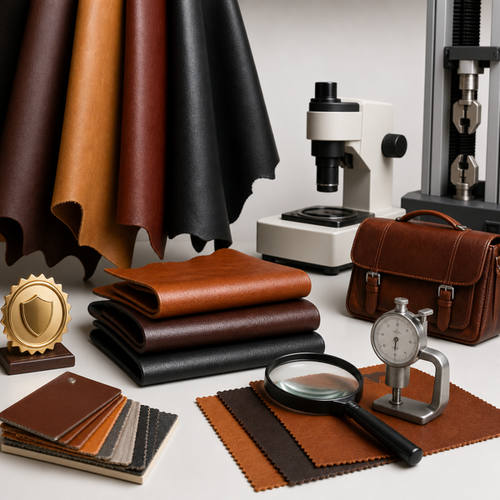
Leather and furs have remained core materials in the textile industry for centuries, prized for both their durability and their aesthetic appeal. As the industry embraces new technologies, global trade, and sustainability pressures, adhering to international standards has become crucial. In this guide, we explore four essential ISO standards that define the benchmarks for color fastness, heat resistance, and water resistance, shaping the future of leather processing and product quality worldwide.
Overview / Introduction
Leather plays a versatile role, featuring in products ranging from premium footwear and gloves to fashion garments, automotive interiors, and home furnishings. Yet, the performance of leather—and business reputations—relies on consistent quality. With growing consumer demands for longevity, color retention, and comfort, and as manufacturers implement new technologies, the need for robust standards is clearer than ever.
International leather standards serve as a universally recognized framework. They empower businesses to enhance productivity, minimize product recalls, safeguard consumers, and scale operations globally. This guide will provide you with an accessible understanding of four core standards:
- ISO 11641:2025 for color fastness to perspiration
- ISO 11642:2025 for color fastness to water
- ISO 17232:2025 for heat resistance of patent leather
- ISO 5403-1:2025 for water resistance in flexible leathers
Read on to learn what these standards cover, their practical applications, and why compliance isn’t just about regulatory box-ticking—it’s a catalyst for growth and competitive advantage in today’s market.
Detailed Standards Coverage
ISO 11641:2025 – Colour Fastness to Perspiration
Leather — Tests for colour fastness — Colour fastness to perspiration
This standard provides a comprehensive method to test how well leather retains its color when exposed to perspiration—a frequent scenario for products like gloves, jackets, linings, and shoe uppers. The process involves treating leather samples with an artificial alkaline perspiration solution, then pressing the samples alongside standard test fabrics. After a specified period, both the leather and adjacent fabrics are assessed for color changes or staining using the grey scale method.
For modern businesses, this test is vital as consumer expectations for apparel and footwear include resistance to sweat-induced staining. The ability to certify color fastness to perspiration can significantly boost product reputation and marketability, especially in sports, luxury, and workwear sectors.
Key requirements and features:
- Simulates real-life exposure to sweat using an alkaline artificial perspiration solution
- Assessment via grey scales for accurate, objective results (referencing ISO 105 series)
- Applicable to all leather types at any processing stage
- Focuses on both color change and potential staining of adjacent materials
Who should comply:
- Leather goods manufacturers (apparel, shoes, gloves)
- Brands supplying products worn in contact with skin
- Quality control laboratories
Practical considerations: Implementing this standard enables businesses to identify finishing or dyeing weaknesses early, reducing the risk of costly returns or brand reputational harm in global markets. It also helps suppliers provide the technical assurances required by premium retail buyers and consumers.
Key highlights:
- Simulates real-world perspiration effects on leather
- Ensures high consumer satisfaction for wearable products
- Boosts export readiness by aligning with global benchmarks
Access the full standard:View ISO 11641:2025 on iTeh Standards
ISO 11642:2025 – Colour Fastness to Water
Leather — Tests for colour fastness — Colour fastness to water
ISO 11642:2025 focuses on how leather performs when exposed to water—critical for products likely to encounter rain, spills, or cleaning. The standard prescribes a method where leather samples are soaked and subjected to slight pressure while in contact with test fabrics. The resulting changes in color and any staining are then evaluated against standardized grey scales.
Water-induced discoloration can impact not just appearance but also perceived value and consumer trust. For this reason, testing color fastness to water has become a must for any company aiming to meet global quality requirements, pass import/export checks, and strengthen consumer satisfaction.
Key requirements and features:
- Uniform method for water exposure simulation on leather
- Uses ISO 105 series for evaluation, ensuring consistency
- Applicability to all leather varieties, processed or finished
- Tests both color changes and transfer of color to adjacent fabrics
Who needs to comply:
- Footwear manufacturers
- Apparel brands
- Leather upholstery and goods producers
- Testing and certification laboratories
Practical implications for businesses: Using this standard allows companies to compare product performance objectively, select appropriate dyes and finishes, and make improvements that reduce warranty claims. In today’s global marketplace, clear water fastness ratings are also an expectation for many retailers and end-users.
Key highlights:
- Harmonizes quality assurance across supply chains
- Provides critical data for product improvement
- Enhances consumer confidence and brand value
Access the full standard:View ISO 11642:2025 on iTeh Standards
ISO 17232:2025 – Heat Resistance of Patent Leather
Leather — Physical and mechanical tests — Determination of heat resistance of patent leather
Patent leather—famous for its gloss and resilience—is used extensively in premium footwear, accessories, and decorative applications. ISO 17232:2025 addresses the need to verify that this unique finish withstands exposure to heat, preventing undesirable effects like blistering, peeling, or loss of shine. The standard specifies two robust testing methods: the modified lastometer and the ‘Zwik’ apparatus, both designed to simulate real-world thermal stress.
As production techniques evolve and consumer use environments change (think heated car interiors or urban summers), heat resistance becomes a critical quality and compliance factor.
Key methods and features:
- Method A (Lastometer): measures resistance to surface damage via mechanical flexing and controlled heating
- Method B (Zwik): tests heat effects under static, pressed conditions
- Testing involves quantifying the onset of patent finish damage (discoloration, cracking, blistering)
- Cites ISO 2418 and ISO 2419 for specimen prep and conditioning
- Draws on international terminology standards (ISO 15115, EN 15987)
Who should adopt:
- Patent leather manufacturers
- Industrial users (shoes, bags, car interiors)
- R&D and testing centers
Implementation notes: Adhering to heat resistance standards enables manufacturers to meet high-spec requirements, improve process controls, and market their products for high-heat, high-wear scenarios. This can broaden market access and elevate reputational standing for quality.
Key highlights:
- Directly addresses durability under heat for patent leather
- Enables qualification for demanding and innovative end uses
- Integrated with broader ISO specimen conditioning protocols
Access the full standard:View ISO 17232:2025 on iTeh Standards
ISO 5403-1:2025 – Water Resistance of Flexible Leather (Penetrometer)
Leather — Determination of water resistance of flexible leather — Part 1: Repeated linear compression (penetrometer)
Flexible leather is ubiquitous in footwear, gloves, and outerwear, making water resistance a priority for everyday performance. ISO 5403-1:2025 standardizes the process of determining how well such leathers withstand water ingress under dynamic compression—a real-world simulation for walking or bending. This method, known as the penetrometer test, measures both the time taken for water to penetrate and the overall water absorption under repeated flexing.
Companies seeking to innovate with waterproofing technologies or to substantiate product claims find this test essential. Moreover, ISO 5403-1:2025 serves as an objective benchmark for comparing different production treatments and leather sources.
Key requirements and features:
- Simulation of dynamic, real-life stress and water exposure
- Tests for time to penetration, total absorption, and water transmission
- Adopts international grooming for specimen preparation (ISO 2418, ISO 2419)
- Primarily aimed at flexible leathers for footwear, but suitable for other applications
Who benefits from compliance:
- Footwear manufacturers
- Outdoor and workwear apparel brands
- R&D divisions seeking performance differentiation
- Quality control professionals
Business implications: Implementation reduces customer complaints, enhances durability, and solidifies leadership in markets demanding waterproof features. It is also increasingly requested in global tendering and sustainability discussions where longevity matters.
Key highlights:
- Recreates authentic flexing plus moisture conditions
- Yields quantifiable, repeatable water resistance data
- Draws a clear line between standard products and premium performance offerings
Access the full standard:View ISO 5403-1:2025 on iTeh Standards
Industry Impact & Compliance
Adhering to internationally recognized leather testing standards is no longer optional—it’s a cornerstone for brands seeking efficiency, reliability, and market reach in a hyper-competitive landscape. Here’s why:
- Risk Reduction: Poor color fastness, heat, or water resistance lead to product recalls, warranty claims, and costly legal exposure. Standards provide confidence in product claims.
- Market Access: Many importers, retailers, and regulatory agencies require compliance with ISO leather standards as a precondition for doing business.
- Productivity Gains: Standardized tests mean fewer disputes, faster diagnostics, and streamlined quality assurance.
- Integration with New Technologies: Digital textile printing, smart wearables, and advanced tanning benefit directly from robust test data, enabling scaling and consistent interoperability.
- Sustainability: Extended product lifespans and reduced waste align with corporate responsibility and environmental goals.
Failing to comply risks market exclusion and competitive disadvantage. Beyond the basics, these standards enable companies to participate in global value chains, secure greener credentials, and leverage trust with both buyers and end-users.
Implementation Guidance
Successfully implementing ISO leather and fur standards involves several best practices:
- Staff Training & Awareness: Ensure laboratory, production, and quality personnel understand the methods, equipment, and reporting requirements of each standard.
- Quality Control Integration: Incorporate standard tests at key process points—especially for dyeing, finishing, and product finalization.
- Invest in Proper Equipment: Maintain calibrated, standard-compliant instruments such as penetrometers, lastometers, and controlled environment test chambers.
- Supplier Collaboration: Work closely with suppliers to ensure materials meet your chosen standards, reducing downstream production issues.
- Continuous Improvement: Use test results not only for pass/fail but as feedback for process and product optimization.
- Documentation & Traceability: Maintain thorough records to demonstrate compliance to auditors and clients, and to facilitate rapid troubleshooting.
Resources for organizations:
- iTeh Standards offers the latest standards for easy access, supporting organizations through both document provision and technical support.
- Industry associations and standard bodies often provide training materials, workshops, and certification programs.
By embedding these best practices, businesses can transform standards compliance from a hurdle into a strategic asset, unlocking efficiencies and new opportunities for innovation.
Conclusion / Next Steps
International standards like ISO 11641:2025, ISO 11642:2025, ISO 17232:2025, and ISO 5403-1:2025 stand as pillars for the modern, quality-driven leather industry. They not only define measurable, objective criteria for product performance but also facilitate global trade, reduce operational risk, and underpin claims of durability, comfort, and sustainability.
Organizations of every scale—whether in luxury goods, workwear, or technical leather applications—should prioritize the adoption and active implementation of these benchmarks. Not only will this help you meet current marketplace demands, but it will future-proof your operations as new manufacturing technologies, sustainability demands, and innovations in textile science emerge.
Take action today:
- Review the latest ISO standards available through iTeh Standards
- Assess your current quality processes for alignment
- Invest in staff training and equipment upgrades as needed
- Foster partnerships throughout the supply chain for seamless compliance
Staying informed and compliant is the surest way to build trust, unlock productivity, and achieve scalable success in the rapidly evolving world of leather and fur products.
Categories
- Latest News
- New Arrivals
- Generalities
- Services and Management
- Natural Sciences
- Health Care
- Environment
- Metrology and Measurement
- Testing
- Mechanical Systems
- Fluid Systems
- Manufacturing
- Energy and Heat
- Electrical Engineering
- Electronics
- Telecommunications
- Information Technology
- Image Technology
- Precision Mechanics
- Road Vehicles
- Railway Engineering
- Shipbuilding
- Aircraft and Space
- Materials Handling
- Packaging
- Textile and Leather
- Clothing
- Agriculture
- Food technology
- Chemical Technology
- Mining and Minerals
- Petroleum
- Metallurgy
- Wood technology
- Glass and Ceramics
- Rubber and Plastics
- Paper Technology
- Paint Industries
- Construction
- Civil Engineering
- Military Engineering
- Entertainment