


Understanding Essential Textile Standards: Colour Fastness Testing Explained
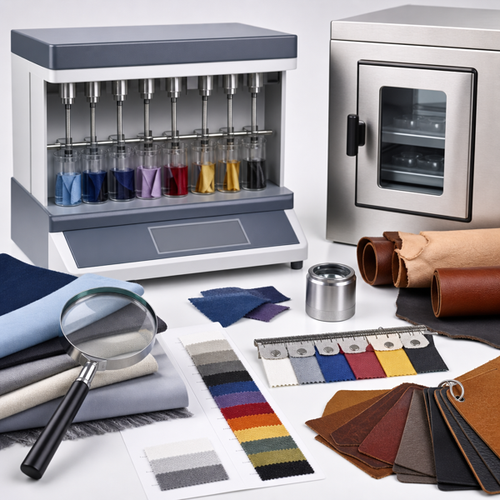
Textile products play a vital role in our daily lives—from clothing and home furnishings to technical materials and industrial fabrics. Ensuring their quality and durability is essential for manufacturers, retailers, and consumers alike. In the textile industry, international standards are the backbone that guarantee products meet globally accepted levels of performance, safety, and consistency. This article explores four crucial international standards for textiles, all focused on the critical property of colour fastness. By adopting these standards, businesses can increase productivity, enhance quality control, improve brand trust, and position themselves for scalable global operations.
Overview / Introduction
Textiles are used everywhere—at home, at work, in hospitals, cars, and countless other environments. With such widespread application, it's vital that textiles retain their intended properties, especially appearance, over time. Colour fastness—the resistance of fabrics to changing colour when subjected to environmental conditions like washing, light exposure, and rubbing—is a key indicator of quality and consumer satisfaction.
International standards in the textile industry provide:
- Uniform testing methods for global comparability
- Assurance of safety and performance
- Guidelines for quality control and legal compliance
In today’s competitive and highly regulated market, implementing textile standards is essential. It drives operational efficiency, reduces product returns, and opens up new markets by ensuring legal compliance and customer confidence. This article dives into four fundamental standards, so industry professionals and everyday consumers alike can understand how these requirements shape the textiles they use every day.
Detailed Standards Coverage
SIST EN ISO 105-A01:1996 - General Principles of Textile Colour Fastness Testing
Textiles – Tests for colour fastness – Part A01: General principles of testing (ISO 105-A01:1994)
At the foundation of all colour fastness testing is the need for reliable, comparable, and repeatable results. SIST EN ISO 105-A01:1996 sets out the general principles, terminology, and methodologies used across the wide spectrum of colour fastness tests in textiles.
What does this standard cover?
This standard defines:
- The overall framework for conducting colour fastness tests on textiles
- The principles for specimen preparation, handling, and environmental controls
- Consistency requirements for equipment and procedures
Who needs this?
Manufacturers, testing laboratories, quality managers, and anyone who must specify, perform, or interpret colour fastness testing will find this standard essential. It’s also crucial for organizations aiming for ISO or EN certification, or those supplying textiles to regulated markets.
Key requirements and features:
- Procedures for sampling and preparing textile materials for testing
- Maintenance of standard test environments to ensure repeatable results
- Use of standardized equipment and reference materials to enable comparability
- Integration with other ISO 105 series tests (e.g., for light, wash, rub fastness)
Implementing these principles prevents inconsistencies that could compromise product quality, and establishes a dependable basis for more specific colour fastness tests.
Key highlights:
- Establishes a common language and approach for colour fastness testing
- Ensures data generated are credible, uniform, and trusted internationally
- Foundation for conformance to all other colour fastness tests
Access the full standard:View SIST EN ISO 105-A01:1996 on iTeh Standards
SIST EN ISO 105-B02:1999 - Colour Fastness to Artificial Light (Xenon Arc Fading Lamp Test)
Textiles – Tests for colour fastness – Part B02: Colour fastness to artificial light: Xenon arc fading lamp test (ISO 105-B02:1994, including amendment 1:1998)
Light exposure is one of the most demanding challenges textiles face—especially for furnishings, outdoor clothing, and technical fabrics. SIST EN ISO 105-B02:1999 spells out how to measure a textile's resistance to fading when exposed to an artificial light source that mimics natural daylight.
What does this standard cover?
It details methods for exposing textiles to controlled xenon arc light, which is representative of the full daylight spectrum. The procedure simulates real-life fading in a highly accelerated and reproducible manner.
Key requirements and specifications:
- Use of standard blue wool reference materials for benchmarking fading rates
- Specified apparatus (xenon arc lamp with defined temperature and humidity control)
- Stepwise exposure and assessment using grey scale for evaluating change in colour
- Applicability to all textiles—including dyed, printed, bleached, or optically brightened fabrics
Who should comply?
- Textile manufacturers
- Testing laboratories
- Product quality assurance teams
- Suppliers of automotive, outdoor, home textile, and fashion sectors
By adopting this method, companies can guarantee that their products remain visually attractive and functionally appropriate throughout their lifespan—even with sustained exposure to sunlight or artificial lighting.
Notable features and practical implications:
- Separate test conditions recommended for use in Europe and America for region-specific accuracy
- Careful humidity, temperature, and irradiance management to avoid inconsistent results
- Blue wool scale calibration ensures international comparability and harmonization
Key highlights:
- Provides accelerated, reliable simulation of sunlight exposure
- Integral for compliance with premium quality marks and end-use requirements
- Helps optimize dye selection and process parameters for long-lasting colour
Access the full standard:View SIST EN ISO 105-B02:1999 on iTeh Standards
SIST EN ISO 105-C06:1999 - Colour Fastness to Domestic and Commercial Laundering
Textiles – Tests for colour fastness – Part C06: Colour fastness to domestic and commercial laundering (ISO 105-C06:1994)
Frequent washing is a major cause of fabric fading and degradation. This standard is indispensable for products that will be cleaned by consumers or in commercial laundries—such as apparel, uniforms, linens, and more.
What does this standard cover?
SIST EN ISO 105-C06:1999 provides reproducible test procedures simulating various wash conditions. It reflects the effects of multiple launderings, using standard detergents, water hardness, temperatures, and abrasion levels akin to both domestic and industrial scenarios.
Key requirements and specifications:
- Pre-defined detergent formulas and washing cycles
- Specific wash temperatures (typically 30°C, 40°C, or 60°C)
- Testing on multi-fibre adjacent fabrics to visualize potential colour bleeding
- Measurements of both colour change of specimen and staining of adjacent fabrics using grey scales
Who should comply?
- Apparel producers
- Industrial textile suppliers (workwear, hospitality, healthcare)
- Testing facilities
- Retailers ensuring product durability claims
Adhering to this standard ensures that garments and linens maintain their appearance over time—reducing warranty claims, boosting customer satisfaction, and safeguarding brand reputation.
Notable features and practical implications:
- Flexible enough to accommodate a wide range of textile constructions and finishes
- Allows both single and repeated wash testing scenarios
- Critical for meeting consumer expectations and market claims regarding wash durability
Key highlights:
- Evaluates product performance under real-life laundering conditions
- Predicts potential for dye bleeding and transfer to other items
- Essential for retailers, hospitality, and healthcare sectors
Access the full standard:View SIST EN ISO 105-C06:1999 on iTeh Standards
SIST EN ISO 105-X12:1996 - Colour Fastness to Rubbing
Textiles – Tests for colour fastness – Part X12: Colour fastness to rubbing (ISO 105-X12:1993)
Rubbing—whether during use, handling, or wear—is a common cause of colour transfer and fading in textiles. SIST EN ISO 105-X12:1996 establishes a standardized way to test for this form of colour loss, also known as crocking.
What does this standard cover?
This test simulates rubbing action on both dry and wet specimens, using a special apparatus and white cotton rubbing cloths. The amount of colour transferred to the rubbing cloth is evaluated, providing a clear indication of potential staining or loss of appearance during real use.
Key requirements and specifications:
- Use of a specific rubbing finger (size and force vary for pile and flat fabrics)
- Controlled number of rub cycles (typically 10 cycles per test)
- Assessment using the grey scale for staining
- Separate assessments for wet and dry rubbing
Who should comply?
- Manufacturers of apparel, upholstery, carpets, and any wearable or handled textile
- Quality assurance and control officers
- Product certifying bodies
By following this standard, stakeholders can ensure products do not unduly soil other materials or lose their appearance prematurely—an important aspect for customer satisfaction and long-term utility.
Notable features and practical implications:
- Applicable to a wide range of textiles, including pile fabrics and carpets
- Enables detection of dye/dyeing process weaknesses before products reach consumers
- Supports claims of durability and cleanliness, critical in high-traffic/public environments
Key highlights:
- Essential for assessing textile suitability in high-wear and contact-prone areas
- Direct link to consumer complaints and product returns
- Easily integrated into routine production checks for preventive quality assurance
Access the full standard:View SIST EN ISO 105-X12:1996 on iTeh Standards
Industry Impact & Compliance
The significance of adhering to textile standards extends far beyond laboratory testing:
For businesses:
- Minimizes the risk of costly product failures or market recalls
- Enables entry into regulated and high-value markets (EU, USA, etc.)
- Demonstrates due diligence to clients, partners, and regulators
For consumers:
- Guarantees lasting colour and fabric integrity in their purchases
- Reduces laundering errors, dissatisfaction, or accidental damage to other clothing
For the broader industry:
- Harmonizes expectations between raw material suppliers, textile processors, and end-product manufacturers
- Drives innovation towards more durable, sustainable textiles
Risks of non-compliance:
- Increased warranty returns and loss of consumer trust
- Legal or regulatory penalties for non-conforming products
- Negative brand perception and reduced competitiveness
Implementation Guidance
Successfully implementing these textile standards involves several steps:
Familiarize with Standard Requirements:
- Obtain and review the latest official standard documents
- Ensure staff understand the rationale and key testing methods
Upgrade Equipment and Procedures:
- Use certified, regularly calibrated testing equipment
- Employ reference materials and controls as specified in each standard
Establish Routine Testing:
- Integrate test protocols into routine quality control cycles
- Train laboratory personnel in sample preparation and result interpretation
Document and Communicate Results:
- Keep clear records for traceability and audits
- Communicate outcomes across design, production, and sales teams
Continuous Improvement:
- Monitor for updates in standard revisions
- Respond proactively to test outcomes, including corrective actions in processing or sourcing
Best practices:
- Partner with accredited testing labs where in-house facilities are impractical
- Participate in industry forums or workshops for up-to-date methodologies
- Leverage ISO-compliant certifications to build client confidence and expand into global markets
Resources:
- Comprehensive standard documentation from iTeh Standards
- Training programs, webinars, and technical bulletins from industry associations
- Software tools for quality management and standards tracking
Conclusion / Next Steps
Colour fastness remains one of the defining measures of textile quality, directly impacting consumer experience, brand perception, and regulatory adherence. The four standards discussed—SIST EN ISO 105-A01:1996, SIST EN ISO 105-B02:1999, SIST EN ISO 105-C06:1999, and SIST EN ISO 105-X12:1996—form a comprehensive foundation for ensuring durable, attractive, and fit-for-purpose textile products.
By implementing these standards, organizations achieve:
- Higher productivity through reduced rework and complaints
- Greater security and legal compliance in diverse markets
- Enhanced scalability of operations and international reputation
Recommendations for organizations:
- Regularly review and update colour fastness testing protocols
- Invest in staff training and modern equipment
- Adopt a holistic approach to textile quality covering light, wash, and rub fastness
- Use authoritative sources like iTeh Standards to obtain current and official documentation
Explore the full range of textile standards on iTeh Standards and ensure your textile products meet the highest benchmarks for quality and consumer safety.
Categories
- Latest News
- New Arrivals
- Generalities
- Services and Management
- Natural Sciences
- Health Care
- Environment
- Metrology and Measurement
- Testing
- Mechanical Systems
- Fluid Systems
- Manufacturing
- Energy and Heat
- Electrical Engineering
- Electronics
- Telecommunications
- Information Technology
- Image Technology
- Precision Mechanics
- Road Vehicles
- Railway Engineering
- Shipbuilding
- Aircraft and Space
- Materials Handling
- Packaging
- Textile and Leather
- Clothing
- Agriculture
- Food technology
- Chemical Technology
- Mining and Minerals
- Petroleum
- Metallurgy
- Wood technology
- Glass and Ceramics
- Rubber and Plastics
- Paper Technology
- Paint Industries
- Construction
- Civil Engineering
- Military Engineering
- Entertainment