

ISO 13628-5:2009
(Main)Petroleum and natural gas industries — Design and operation of subsea production systems — Part 5: Subsea umbilicals
General Information
- Abstract
ISO 13628-5:2009 specifies requirements and gives recommendations for the design, material selection, manufacture, design verification, testing, installation and operation of umbilicals and associated ancillary equipment for the petroleum and natural gas industries. Ancillary equipment does not include top side hardware. Topside hardware refers to any hardware that is not permanently attached to the umbilical, above the topside hang-off termination. ISO 13628-5:2009 applies to umbilicals containing components, such as electrical cables, optical fibres, thermoplastic hoses and metallic tubes, either alone or in combination; and to umbilicals for static or dynamic service, with surface-surface, surface-subsea and subsea-subsea routings . ISO 13628-5:2009 does not apply to the associated component connectors, unless they affect the performance of the umbilical or that of its ancillary equipment. ISO 13628-5:2009 applies only to tubes with the following dimensions: wall thickness, t 6 mm, internal diameter, ID 50,8 mm (2 in). Tubular products greater than these dimensions can be regarded as pipe/linepipe and it is expected that they be designed and manufactured according to a recognised pipeline/linepipe standard. ISO 13628-5:2009 does not apply to a tube or hose rated lower than 7 MPa (1 015 psi), or to electric cable voltage ratings above standard rated voltages = 3,6/6(7,2) kV rms, where U0, U and Um are as defined in IEC 60502-1 and IEC 60502-2.
- Status
- Withdrawn
- Publication Date
- 10-Dec-2009
- Technical Committee
- ISO/TC 67/SC 4 - Drilling and production equipment
- Drafting Committee
- ISO/TC 67/SC 4/WG 6 - Subsea equipment
- Current Stage
- 9599 - Withdrawal of International Standard
- Start Date
- 08-Dec-2025
- Completion Date
- 29-Aug-2026
Buy Documents

ISO 13628-5:2009 - Petroleum and natural gas industries — Design and operation of subsea production systems — Part 5: Subsea umbilicals Released:12/11/2009


ISO 13628-5:2009 - Industries du pétrole et du gaz naturel — Conception et exploitation des systemes de production immergés — Partie 5: Faisceaux de câbles immergés Released:3/11/2013
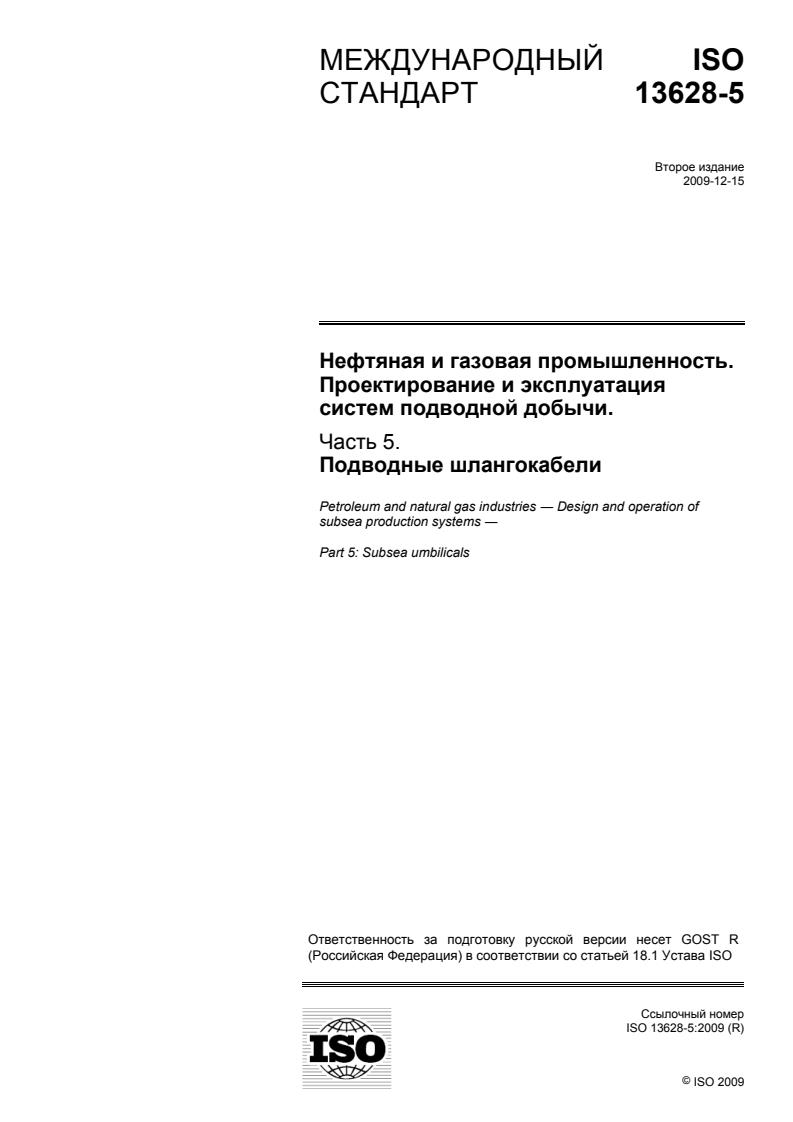

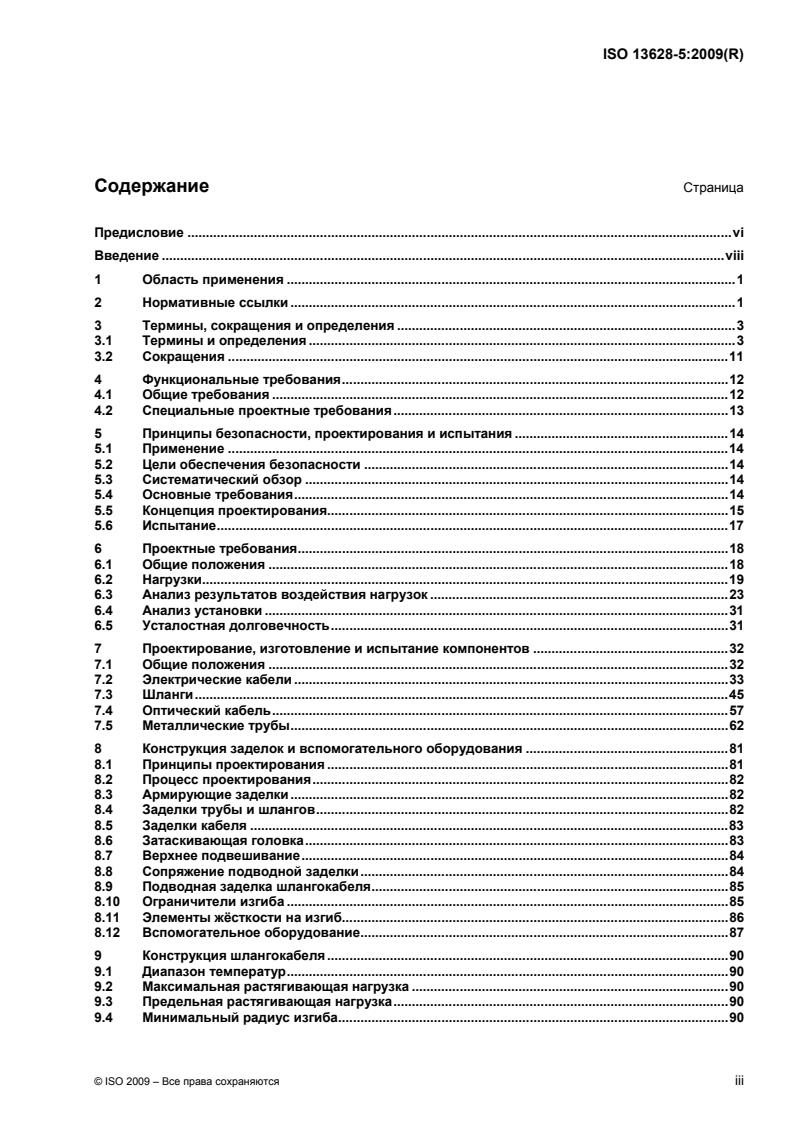
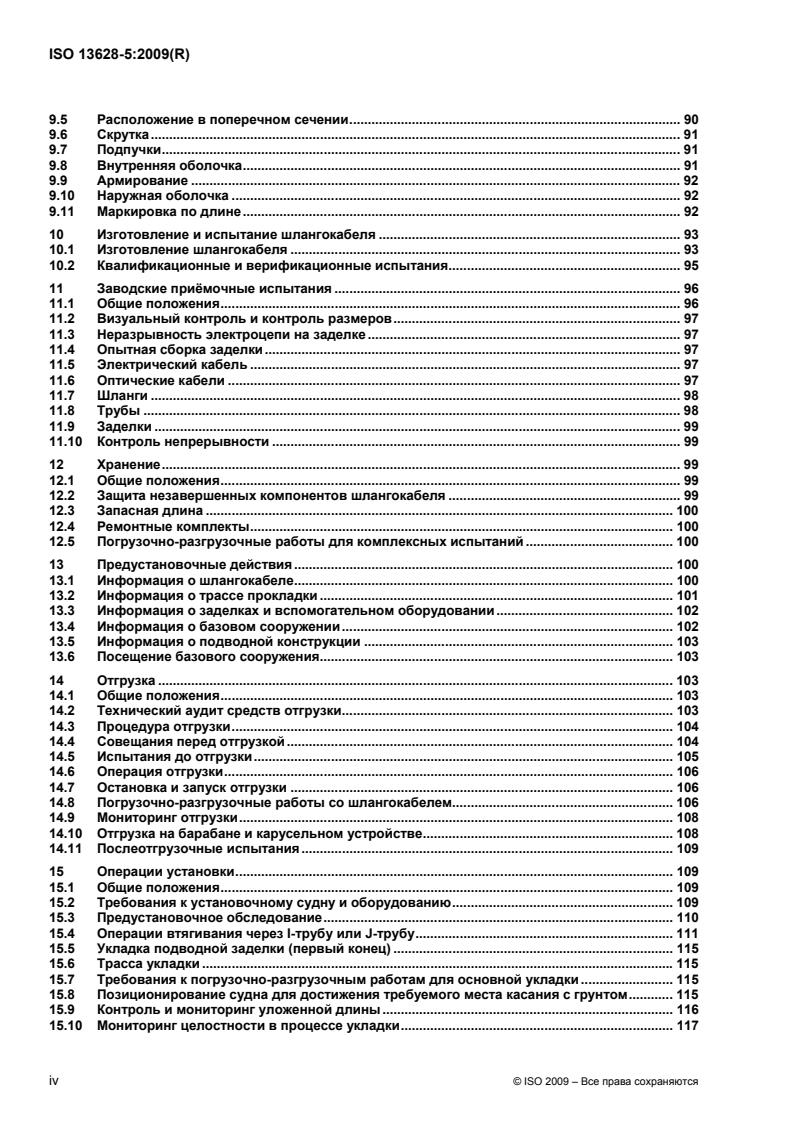
ISO 13628-5:2009 - Petroleum and natural gas industries — Design and operation of subsea production systems — Part 5: Subsea umbilicals Released:2/7/2013
Overview
ISO 13628-5:2009 - "Petroleum and natural gas industries - Design and operation of subsea production systems - Part 5: Subsea umbilicals" defines requirements and recommendations for the design, material selection, manufacture, verification, testing, installation and operation of subsea umbilicals and their ancillary equipment (excluding topside hardware). It applies to umbilicals that include electrical cables, optical fibres, thermoplastic hoses and metallic tubes for static or dynamic service and for surface-surface, surface-subsea and subsea-subsea routings. The standard excludes tubes with wall thickness ≥ 6 mm or ID ≥ 50.8 mm, hoses/tubes rated below 7 MPa, and electric cable voltage ratings above the standard rated voltages defined in IEC 60502 series.
Key Topics and Technical Requirements
- Functional and safety requirements: project-specific requirements, system safety objectives and systematic reviews.
- Design philosophy: load and fatigue analysis, installation analysis, minimum bend radius, tensile and ultimate load criteria.
- Component design & testing: detailed guidance for electric cables, optical-fibre cables, thermoplastic hoses and metallic tubes, including material selection, manufacture and qualification tests.
- Terminations & ancillary equipment: design and verification of armour terminations, cable/hose/tube terminations, pull-in heads, bend restrictors/stiffeners and subsea termination interfaces.
- Manufacture & factory acceptance tests (FAT): production processes, qualification and verification testing, visual/dimensional inspection and continuity checks.
- Installation and handling: pre-installation surveys, load-out procedures, lay operations, burial, route management, integrity monitoring and post-lay/post-hook-up testing.
- Storage, repair and logistics: protection of unterminated components, spare length, repair kits and handling for integration tests.
Practical Applications
This standard is essential for ensuring reliable and safe subsea umbilical systems used to deliver hydraulic power, chemical injection, electrical power/control and communications in offshore oil and gas production. Typical applications:
- Subsea production tiebacks and manifolds
- Umbilical design for floating production units and subsea templates
- Installation and burial of dynamic and static umbilicals
- Qualification and factory acceptance testing of umbilical assemblies
Who Should Use ISO 13628-5:2009
- Offshore and subsea design engineers (umbilical design, structural and fatigue analysis)
- Umbilical and component manufacturers (cables, hoses, tubes)
- Installation contractors and marine operations planners
- Project managers, asset owners and operators responsible for subsea production systems
- Test laboratories and inspection/QA teams
Related Standards
- IEC 60502-1 / IEC 60502-2 (for cable voltage definitions)
- Pipeline/linepipe standards (for tubular products exceeding umbilical dimensions)
Keywords: ISO 13628-5:2009, subsea umbilicals, umbilical design, umbilical installation, petroleum and natural gas, subsea production systems, electric cable, optical-fibre, hoses, metallic tubes.
Relations
- Effective Date
- 25-Aug-2026
- Effective Date
- 12-Feb-2026
- Effective Date
- 06-Jun-2022
- Consolidated By
ISO 9241-161:2025 - Ergonomics of human-system interaction — Part 161: Visual user-interface elements - Effective Date
- 22-Oct-2022
- Consolidated By
ISO 9241-161:2016 - Ergonomics of human-system interaction — Part 161: Guidance on visual user-interface elements - Effective Date
- 06-Jun-2022
- Effective Date
- 15-Apr-2008
Buy Documents
ISO 13628-5:2009 - Petroleum and natural gas industries — Design and operation of subsea production systems — Part 5: Subsea umbilicals Released:12/11/2009
ISO 13628-5:2009 - Industries du pétrole et du gaz naturel — Conception et exploitation des systemes de production immergés — Partie 5: Faisceaux de câbles immergés Released:3/11/2013
ISO 13628-5:2009 - Petroleum and natural gas industries — Design and operation of subsea production systems — Part 5: Subsea umbilicals Released:2/7/2013
Get Certified
Connect with accredited certification bodies for this standard

Element Materials Technology
Materials testing and product certification.

ABS Group Brazil
ABS Group certification services in Brazil.

ABS Quality Evaluations Inc.
American Bureau of Shipping quality certification.
Sponsored listings
Frequently Asked Questions
ISO 13628-5:2009 is a standard published by the International Organization for Standardization (ISO). Its full title is "Petroleum and natural gas industries — Design and operation of subsea production systems — Part 5: Subsea umbilicals". This standard covers: ISO 13628-5:2009 specifies requirements and gives recommendations for the design, material selection, manufacture, design verification, testing, installation and operation of umbilicals and associated ancillary equipment for the petroleum and natural gas industries. Ancillary equipment does not include top side hardware. Topside hardware refers to any hardware that is not permanently attached to the umbilical, above the topside hang-off termination. ISO 13628-5:2009 applies to umbilicals containing components, such as electrical cables, optical fibres, thermoplastic hoses and metallic tubes, either alone or in combination; and to umbilicals for static or dynamic service, with surface-surface, surface-subsea and subsea-subsea routings . ISO 13628-5:2009 does not apply to the associated component connectors, unless they affect the performance of the umbilical or that of its ancillary equipment. ISO 13628-5:2009 applies only to tubes with the following dimensions: wall thickness, t 6 mm, internal diameter, ID 50,8 mm (2 in). Tubular products greater than these dimensions can be regarded as pipe/linepipe and it is expected that they be designed and manufactured according to a recognised pipeline/linepipe standard. ISO 13628-5:2009 does not apply to a tube or hose rated lower than 7 MPa (1 015 psi), or to electric cable voltage ratings above standard rated voltages = 3,6/6(7,2) kV rms, where U0, U and Um are as defined in IEC 60502-1 and IEC 60502-2.
ISO 13628-5:2009 specifies requirements and gives recommendations for the design, material selection, manufacture, design verification, testing, installation and operation of umbilicals and associated ancillary equipment for the petroleum and natural gas industries. Ancillary equipment does not include top side hardware. Topside hardware refers to any hardware that is not permanently attached to the umbilical, above the topside hang-off termination. ISO 13628-5:2009 applies to umbilicals containing components, such as electrical cables, optical fibres, thermoplastic hoses and metallic tubes, either alone or in combination; and to umbilicals for static or dynamic service, with surface-surface, surface-subsea and subsea-subsea routings . ISO 13628-5:2009 does not apply to the associated component connectors, unless they affect the performance of the umbilical or that of its ancillary equipment. ISO 13628-5:2009 applies only to tubes with the following dimensions: wall thickness, t 6 mm, internal diameter, ID 50,8 mm (2 in). Tubular products greater than these dimensions can be regarded as pipe/linepipe and it is expected that they be designed and manufactured according to a recognised pipeline/linepipe standard. ISO 13628-5:2009 does not apply to a tube or hose rated lower than 7 MPa (1 015 psi), or to electric cable voltage ratings above standard rated voltages = 3,6/6(7,2) kV rms, where U0, U and Um are as defined in IEC 60502-1 and IEC 60502-2.
ISO 13628-5:2009 is classified under the following ICS (International Classification for Standards) categories: 75.180.10 - Exploratory, drilling and extraction equipment. The ICS classification helps identify the subject area and facilitates finding related standards.
ISO 13628-5:2009 has the following relationships with other standards: It is inter standard links to EN ISO 13628-1:2005, EN ISO 13628-5:2009, ISO 15245-2:2001, ISO 9241-161:2025, ISO 9241-161:2016, ISO 13628-5:2002. Understanding these relationships helps ensure you are using the most current and applicable version of the standard.
ISO 13628-5:2009 is available in PDF format for immediate download after purchase. The document can be added to your cart and obtained through the secure checkout process. Digital delivery ensures instant access to the complete standard document.
Standards Content (Sample)
INTERNATIONAL ISO
STANDARD 13628-5
Second edition
2009-12-15
Petroleum and natural gas industries —
Design and operation of subsea
production systems —
Part 5:
Subsea umbilicals
Industries du pétrole et du gaz naturel — Conception et exploitation des
systèmes de production immergés —
Partie 5: Faisceaux de câbles immergés
Reference number
©
ISO 2009
PDF disclaimer
This PDF file may contain embedded typefaces. In accordance with Adobe's licensing policy, this file may be printed or viewed but
shall not be edited unless the typefaces which are embedded are licensed to and installed on the computer performing the editing. In
downloading this file, parties accept therein the responsibility of not infringing Adobe's licensing policy. The ISO Central Secretariat
accepts no liability in this area.
Adobe is a trademark of Adobe Systems Incorporated.
Details of the software products used to create this PDF file can be found in the General Info relative to the file; the PDF-creation
parameters were optimized for printing. Every care has been taken to ensure that the file is suitable for use by ISO member bodies. In
the unlikely event that a problem relating to it is found, please inform the Central Secretariat at the address given below.
© ISO 2009
All rights reserved. Unless otherwise specified, no part of this publication may be reproduced or utilized in any form or by any means,
electronic or mechanical, including photocopying and microfilm, without permission in writing from either ISO at the address below or
ISO's member body in the country of the requester.
ISO copyright office
Case postale 56 • CH-1211 Geneva 20
Tel. + 41 22 749 01 11
Fax + 41 22 749 09 47
E-mail copyright@iso.org
Web www.iso.org
Published in Switzerland
ii © ISO 2009 – All rights reserved
Contents Page
Foreword .vi
Introduction.vii
1 Scope.1
2 Normative references.1
3 Terms, abbreviated terms and definitions.3
3.1 Terms and definitions .3
3.2 Abbreviated terms .10
4 Functional requirements.11
4.1 General requirements .11
4.2 Project-specific requirements.12
5 Safety, design and testing philosophy.12
5.1 Application .12
5.2 Safety objective .12
5.3 Systematic review .12
5.4 Fundamental requirements .12
5.5 Design philosophy .13
5.6 Testing.14
6 Design requirements.16
6.1 General .16
6.2 Loads .16
6.3 Load effect analysis .20
6.4 Installation analysis .26
6.5 Fatigue life.27
7 Component design, manufacture and test .27
7.1 General .27
7.2 Electric cables .28
7.3 Hoses.38
7.4 Optical-fibre cable .49
7.5 Metallic tubes.54
8 Terminations and ancillary equipment design.71
8.1 Design principles.71
8.2 Design process.71
8.3 Armour terminations .71
8.4 Tube and hose terminations.72
8.5 Cable terminations .72
8.6 Pull-in head .73
8.7 Topside hang-off .73
8.8 Subsea termination interface .74
8.9 Subsea umbilical termination .74
8.10 Bend restrictors.74
8.11 Bend stiffeners .75
8.12 Ancillary equipment .75
9 Umbilical design .78
9.1 Temperature range .78
9.2 Maximum tensile load .78
9.3 Ultimate tensile load.78
9.4 Minimum bend radius .78
9.5 Cross-sectional arrangement.78
9.6 Lay-up .79
9.7 Sub-bundles .79
9.8 Inner sheath.79
9.9 Armouring.79
9.10 Outer sheath.80
9.11 Length marking.80
10 Umbilical manufacture and test .80
10.1 Umbilical manufacture .80
10.2 Qualification and verification tests.83
11 Factory acceptance tests.84
11.1 General.84
11.2 Visual and dimensional inspection.84
11.3 Electrical continuity at the termination .84
11.4 Trial termination fit-up.84
11.5 Electric cable.84
11.6 Optical fibre cables.85
11.7 Hoses .85
11.8 Tubes .86
11.9 Terminations .86
11.10 Continuity check.86
12 Storage.86
12.1 General.86
12.2 Protection of unterminated umbilical components.86
12.3 Spare length .87
12.4 Repair kits.87
12.5 Handling for integration tests.87
13 Pre-installation activity .87
13.1 Umbilical information .87
13.2 Route information.88
13.3 Terminations and ancillary equipment information.88
13.4 Host facility information.89
13.5 Subsea structure information.89
13.6 Host facility visit .89
14 Load-out.90
14.1 General.90
14.2 Technical audit of load-out facilities.90
14.3 Load-out procedure.91
14.4 Pre-load-out meetings.91
14.5 Pre-load-out tests .91
14.6 Load-out operation .92
14.7 Stopping and starting the load-out.93
14.8 Handling of the umbilical .93
14.9 Load-out monitoring.94
14.10 Load-out on a reel or carousel .94
14.11 Post-load-out tests .95
15 Installation operations .95
15.1 General.95
15.2 Requirements for installation vessel and equipment .95
15.3 Pre-installation survey .96
15.4 I-tube or J-tube pull-in operations .97
15.5 Lay-down of subsea termination (first end).100
15.6 Lay route.100
15.7 Handling requirements for the main lay.100
15.8 Vessel positioning to achieve required touch-down .101
15.9 Control and monitoring of length laid .101
15.10 Integrity monitoring during lay.102
iv © ISO 2009 – All rights reserved
15.11 Burial operations .103
15.12 Approach to subsea termination position (second end).104
15.13 Lay-down of subsea termination .104
15.14 Pull-in of subsea termination .105
15.15 Pipeline crossings.105
15.16 Buoyancy attachments .106
15.17 Arming of the weak link .106
15.18 Post-lay survey.106
15.19 Post-burial survey .106
15.20 Post-pull-in test .107
15.21 Post-hook-up test .107
15.22 Retrieval of installation aids.108
15.23 Contingencies.108
15.24 Repairs.108
15.25 Post-installation survey.108
Annex A (informative) Information that should be provided in a purchaser's functional
specification.109
Annex B (informative) Umbilical testing .116
Annex C (informative) Hose and tube preferred sizes .120
Annex D (normative) Characterization tests for hoses and umbilicals .121
Annex E (informative) Fatigue testing .125
Annex F (informative) Load-effect analysis.127
Annex G (informative) Umbilical full-scale tests.139
Annex H (informative) Tube material matrix.145
Annex I (informative) Tube-wall thickness example calculation.157
Annex J (informative) Buckling of metallic tubes.164
Bibliography.167
Foreword
ISO (the International Organization for Standardization) is a worldwide federation of national standards bodies
(ISO member bodies). The work of preparing International Standards is normally carried out through ISO
technical committees. Each member body interested in a subject for which a technical committee has been
established has the right to be represented on that committee. International organizations, governmental and
non-governmental, in liaison with ISO, also take part in the work. ISO collaborates closely with the
International Electrotechnical Commission (IEC) on all matters of electrotechnical standardization.
International Standards are drafted in accordance with the rules given in the ISO/IEC Directives, Part 2.
The main task of technical committees is to prepare International Standards. Draft International Standards
adopted by the technical committees are circulated to the member bodies for voting. Publication as an
International Standard requires approval by at least 75 % of the member bodies casting a vote.
Attention is drawn to the possibility that some of the elements of this document may be the subject of patent
rights. ISO shall not be held responsible for identifying any or all such patent rights.
ISO 13628-5 was prepared by Technical Committee ISO/TC 67, Materials, equipment and offshore structures
for petroleum, petrochemical and natural gas industries, Subcommittee SC 4, Drilling and production
equipment.
This second edition cancels and replaces the first edition (ISO 13628-5:2002), which has been technically
revised.
ISO 13628 consists of the following parts, under the general title Petroleum and natural gas industries —
Design and operation of subsea production systems:
⎯ Part 1: General requirements and recommendations
⎯ Part 2: Unbonded flexible pipe systems for subsea and marine applications
⎯ Part 3: Through flowline (TFL) systems
⎯ Part 4: Subsea wellhead and tree equipment
⎯ Part 5: Subsea umbilicals
⎯ Part 6: Subsea production control systems
⎯ Part 7: Completion/workover riser systems
⎯ Part 8: Remotely Operated Vehicle (ROV) interfaces on subsea production systems
⎯ Part 9: Remotely Operated Tool (ROT) intervention systems
⎯ Part 10: Specification for bonded flexible pipe
⎯ Part 11: Flexible pipe systems for subsea and marine applications
A Part 12, dealing with dynamic production risers, a Part 13, dealing with remotely operated tool and
interfaces on subsea production systems, a Part 15, dealing with subsea structures and manifolds, a Part 16,
dealing with specification for flexible pipe ancillary equipment, and a Part 17, dealing with recommended
practice for flexible pipe ancillary equipment, are under development.
vi © ISO 2009 – All rights reserved
Introduction
This part of ISO 13628 is based on the first edition of ISO 13628-5, which was based on API Spec 17E,
second edition and API RP 17I, first edition. The first edition of ISO 13628-5 was adopted by API as API
Spec 17E, third edition. It is intended that API Spec 17E, fourth edition, will be identical to this International
Standard.
It is important that users of this part of ISO 13628 be aware that further or differing requirements can be
needed for individual applications. This part of ISO 13628 is not intended to inhibit a vendor from offering, or
the purchaser from accepting, alternative equipment engineering solutions for the individual application. This
can be particularly applicable if there is innovative or developing technology. If an alternative is offered, it is
the responsibility of the vendor to identify any variations from this part of ISO 13628 and provide details.
In this part of ISO 13628, where practical, US Customary (USC) and other units are included in parentheses
for information.
INTERNATIONAL STANDARD ISO 13628-5:2009(E)
Petroleum and natural gas industries — Design and operation
of subsea production systems —
Part 5:
Subsea umbilicals
1 Scope
This part of ISO 13628 specifies requirements and gives recommendations for the design, material selection,
manufacture, design verification, testing, installation and operation of umbilicals and associated ancillary
equipment for the petroleum and natural gas industries. Ancillary equipment does not include topside
hardware. Topside hardware refers to any hardware that is not permanently attached to the umbilical, above
the topside hang-off termination.
This part of ISO 13628 applies to umbilicals containing components, such as electrical cables, optical fibres,
thermoplastic hoses and metallic tubes, either alone or in combination.
This part of ISO 13628 applies to umbilicals for static or dynamic service, with surface-surface, surface-
subsea and subsea-subsea routings.
This part of ISO 13628 does not apply to the associated component connectors, unless they affect the
performance of the umbilical or that of its ancillary equipment.
This part of ISO 13628 applies only to tubes with the following dimensions: wall thickness, t < 6 mm, internal
diameter, ID < 50,8 mm (2 in). Tubular products greater than these dimensions can be regarded as
pipe/linepipe and it is expected that they be designed and manufactured according to a recognised
pipeline/linepipe standard.
This part of ISO 13628 does not apply to a tube or hose rated lower than 7 MPa (1 015 psi).
This part of ISO 13628 does not apply to electric cable voltage ratings above standard rated voltages
UU/(U ) = 3,6/6(7,2) kV rms, where U , U and U are as defined in IEC 60502-1 and IEC 60502-2.
m
0m 0
2 Normative references
The following referenced documents are indispensable for the application of this document. For dated
references, only the edition cited applies. For undated references, the latest edition of the referenced
document (including any amendments) applies.
ISO 527 (all parts), Plastics — Determination of tensile properties
ISO 1402, Rubber and plastics hoses and hose assemblies — Hydrostatic testing
ISO 4080, Rubber and plastics hoses and hose assemblies — Determination of permeability to gas
ISO 4406, Hydraulic fluid power — Fluids — Method for coding the level of contamination by solid particles
ISO 4672:1997, Rubber and plastics hoses — Sub-ambient temperature flexibility tests
ISO 6801, Rubber or plastics hoses — Determination of volumetric expansion
ISO 6803:2008, Rubber or plastics hoses and hose assemblies — Hydraulic-pressure impulse test without
flexing
ISO 7751, Rubber and plastics hoses and hose assemblies — Ratios of proof and burst pressure to design
working pressure
ISO 13628-8, Petroleum and natural gas industries — Design and operation of subsea production systems —
Part 8: Remotely Operated Vehicle (ROV) interfaces on subsea production systems
ISO 8308, Rubber and plastics hoses and tubing — Determination of transmission of liquids through hose and
tubing walls
IEC 60228, Conductors of insulated cables
IEC 60502-1, Power cables with extruded insulation and their accessories for rated voltages from 1 kV
(U = 1,2 kV) up to 30 kV (U = 36 kV) — Part 1: Cables for rated voltages of 1 kV (U = 1,2 kV) and 3 kV
m m m
(U = 3,6 kV)
m
IEC 60502-2, Power cables with extruded insulation and their accessories for rated voltages from 1 kV
(U = 1,2 kV) up to 30 kV (U = 36 kV) — Part 2: Cables for rated voltages from 6 kV (U = 7,2 kV) up to
m m m
30 kV (U = 36 kV)
m
IEC 60793-1-1, Optical fibres — Part 1-1: Measurement methods and test procedures — General and
guidance
IEC 60793-2, Optical fibres — Part 2: Product specifications — General
IEC 60794-1-1, Optical fibre cables — Part 1-1: Generic specification — General
IEC 60794-1-2, Optical fibre cables — Part 1-2: Generic specification — Basic optical cable test procedures
EN 10204:2004, Metallic products — Types of inspection documents
ASTM A240, Standard Specification for Chromium and Chromium-Nickel Stainless Steel Plate, Sheet, and
Strip for Pressure Vessels and for General Applications
ASTM A370, Standard Test Methods and Definitions for Mechanical Testing of Steel Products
ASTM A480, Standard Specification for General Requirements for Flat-Rolled Stainless and Heat-Resisting
Steel Plate, Sheet, and Strip
ASTM A789/A789M, Standard Specification for Seamless and Welded Ferritic/Austenitic Stainless Steel
Tubing for General Service
ASTM A1016/A1016M-04A, Standard Specification for General Requirements for Ferritic Alloy Steel,
Austenitic Alloy Steel and Stainless Steel Tubes
ASTM E8/E8M, Standard Test Methods for Tension Testing of Metallic Materials
ASTM E92, Standard Test Method for Vickers Hardness of Metallic Materials
ASTM E213, Standard Practice for Ultrasonic Examination of Metal Pipe And Tubing
ASTM E273, Standard Practice for Ultrasonic Examination of the Weld Zone of Welded Pipe and Tubing
ASTM E309, Standard Practice for Eddy-Current Examination of Steel Tubular Products Using Magnetic
Saturation
2 © ISO 2009 – All rights reserved
ASTM E384, Standard Test Method for Microindentation Hardness of Materials
ASTM E426, Standard Practice for Electromagnetic (Eddy-Current) Examination of Seamless and Welded
Tubular Products, Austenitic Stainless Steel and Similar Alloys
ASTM E562, Standard Test Method for Determining Volume Fraction by Systematic Manual Point Count
ASTM E1001, Standard Practice for Detection and Evaluation of Discontinuities by the Immersed Pulse-Echo
Ultrasonic Method Using Longitudinal Waves
ASTM E1245, Standard Practice for Determining the Inclusion or Second-Phase Constituent Content of
Metals by Automatic Image Analysis
ASTM G48-03, Standard Test Methods for Pitting And Crevice Corrosion Resistance of Stainless Steels and
Related Alloys by Use of Ferritic Chloride Solution
BS 5099, Electric cables. Voltage levels for spark testing
ITU-T G.976, Test methods applicable to optical fibre submarine cable systems
3 Terms, abbreviated terms and definitions
3.1 Terms and definitions
For the purposes of this document, the following terms and definitions apply.
3.1.1
allowable bend radius
minimum radius to which an umbilical, at a given tension, may be bent to without infringing design criteria or
suffering loss of performance
See Figure 1.
NOTE 1 The bend radius is measured to the centreline of the umbilical.
NOTE 2 Allowable bend radius increases with increasing tensile load and varies depending on internal pressure and
condition, i.e. safety level.
3.1.2
allowable tensile load
maximum tensile load that an umbilical, at a given bend radius, can be loaded to without infringing design
criteria or suffering loss of performance
See Figure 1.
NOTE Allowable tensile load decreases with decreasing bend radius and will vary depending on internal pressure
and condition, i.e. safety level.
3.1.3
ancillary equipment
accessory to the umbilical system that does not form part of the main functional purpose
EXAMPLES Weak link, buoyancy attachments, I-tube or J-tube seals, VIV strakes, centralizers, anchors external
clamps.
3.1.4
bend restrictor
device for limiting the bend radius of the umbilical by mechanical means
NOTE A bend restrictor typically is comprised of a series of interlocking metallic or moulded rings, applied over the
umbilical. It is sometimes referred to as a bend strain reliever (BSR).
3.1.5
bend stiffener
device for providing a localized increase in bending stiffness, preserving the minimum bend radius of the
umbilical under defined bending moment conditions
NOTE The stiffener is usually a moulded device, sometimes reinforced, depending on the required duty, applied over
the umbilical. It is sometimes referred to as a bend strain reliever (BSR).
3.1.6
bird-caging
phenomenon whereby armour wires locally rearrange with an increase and/or decrease in pitch-circle
diameter as a result of accumulated axial and radial stresses in the armour layer(s)
3.1.7
bundle
laid-up functional components and associated fillers in the umbilical prior to further processing
NOTE Typical functional components in a bundle include hoses, tubes, electric cables, optical fibre cables.
3.1.8
capacity curve
curve that defines the relationship between the allowable bend radius and allowable tension for an internal
pressure condition
See Figure 1.
NOTE Curves can, therefore, differ for storage, testing, installation and operation scenarios.
4 © ISO 2009 – All rights reserved
Key
X inverse of the normalized bend radius, MBR per radius
Y normalized allowable tensile load, tension per MTL
1 maximum tensile load (MTL) with no bending
2 increasing pressure and/or increasing safety level
3 inverse of minimum bend radius (MBR) with no tension
NOTE 1 Increasing the level of safety generally increases the allowable bend radius and decreases the allowable
tensile load, i.e. moves the capacity curves towards origin.
NOTE 2 Increasing the internal pressure generally increases the allowable bend radius and decreases the allowable
tensile load, i.e. moves the capacity curves towards origin.
Figure 1 — Capacity curves
3.1.9
carousel
storage container that can be rotated by a drive about a vertical axis
3.1.10
caterpillar
device that holds the umbilical between belts or pads and which transfers axial linear motive power to the
umbilical
NOTE A caterpillar is also known as an in-line cable engine, or haul off, or tensioner.
3.1.11
characterization data
data relating to a component or an umbilical giving an indication of performance but not giving specific
acceptance/rejection criteria
3.1.12
chinese finger
type of gripper used to hold the umbilical via its outer diameter, comprised of a number of spirally interwoven
wires or synthetic rope attached to a built-in anchorage arrangement
3.1.13
core
generic term used to describe an individual electrically insulated conductor
3.1.14
crab lay
installation deployment activity whereby the installation vessel moves sideways along, or at the end of, the
installation route
3.1.15
crushing load
load that acts in the radial direction that might not be evenly distributed along the circumference and that is
limited in length along the umbilical
NOTE A crushing load is typically induced during installation.
3.1.16
deep water
water depth generally ranging from 610 m (2 000 ft) to 1 830 m (6 000 ft)
3.1.17
design life
service life multiplied by an appropriate factor that is equal to, or greater than, one
3.1.18
design working pressure
DWP
maximum working pressure at which a hose or tube is rated for continuous operation
3.1.19
design tensile load
maximum tensile load multiplied by an appropriate factor that is equal to, or less than, one
3.1.20
end termination
mechanical fitting that is attached to the end of an umbilical and that provides a means of transferring
installation and operating loads, fluid and electrical services to a mating assembly mounted on the subsea
facility or surface facility
3.1.21
factory acceptance test
series of tests carried out on the completed umbilical component or complete umbilical to demonstrate the
integrity of the item under test
3.1.22
filler
item wholly or partially filling the voids between the functional components (3.1.23) with the purpose(s) of
maintaining the relative location of the components, maintaining the shape of the cross-section, influencing
the weight-to-diameter ratio, separating components for wear considerations, or providing a certain radial
stiffness
3.1.23
functional component
hoses, tubes, electric/optical fibre cables included within an umbilical which are required to fulfil the
operational service needs
6 © ISO 2009 – All rights reserved
3.1.24
functional specification
document that specifies the totality of needs expressed by features, characteristics, process conditions,
boundaries and exclusions defining the performance of a product or service including quality assurance
requirements
3.1.25
host facility
fixed or floating facility to which the umbilical is mechanically and functionally connected and that provides the
functions and services transmitted through the umbilical
EXAMPLES Platform, buoy, floating production system.
3.1.26
hydrogen scavenger
gel material applied inside the tube (metal or polymer) holding the optical fibre to absorb hydrogen ions that
prevent fibre from “darkening” and from reducing transmission capabilities
3.1.27
independent verification agent
party or group independent from the manufacturer and the purchaser
3.1.28
lay-up
operation of helically assembling (SZ where appropriate) electrical cores or optical fibres into a cable, or
hoses, tubes, electric cables, optical fibre cables into a bundle or sub-bundle
NOTE Sometimes referred to as “cabling”.
3.1.29
lay angle
angle between the axis of a spiral-wound element (e.g. armour wires) and a line parallel to the longitudinal
axis of the umbilical
3.1.30
load-out
transfer of an umbilical or umbilical system from a storage facility onto an installation/shipping vessel, either by
transfer spooling or by lifting the product stored on its installation/shipping reel
3.1.31
manufacturer's written specification
specification for the umbilical, the umbilical components and their manufacture, generated by the
manufacturer in compliance with requirements specified by the purchaser and this part of ISO 13628
NOTE The specification may be comprised of a multiplicity of documents (design plan, inspection and test plan, test
procedures, etc.).
3.1.32
maximum tensile load
maximum tensile load that an umbilical, with zero curvature, can withstand without infringing the stress
criterion or suffering loss of performance
See Figure 1, and 3.1.8.
3.1.33
messenger wire
device installed or pre-fitted into an I-tube or J-tube for transferring the primary pulling device, usually a wire
rope, into the tube to provide means of pulling an umbilical through the tube
3.1.34
minimum bend radius
minimum radius to which an umbilical, at zero tensile load, can be bent to without infringing the stress criterion
or suffering loss of performance
See Figure 1 and 3.1.8.
3.1.35
multi-coupler
multi-way connector arrangement comprised of two mating stabplate sub-assemblies, one of which is made of
a number of hydraulic and/or electric and/or optical coupler halves, each carrying a separate service, that
mate simultaneously with corresponding coupler halves on the other sub-assembly when the two
sub-assemblies are brought together
3.1.36
pull-in head
device used for terminating the end of an umbilical so that it can be loaded/offloaded from a vessel and pulled
along the seabed and/or through an I-tube or J-tube
NOTE In some designs, the terminated armours can be used to anchor the umbilical at the top of the I-tube or J-tube.
It normally is comprised of a streamlined cylindrical housing into which the umbilical armouring is terminated and within
which the ends of the functional components are contained. It is usually capable of rapid disassembly to access the
components for post-pull-in tests and monitoring. A form of pull-in head may also be used at the subsea end of the
umbilical.
3.1.37
reel
device for storing, transporting, or installing umbilicals or components comprised of two flanges, separated by
a barrel, with the barrel axis normally being horizontal
NOTE Reels are designed for the intended use.
3.1.38
service life
specified time during which the umbilical system shall be capable of meeting the functional requirements
3.1.39
S-N data
data obtained by plotting cyclic stress level versus number of cycles to failure
3.1.40
splice
join together component lengths or sub-components to achieve the required production length
3.1.41
static application
application for which the load effect(s) due to dynamic loads (e.g. wave action, induced vibrations, etc.) when
installed can be neglected
NOTE Free spans, in an otherwise static umbilical, should be considered as a dynamic application.
3.1.42
subsea termination interface
mechanism that forms the transition between the umbilical and the subsea termination
NOTE The interface is comprised typically of an umbilical armour termination and/or a mechanical anchoring device
for the tubes, bend stiffener/limiter, and tube or hose-end fittings. If the umbilical contains electric cables/fibre optics, then
penetrator(s) and/or connectors may also be incorporated.
8 © ISO 2009 – All rights reserved
3.1.43
subsea umbilical termination
mechanism for mechanically, electrically, optically and/or hydraulically connecting an umbilical or jumper
bundle to a subsea system
3.1.44
tensile armour
structural layer consisting of e.g. steel wires, fibre reinforced plastic rods, etc. that is used to sustain tensile
loads in the umbilical
NOTE For some applications, the tensile armour may also have the additional function of providing additional weight
and/or impact protection.
3.1.45
ultimate tensile load
load at which the weakest component of the umbilical bundle fails when the load is applied with the umbilical
in a straight condition
3.1.46
ultra-deep water
term used to imply depths exceeding 1 830 m (6 000 ft), which can necessitate the consideration of design
and/or technology alternatives
3.1.47
umbilical
group of functional components, such as electric cables, optical fibre cables, hoses, and tubes, laid up or
bundled together or in combination with each other, that generally provides hydraulics, fluid injection, power
and/or communication services
NOTE Other elements or armouring may be included for strength, protection, or weight considerations.
3.1.48
umbilical joint
means of joining together two lengths of umbilical to effect a repair or to achieve the required production
length
3.1.49
umbilical syste
...
NORME ISO
INTERNATIONALE 13628-5
Deuxième édition
2009-12-15
Industries du pétrole et du gaz naturel —
Conception et exploitation des systèmes
de production immergés —
Partie 5:
Faisceaux de câbles immergés
Petroleum and natural gas industries — Design and operation of
subsea production systems —
Part 5: Subsea umbilicals
Numéro de référence
©
ISO 2009
DOCUMENT PROTÉGÉ PAR COPYRIGHT
© ISO 2009
Droits de reproduction réservés. Sauf prescription différente, aucune partie de cette publication ne peut être reproduite ni utilisée sous
quelque forme que ce soit et par aucun procédé, électronique ou mécanique, y compris la photocopie et les microfilms, sans l'accord écrit
de l'ISO à l'adresse ci-après ou du comité membre de l'ISO dans le pays du demandeur.
ISO copyright office
Case postale 56 • CH-1211 Geneva 20
Tel. + 41 22 749 01 11
Fax + 41 22 749 09 47
E-mail copyright@iso.org
Web www.iso.org
Version française parue en 2013
Publié en Suisse
ii © ISO 2009 – Tous droits réservés
Sommaire Page
Avant-propos .vi
Introduction.vii
1 Domaine d'application .1
2 Références normatives.1
3 Termes, définitions et abréviations.3
3.1 Termes et définitions .3
3.2 Abréviations.10
4 Exigences fonctionnelles .11
4.1 Exigences générales.11
4.2 Exigences spécifiques au projet.12
5 Philosophie de sécurité, de conception et d'essai .12
5.1 Application .12
5.2 Objectif de sécurité .12
5.3 Examen systématique.12
5.4 Exigences fondamentales .12
5.5 Philosophie de conception.13
5.6 Essais .15
6 Exigences de conception .16
6.1 Généralités .16
6.2 Charges .17
6.3 Analyse de l'effet des charges.21
6.4 Analyse d'installation.28
6.5 Résistance à la fatigue.29
7 Conception, fabrication et essais des composants .29
7.1 Généralités .29
7.2 Câblage électrique.30
7.3 Flexibles .41
7.4 Câbles à fibres optiques.52
7.5 Tubes métalliques .57
8 Conception des terminaisons et des équipements auxiliaires .75
8.1 Principes de conception.75
8.2 Processus de conception.75
8.3 Terminaisons d'armures.75
8.4 Terminaisons de tubes et de flexibles .76
8.5 Terminaisons de câbles.76
8.6 Tête de traction.77
8.7 Équipement de suspension de superstructure.77
8.8 Interface de terminaison immergée.78
8.9 Terminaison immergée de l'ombilical .78
8.10 Limiteurs de courbure.78
8.11 Raidisseurs .79
8.12 Équipements auxiliaires .80
9 Conception de l'ombilical .83
9.1 Plage de températures.83
9.2 Charge de traction maximale .83
9.3 Charge limite de rupture.83
9.4 Rayon de courbure minimal .83
9.5 Dispositions relatives à la section transversale.83
9.6 Confection .83
9.7 Sous-faisceaux.84
9.8 Gaine intérieure.84
9.9 Armure .84
9.10 Gaine extérieure.85
9.11 Marquage de longueur .85
10 Fabrication et essais des ombilicaux .85
10.1 Fabrication des ombilicaux .85
10.2 Essais de qualification et de vérification .88
11 Essais de réception en usine .89
11.1 Généralités .89
11.2 Contrôle visuel et dimensionnel .89
11.3 Continuité électrique de la terminaison .89
11.4 Fixation des terminaisons pour essai .89
11.5 Câbles électriques .90
11.6 Câbles optiques .90
11.7 Flexibles.90
11.8 Tubes .91
11.9 Terminaisons.91
11.10 Contrôle de la continuité.91
12 Stockage .91
12.1 Généralités .91
12.2 Protection des composants d'ombilicaux non terminés.92
12.3 Longueur de réserve .92
12.4 Kits de réparation .92
12.5 Manutention pour essais d'intégration.92
13 Activité de pré-installation.93
13.1 Informations sur l'ombilical.93
13.2 Informations sur le tracé.94
13.3 Informations sur les terminaisons et les équipements auxiliaires.94
13.4 Informations sur l'installation hôte.94
13.5 Informations sur la structure immergée.95
13.6 Visite de l'installation hôte.95
14 Chargement.95
14.1 Généralités .95
14.2 Audit technique des installations de chargement.95
14.3 Mode opératoire de chargement .96
14.4 Réunions de pré-chargement.97
14.5 Essais de pré-chargement.97
14.6 Opération de chargement .98
14.7 Début et arrêt du chargement.98
14.8 Manutention de l'ombilical.98
14.9 Surveillance du chargement.100
14.10 Chargement sur un dérouleur ou un carrousel .100
14.11 Essais de post-chargement.101
15 Opérations d'installation.101
15.1 Généralités .101
15.2 Exigences relatives au navire et à l'équipement d'installation.101
15.3 Étude de pré-installation.102
15.4 Opérations de traction des tubes en I ou J.103
15.5 Pose d'une terminaison immergée (première extrémité) .106
15.6 Tracé de pose.107
iv © ISO 2009 – Tous droits réservés
15.7 Exigences de manutention relative à la pose des canalisations .107
15.8 Positionnement du navire pour atteindre le point de contact requis avec le fond .107
15.9 Contrôle et surveillance de la longueur posée .108
15.10 Surveillance de l'intégrité pendant la pose .109
15.11 Opérations d'enfouissement.110
15.12 Approche de la position de la terminaison immergée (seconde extrémité) .111
15.13 Pose de la terminaison immergée .111
15.14 Traction de la terminaison immergée.111
15.15 Croisements de conduites .112
15.16 Fixations flottantes.112
15.17 Armement des maillons faibles .112
15.18 Étude de post-pose .113
15.19 Étude de post-enfouissement .113
15.20 Essais de post-traction.113
15.21 Essais de post-accrochage .114
15.22 Récupération des aides à l'installation .114
15.23 Situations d'urgence .114
15.24 Réparations.114
15.25 Étude de post-installation .115
Annexe A (informative) Information that should be provided in a purchaser's functional
specification.116
Annexe B (informative) Umbilical testing.123
Annexe C (informative) Hose and tube preferred sizes .127
Annexe D (normative) Essais de caractérisation des flexibles et des ombilicaux .128
Annexe E (informative) Fatigue testing .133
Annexe F (informative) Load-effect analysis.135
Annexe G (informative) Umbilical full-scale tests .147
Annexe H (informative) Tube material matrix.153
Annexe I (informative) Tube-wall thickness example calculation.165
Annexe J (informative) Buckling of metallic tubes.172
Bibliographie.175
Avant-propos
L'ISO (Oganisation internationale de normalisation) est une fédération mondiale d'organismes nationaux de
normalisation (comités membres de l'ISO). L'élaboration des Normes internationales est en général confiée
aux comités techniques de l'ISO. Chaque comité membre intéressé par une étude a le droit de faire partie du
comité technique créé à cet effet. Les organisations internationales, gouvernementales et non
gouvernementales, en liaison avec l'ISO participent également aux travaux. L'ISO collabore étroitement avec
la Commission électrotechnique internationale (CEI) en ce qui concerne la normalisation électrotechnique.
Les Normes internationales sont rédigées conformément aux règles données dans les Directives ISO/CEI,
Partie 2.
La tâche principale des comités techniques est d'élaborer les Normes internationales. Les projets de Normes
internationales adoptés par les comités techniques sont soumis aux comités membres pour vote. Leur
publication comme Normes internationales requiert l'approbation de 75 % au moins des comités membres
votants.
L'attention est appelée sur le fait que certains des éléments du présent document peuvent faire l'objet de
droits de propriété intellectuelle ou de droits analogues. L'ISO ne saurait être tenue pour responsable de ne
pas avoir identifié de tels droits de propriété et averti de leur existence.
L'ISO 13628-5 a été élaborée par le comité technique ISO/TC 67, Matériel, équipement et structures en mer
pour les industries pétrolière, pétrochimique et du gaz naturel, sous-comité SC 4, Equipements de forage et
de production.
Cette deuxième édition annule et remplace la première édition (ISO 13628-5:2002), qui a fait l'objet d'une
révision technique.
L'ISO 13628 comprend les parties suivantes, présentées sous le titre général Industries du pétrole et du gaz
naturel — Conception et exploitation des systèmes de production immergés:
⎯ Partie 1: Exigences générales et recommandations
⎯ Partie 2: Systèmes de canalisations flexibles non collées pour applications sous-marines et en milieu
marin
⎯ Partie 3: Systèmes d'injection TFL
⎯ Partie 4: Équipements immergés de tête de puits et tête de production
⎯ Partie 5: Faisceaux de câbles immergés
⎯ Partie 6: Commandes pour équipements immergés
⎯ Partie 7: Systèmes de liaison surface/fond de mer pour complétion/reconditionnement
⎯ Partie 8: Véhicules commandés à distance pour l'interface avec les matériels immergés
⎯ Partie 9: Systèmes d'intervention utilisant des dispositifs à commande à distance (ROT)
⎯ Partie 10: Spécification pour canalisations flexibles composites
⎯ Partie 11: Systèmes de canalisations flexibles pour applications sous-marines et en milieu marin
Les documents suivants sont en cours d'élaboration: une partie 12 relative aux tubes prolongateurs de
production dynamique, une partie 13 relative aux outils et interfaces commandés à distance des systèmes de
production immergés, une partie 15 relative aux structures immergées et aux collecteurs, une partie 16
relative aux caractéristiques des équipements auxiliaires à tuyaux flexibles, et une partie 17 relative à la
pratique recommandée pour les équipements auxiliaires à tuyaux flexibles.
vi © ISO 2009 – Tous droits réservés
Introduction
La présente partie de l'ISO 13628 est fondée sur la première édition de l'ISO 13628-5, elle-même basée sur
l'API Spec 17E, seconde édition, et l'API RP 17I, première édition. L'API a adopté la première édition de
l'ISO 13628-5 en tant qu'API Spec 17E, troisième édition. Il est prévu que l'API Spec 17E, quatrième édition,
soit identique à la présente Norme internationale.
Il est important que les utilisateurs de la présente partie de l'ISO 13628 aient conscience que des exigences
supplémentaires ou différentes peuvent être nécessaires pour des applications individuelles. La présente
partie de l'ISO 13628 n’a pas pour objet d’empêcher un fournisseur de proposer, ou un acheteur d’accepter,
d'autres équipements ou solutions techniques alternatives pour une application particulière. De telles
solutions alternatives peuvent notamment être applicables lorsqu’il s’agit de technologies innovatrices ou en
cours de développement. Lorsqu'une solution alternative est proposée, le fournisseur est tenu d'identifier tout
écart par rapport à la présente partie de l'ISO 13628 et d'en donner les détails.
Dans la présente partie de l'ISO 13628, les unités américaines usuelles (USC) et autres sont, dans la mesure
du possible, indiquées entre parenthèses à titre d’information.
NORME INTERNATIONALE ISO 13628-5:2009(F)
Industries du pétrole et du gaz naturel — Conception et
exploitation des systèmes de production immergés —
Partie 5:
Faisceaux de câbles immergés
1 Domaine d'application
La présente partie de l'ISO 13628 spécifie des exigences et fournit des recommandations pour la conception,
le choix de matériaux, la fabrication, la vérification de la conception, les essais, l'installation et l'exploitation
des ombilicaux et équipements auxiliaires associés utilisés dans les industries du pétrole et du gaz naturel. Le
matériel de superstructure n'est pas inclus dans les équipements auxiliaires. Le matériel de superstructure
désigne le matériel qui n'est pas fixé en permanence à l'ombilical, au-dessus de la terminaison d'accrochage
de la superstructure.
La présente partie de l'ISO 13628 s'applique aux ombilicaux contenant des composants individuels ou
combinés, tels que des câbles électriques, des fibres optiques, des flexibles thermoplastiques et des tubes
métalliques.
La présente partie de l'ISO 13628 s'applique aux ombilicaux statiques ou dynamiques dont le cheminement
est de type surface-surface, surface-immergé ou immergé-immergé.
La présente partie de l'ISO 13628 ne s'applique pas aux connecteurs de composants associés, à moins qu'ils
n'aient un impact sur les performances de l'ombilical et de ses équipements auxiliaires.
La présente partie de l'ISO 13628 ne s'applique qu'aux tubes de dimensions suivantes: épaisseur de paroi,
t < 6 mm, diamètre intérieur, ID < 50,8 mm (2 in). Les produits tubulaires de dimensions supérieures peuvent
être assimilés à des conduites ou des tubes de conduites, et la conception et la fabrication attendues doivent
être conformes à une norme reconnue dans ce domaine.
La présente partie de l'ISO 13628 ne s'applique pas aux tubes ou flexibles de pression nominale inférieure à
7 MPa (1 015 psi).
La présente partie de l'ISO 13628 ne s'applique pas aux tensions nominales de câbles électriques
supérieures aux tensions nominales normalisées UU/()U = 3,6/6(7,2) kV rms, où U , U et U sont
m
0m
conformes aux définitions des CEI 60502-1 et CEI 60502-2.
2 Références normatives
Les documents de référence suivants sont indispensables pour l'application du présent document. Pour les
références datées, seule l'édition citée s'applique. Pour les références non datées, la dernière édition du
document de référence s'applique (y compris les éventuels amendements).
ISO 527 (toutes les parties), Plastiques — Détermination des propriétés en traction
ISO 1402, Tuyaux et flexibles en caoutchouc et en plastique — Essais hydrostatiques
ISO 4080, Tuyaux et flexibles en caoutchouc et en plastique — Détermination de la perméabilité au gaz
ISO 4406, Transmissions hydrauliques — Fluides — Méthodes de codification du niveau de pollution
particulaire solide
ISO 4672:1997, Tuyaux en caoutchouc et en plastique — Essais de souplesse à température inférieure à
l'ambiante
ISO 6801, Tuyaux en caoutchouc ou en plastique — Détermination de l'expansion volumique
ISO 6803:2008, Tuyaux et flexibles en caoutchouc ou en plastique — Essai d'impulsions de pression
hydraulique sans flexion
ISO 7751, Tuyaux et flexibles en caoutchouc et en plastique — Rapports des pressions d'épreuve et
d'éclatement à la pression maximale de service
ISO 13628-8, Industries du pétrole et du gaz naturel — Conception et exploitation des systèmes de
production immergés — Partie 8: Véhicules commandés à distance pour l'interface avec les matériels
immergés
ISO 8308, Tuyaux et tubes en caoutchouc et en plastique — Détermination de la transmission des liquides à
travers les parois des tuyaux et des tubes
CEI 60228, Âmes des câbles isolés
CEI 60502-1, Câbles d'énergie à isolant extrudé et leurs accessoires pour des tensions assignées de 1kV
(Um = 1,2 kV) à 30 kV (Um = 36 kV) — Partie 1: Câbles de tensions assignées de 1 kV (Um = 1,2 kV) et 3 kV
(Um = 3,6 kV).
CEI 60502-2, Câbles d'énergie à isolant extrudé et leurs accessoires pour des tensions assignées de 1 kV
(UM égal 1,2 kV) à 30 kV (UM égal 36 kV) — Partie 2: Câbles de tensions assignées de 6 kV (UM égal 7,2
kV) à 30 kV (UM égal 36 kV).
CEI 60793-1-1, Fibres optiques — Partie 1-1: Méthodes de mesure et procédures d'essai — Généralités et
guide.
CEI 60793-2, Fibres optiques — Partie 2: Spécifications de produits — Généralités.
CEI 60794-1-1, Câbles à fibres optiques — Partie 1-1: Spécification générique — Généralités.
CEI 60794-1-2, Câbles à fibres optiques — Partie 1-2: Spécification générique — Procédures de base
applicables aux essais des câbles optiques.
EN 10204:2004, Produits métalliques — Types de documents de contrôle.
ASTM A240, Standard Specification for Chromium and Chromium-Nickel Stainless Steel Plate, Sheet, and
Strip for Pressure Vessels and for General Applications.
ASTM A370, Standard Test Methods and Definitions for Mechanical Testing of Steel Products.
ASTM A480, Standard Specification for General Requirements for Flat-Rolled Stainless and Heat-Resisting
Steel Plate, Sheet, and Strip.
ASTM A789/A789M, Standard Specification for Seamless and Welded Ferritic/Austenitic Stainless Steel
Tubing for General Service.
ASTM A1016/A1016M-04A, Standard Specification for General Requirements for Ferritic Alloy Steel,
Austenitic Alloy Steel and Stainless Steel Tubes.
2 © ISO 2009 – Tous droits réservés
ASTM E8/E8M, Standard Test Methods for Tension Testing of Metallic Materials.
ASTM E92, Standard Test Method for Vickers Hardness of Metallic Materials.
ASTM E213, Standard Practice for Ultrasonic Examination of Metal Pipe And Tubing.
ASTM E273, Standard Practice for Ultrasonic Examination of the Weld Zone of Welded Pipe and Tubing.
ASTM E309, Standard Practice for Eddy-Current Examination of Steel Tubular Products Using Magnetic
Saturation.
ASTM E384, Standard Test Method for Microindentation Hardness of Materials.
ASTM E426, Standard Practice for Electromagnetic (Eddy-Current) Examination of Seamless and Welded
Tubular Products, Austenitic Stainless Steel and Similar Alloys.
ASTM E562, Standard Test Method for Determining Volume Fraction by Systematic Manual Point Count.
ASTM E1001, Standard Practice for Detection and Evaluation of Discontinuities by the Immersed Pulse-Echo
Ultrasonic Method Using Longitudinal Waves.
ASTM E1245, Standard Practice for Determining the Inclusion or Second-Phase Constituent Content of
Metals by Automatic Image Analysis.
ASTM G48-03, Standard Test Methods for Pitting And Crevice Corrosion Resistance of Stainless Steels and
Related Alloys by Use of Ferritic Chloride Solution.
BS 5099, Electric cables. Voltage levels for spark testing.
ITU-T G.976, Test methods applicable to optical fibre submarine cable systems.
3 Termes, définitions et abréviations
3.1 Termes et définitions
Pour les besoins du présent document, les termes et définitions suivants s'appliquent.
3.1.1
rayon de courbure admissible
rayon minimal auquel un ombilical peut fléchir à une tension donnée, sans enfreindre les critères de
conception ni subir de pertes de performance
Voir Figure 1.
NOTE 1 Le rayon de courbure est mesuré par rapport à l'axe de l'ombilical.
NOTE 2 Le rayon de courbure admissible croît en même temps que l'augmentation de la charge de traction et varie en
fonction de la pression et des conditions internes, c'est-à-dire du niveau de sécurité.
3.1.2
charge de traction admissible
charge de traction maximale pouvant être appliquée à un ombilical ayant un rayon de courbure donné, sans
enfreindre les critères de conception ni engendrer de pertes de performance
Voir Figure 1.
NOTE La charge de traction admissible décroît en même temps que la diminution du rayon de courbure et varie en
fonction de la pression et des conditions internes, c'est-à-dire du niveau de sécurité.
3.1.3
équipement auxiliaire
accessoire du système ombilical d'importance mineure en termes de fonctionnalité
EXEMPLES Maillon faible, fixations de flottaison, joints d'étanchéité pour tubes en I ou J, virures VIV, centreurs,
ancres et pinces externes.
3.1.4
limiteur de courbure
dispositif mécanique destiné à limiter le rayon de courbure de l'ombilical
NOTE Un limiteur de courbure se compose généralement d'une série d'anneaux à verrouillage, métalliques ou
moulés, appliqués sur l'ombilical. Il est parfois appelé "système de décharge de flexion" (BSR).
3.1.5
raidisseur
dispositif destiné à accroître localement la rigidité en préservant le rayon de courbure minimal de l'ombilical,
dans des conditions définies en termes de moment de flexion
NOTE Selon l'application, le raidisseur est généralement un dispositif moulé, parfois renforcé, appliqué sur
l'ombilical. Il est parfois appelé "système de décharge de flexion" (BSR).
3.1.6
déformation en panier (ou en lanterne)
phénomène au cours duquel les fils d'armure se réorganisent localement avec une augmentation et/ou
diminution du diamètre de cercle primitif en raison des contraintes axiales et radiales accumulées dans les
couches d'armure
3.1.7
faisceau
composants fonctionnels regroupés dans l'ombilical et bourrage associé avant un traitement complémentaire
NOTE Les composants fonctionnels classiques d'un faisceau comprennent les flexibles, les tubes, les câbles
électriques et les câbles à fibres optiques.
3.1.8
courbe de capacité
courbe définissant la relation entre le rayon de courbure admissible et la tension admissible pour une
condition de pression interne
Voir Figure 1.
NOTE Les courbes peuvent donc différer en fonction des scénarios de stockage, d'essai, d'installation et
d'exploitation.
4 © ISO 2009 – Tous droits réservés
Légende
X inverse du rayon de courbure normalisé, MBR, par rayon
Y charge de traction admissible normalisée, tension par MTL
1 charge de traction maximale (MTL) sans courbure
2 augmentation de la pression et/ou du niveau de sécurité
3 inverse du rayon de courbure minimal (MBR) sans tension
NOTE 1 L'élévation du niveau de sécurité augmente généralement le rayon de courbure admissible et réduit la charge
de traction admissible, c'est-à-dire qu'elle rapproche la courbe de capacité de l'origine.
NOTE 2 L'élévation de la pression interne augmente généralement le rayon de courbure admissible et réduit la charge
de traction admissible, c'est-à-dire qu'elle rapproche la courbe de capacité de l'origine.
Figure 1 — Courbes de capacité
3.1.9
carrousel
conteneur de stockage entraîné en rotation autour d'un axe vertical par un mécanisme prévu à cet effet
3.1.10
chenille
dispositif assurant le maintien de l'ombilical entre les tapis ou les patins et le transfert de la puissance motrice
linéaire axiale à l'ombilical
NOTE La chenille est également appelée "machine de pose", "dispositif de tirage" ou "tensionneur".
3.1.11
données de caractérisation
données donnant une indication de performance d'un composant ou d'un ombilical, mais aucun critère
d'acceptation/rejet spécifique
3.1.12
chaussette de tirage
type de pinces servant à tenir l'ombilical par son diamètre extérieur, constitué de plusieurs fils entrelacés en
spirale ou d'une corde synthétique attachés à un dispositif d'ancrage intégré
3.1.13
âme
terme générique désignant un conducteur individuel électriquement isolé
3.1.14
pose en crabe
activité de déploiement au cours de laquelle le navire d'installation se déplace latéralement le long ou à la fin
du tracé de pose
3.1.15
charge d'écrasement
charge radiale qui peut ne pas être répartie uniformément sur la circonférence et dont l'action se limite à la
longueur de l'ombilical
NOTE Une charge d'écrasement est généralement induite lors de l'installation.
3.1.16
eaux profondes
profondeur d'eau généralement comprise entre 610 m (2 000 ft) et 1 830 m (6 000 ft)
3.1.17
durée de vie théorique
durée de vie en service multipliée par un facteur approprié supérieur ou égal à un
3.1.18
pression de service théorique
DWP
pression maximale à laquelle un flexible ou un tube est conçu pour fonctionner en continu
3.1.19
charge de traction théorique
charge de traction maximale multipliée par un facteur approprié inférieur ou égal à un
3.1.20
terminaison d'extrémité
raccord mécanique fixé à l'extrémité d'un ombilical et permettant de transférer les charges d'installation et
d'exploitation, le fluide et les services électriques à un ensemble conjugué monté sur l'installation immergée
ou en surface
3.1.21
essai de réception en usine
série d'essais réalisés sur le composant d'ombilical complété ou sur l'ombilical complet afin de démontrer
l'intégrité de l'élément en essai
3.1.22
bourrage
élément utilisé pour remplir totalement ou partiellement les espaces vides entre les composants
fonctionnels (3.1.23) dans le but de maintenir la position relative des composants, de conserver la forme de
la section, d'influer sur le rapport poids/diamètre, de séparer les composants sujets à l'usure ou d'assurer une
certaine rigidité radiale
3.1.23
composant fonctionnel
flexibles, tubes, câbles électriques ou à fibres optiques inclus dans un ombilical et qui doivent satisfaire aux
besoins opérationnels
6 © ISO 2009 – Tous droits réservés
3.1.24
spécification fonctionnelle
document spécifiant la totalité des besoins exprimés par les caractéristiques, les conditions de process, les
limites et les exclusions définissant la performance d'un produit ou service, y compris les exigences
d'assurance qualité
3.1.25
installation hôte
installation fixe ou flottante à laquelle l'ombilical est mécaniquement et fonctionnellement relié et qui fournit les
fonctions et services transmis via l'ombilical
EXEMPLES Plate-forme, bouée, système de production flottant.
3.1.26
piégeur d'hydrogène
matière en gel appliquée à l'intérieur du tube (métal ou polymère) contenant la fibre optique afin d'absorber
les ions d'hydrogène de manière à empêcher la fibre de "s'obscurcir" de réduire les capacités de transmission
3.1.27
agent de vérification indépendant
tiers ou groupe indépendant du fabricant et de l'acheteur
3.1.28
confection
opération consistant à assembler (SZ le cas échéant) des âmes électriques ou des fibres optiques en hélice
pour former un câble, ou bien des flexibles, des tubes, des câbles électriques ou des câbles à fibres optiques
pour former un faisceau ou un sous-faisceau
NOTE Cette opération est parfois appelée "câblage".
3.1.29
angle de pose
angle formé entre l'axe de l'élément enroulé en spirale (fils d'armure, par exemple) et une ligne parallèle à
l'axe longitudinal de l'ombilical
3.1.30
chargement
opération consistant à transférer un ombilical ou un système ombilical depuis une installation de stockage sur
un navire d'installation/transport, soit par un bobinage de transfert soit par un levage du produit stocké sur son
dérouleur d'installation/transport
3.1.31
spécifications écrites du fabricant
spécifications relatives à l'ombilical, ses composants et leur fabrication, produites par le fabricant
conformément aux exigences spécifiées par l'acheteur et la présente partie de l'ISO 13628
NOTE Les spécifications peuvent comporter de multiples documents (plan de conception, d'inspection et d'essai,
modes opératoires d'essai, etc.).
3.1.32
charge de traction maximale
charge de traction maximale qu'un ombilical à courbure nulle peut supporter sans enfreindre le critère de
contrainte ni subir de pertes de performance
Voir Figure 1 et 3.1.8.
3.1.33
câble porteur
dispositif installé ou pré-monté dans un tube en I ou J pour transférer le dispositif de traction primaire,
généralement un câble métallique, dans le tube qui servira à tirer un ombilical à travers le tube
3.1.34
rayon de courbure minimal
rayon minimal auquel un ombilical peut fléchir à une charge de traction nulle, sans enfreindre le critère de
conception ni subir de pertes de performance
Voir Figure 1 et 3.1.8.
3.1.35
multi-coupleur
dispositif à connecteurs multiples constitué de deux sous-ensembles conjugués dont l'un est formé de
plusieurs demi-coupleurs hydrauliques et/ou électriques et/ou optiques transportant chacun un service
séparé, qui s'apparient simultanément avec les demi-coupleurs correspondants de l'autre sous-ensemble
lorsque les deux sous-ensembles sont réunis
3.1.36
tête de traction
dispositif de terminaison situé à l'extrémité d'un ombilical de sorte que ce dernier peut être chargé/déchargé
d'un navire et tiré sur le fond marin et/ou à travers un tube en I ou J
NOTE Dans certaines conceptions, l'armure terminée peut servir à ancrer l'ombilical au-dessus du tube en I ou J. Elle
est normalement constituée d'une enveloppe cylindrique profilée dans laquelle l'armure de l'ombilical se termine et à
l'intérieur de laquelle sont contenues les extrémités des composants fonctionnels. Elle est généralement rapidement
démontable afin d'accéder aux composants pour les essais et la surveillance post-traction. Une forme de tête de traction
peut également être utilisée à l'extrémité immergée de l'ombilical.
3.1.37
dérouleur
dispositif utilisé pour stocker, transporter ou installer des ombilicaux ou des composants, formé de deux
flasques séparés par un cylindre dont l'axe est normalement horizontal
NOTE Les dérouleurs sont conçus pour l'usage prévu.
3.1.38
durée de vie en service
période spécifiée au cours de laquelle le système ombilical doit être capable de satisfaire aux exigences
fonctionnelles
3.1.39
données S-N
données obtenues en traçant le niveau de contrainte cyclique en fonction du nombre de cycles jusqu'à la
défaillance
3.1.40
épissure
longueurs de composants ou de sous-composants assemblées pour obtenir la longueur de production requise
3.1.41
application statique
application pour laquelle les effets dus aux charges dynamiques (action des vagues, vibrations induites, etc.)
après l'installation, peuvent être négligés
NOTE Dans un ombilical statique, il convient de considérer les portées libres comme une application dynamique.
8 © ISO 2009 – Tous droits réservés
3.1.42
interface de terminaison immergée
mécanisme assurant la transition entre l'ombilical et la terminaison immergée
NOTE L'interface est généralement composée d'une terminaison d'armure d'ombilical et/ou d'un dispositif d'ancrage
mécanique pour les tubes, le raidisseur/limiteur de courbure, et les raccords de tubes ou d'extrémités de flexibles. Si
l'ombilical contient des câbles électriques ou des fibres optiques, des pénétrateurs et/ou des connecteurs peuvent
également être incorporés.
3.1.43
terminaison d'ombilical immergée
mécanisme servant à raccorder mécaniquement, électriquement, optiquement et/ou hydrauli
...
МЕЖДУНАРОДНЫЙ ISO
СТАНДАРТ 13628-5
Второе издание
2009-12-15
Нефтяная и газовая промышленность.
Проектирование и эксплуатация
систем подводной добычи.
Часть 5.
Подводные шлангокабели
Petroleum and natural gas industries ― Design and operation of
subsea production systems ―
Part 5: Subsea umbilicals
Ответственность за подготовку русской версии несет GOST R
(Российская Федерация) в соответствии со статьей 18.1 Устава ISO
Ссылочный номер
©
ISO 2009
Отказ от ответственности при работе в PDF
Настоящий файл PDF может содержать интегрированные шрифты. В соответствии с условиями лицензирования, принятыми
фирмой Adobe, этот файл можно распечатать или смотреть на экране, но его нельзя изменить, пока не будет получена
лицензия на установку интегрированных шрифтов в компьютере, на котором ведется редактирование. В случае загрузки
настоящего файла заинтересованные стороны принимают на себя ответственность за соблюдение лицензионных условий
фирмы Adobe. Центральный секретариат ISO не несет никакой ответственности в этом отношении.
Adobe - торговый знак фирмы Adobe Systems Incorporated.
Подробности, относящиеся к программным продуктам, использованным для создания настоящего файла PDF, можно найти в
рубрике General Info файла; параметры создания PDF были оптимизированы для печати. Были приняты во внимание все
меры предосторожности с тем, чтобы обеспечить пригодность настоящего файла для использования комитетами-членами
ISO. В редких случаях возникновения проблемы, связанной со сказанным выше, просьба проинформировать Центральный
секретариат по адресу, приведенному ниже.
ДОКУМЕНТ ЗАЩИЩЕН АВТОРСКИМ ПРАВОМ
© ISO 2009
Все права сохраняются. Если не указано иное, никакую часть настоящей публикации нельзя копировать или использовать в
какой-либо форме или каким-либо электронным или механическим способом, включая фотокопии и микрофильмы, без
предварительного письменного согласия ISO, которое должно быть получено после запроса о разрешении, направленного по
адресу, приведенному ниже, или в комитет-член ISO в стране запрашивающей стороны.
ISO copyright office
Case postale 56 • CH-1211 Geneva 20
Tel. + 41 22 749 01 11
Fax + 41 22 749 09 47
E-mail copyright@iso.org
Web www.iso.org
Опубликовано в Швейцарии
ii © ISO 2009 – Все права сохраняются
Содержание Страница
Предисловие .vi
Введение .viii
1 Область применения .1
2 Нормативные ссылки .1
3 Термины, сокращения и определения .3
3.1 Термины и определения .3
3.2 Сокращения .11
4 Функциональные требования.12
4.1 Общие требования .12
4.2 Специальные проектные требования.13
5 Принципы безопасности, проектирования и испытания .14
5.1 Применение .14
5.2 Цели обеспечения безопасности .14
5.3 Систематический обзор .14
5.4 Основные требования.14
5.5 Концепция проектирования.15
5.6 Испытание.17
6 Проектные требования.18
6.1 Общие положения .18
6.2 Нагрузки.19
6.3 Анализ результатов воздействия нагрузок .23
6.4 Анализ установки .31
6.5 Усталостная долговечность.31
7 Проектирование, изготовление и испытание компонентов .32
7.1 Общие положения .32
7.2 Электрические кабели .33
7.3 Шланги.45
7.4 Оптический кабель.57
7.5 Металлические трубы.62
8 Конструкция заделок и вспомогательного оборудования .81
8.1 Принципы проектирования .81
8.2 Процесс проектирования.82
8.3 Армирующие заделки.82
8.4 Заделки трубы и шлангов.82
8.5 Заделки кабеля .83
8.6 Затаскивающая головка.83
8.7 Верхнее подвешивание.84
8.8 Сопряжение подводной заделки.84
8.9 Подводная заделка шлангокабеля.85
8.10 Ограничители изгиба .85
8.11 Элементы жёсткости на изгиб.86
8.12 Вспомогательное оборудование.87
9 Конструкция шлангокабеля .90
9.1 Диапазон температур.90
9.2 Максимальная растягивающая нагрузка .90
9.3 Предельная растягивающая нагрузка.90
9.4 Минимальный радиус изгиба.90
9.5 Расположение в поперечном сечении. 90
9.6 Скрутка. 91
9.7 Подпучки. 91
9.8 Внутренняя оболочка. 91
9.9 Армирование . 92
9.10 Наружная оболочка . 92
9.11 Маркировка по длине. 92
10 Изготовление и испытание шлангокабеля . 93
10.1 Изготовление шлангокабеля . 93
10.2 Квалификационные и верификационные испытания. 95
11 Заводские приёмочные испытания . 96
11.1 Общие положения. 96
11.2 Визуальный контроль и контроль размеров. 97
11.3 Неразрывность электроцепи на заделке . 97
11.4 Опытная сборка заделки. 97
11.5 Электрический кабель . 97
11.6 Оптические кабели . 97
11.7 Шланги . 98
11.8 Трубы . 98
11.9 Заделки . 99
11.10 Контроль непрерывности . 99
12 Хранение. 99
12.1 Общие положения. 99
12.2 Защита незавершенных компонентов шлангокабеля . 99
12.3 Запасная длина . 100
12.4 Ремонтные комплекты. 100
12.5 Погрузочно-разгрузочные работы для комплексных испытаний . 100
13 Предустановочные действия . 100
13.1 Информация о шлангокабеле. 100
13.2 Информация о трассе прокладки . 101
13.3 Информация о заделках и вспомогательном оборудовании . 102
13.4 Информация о базовом сооружении. 102
13.5 Информация о подводной конструкции . 103
13.6 Посещение базового сооружения. 103
14 Отгрузка . 103
14.1 Общие положения. 103
14.2 Технический аудит средств отгрузки. 103
14.3 Процедура отгрузки. 104
14.4 Совещания перед отгрузкой. 104
14.5 Испытания до отгрузки. 105
14.6 Операция отгрузки. 106
14.7 Остановка и запуск отгрузки . 106
14.8 Погрузочно-разгрузочные работы со шлангокабелем. 106
14.9 Мониторинг отгрузки. 108
14.10 Отгрузка на барабане и карусельном устройстве. 108
14.11 Послеотгрузочные испытания. 109
15 Операции установки. 109
15.1 Общие положения. 109
15.2 Требования к установочному судну и оборудованию. 109
15.3 Предустановочное обследование. 110
15.4 Операции втягивания через I-трубу или J-трубу. 111
15.5 Укладка подводной заделки (первый конец) . 115
15.6 Трасса укладки . 115
15.7 Требования к погрузочно-разгрузочным работам для основной укладки . 115
15.8 Позиционирование судна для достижения требуемого места касания с грунтом. 115
15.9 Контроль и мониторинг уложенной длины . 116
15.10 Мониторинг целостности в процессе укладки. 117
iv © ISO 2009 – Все права сохраняются
15.11 Операции по заглублению.118
15.12 Подход к расположению подводной заделки (второй конец).119
15.13 Укладка подводной заделки.120
15.14 Втягивание подводной заделки .120
15.15 Пересечения трубопроводов .120
15.16 Навесные устройства плавучести .121
15.17 Перевод слабого звена в рабочее состояние.121
15.18 Обследование после укладки.121
15.19 Обследование после заглубления.122
15.20 Испытание после втягивания .122
15.21 Испытание после подвешивания.123
15.22 Извлечение средств установки .123
15.23 Непредвиденные обстоятельства .123
15.24 Ремонт.123
15.25 Обследование после установки.123
Приложение А (информативное) Информация, которую следует представлять в
функциональных технических условиях покупателя.125
Приложение В (информативное) Испытание шлангокабеля .132
Приложение С (информативное) Предпочтительные размеры шлангов и труб.136
Приложение D (нормативное) Характеристические испытания для шлангов и
шлангокабелей.137
Приложение Е (информативное) Усталостное испытание.141
Приложение F (информативное) Анализ влияния нагрузок .145
Приложение G (информативное) Натурные испытания шлангокабеля .159
Приложение H (информативное) Матрица материала труб .165
Приложение I (информативное) Пример расчёта толщины стенки трубы .181
Приложение J (информативное) Потеря устойчивости металлических труб.188
Библиография.191
Предисловие
Международная организация по стандартизации (ISO) является всемирной федерацией национальных
организаций по стандартизации (стандартизующих органов членов ISO). Подготовка международных
стандартов обычно проводится в технических комитетах ISO. Каждый стандартизующий орган,
являющийся членом ISO, и заинтересованный в области, для которой был создан технический комитет,
имеет право участвовать в деятельности этого комитета. В этой работе также участвуют
международные, правительственные и неправительственные организации, имеющие соответствующие
соглашения о сотрудничестве с ISO. ISO тесно сотрудничает с Международной электротехнической
комиссией (IEC) по всем вопросам стандартизации в электротехнике.
Международные стандарты разрабатываются в соответствии с правилами, приведенными в
Директивах ISO/IEC, Часть 2.
Основной задачей технических комитетов является подготовка международных стандартов. Проекты
международных стандартов, принятые техническими комитетами, рассылаются стандартизующим
органам членам ISO для голосования. Публикация в качестве международного стандарта требует его
утверждения не менее 75 % стандартизующих органов членов ISO, участвующих в голосовании.
Необходимо иметь в виду, что некоторые элементы настоящего документа могут быть объектом
патентного права. ISO не берет на себя ответственность за идентификацию какого-либо отдельного
или всех таких патентных прав.
ISO 13628-5 был подготовлен Техническим комитетом ISO/TC 67, Материалы, оборудование и
морские конструкции для нефтяной, нефтехимической и газовой промышленности, Подкомитетом
SC 4, Буровое и эксплуатационное оборудование.
Настоящее второе издание отменяет и заменяет первое издание (ISO 13628-5:2002), которое было
технически пересмотрено.
ISO 13628 состоит из следующих частей под общим названием Нефтяная и газовая промышленность.
Проектирование и эксплуатация систем подводных добычи:
⎯ Часть 1. Общие требования и рекомендации
⎯ Часть 2. Гибкие трубные системы многослойной структуры без связующих слоёв для
подводного и морского применения
⎯ Часть 3. Системы выкидных проходных трубопроводов (TFL)
⎯ Часть 4. Подводное оборудование устья скважины и устьевой елки
⎯ Часть 5. Подводные шлангокабели
⎯ Часть 6. Подводные системы контроля добычи
⎯ Часть 7. Райзерные системы для заканчивания/ремонта скважин
⎯ Часть 8. Сопряжения дистанционно управляемых устройств (ROV) в системах подводной
добычи
⎯ Часть 9. Системы дистанционно управляемых инструментов (ROT) для работ в скважине
vi © ISO 2009 – Все права сохраняются
⎯ Часть 10. Технические условия на гибкую трубу многослойной структуры со связующими
слоями
⎯ Часть 11. Гибкие трубные системы для подводного и морского применения
Часть 12, относящаяся к динамическим эксплуатационным райзерам, Часть 13, относящаяся к
дистанционно управляемым инструментам и сопряжениям в системах подводной добычи, Часть 15,
относящаяся к подводным конструкциям и манифольдам, Часть 16, относящаяся к техническим
условиям на вспомогательное оборудование гибких труб, и Часть 17, относящаяся к практическим
рекомендациям для вспомогательного оборудования гибких труб, находятся в разработке.
Введение
Настоящая часть ISO 13628 разработана на основе первого издания ISO 13628-5, которое
базировалось на API Spec 17E, второе издание, и API RP 17I, первое издание. Первое издание
ISO 13628-5 было принято API как API Spec 17E, третье издание. Предполагается, что API Spec 17E,
четвёртое издание, будет идентичен настоящему международному стандарту.
Пользователям настоящей части ISO 13628 следует учитывать, что в конкретных условиях применения
могут возникать дополнительные или отличающиеся требования. Настоящая часть ISO 13628 не
ставит целью установить ограничения для продавца при предложении или для потребителя по
использованию альтернативного оборудования или инженерных решений для конкретных условий
применения. Это имеет особое значение в случае совершенствования продукции или применения
инновационных технологий. В случае предложения альтернативного решения продавцу следует
указать все отличия от настоящей части ISO 13628 и дать их подробное описание.
В настоящей части ISO 13628, где целесообразно, для информации в скобках включены единицы
измерения традиционной американской системы (USC) и других систем.
viii © ISO 2009 – Все права сохраняются
МЕЖДУНАРОДНЫЙ СТАНДАРТ ISO 13628-5:2009(R)
Нефтяная и газовая промышленность. Проектирование и
эксплуатация систем подводной добычи.
Часть 5.
Подводные шлангокабели
1 Область применения
Настоящая часть ISO 13628 определяет требования и рекомендации по проектированию, выбору
материала, изготовлению, верификации конструкции, испытаниям, установке и эксплуатации
шлангокабелей и соответствующего вспомогательного оборудования для нефтегазовой
промышленности. Вспомогательное оборудование не включает в себя оборудование верхнего
строения платформы. Оборудование верхнего строения платформы относится к любому
оборудованию, которое не крепится постоянно к шлангокабелю выше концевой заделки для
подвешивания.
Настоящая часть ISO 13628 применима для шлангокабелей, содержащих такие компоненты, как
электрические кабели, оптические волокна, термопластичные шланги и металлические трубы как
отдельно, так и в комбинации.
Настоящая часть ISO 13628 применима для шлангокабелей для статических и динамических условий
работы с поверхностно-поверхностными, поверхностно-подводными и подводно-подводными
трассами.
Настоящая часть ISO 13628 не применима к соединителям связанных компонентов, если только они не
влияют на эксплуатационные характеристики шлангокабеля или его вспомогательного оборудования.
Настоящая часть ISO 13628 применима только для труб со следующими размерами: толщина стенки,
t < 6 мм, внутренний диаметр, ID < 50,8 мм (2 дюйма). Трубная продукция больше чем эти размеры
может быть отнесена к трубам/трубопроводам и изготовляться в соответствии с общепризнанным
стандартом на трубопровод/трубы для трубопроводов.
Настоящая часть ISO 13628 не применима к трубе или шлангу, классифицированным ниже чем 7 МПа
(1 015 фунт/дюйм ).
Настоящая часть ISO 13628 не применима для номинальных напряжений электрических кабелей выше
стандартных номинальных напряжений UU/()U = 3,6/6(7,2) кВ rms, где U , U и U определены в
m
0m 0
IEC 60502-1 и IEC 60502-2.
2 Нормативные ссылки
Следующие ссылочные документы являются обязательными для применения настоящего документа.
Для ссылок с твердой идентификацией применяется только указанное издание. Для ссылок со
скользящей идентификацией применяется самое последнее издание нормативного документа, на
который дается ссылка (включая любые дополнения).
ISO 527 (все части), Пластмассы. Определение механических свойств при растяжении
ISO 1402, Рукава и рукава в сборе резиновые и пластмассовые. Гидростатическое испытание
ISO 4080, Рукава и рукава в сборе резиновые и пластмассовые. Определение газопроницаемости
ISO 4406, Приводы гидравлические. Жидкости. Метод кодирования степени загрязнения твердыми
частицами
ISO 4672:1997, Рукава резиновые и пластмассовые. Испытание на эластичность при низких
температурах окружающей среды
ISO 6801, Рукава резиновые и пластмассовые. Определение объёмного расширения
ISO 6803:2008, Рукава и рукава в сборе резиновые и пластмассовые. Импульсные гидравлические
испытания под давлением без изгиба
ISO 7751, Рукава и рукава в сборе резиновые и пластмассовые. Отношения контрольного давления
и внутреннего разрушающего давления к проектному рабочему давлению
ISO 13628-8, Нефтяная и газовая промышленность. Проектирование и эксплуатация систем
подводных добычи. Часть 8. Сопряжения дистанционно управляемых устройств (ROV) в системах
подводной добычи
ISO 8308, Резиновые и пластмассовые шланги и гибкие трубы. Определение прохождения
жидкостей через стенки рукавов и гибких труб
IEC 60228, Проводники изолированных кабелей
IEC 60502-1, Силовые кабели с экструдированной изоляцией и их арматура для номинальных
напряжений от 1 кВ (U = 1,2 кВ) до 30 кВ (U = 36 кВ). Часть 1. Кабели для номинальных
m m
напряжений 1 кВ (U = 1,2 кВ) и 3 кВ (U = 3,6 кВ)
m m
IEC 60502-2, Силовые кабели с экструдированной изоляцией и их арматура для номинальных
напряжений от 1 кВ (U = 1,2 кВ) до 30 кВ (U = 36 кВ). Часть 2. Кабели для номинальных
m m
напряжений от 6 кВ (U = 7,2 кВ) до 30 кВ (U = 36 кВ)
m m
IEC 60793-1-1, Оптические волокна. Часть 1-1. Методы измерений и процедуры испытаний. Общие
положения и руководство
IEC 60793-2, Оптические волокна. Часть 2. Технические условия на продукцию. Общие положения
IEC 60794-1-1, Оптические кабели. Часть 1-1. Общие технические условия. Общие положения
IEC 60794-1-2, Оптические кабели. Часть 1-2. Общие технические условия. Базовые процедуры
испытаний оптических кабелей
EN 10204:2004, Металлические изделия. Типы инспекционных документов
ASTM A240, Стандартные технические условия на плиты, листы и ленты из хромистой и
хромоникелевой нержавеющей стали для сосудов, работающих под давлением, и общего
применения
ASTM A370, Стандартные методы испытаний и определения для механических испытаний
стальных изделий
ASTM A480, Стандартные технические условия на общие требования для листовой стали из
нержавеющей жаропрочной стали, листов и лент
ASTM A789/A789M, Стандартные технические условия на бесшовные и сварные гибкие трубы из
ферритной/аустенитной нержавеющей стали для общего применения
2 © ISO 2009 – Все права сохраняются
ASTM A1016/A1016M-04A, Стандартные технические условия для общих требований на трубы из
ферритной легированной стали, аустенитной легированной стали и нержавеющей стали
ASTM E8/E8M, Стандартные методы испытаний металлических материалов на растяжение
ASTM E92, Стандартный метод контроля твердости металлических материалов по Виккерсу
ASTM E213, Стандартная практика ультразвукового контроля металлической трубы и гибкой
трубы
ASTM E273, Стандартная практика ультразвукового исследования зоны сварного соединения
сварной трубы и гибкой трубы
ASTM E309, Стандартная практика электроиндуктивного контроля стальных трубных изделий с
применением эффекта магнитного насыщения
ASTM E384, Стандартные методы измерения микротвёрдости материалов
ASTM E426, Стандартная практика электромагнитного (электроиндуктивного) контроля
бесшовной и сварной трубной продукции из аустенитной нержавеющей стали и аналогичных
сплавов
ASTM E562, Стандартный метод определения объёмной долевой концентрации путем
систематического ручного подсчета
ASTM E1001, Стандартная практика обнаружения и оценки несплошностей иммерсионным эхо-
импульсным ультразвуковым методом с использованием продольных волн
ASTM E1245, Стандартная практика определения содержания в металле включений или
компонентов вторичной фазы с использованием автоматического анализа изображений
ASTM G48-03, Стандартные методы испытания на стойкость к питтинговой и щелевой коррозии
нержавеющих сталей и соответствующих сплавов при использовании раствора хлорида окисного
железа
BS 5099, Электрические кабели. Уровень напряжений для электроискрового испытания
ITU-T G.976, Методы испытаний, применимые для систем подводных оптических кабелей
3 Термины, сокращения и определения
3.1 Термины и определения
В настоящем документе используются следующие термины и определения.
3.1.1
допустимый радиус изгиба
allowable bend radius
минимальный радиус, с которым шлангокабель может изогнуться при заданном растяжении без
нарушения проектных критериев или снижения эксплуатационных характеристик
См. Рисунок 1.
ПРИМЕЧАНИЕ 1 Радиус изгиба измеряется от осевой линии шлангокабеля.
ПРИМЕЧАНИЕ 2 Допустимый радиус изгиба увеличивается с увеличением растягивающей нагрузки и
изменяется в зависимости от внутреннего давления и условий, например, уровня безопасности.
3.1.2
допустимая растягивающая нагрузка
allowable tensile load
максимальная растягивающая нагрузка, которая может быть приложена к шлангокабелю при заданном
радиусе изгиба без нарушения проектных критериев или снижения эксплуатационных характеристик
См. Рисунок 1.
ПРИМЕЧАНИЕ Допустимая растягивающая нагрузка уменьшается с уменьшением радиуса изгиба и
изменяется в зависимости от внутреннего давления и условий, например, уровня безопасности.
3.1.3
вспомогательное оборудование
ancillary equipment
устройства системы шлангокабеля, которая не является частью основного функционального
назначения
ПРИМЕРЫ Слабое звено, навесные устройства плавучести, уплотнения I-трубы или J-трубы, рёбра
обтекателей VIV, центраторы, якорные наружные хомуты.
3.1.4
ограничитель изгиба
bend restrictor
устройство для ограничения радиуса изгиба шлангокабеля механическим способом
ПРИМЕЧАНИЕ Ограничитель изгиба обычно состоит из серии взаимосвязанных металлических или
прессованных колец, накладываемых на шлангокабель. Его иногда относят к разгрузочному устройству
изгибающих деформаций (BSR).
3.1.5
элемент жёсткости на изгиб
bend stiffener
устройство, обеспечивающего локальное увеличение жесткости на изгиб, сохраняя минимальный
радиус изгиба шлангокабеля при определенных условиях изгибающего момента
ПРИМЕЧАНИЕ Элемент жесткости обычно является прессованным устройством, иногда упрочненным в
зависимости от требуемых условий эксплуатации, который накладывается на шлангокабель. Его иногда относят к
разгрузочному устройству изгибающих деформаций (BSR).
3.1.6
образование клетки
bird-caging
явление, при котором армирующая проволока местами перекомпоновывается путем увеличения и/или
уменьшения диаметра делительной окружности, как результат аккумуляции осевых и радиальных
напряжений в армирующем слое (слоях)
3.1.7
пучок
bundle
уложенные функциональные компоненты и соответствующие заполнители в шлангокабеле перед
последующим использованием
ПРИМЕЧАНИЕ К типовым функциональным компонентам в пучке относятся шланги, трубы, электрические
кабели, оптические кабели.
4 © ISO 2009 – Все права сохраняются
3.1.8
кривая несущей способности
capacity curve
кривая, которая определяет отношение между допустимым радиусом изгиба и допустимым
растяжением для условия нагружения внутренним давлением
См. Рисунок 1.
ПРИМЕЧАНИЕ Поэтому, кривые могут отличаться для вариантов хранения, испытания, установки и
эксплуатации.
Обозначение
X обратная величина нормализированного радиуса изгиба, MBR на радиус
Y нормализированная допустимая растягивающая нагрузка, растяжение на MTL
1 максимальная растягивающая нагрузка (MTL) без изгиба
2 увеличивающееся давление и/или уменьшающийся уровень безопасности
3 обратная величина минимального радиуса на изгиб (MBR) без растяжения
ПРИМЕЧАНИЕ 1 С увеличением уровня безопасности обычно увеличивается допустимый радиус изгиба и
уменьшается допустимая растягивающая нагрузка, т.е. кривая несущей способности перемещается в
направлении ее исходной точки.
ПРИМЕЧАНИЕ 2 С увеличением внутреннего давления обычно увеличивается допустимый радиус изгиба и
уменьшается допустимая растягивающая нагрузка, т.е. кривая несущей способности перемещается в
направлении ее исходной точки.
Рисунок 1 — Кривые несущей способности
3.1.9
карусельное устройство
carousel
контейнер для хранения, который может вращаться вокруг вертикальной оси с помощью привода
3.1.10
гусеничный движитель
caterpillar
устройство, которое удерживает шлангокабель между ремнями или колодками и которое передает
линейную движущую силу шлангокабелю
ПРИМЕЧАНИЕ Гусеничный движитель ещё известен как линейный кабелеукладочный механизм, отводное
устройство или механизм натяжения.
3.1.11
характеристические данные
characterization data
данные, относящиеся к компоненту или шлангокабелю, отражающие эксплуатационные
характеристики, но не заданные приёмочные/отбраковочные критерии
3.1.12
китайский палец
chinese finger
тип захватывающего устройства, используемого для удержания шлангокабеля за его наружный
диаметр, состоящий из многочисленных спирально переплетенных проволок или синтетического троса,
закрепленного на встроенном анкерном устройстве
3.1.13
жила
core
общий термин, используемый для описания отдельного электрического изолированного проводника
3.1.14
дрейфующий курс
crab lay
деятельность по развёртыванию установочного оборудования, при которой монтажное судно движется
в боковом направлении вдоль или в конце трассы установки
3.1.15
раздавливающая нагрузка
crushing load
нагрузка, которая действует в радиальном направлении и которая может быть неравномерно
распределена по окружности и быть ограничена по длине шлангокабеля
ПРИМЕЧАНИЕ раздавливающая нагрузка обычно возникает в процессе установки.
3.1.16
глубоководный
deep water
глубина воды обычно в пределах от 610 м (2 000 футов) до 1 830 м (6 000 футов)
3.1.17
проектная долговечность
design life
срок службы, умноженный на соответствующий коэффициент, равный или больше единицы
3.1.18
проектное рабочее давление
design working pressure
DWP
максимальное рабочее давление, на которое рассчитан шланг или труба для непрерывной
эксплуатации
6 © ISO 2009 – Все права сохраняются
3.1.19
проектная растягивающая нагрузка
design tensile load
максимальная растягивающая нагрузка, умноженная на соответствующий коэффициент, равный или
больше единицы
3.1.20
концевая заделка
end termination
механический фитинг, который крепится на конце шлангокабеля и обеспечивает передачу нагрузок при
установке и эксплуатации, снабжение флюидом и электроэнергией сопрягаемых узлов, установленных
на подводных или наземных объектах
3.1.21
заводские приёмочные испытания
factory acceptance test
серия испытаний, выполняемых на завершенном компоненте шлангокабеля или на самом
шлангокабеле для демонстрации целостности элемента при испытании
3.1.22
заполнитель
filler
элемент полностью или частично заполняющий пустоты между функциональными компонентами
(3.1.23) с целью обеспечения относительного месторасположения компонентов, поддержания формы
поперечного сечения, оказания влияния на отношение диаметра к весу, разделения компонентов для
предупреждения износа или обеспечения определенной радиальной жесткости
3.1.23
функциональный компонент
functional component
шланги, трубы, электрические/оптические кабели, включаемые в состав шлангокабеля и необходимые
для выполнения эксплуатационных задач
3.1.24
функциональные технические условия
functional specification
документ, определяющий совокупность требований, выраженных в виде свойств, характеристик,
технологических условий, границ разделов и исключений, определяющих эксплуатационные
характеристики продукции или услуг, включая требования обеспечения качества
3.1.25
базовое сооружение
host facility
стационарное или плавучее сооружение, с которым механически или функционально соединяется
шлангокабель и которое обеспечивает функции и обслуживание, передаваемые через шлангокабель
ПРИМЕРЫ Платформа, буй, плавучая система добычи.
3.1.26
поглотитель водорода
hydrogen scavenger
гелеобразный материал, наносимый внутри трубы (металлической или полимерной) для
предупреждения абсорбции оптическими волокнами ионов водорода, что защищает их от “почернения”
и снижения передающих свойств
3.1.27
независимый агент по верификации
independent verification agent
сторона или группа, независимая от изготовителя и покупателя
3.1.28
скрутка
lay-up
операция по спиральной компоновке (SZ где применимо) электрических жил или оптических волокон в
кабель, или шлангов, труб, электрических кабелей, оптических кабелей в пучок или подпучок
ПРИМЕЧАНИЕ Иногда называют “каблирование”.
3.1.29
угол навивки
lay angle
угол между осью спирально-наматываемого элемента (например, армирующих проволок) и линией,
параллельной продольной оси шлангокабеля
3.1.30
отгрузка
load-out
перемещение шлангокабеля или системы шлангокабеля из хранилища на монтажное/транспортное
судно путем перемотки или подъёма изделия, намотанного на установочную/транспортировочную
катушку
3.1.31
документально оформленные технические условия изготовителя
manufacturer's written specification
технические условия на шлангокабель, компоненты шлангокабеля и их изготовление, подготовленные
изготовителем в соответствии с требованиями, указанными покупателем и настоящей частью
ISO 13628
ПРИМЕЧАНИЕ технические условия могут состоять из нескольких документов (проектный план, план контроля
и испытаний, процедуры испытаний и т.д.).
3.1.32
максимальная растягивающая нагрузка
maximum tensile load
максимальная растягивающая нагрузка, которую может выдержать шлангокабель при нулевой
искривлённости без нарушения проектных критериев или снижения эксплуатационных характеристик
См. Рисунок 1, и 3.1.8.
3.1.33
связующая проволока
messenger wire
устройство, устанавливаемое или предварительно установленное в I-трубе или J-трубе для
перемещения основного устройства натяжения, обычно проволочного троса, в трубу для
протаскивания шлангокабеля через трубу
3.1.34
минимальный радиус изгиба
minimum bend radius
минимальный радиус, с которым шлангокабель может быть искривлен при нулевой растягивающей
нагрузке без нарушения проектных критериев или снижения эксплуатационных характеристик
См. Рисунок 1, и 3.1.8.
8 © ISO 2009 – Все права сохраняются
3.1.35
многоконтактная муфта
multi-coupler
многопроводная соединительная компоновка, включающая две сопрягаемых подкомпоновки опорной
плиты, одна из которых состоит из нескольких гидравлических и/или электрических, и/или оптических
полумуфт, каждая из которых выполняет отдельную задачу, которые одновременно сопрягаются с
соответствующими полумуфтами на другой подкомпоновке, когда две подкомпоновки соединяются
3.1.36
втягивающая головка
pull-in head
устройство, используемое для заделки конца шлангокабеля таким образом, чтобы он мог
нагружаться/разгружаться с судна и протаскиваться по морскому дну и/или через I-трубу или J-трубу
ПРИМЕЧАНИЕ В некоторых конструкциях концевой армирующий элемент может использоваться для
крепления шлангокабеля в верхней части I-трубы или J-трубы. Он обычно состоит из подогнанного
цилиндрического кожуха, в котором заканчиваются армирующие элементы шлангокабеля и который содержит
концы функциональных компонентов. Он обычно имеет возможность быстрого отсоединения для доступа к
компонентам для испытаний после втягивания и контроля. Форма втягивающей головки может также
использоваться на подводном конце шлангокабеля.
3.1.37
барабан
reel
устройство для хранения, транспортировки или установки шлангокабелей или компонентов, состоящий
из двух фланцев, разделенных цилиндрической частью, ось которой обычно горизонтальна
ПРИМЕЧАНИЕ Барабаны проектируются для предполагаемого использования.
3.1.38
срок службы
service life
заданное время, в течение которого система шлангокабеля должна быть способной соответствовать
функц
...