

ISO 1575:1987
(Main)Tea — Determination of total ash
General Information
- Abstract
The method consists in destructing of organic matter by heating at 525 +/- 25 degrees centigrade to constant mass using a furnace, capable of being controlled.
- Status
- Published
- Publication Date
- 09-Sep-1987
- Technical Committee
- ISO/TC 34/SC 8 - Tea
- Drafting Committee
- ISO/TC 34/SC 8 - Tea
- Current Stage
- 9093 - International Standard confirmed
- Start Date
- 19-Dec-2025
- Completion Date
- 29-Aug-2026
Buy Documents

ISO 1575:1987 - Tea -- Determination of total ash
ISO 1575:1987 - Tea — Determination of total ash/10/1987
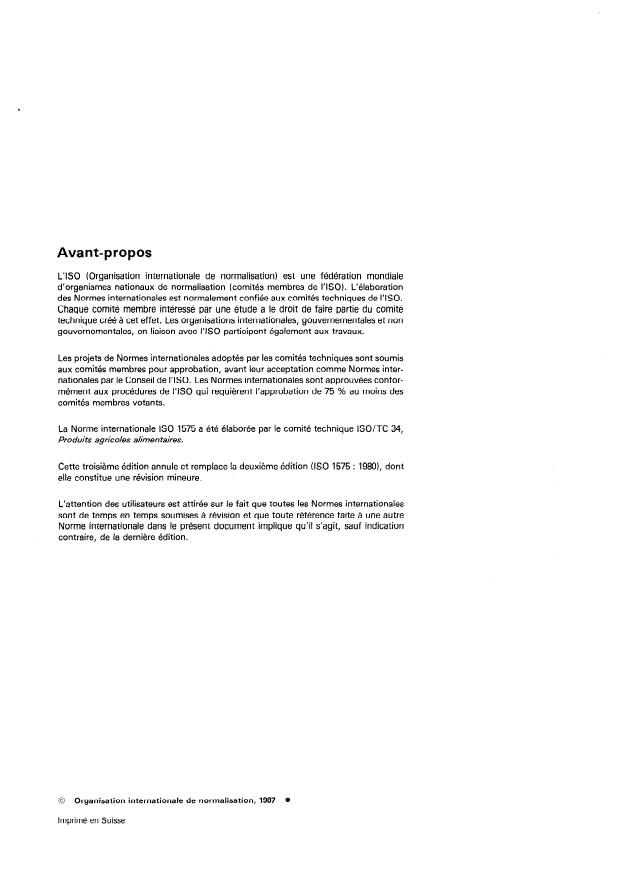
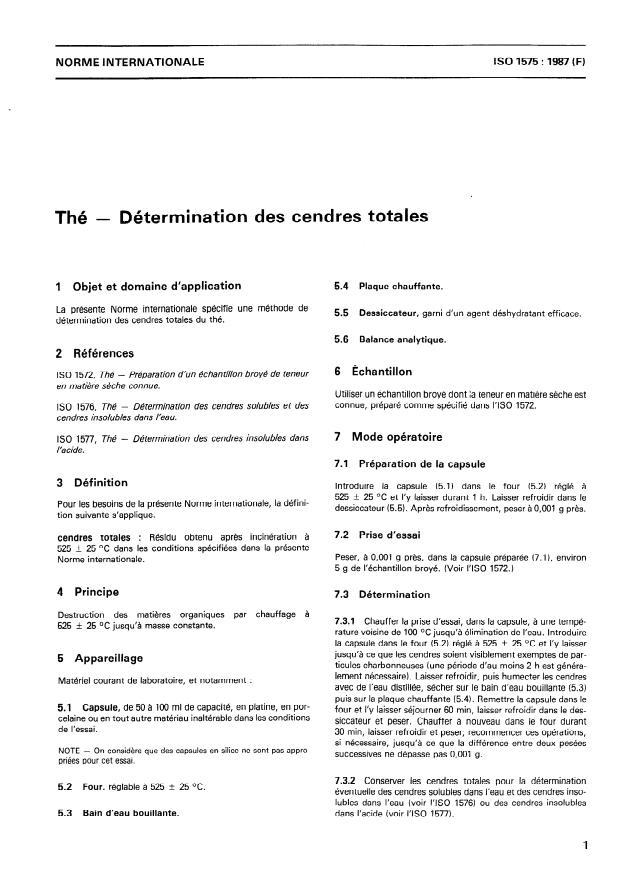

ISO 1575:1987 - Thé -- Détermination des cendres totales
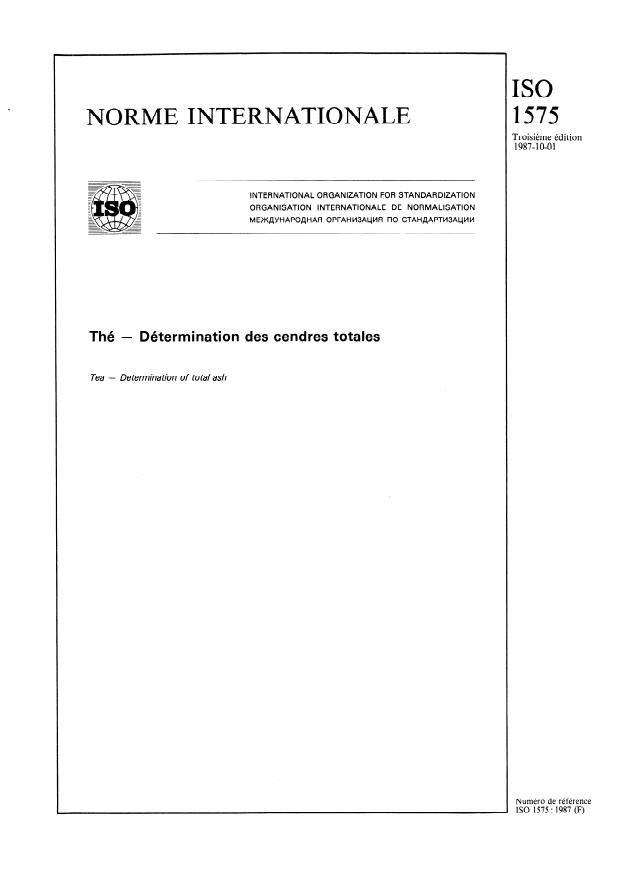
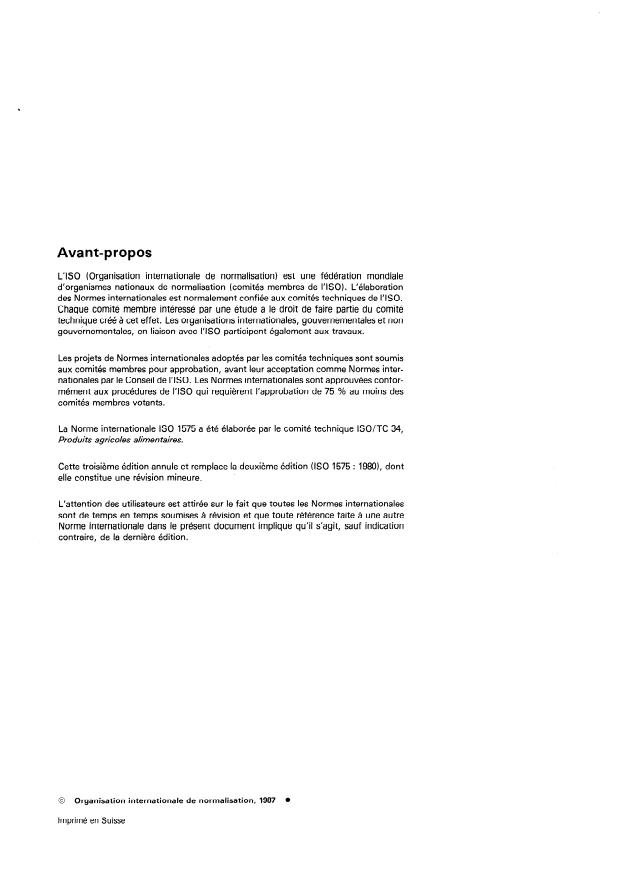
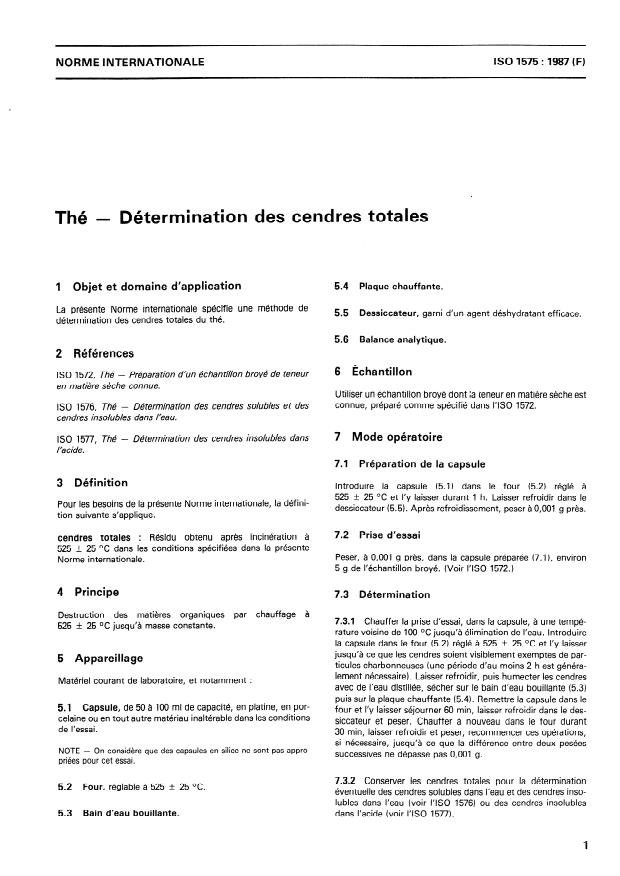

ISO 1575:1987 - Thé -- Détermination des cendres totales
ISO 1575:1987 - Thé — Détermination des cendres totales/10/1987
ISO 1575:1987 - Thé — Détermination des cendres totales/10/1987
ISO 1575:1987 - Tea — Determination of total ash
Overview
ISO 1575:1987 is an international standard published by the International Organization for Standardization (ISO) that specifies a precise method for the determination of total ash content in tea. This method helps quantify the inorganic residue remaining after the combustion of the organic matter within tea samples. The standard aims to provide a consistent and repeatable procedure to ensure accurate quality control and characterization of tea products.
The standardized process involves incinerating a prepared tea sample at a controlled temperature of 525 ± 25 degrees Celsius until the mass reaches a constant value. This destructive analysis removes all organic material, leaving only mineral ash for measurement. ISO 1575:1987 ensures that laboratory results are comparable globally by detailing sample preparation, apparatus, and calculation formulae.
Key Topics
- Scope and Application: Applies to the quantitative determination of total ash in tea, contributing to quality assessment and regulatory compliance.
- Sample Preparation: Requires use of a tea sample ground to a known dry matter content, in accordance with ISO 1572.
- Apparatus Requirements:
- Capsules (50-100 ml) made of platinum, porcelain, or other inert materials (silica capsules are unsuitable).
- Temperature-controlled furnace able to maintain 525 ± 25 °C.
- Analytical balance with precision to 0.001 g.
- Dessicator with effective drying agent.
- Hot water bath and heating plate to dry samples between steps.
- Test Procedure:
- Preheat capsule to constant mass.
- Weigh approximately 5 g of prepared sample in capsule.
- Heat initially near 100 °C to remove moisture.
- Incinerate at 525 ± 25 °C until ashes show no black residue (typically minimum 2 hours).
- Hydrate, dry, and reheat the ash to remove soluble impurities.
- Repeat heating and weighing until mass stabilization within 0.001 g.
- Calculation: Total ash content expressed as a percentage of the dry sample mass using a defined formula.
- Quality Control: Duplicate determinations with a specified repeatability limit (maximum 0.2 g difference for 100 g sample).
- Documentation: Test reports must detail the method used, any deviations, sample identification, and test results.
Applications
The ISO 1575:1987 method is critical for:
- Quality Assurance in Tea Production: Helps producers assess mineral residue levels, which can affect flavor, safety, and regulatory compliance.
- Regulatory Compliance: Supports meeting food safety standards related to inorganic content.
- Research and Development: Provides a reliable baseline for studies on tea composition, processing effects, and adulteration detection.
- Trade and Certification: Enables consistent quality benchmarks across international markets and certification bodies.
- Complementary Analysis: Can be combined with ISO 1576 (soluble and insoluble ash) or ISO 1577 (acid-insoluble ash) for detailed inorganic profiling.
Related Standards
- ISO 1572: Specifies the preparation of tea samples with known dry matter content, essential for accurate ash testing.
- ISO 1576: Details methods for determination of water-soluble and insoluble ash components in tea.
- ISO 1577: Describes the determination of acid-insoluble ash in tea, useful for detecting soil or sand contamination.
ISO 1575:1987 fits within the broader framework of agricultural food product standards under ISO/TC 34, ensuring that tea analysis methods remain harmonized and scientifically robust.
Keywords: ISO 1575, tea total ash determination, tea quality control, inorganic residue analysis, tea testing standards, tea ash content, sample incineration method, ISO tea standards
Relations
- Effective Date
- 15-Apr-2008
Buy Documents
ISO 1575:1987 - Tea -- Determination of total ash
ISO 1575:1987 - Tea — Determination of total ash/10/1987
ISO 1575:1987 - Thé -- Détermination des cendres totales
ISO 1575:1987 - Thé -- Détermination des cendres totales
ISO 1575:1987 - Thé — Détermination des cendres totales/10/1987
ISO 1575:1987 - Thé — Détermination des cendres totales/10/1987
ISO 1575:1987 - Tea — Determination of total ash
Get Certified
Connect with accredited certification bodies for this standard

BSI Group
BSI (British Standards Institution) is the business standards company that helps organizations make excellence a habit.

Bureau Veritas
Bureau Veritas is a world leader in laboratory testing, inspection and certification services.

DNV
DNV is an independent assurance and risk management provider.
Sponsored listings
Frequently Asked Questions
ISO 1575:1987 is a standard published by the International Organization for Standardization (ISO). Its full title is "Tea — Determination of total ash". This standard covers: The method consists in destructing of organic matter by heating at 525 +/- 25 degrees centigrade to constant mass using a furnace, capable of being controlled.
The method consists in destructing of organic matter by heating at 525 +/- 25 degrees centigrade to constant mass using a furnace, capable of being controlled.
ISO 1575:1987 is classified under the following ICS (International Classification for Standards) categories: 67.140.10 - Tea. The ICS classification helps identify the subject area and facilitates finding related standards.
ISO 1575:1987 has the following relationships with other standards: It is inter standard links to ISO 1575:1980. Understanding these relationships helps ensure you are using the most current and applicable version of the standard.
ISO 1575:1987 is available in PDF format for immediate download after purchase. The document can be added to your cart and obtained through the secure checkout process. Digital delivery ensures instant access to the complete standard document.
Standards Content (Sample)
ISO
INTERNATIONAL STANDARD
Third edition
1987-10-01
INTERNATIONAL ORGANKATION FOR STANDARDIZATIOM
ORGANISATION INTERNATIONALE DE NORMALISATION
lvlEX)JYHAPO~HAR OPTAHM3A~Mfl l-l0 CTAHflAPTL13A~MM
Tea - Determination of total ash
TM - Determination des cendres totales
Reference number
ISO 1575 : 1987 (E)
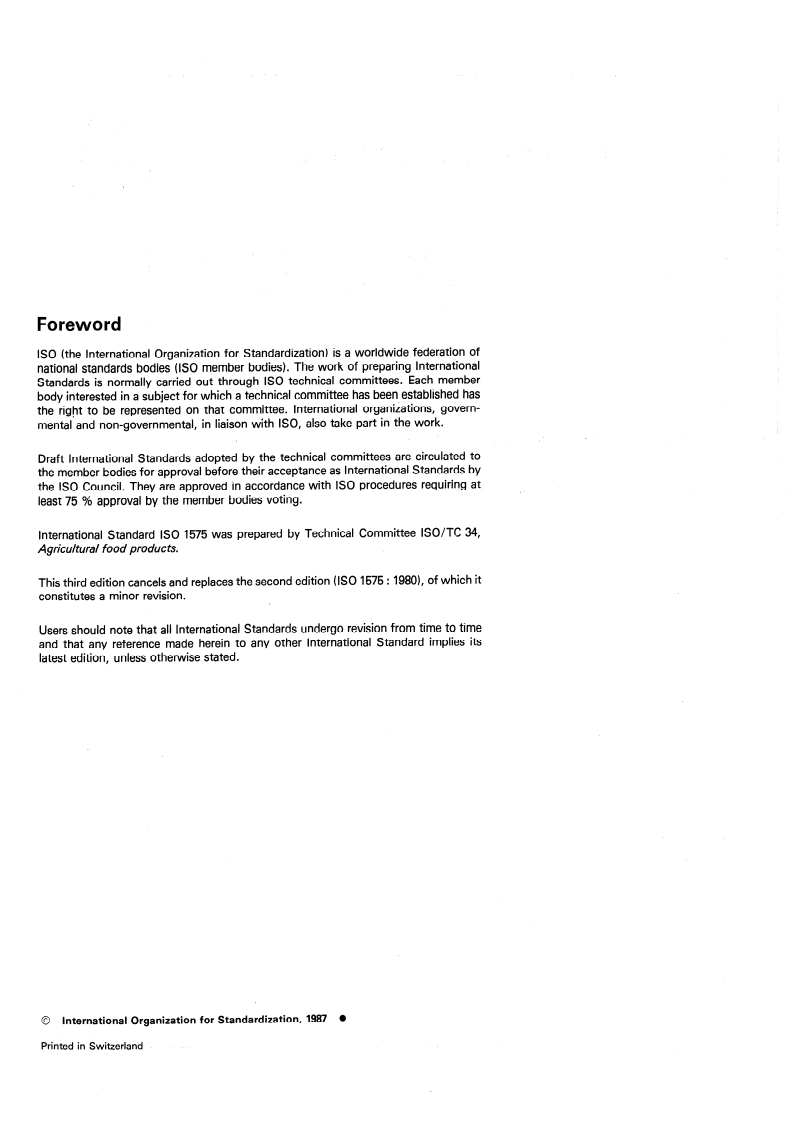
Foreword
ISO (the International Organization for Standardization) is a worldwide federation of
national Standards bodies (ISO member bodies). The work of preparing International
Standards is normally carried out through ISO technical committees. Esch member
body interested in a subject for which a technical committee has been established has
the right to be represented on that committee. International organizations, govern-
mental’and non-governmental, in liaison with ISO, also take part in the work.
Draft International Standards adopted by the technical committees are circulated to
the member bodies for approval before their acceptance as International Standards by
the ISO Council. They are approved in accordance with ISO procedures requiring at
least 75 % approval by the member bodies voting.
International Standard ISO 1575 was prepared by Technical Committee ISO/TC 34,
Agricultural food produc ts.
This third edition cancels and replaces the second edition (ISO 1575 : 19801, of which it
constitutes a minor revision.
Users should note that all International Standards undergo revision from time to time
and that any reference made herein to any other International Standard implies its
latest edition, unless otherwise stated.
0 International Organkation for Standardkation, 1987
Printed in Switzerland
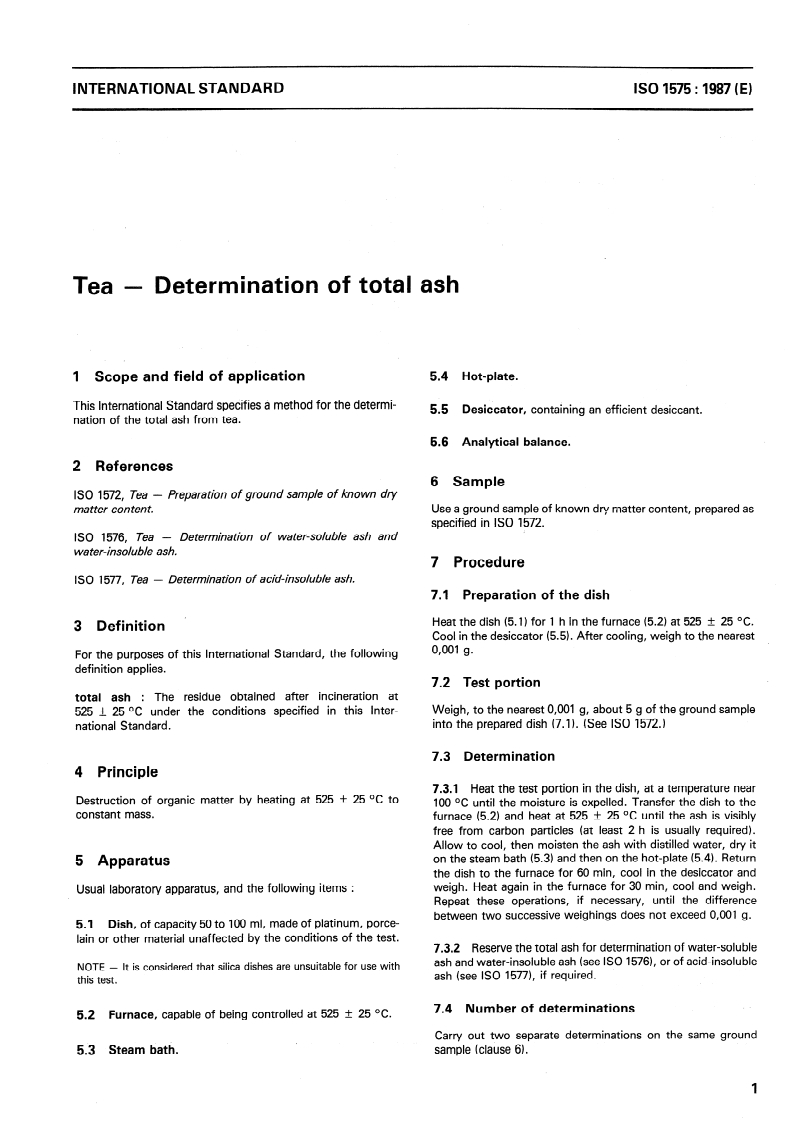
INTERNATIONAL STANDARD ISO 1575 : 1987 (E)
Tea - Determination of total ash
5.4 Hot-plate.
1 Scope and field of application
This International Standard specifies a method for the determi-
5.5 Desiccator, containing an eff icient desiccant.
nation of the total ash from tea.
5.6 Analytical balance.
2 References
6 Sample
ISO 1572, Tea - Preparation of ground Sample of known dry
Use a ground Sample of known dry matter content, prepared as
matter content.
specified in ISO 1572.
Determination of water-soluble asb and
ISO 1576, Tea -
wa ter-insoluble ash.
7 Procedure
ISO 1577, Tea - Determination of acid-insoluble ash.
7.1 Preparation of the dish
Heat the dish (5.1) for 1 h in the furnace (5.2) at 525 + 25 OC.
3 Definition
Cool in the desiccator (5.5). After cooling, weigh to the nearest
0,001 g.
For the purposes of this International Standard, the following
definition applies.
7.2 Test Portion
: The residue obtained after incineration at
total ash
Weigh, to the nearest 0,001 g, about 5 g of the ground Sample
525 + 25 OC under the conditions specified
...
ISO
INTERNATIONAL STANDARD
Third edition
1987-10-01
INTERNATIONAL ORGANKATION FOR STANDARDIZATIOM
ORGANISATION INTERNATIONALE DE NORMALISATION
lvlEX)JYHAPO~HAR OPTAHM3A~Mfl l-l0 CTAHflAPTL13A~MM
Tea - Determination of total ash
TM - Determination des cendres totales
Reference number
ISO 1575 : 1987 (E)
Foreword
ISO (the International Organization for Standardization) is a worldwide federation of
national Standards bodies (ISO member bodies). The work of preparing International
Standards is normally carried out through ISO technical committees. Esch member
body interested in a subject for which a technical committee has been established has
the right to be represented on that committee. International organizations, govern-
mental’and non-governmental, in liaison with ISO, also take part in the work.
Draft International Standards adopted by the technical committees are circulated to
the member bodies for approval before their acceptance as International Standards by
the ISO Council. They are approved in accordance with ISO procedures requiring at
least 75 % approval by the member bodies voting.
International Standard ISO 1575 was prepared by Technical Committee ISO/TC 34,
Agricultural food produc ts.
This third edition cancels and replaces the second edition (ISO 1575 : 19801, of which it
constitutes a minor revision.
Users should note that all International Standards undergo revision from time to time
and that any reference made herein to any other International Standard implies its
latest edition, unless otherwise stated.
0 International Organkation for Standardkation, 1987
Printed in Switzerland
INTERNATIONAL STANDARD ISO 1575 : 1987 (E)
Tea - Determination of total ash
5.4 Hot-plate.
1 Scope and field of application
This International Standard specifies a method for the determi-
5.5 Desiccator, containing an eff icient desiccant.
nation of the total ash from tea.
5.6 Analytical balance.
2 References
6 Sample
ISO 1572, Tea - Preparation of ground Sample of known dry
Use a ground Sample of known dry matter content, prepared as
matter content.
specified in ISO 1572.
Determination of water-soluble asb and
ISO 1576, Tea -
wa ter-insoluble ash.
7 Procedure
ISO 1577, Tea - Determination of acid-insoluble ash.
7.1 Preparation of the dish
Heat the dish (5.1) for 1 h in the furnace (5.2) at 525 + 25 OC.
3 Definition
Cool in the desiccator (5.5). After cooling, weigh to the nearest
0,001 g.
For the purposes of this International Standard, the following
definition applies.
7.2 Test Portion
: The residue obtained after incineration at
total ash
Weigh, to the nearest 0,001 g, about 5 g of the ground Sample
525 + 25 OC under the conditions specified
...
ISO
NORME INTERNATIONALE
Troisième édition
1987-10-01
INTERNATIONAL ORGANIZATION FOR STANDARDIZATION
ORGANISATION INTERNATIONALE DE NORMALISATION
MEXAYHAPOflHAF1 OPI-AHM3A~MR Il0 CTAH~APTM3A~MM
Thé - Détermination des cendres totales
Tea - De termina tion of total ash
Numéro de référence
ISO 1575: 1987 (F)
,
Avant-propos
L’ISO (Organisation internationale de normalisation) est une fédération mondiale
d’organismes nationaux de normalisation (comités membres de I’ISO). L’élaboration
des Normes internationales est normalement confiée aux comités techniques de I’ISO.
Chaque comité membre intéressé par une étude a le droit de faire partie du comité
technique créé à cet effet. Les organisations internationales, gouvernementales et non
gouvérnementales, en liaison avec I’ISO participent également aux travaux.
Les projets de Normes internationales adoptés par les comités techniques sont soumis
aux comités membres pour approbation, avant leur acceptation comme Normes inter-
nationales par le Conseil de I’ISO. Les Normes internationales sont approuvées confor-
mément aux procédures de I’ISO qui requièrent l’approbation de 75 % au moins des
comités membres votants.
La Norme internationale ISO 1575 a été élaborée par le comité technique ISO/TC 34,
Produits agricoles alimentaires.
Cette troisième édition annule et remplace la deuxième édition USO 1575 : 19801, dont
elle constitue une révision mineure.
L’attention des utilisateurs est attirée sur le fait que toutes les Normes internationales
sont de temps en temps soumises à révision et que toute référence faite à une autre
Norme internationale dans le présent document implique qu’il s’agit, sauf indication
contraire, de la dernière édition.
0 Organisation internationale de normalisation, 1987 l
Imprimé en Suisse
ISO 1575: 1987 (F)
NORME INTERNATIONALE
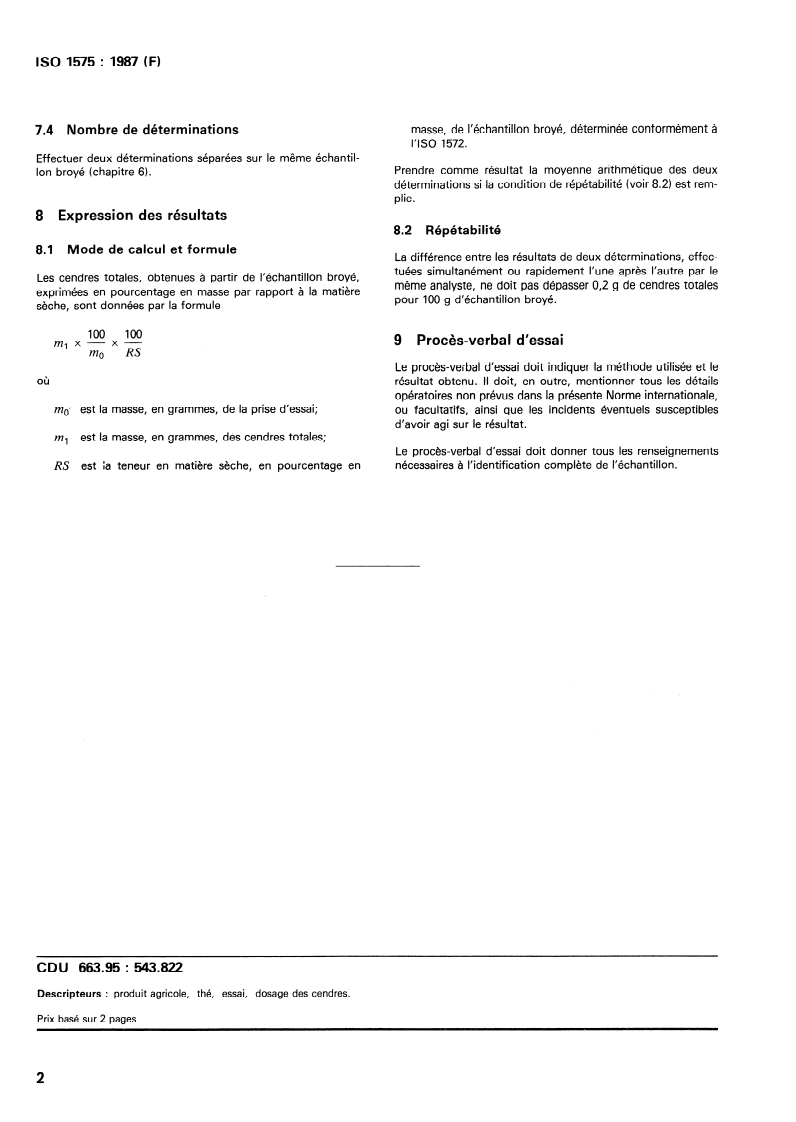
Détermination des cendres totales
Thé -
5.4 Plaque chauffante.
1 Objet et domaine d’application
La présente Norme internationale spécifie une méthode de
5.5 Dessiccateur, garni d’un agent déshydratant efficace.
détermination des cendres totales du thé.
5.6 Balance analytique.
2 Références
6 Échantillon
Préparation d’un échantillon broyé de teneur
ISO 1572, Thé -
en matière sèche connue.
Utiliser un échantillon broyé dont :a teneur en matière sèche est
connue, préparé comme spécifié dans I’ISO 1572.
ISO 1576, Thé - Détermination des cendres solubles et des
cendres insolubles dans l’eau.
7 Mode opératoire
Détermination des cendres insolubles dans
ISO 1577, Thé -
l’acide.
7.1 Préparation de la capsule
3 Définition
Introduire la capsule (5.1) dans le four (5.2) réglé à
525 + 25 OC et 1’ y I aisser durant 1 h. Laisser refroidir dans le
Pour les besoins de la présente Norme internationale, la défini-
dessiccateur (5.5). Après refroidissement, peser à 0,001 g près.
tion suivante s’applique.
7.2 Prise d’essai
cendres totales : Résidu obtenu après incinération à
525 + 25 OC dans les conditions spécifiées dans la présente
Peser, à 0,001 g près, dans la capsule préparée (7.11, environ
Norme internationale.
...
ISO
NORME INTERNATIONALE
Troisième édition
1987-10-01
INTERNATIONAL ORGANIZATION FOR STANDARDIZATION
ORGANISATION INTERNATIONALE DE NORMALISATION
MEXAYHAPOflHAF1 OPI-AHM3A~MR Il0 CTAH~APTM3A~MM
Thé - Détermination des cendres totales
Tea - De termina tion of total ash
Numéro de référence
ISO 1575: 1987 (F)
,
Avant-propos
L’ISO (Organisation internationale de normalisation) est une fédération mondiale
d’organismes nationaux de normalisation (comités membres de I’ISO). L’élaboration
des Normes internationales est normalement confiée aux comités techniques de I’ISO.
Chaque comité membre intéressé par une étude a le droit de faire partie du comité
technique créé à cet effet. Les organisations internationales, gouvernementales et non
gouvérnementales, en liaison avec I’ISO participent également aux travaux.
Les projets de Normes internationales adoptés par les comités techniques sont soumis
aux comités membres pour approbation, avant leur acceptation comme Normes inter-
nationales par le Conseil de I’ISO. Les Normes internationales sont approuvées confor-
mément aux procédures de I’ISO qui requièrent l’approbation de 75 % au moins des
comités membres votants.
La Norme internationale ISO 1575 a été élaborée par le comité technique ISO/TC 34,
Produits agricoles alimentaires.
Cette troisième édition annule et remplace la deuxième édition USO 1575 : 19801, dont
elle constitue une révision mineure.
L’attention des utilisateurs est attirée sur le fait que toutes les Normes internationales
sont de temps en temps soumises à révision et que toute référence faite à une autre
Norme internationale dans le présent document implique qu’il s’agit, sauf indication
contraire, de la dernière édition.
0 Organisation internationale de normalisation, 1987 l
Imprimé en Suisse
ISO 1575: 1987 (F)
NORME INTERNATIONALE
Détermination des cendres totales
Thé -
5.4 Plaque chauffante.
1 Objet et domaine d’application
La présente Norme internationale spécifie une méthode de
5.5 Dessiccateur, garni d’un agent déshydratant efficace.
détermination des cendres totales du thé.
5.6 Balance analytique.
2 Références
6 Échantillon
Préparation d’un échantillon broyé de teneur
ISO 1572, Thé -
en matière sèche connue.
Utiliser un échantillon broyé dont :a teneur en matière sèche est
connue, préparé comme spécifié dans I’ISO 1572.
ISO 1576, Thé - Détermination des cendres solubles et des
cendres insolubles dans l’eau.
7 Mode opératoire
Détermination des cendres insolubles dans
ISO 1577, Thé -
l’acide.
7.1 Préparation de la capsule
3 Définition
Introduire la capsule (5.1) dans le four (5.2) réglé à
525 + 25 OC et 1’ y I aisser durant 1 h. Laisser refroidir dans le
Pour les besoins de la présente Norme internationale, la défini-
dessiccateur (5.5). Après refroidissement, peser à 0,001 g près.
tion suivante s’applique.
7.2 Prise d’essai
cendres totales : Résidu obtenu après incinération à
525 + 25 OC dans les conditions spécifiées dans la présente
Peser, à 0,001 g près, dans la capsule préparée (7.11, environ
Norme internationale.
...
ISO
NORME INTERNATIONALE
Troisième édition
1987-10-01
INTERNATIONAL ORGANIZATION FOR STANDARDIZATION
ORGANISATION INTERNATIONALE DE NORMALISATION
MEXAYHAPOflHAF1 OPI-AHM3A~MR Il0 CTAH~APTM3A~MM
Thé - Détermination des cendres totales
Tea - De termina tion of total ash
Numéro de référence
ISO 1575: 1987 (F)
,
Avant-propos
L’ISO (Organisation internationale de normalisation) est une fédération mondiale
d’organismes nationaux de normalisation (comités membres de I’ISO). L’élaboration
des Normes internationales est normalement confiée aux comités techniques de I’ISO.
Chaque comité membre intéressé par une étude a le droit de faire partie du comité
technique créé à cet effet. Les organisations internationales, gouvernementales et non
gouvérnementales, en liaison avec I’ISO participent également aux travaux.
Les projets de Normes internationales adoptés par les comités techniques sont soumis
aux comités membres pour approbation, avant leur acceptation comme Normes inter-
nationales par le Conseil de I’ISO. Les Normes internationales sont approuvées confor-
mément aux procédures de I’ISO qui requièrent l’approbation de 75 % au moins des
comités membres votants.
La Norme internationale ISO 1575 a été élaborée par le comité technique ISO/TC 34,
Produits agricoles alimentaires.
Cette troisième édition annule et remplace la deuxième édition USO 1575 : 19801, dont
elle constitue une révision mineure.
L’attention des utilisateurs est attirée sur le fait que toutes les Normes internationales
sont de temps en temps soumises à révision et que toute référence faite à une autre
Norme internationale dans le présent document implique qu’il s’agit, sauf indication
contraire, de la dernière édition.
0 Organisation internationale de normalisation, 1987 l
Imprimé en Suisse
ISO 1575: 1987 (F)
NORME INTERNATIONALE
Détermination des cendres totales
Thé -
5.4 Plaque chauffante.
1 Objet et domaine d’application
La présente Norme internationale spécifie une méthode de
5.5 Dessiccateur, garni d’un agent déshydratant efficace.
détermination des cendres totales du thé.
5.6 Balance analytique.
2 Références
6 Échantillon
Préparation d’un échantillon broyé de teneur
ISO 1572, Thé -
en matière sèche connue.
Utiliser un échantillon broyé dont :a teneur en matière sèche est
connue, préparé comme spécifié dans I’ISO 1572.
ISO 1576, Thé - Détermination des cendres solubles et des
cendres insolubles dans l’eau.
7 Mode opératoire
Détermination des cendres insolubles dans
ISO 1577, Thé -
l’acide.
7.1 Préparation de la capsule
3 Définition
Introduire la capsule (5.1) dans le four (5.2) réglé à
525 + 25 OC et 1’ y I aisser durant 1 h. Laisser refroidir dans le
Pour les besoins de la présente Norme internationale, la défini-
dessiccateur (5.5). Après refroidissement, peser à 0,001 g près.
tion suivante s’applique.
7.2 Prise d’essai
cendres totales : Résidu obtenu après incinération à
525 + 25 OC dans les conditions spécifiées dans la présente
Peser, à 0,001 g près, dans la capsule préparée (7.11, environ
Norme internationale.
...
ISO
NORME INTERNATIONALE
Troisième édition
1987-10-01
INTERNATIONAL ORGANIZATION FOR STANDARDIZATION
ORGANISATION INTERNATIONALE DE NORMALISATION
MEXAYHAPOflHAF1 OPI-AHM3A~MR Il0 CTAH~APTM3A~MM
Thé - Détermination des cendres totales
Tea - De termina tion of total ash
Numéro de référence
ISO 1575: 1987 (F)
,
Avant-propos
L’ISO (Organisation internationale de normalisation) est une fédération mondiale
d’organismes nationaux de normalisation (comités membres de I’ISO). L’élaboration
des Normes internationales est normalement confiée aux comités techniques de I’ISO.
Chaque comité membre intéressé par une étude a le droit de faire partie du comité
technique créé à cet effet. Les organisations internationales, gouvernementales et non
gouvérnementales, en liaison avec I’ISO participent également aux travaux.
Les projets de Normes internationales adoptés par les comités techniques sont soumis
aux comités membres pour approbation, avant leur acceptation comme Normes inter-
nationales par le Conseil de I’ISO. Les Normes internationales sont approuvées confor-
mément aux procédures de I’ISO qui requièrent l’approbation de 75 % au moins des
comités membres votants.
La Norme internationale ISO 1575 a été élaborée par le comité technique ISO/TC 34,
Produits agricoles alimentaires.
Cette troisième édition annule et remplace la deuxième édition USO 1575 : 19801, dont
elle constitue une révision mineure.
L’attention des utilisateurs est attirée sur le fait que toutes les Normes internationales
sont de temps en temps soumises à révision et que toute référence faite à une autre
Norme internationale dans le présent document implique qu’il s’agit, sauf indication
contraire, de la dernière édition.
0 Organisation internationale de normalisation, 1987 l
Imprimé en Suisse
ISO 1575: 1987 (F)
NORME INTERNATIONALE
Détermination des cendres totales
Thé -
5.4 Plaque chauffante.
1 Objet et domaine d’application
La présente Norme internationale spécifie une méthode de
5.5 Dessiccateur, garni d’un agent déshydratant efficace.
détermination des cendres totales du thé.
5.6 Balance analytique.
2 Références
6 Échantillon
Préparation d’un échantillon broyé de teneur
ISO 1572, Thé -
en matière sèche connue.
Utiliser un échantillon broyé dont :a teneur en matière sèche est
connue, préparé comme spécifié dans I’ISO 1572.
ISO 1576, Thé - Détermination des cendres solubles et des
cendres insolubles dans l’eau.
7 Mode opératoire
Détermination des cendres insolubles dans
ISO 1577, Thé -
l’acide.
7.1 Préparation de la capsule
3 Définition
Introduire la capsule (5.1) dans le four (5.2) réglé à
525 + 25 OC et 1’ y I aisser durant 1 h. Laisser refroidir dans le
Pour les besoins de la présente Norme internationale, la défini-
dessiccateur (5.5). Après refroidissement, peser à 0,001 g près.
tion suivante s’applique.
7.2 Prise d’essai
cendres totales : Résidu obtenu après incinération à
525 + 25 OC dans les conditions spécifiées dans la présente
Peser, à 0,001 g près, dans la capsule préparée (7.11, environ
Norme internationale.
...
ة�يلود ة�يسا�يق ةفصاوم
�����
ISO 1575
يلكلا دامرلا ر�يدقي — ياشلا ةيلايلا ةع�بطلا
���������
1987-09
Tea — Determination of total ash
عجرملاا م�قر
ISO 1575:1987(ar) ISO 1987 ©
ISO 1575:1987(ar)
ة�يكلم قوقح�ب ة�يمحم ةق�ييو
�������
ISO 1987 ©
ال�ن ،ةــ�تك�تناك�تم و�ا ة�تنومتكاإا ةل�تسو �ي�ا�ن و�ا لاكس�الا نم لكس �ي�ا�ن ةماذحتسا و�ا روسنلاا اذه نم ءمجر �ي�ا خسن رو�ح�ي ال ،�كاذ �فالر ىلع صن�ي ما ام .ةظوقحم قوقحاا لك
���������������������������
وسإا وضع ةن�تهاا و�ا هانذ�ا ناونعاا ىلع وسإا نم �ي�ا نم نذإالا �تلظ نكل�ي .ق�نسم �ى�ناتك نذإا ىلع لوضحاا نوذ ،تنامتنإالا و�ا تنمتنإالا ىلع مسناا و�ا �ىنوضاا خسناا �كاذ �ى�ق
�������������������������������
.�تااطاا ذل�ن �ى�ق
ISO copyright office
CP 401 • Ch. de Blandonnet 8
CH-1214 Vernier, Geneva
Tel. + 41 22 749 01 11
E-mail copyright@iso.org
Website www.iso.org
امس�يوس �ى�ق تمسن
���
ISO 1987 — All rights reserved ©
�ب
ISO 1575:1987(ar)
ةحقضاا با�يويحم
��
��
د . م�يدقي
��
1 . ق�ي�بطيلا قاطب و لا�حملا 1
����
1 . ةم�يل�يمكميلا عمجاارمملا 2
��
1 . فم�يرمعيملا 3
��
1 . ساممس�ألا 4
1 . باود�ألاو �ةرهجا�ألا 5
��
1 . ةب�يعلا 6
��
2 . �ةق�يرممطلا 7
�
2 . ق�نطاا م�ته�حي 1.7
���
2 . را�نترالا ءمجر 2.7
���
2 . مـ�يذـقـتاا 3.7
��
2 . تام�يذقتاا ذذع 4.7
���
2 . ججبايبلا نع ر�ي�بعيلا 8
�����
2 . �تاسحاا ةق�يمظ 1.8
��
2 . ة�يرامكتاا 2.8
��
2 . را�بياألا ر�يرقي 9
����
ISO 1987 — All rights reserved ©
جج
ISO 1575:1987(ar)
م�يدقي
��
ة�ت اوذاا تاقصاولاا ذاذعإا مت�ي ام ا�نااعو ،(وم�ي�الا ى�ق ءاضع�الا) ة�تنظواا س�ت�تقتاا تاه�حا ىلااع ذاحيا ىه (س�ت�تقتلا ة�تاوذاا ةلطنلاا) وم�ي�الا
�����������������������
ة ا نوك�ي ن�ا ى�ق قحاا وضعاا اذها نإا�ق ، ة�تن�ق ةن�حا ةا تلكس ذ�ق عوصول�ن مالتهإا اها وضعاا ةه�حاا تناك اذإاو ، وم�ي�الا ة�تنقاا نا�حلاا لالر نم
���������������������������
.وم�ي�الا ةلطنم عم لصاوي اها ىتاا ة�تموكحاا م�تعو اهنم ة�تموكحاا ة�تاوذاا تالطنلااا �كاذك للعاا ى�ق �كراس�يو .ةن�حلاا �كلي ى�ق لتلم
�����������������������
اــهذالت عا ل�نق ةققاوللا ءاضع�الا لوذاا ىلع اهع�يروي مت�ي ة�تنقاا نا�حلاا ل�نق نم اهذاذعإا مت�ي ىتاا ة�تاوذاا ة�تس
...