


Key Agriculture Standards: Digital Networks, Irrigation, and Aquaculture Effluent Management Explained
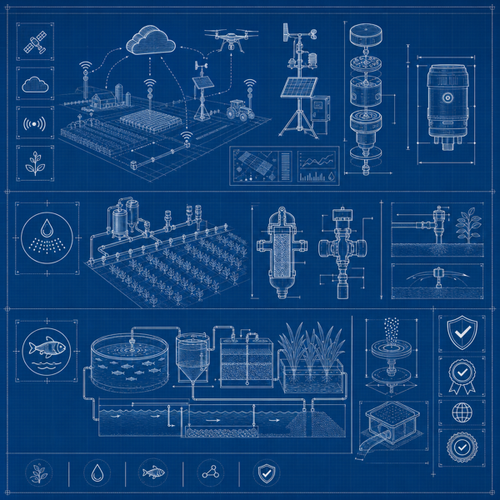
Agriculture is undergoing rapid transformation, propelled by digital connectivity, sustainable irrigation methods, and responsible environmental management. As global food production faces mounting pressures from climate, resource scarcity, and population growth, compliance with well-defined agricultural standards has shifted from optional to absolutely essential. This article unpacks three keystone ISO standards—each addressing a pivotal domain: communication networks for tractors and agricultural machinery, best practices for pressurized sprinkler irrigation, and effective management of aquaculture effluent. Whether you are a farm equipment OEM, an irrigation planner, or an aquafarm manager, understanding and implementing these internationally harmonized requirements can be the difference between thriving and struggling in modern agriculture.
Overview / Introduction
Today's agriculture sector stands at the crossroads of sustainability and technology. Farmers, agribusinesses, consultants, and policymakers grapple daily with complex challenges: feeding a growing population, making efficient use of dwindling water supplies, managing environmental impact, and staying profitable. In this environment, international standards for agriculture offer clarity, unity, and a proven path to compliance and operational excellence.
Why do these standards matter?
- Ensure Product and Operational Compatibility: Common requirements enable machinery, systems, and resources to work together seamlessly, regardless of country or brand.
- Boost Productivity and Safety: Standardized systems support automation, reduce error, and facilitate scaling without compromise.
- Guarantee Resource Efficiency & Environmental Responsibility: Water use, waste management, and energy are optimized, minimizing costs and negative impact.
- Enable Market Access: Compliance with leading standards is increasingly required for both regulatory approval and global trade.
In this comprehensive guide, we break down ISO 11783-3, ISO 24120-3, and ISO 25247. You’ll find easy-to-digest explanations, key requirements, practical summaries, and implementation tips—all crafted to empower both specialists and the broader public to make informed decisions.
Detailed Standards Coverage
ISO 11783-3:2026 - Digital Communication for Agricultural Machinery
Tractors and machinery for agriculture and forestry — Serial control and communications data network — Part 3: Application layer, transport layer and network layer
Modern farms are high-tech operations, relying on fleets of interconnected vehicles, implements, and management systems. ISO 11783-3:2026 sets the foundation for this ‘digital backbone’ by specifying how machines “talk” to each other. It focuses on the upper layers (application, transport, and network) of the open systems interconnection (OSI) model for serial communications between tractors, implements, and digital control units (ECUs).
Scope and Coverage:
- Standardizes how messages are constructed, prioritized, and transmitted using Controller Area Network (CAN), specifically mapping to the classic extended frame format (CEFF) per ISO 11898-1.
- Defines how to handle messages longer than CAN’s basic eight-byte limit, using advanced transport and network layer protocols inspired by the SAE J1939-21 practice.
- Includes requirements for addressing, message types (command, broadcast, acknowledgment, transfer), arbitration, error detection, and connection management.
Who Should Comply:
- Agricultural machinery manufacturers (OEMs), especially those producing tractors, harvesters, and complex implements.
- On-board electronics designers and suppliers.
- Software developers creating farm management and automation systems.
- Service providers maintaining, upgrading, or integrating farm equipment.
Practical Implications:
- Ensures interoperability between tractors, harvesters, planters, and digital control equipment across brands and regions.
- Facilitates automation, data-driven planning, and cloud-based farm analytics, paving the way for precision agriculture.
- Reduces downtime and troubleshooting by harmonizing how equipment communicates and responds across the farm.
Key highlights:
- Detailed mapping of application messages to 29-bit CAN CEFF frames for consistent communication.
- Robust multi-layer protocols for handling larger data transfers over the CAN bus.
- Mechanisms for network arbitration, message priority, acknowledgement, and error detection to boost reliability and safety.
Access the full standard:View ISO 11783-3:2026 on iTeh Standards
ISO 24120-3:2025 - Pressurized Sprinkler Irrigation Guidelines
Agricultural irrigation equipment — Guidelines on the implementation of pressurized irrigation systems — Part 3: Sprinkler irrigation
Effective irrigation is the linchpin of global agricultural productivity, and with increasingly limited water resources, best practices are more vital than ever. ISO 24120-3:2025 provides comprehensive guidelines for implementing pressurized sprinkler, micro-sprinkler, and sprayer irrigation systems. Its recommendations span the full spectrum of agricultural operations—from small farms to large commercial enterprises, both in open fields and protected crop structures (like greenhouses and tunnels).
Scope and Coverage:
- Offers design and operational guidance for pressurized irrigation systems (excluding center-pivot and roll-type systems).
- Explains device selection, installation, operation, and maintenance for optimal water efficiency.
- Addresses system components including control heads, pumps, meters, valves, pipes, filtration, and delivery hardware.
- Integrates fertigation (fertilizer via irrigation) and chemigation (chemical application via water).
- Covers testing, performance monitoring, troubleshooting, and safety for reliable, sustainable operation.
Who Should Comply:
- Farm owners and operators seeking to optimize water use and crop yield.
- Irrigation planners, designers, manufacturers, and contractors.
- Agronomists and agricultural extension services.
- Policymakers and agricultural agencies overseeing resource management and food security.
Practical Implications:
- Enables substantial water savings, reducing costs and freeing up water for domestic and industrial use.
- Supports automation and remote management, opening the door to smart-farming via sensors and IoT controls.
- Mitigates environmental risks such as soil erosion, runoff, and fertilizer waste through systemized design and management.
Key highlights:
- Systematic principles for device and layout selection tailored to crop needs, soils, and terrain.
- Detailed operational and maintenance protocols to ensure efficient, long-lived irrigation systems.
- Integrated guidance on fertigation and chemigation for optimized input usage and minimized environmental impact.
Access the full standard:View ISO 24120-3:2025 on iTeh Standards
ISO 25247:2026 - Aquaculture Effluent: Principles, Methods, and Guidance
Treatment of aquaculture effluent in closed and semi-closed aquaculture systems — Principles, methods and guidance
The world looks increasingly to aquaculture—farming of fish and aquatic organisms—for secure, sustainable protein. However, effluent from intensive aquaculture operations threatens aquatic ecosystems and the broader environment if left unmanaged. ISO 25247:2026 responds to this challenge by defining a framework for reducing and controlling effluent discharge specifically in closed and semi-closed aquaculture systems (both freshwater and marine).
Scope and Coverage:
- Establishes ecological priorities, emphasizing minimization of effluent generation, maximization of reuse/recycle, and protection of downstream ecosystems.
- Details good practices for source reduction, treatment, valorization (e.g., using waste as resource), and discharge monitoring.
- Offers guidance for treatment technology selection and adaptation to local and species-specific needs.
- Specifies sampling, water quality testing, monitoring, and compliance approaches.
Who Should Comply:
- Owners, operators, and managers of closed and semi-closed aquaculture farms worldwide.
- System designers and environmental consultants involved in aquaculture infrastructure.
- Regulatory authorities and industry stakeholders responsible for sustainable aquatic food production.
Practical Implications:
- Meets growing demands for sustainable, ‘green’ aquaculture by reducing pollution and resource waste.
- Supports regulatory acceptance and consumer trust in aquaculture products by guaranteeing responsible effluent handling.
- Protects biodiversity, water quality, and the “social license” to operate in sensitive ecosystems.
Key highlights:
- Focus on ecological priority for effluent minimization, valorization, and intelligent management.
- Clear framework for effluent reduction methods—physical, biological, and operational.
- Comprehensive monitoring, sampling, and discharge control to ensure compliance and environmental safety.
Access the full standard:View ISO 25247:2026 on iTeh Standards
Industry Impact & Compliance
Adhering to leading international standards in agriculture is no longer a matter of competitive advantage alone—it’s an operational necessity:
Key Business Outcomes
- Productivity Increases: Standard-compliant systems enable streamlined operations, compatible equipment, and data-driven management.
- Higher Security & Traceability: Robust digital communication (ISO 11783-3) minimizes risk of data loss, operational misalignment, or accidental misapplication.
- Sustainable Scaling: Efficient irrigation (ISO 24120-3) and effective waste management (ISO 25247) eliminate bottlenecks—making it easier for businesses to grow.
- Regulatory and Trade Compliance: Many global markets mandate adherence to ISO and IEC agriculture standards for equipment, processes, or food exports.
- Brand Reputation and Market Access: Certified compliance demonstrates a business’s dedication to quality, responsibility, and future-proofing.
Risks of Non-Compliance
- Regulatory penalties or business shutdowns due to environmental or safety violations.
- Loss of domestic or export market access.
- Unnecessary operational costs, resource waste, and reputational damage.
Implementation Guidance
Successfully implementing these agriculture standards involves practical steps and best practices tailored to each organization’s size and context:
1. Assess Relevance and Scope
- Review which standards apply to your machinery, systems, or operations.
- Identify legal, contractual, or customer requirements for compliance.
2. Build Internal Expertise
- Train technical, operational, and management staff on the fundamentals and benefits of the standards.
- Use manufacturer or industry group resources for ongoing education.
3. System Design & Procurement
- Choose equipment and systems that are clearly certified or designed for compliance with relevant ISO standards.
- When retrofitting, ensure digital controls and irrigation systems are upgrade-compatible.
4. Adopt Best Practices from the Standards
- Apply mapping, arbitration, and packet management (ISO 11783-3) for all digital communications between agricultural machinery.
- Follow device selection, layout, installation, operation, and maintenance protocols for pressurized irrigation systems (ISO 24120-3).
- Integrate effluent minimization, treatment, monitoring, and reporting as per ISO 25247 for aquaculture.
5. Monitor, Audit, and Improve
- Schedule regular audits and maintenance.
- Use data collection and analytics to identify inefficiencies, leaks, or compliance gaps.
- Participate in industry benchmarking and share best practices with peers.
6. Leverage Third-Party Certification
- Work with accredited bodies for formal certification when required or beneficial. This is especially valuable for tendering, major contracts, or food chain transparency.
Conclusion / Next Steps
Successfully navigating the “new normal” in agriculture depends on proactive adoption of international standards across digitalization, resource management, and environmental responsibility. ISO 11783-3, ISO 24120-3, and ISO 25247 stand among the most practical tools in the modern producer’s toolkit. Each one supports significant business and societal goals: productivity gain, sustainability, compliance, and long-term viability.
Key Takeaways:
- Standards make it possible to scale complex agriculture operations safely and sustainably.
- Digital connectivity, resource-efficient irrigation, and responsible aquaculture effluent management are foundational today, not optional extras.
- Early adoption and continual improvement position organizations for regulatory compliance, market access, resource savings, and reputational excellence.
Want to learn more? Explore the referenced standards in full, engage with your industry peers, and seek out expert advice via iTeh Standards. Future-proof your operation and lead the way in agricultural best practices.
https://standards.iteh.ai/catalog/standards/iso/226c6aaf-d32d-4406-abcd-74907700f2b8/iso-25247-2026
Categories
- Latest News
- New Arrivals
- Generalities
- Services and Management
- Natural Sciences
- Health Care
- Environment
- Metrology and Measurement
- Testing
- Mechanical Systems
- Fluid Systems
- Manufacturing
- Energy and Heat
- Electrical Engineering
- Electronics
- Telecommunications
- Information Technology
- Image Technology
- Precision Mechanics
- Road Vehicles
- Railway Engineering
- Shipbuilding
- Aircraft and Space
- Materials Handling
- Packaging
- Textile and Leather
- Clothing
- Agriculture
- Food technology
- Chemical Technology
- Mining and Minerals
- Petroleum
- Metallurgy
- Wood technology
- Glass and Ceramics
- Rubber and Plastics
- Paper Technology
- Paint Industries
- Construction
- Civil Engineering
- Military Engineering
- Entertainment