


Vital Standards for Space Systems and Operations: Enhancing Reliability, Sustainability, and Safety
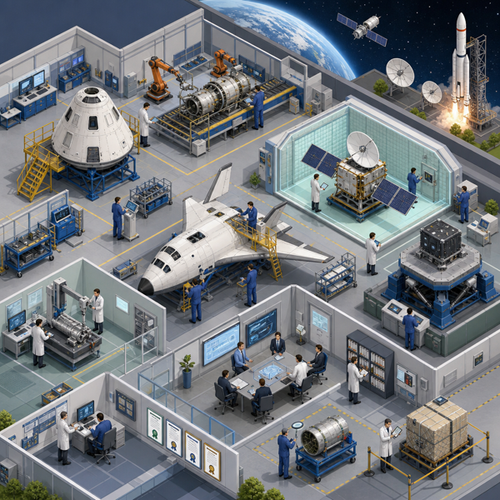
Vital Standards for Space Systems and Operations: Enhancing Reliability, Sustainability, and Safety
Space systems and operations are at the forefront of technological advancement, driving progress in communications, Earth observation, navigation, and scientific discovery. As organizations worldwide accelerate the deployment of novel hardware and software in orbit, the need for standardized approaches to design, dependability, risk management, and environmental protection has never been greater. This guide examines four crucial international standards—EN 16603-20-40:2023, EN 16604-10:2023, EN 9227-1:2025, and EN 9227-2:2025—that collectively address the lifecycle of spacecraft and space infrastructure, enabling businesses to increase productivity, ensure security and safety, and scale operations in increasingly complex environments.
Overview / Introduction
The space sector is rapidly expanding, fueled by the growth of private ventures, satellite constellations, interplanetary exploration, and the integration of advanced electronics and new materials. While innovation drives opportunity, it also introduces significant risks—system failures, safety incidents, regulatory infractions, and environmental threats like space debris accumulation.
To meet these challenges, organizations must rely on rigorous, widely accepted standards. International standards for space engineering, sustainability, programme management, and reliability control establish baseline requirements and best practices, streamline interoperability, and provide assurance to customers, regulators, and investors alike.
In this article, you'll gain:
- An understanding of the purpose and content of four key space sector standards
- Practical insights into their application in real-world space system projects
- Guidance on achieving compliance and leveraging standards to boost quality, scalability, and security
- Perspectives on how standards drive sustainable, responsible space activities amid rapid technological change
Whether you are part of a start-up, government agency, established aerospace contractor, or research institution, mastering these standards is essential to succeed and scale in the modern space economy.
Detailed Standards Coverage
EN 16603-20-40:2023 – Space Engineering: ASIC, FPGA and IP Core Engineering
Full Title: Space engineering - ASIC, FPGA and IP Core engineering
The EN 16603-20-40:2023 standard provides a comprehensive and coherent set of engineering requirements for the end-to-end development of application-specific integrated circuits (ASICs), field programmable gate arrays (FPGAs), and intellectual property (IP) cores used in space. Its framework addresses unique challenges faced when implementing highly complex, mission-critical electronics in harsh and costly space environments, where mistakes can result in irreversible failures and lost investments.
What the Standard Covers
This standard encompasses the entire device development process:
- Specification of requirements
- Architecture definition
- Design and verification
- Implementation
- Validation, qualification, and acceptance
- Documentation and risk assessment across all stages
The requirements are tailored for monolithic devices—covering digital, analogue, and mixed-signal ASICs, various FPGA technology families (SRAM, FLASH, anti-fuse), and advanced Systems-on-Chip (SoC) with hardware-software co-design elements. Special attention is given to software dependencies and the integration of processor cores.
Key Requirements and Specifications
- Device Development Flow: Prescribed sequential phases from definition to validation, each with distinct reviews and deliverables
- Verification and Validation Plans: Documented strategies and plans for confirming device functionality and meeting design targets
- Feasibility and Risk Assessment: Requirements for early risk identification and mitigation
- Documentation: Detailed outputs including requirements specifications, development plans, data sheets, support, and maintenance plans
- Tailoring: Guidance on adapting requirements based on device criticality and project specifics
- Iterative Design: Processes accounting for design iterations and review gates
Who Should Comply?
- Space system integrators
- Microelectronics and ASIC/FPGA/IP core developers for space missions
- Agencies and organizations procuring custom microelectronics for spacecraft
- Prime contractors and supply chain vendors involved in electronic component design for orbit
Practical Implications for Implementation
Adopting EN 16603-20-40 brings structure and clarity, reducing design errors, increasing predictability, and facilitating thorough risk management. It aligns design and customer expectations, guarantees traceability, and supports future qualification—vital for mission assurance. Combined with complementary product assurance standards, it lays the foundation for secure, reliable, and maintainable electronic systems for modern spacecraft.
Key highlights:
- Covers full lifecycle: requirements to validation, including SoC/software co-design
- Applies to ASIC, FPGA, and IP core engineering for robust, space-ready systems
- Emphasizes risk management, traceability, and phase reviews
Access the full standard:View EN 16603-20-40:2023 on iTeh Standards
EN 16604-10:2023 – Space Sustainability: Space Debris Mitigation Requirements
Full Title: Space sustainability - Space debris mitigation requirements (ISO 24113:2023, modified)
The EN 16604-10:2023 standard is the international benchmark for minimizing the creation of space debris and ensuring responsible, sustainable operations in Earth orbit. Rooted in guidelines by the International Organization for Standardization (ISO), United Nations treaties, and leading national and international initiatives, it translates high-level policy into actionable engineering and management requirements for all unmanned space systems.
What the Standard Covers
The standard provides primary debris mitigation requirements for:
- Satellites of all types and sizes
- Launch vehicle orbital stages
- Any objects released during normal system operations
It applies to all phases: launch, mission, end-of-life, and post-mission disposal.
Key Requirements and Specifications
- Intentional Release Restrictions: Prohibits or tightly controls objects released during operations
- Break-up Avoidance: Mandates prevention of both intentional and accidental break-ups (from stored energy or collisions)
- Post-Mission Disposal: Defines criteria for safe removal from protected low-Earth (LEO) and geostationary (GEO) regions, including disposal orbits and re-entry protocols
- Passivation: Requires permanent disabling of on-board energy sources to prevent post-mission explosions
- Planning and Documentation: Space debris mitigation plans required at program inception
- Probability Calculations: Includes metrics for calculating the probability of successful disposal
Who Should Comply?
- Satellite and launch vehicle manufacturers
- Mission operators (commercial, civil, governmental)
- Space agencies and licensing authorities
- Service providers in satellite launches and operations
Practical Implications for Implementation
Integrating EN 16604-10 into mission planning, design, and end-of-life processes is crucial to satisfy regulatory requirements, avoid fines and launch license issues, and demonstrate commitment to sustainable space use. As orbital congestion increases, standards-based mitigation is no longer optional—it is fundamental for mission approval, reputation, and ensuring the future viability of space operations.
Key highlights:
- Defines mandatory debris mitigation engineering and operational processes
- Reduces legal, reputational, and financial risks
- Supports global sustainability and international compliance for all mission stakeholders
Access the full standard:View EN 16604-10:2023 on iTeh Standards
EN 9227-1:2025 – Aerospace Programme Management: Guide to Dependability and Safety Control (RAMS)
Full Title: Aerospace series - Programme management - Part 1: Guide to dependability and safety control
EN 9227-1:2025 delivers an essential management and technical framework for ensuring reliability, availability, maintainability, and safety (RAMS) in aerospace and space-related programs. Recognizing that the dependability and safety of systems are critical to mission success and business sustainability, this standard is foundational for program directors, project managers, and stakeholders at all organization levels.
What the Standard Covers
The standard specifies procedures for the "construction" and "management" of product RAMS. It covers:
- Roles and responsibilities (customer, supplier, user)
- RAMS requirements definition, allocation, and negotiation
- Technical risk control and criticality assessments
- Task execution logic throughout all program phases (feasibility, development, production, operation, and disposal)
- Documentation of RAMS studies and plans
- Integrated management of technical and organizational aspects
Key Requirements and Specifications
- RAMS Plan Creation: Mandates the establishment of formal plans encompassing targets, analyses, and monitoring
- Risk Assessment: Process-oriented requirements for identifying, analyzing, prioritizing, and managing risks
- RAMS Growth and Testing: Specifies the need for ongoing verification, validation, and improvement throughout system life
- Digital Continuity: Documentation management and traceability
- Interrelations: Defines links between RAMS, quality assurance, systems engineering, logistics, human factors, and cybersecurity
Who Should Comply?
- Program directors and project managers across space and aerospace
- System, sub-system, and component integrators
- Suppliers and customers involved in contractual relationships
- Organizations responsible for safety, reliability, or mission assurance
Practical Implications for Implementation
Deploying EN 9227-1 improves transparency, provides a common language across multi-organization projects, and ensures risks are systematically managed and communicated. Centralizing RAMS activities boosts mission success rates, facilitates regulatory approvals, and supports product certification and international market access.
Key highlights:
- Provides a complete guide for RAMS management, from specification to product support
- Mandates clear assignment of responsibilities and reporting across the supply chain
- Synchronizes RAMS with broader project and quality management activities
Access the full standard:View EN 9227-1:2025 on iTeh Standards
EN 9227-2:2025 – Aerospace Programme Management: Guide for Reliability Control
Full Title: Aerospace series - Programme management - Part 2: Guide for reliability control
The EN 9227-2:2025 standard provides a deep dive into the practicalities and best practices for achieving and sustaining product reliability in aeronautical, space, and defense programs. It outlines the "construction" and "management" of reliability—central pillars of RAMS—helping organizations design robust systems that deliver on their technical, economic, and operational promises.
What the Standard Covers
EN 9227-2 establishes a detailed framework for:
- Setting and allocating reliability goals
- Conducting reliability prediction, risk analysis, failure mode and effects analysis (FMEA/FMECA)
- Reliability growth, demonstration, characterization, and production testing
- Activity management, including reviews and feedback systems
- Integrating reliability activities into each programme phase: preparation, realization, and use
Key Requirements and Specifications
- Reliability Programme Planning: Details requirements for systematic planning and allocation of reliability targets, traceable throughout the lifecycle
- Analytical and Testing Methods: Specifies methodologies for prediction, modeling, risk analysis, and formal test programs
- Failure Reporting and Corrective Action Systems (FRACAS): Mandates structured processes to capture, analyze, and address failures in real-time
- Management Integration: Ensures reliability activities are coordinated with quality management and other assurance processes
Who Should Comply?
- Programme directors and reliability engineers in aerospace and space organizations
- Subsystem/component suppliers
- System integrators
- Project teams responsible for reliability, maintainability, or lifecycle performance
Practical Implications for Implementation
Implementing EN 9227-2 ensures projects deliver systems that meet contractual and operational requirements for reliability. It reduces total lifecycle costs, supports certification, and underpins the sustainable operation of increasingly complex systems in challenging environments.
Key highlights:
- Comprehensive breakdown of reliability control tasks integrated into overall project management
- Promotes early risk detection and cost-benefit optimization
- Aligns reliability targets with actual system use, ensuring mission assurance
Access the full standard:View EN 9227-2:2025 on iTeh Standards
Industry Impact & Compliance
How These Standards Affect Modern Space Organizations
Adoption of these four standards transforms how businesses approach space systems and operations:
- Productivity Increases: Standards bring clarity to requirements, reducing costly rework and streamlining engineering and management workflows.
- Security & Safety: Thorough RAMS and reliability strategies, combined with debris mitigation, minimize the risk of catastrophic failures and safeguard human and environmental health.
- Scaling & Flexibility: Standards-based processes enable organizations to scale operations with confidence, manage complex supply chains, and integrate innovation without sacrificing quality.
- Market Access & Regulatory Compliance: Internationally recognized standards are often prerequisites for accessing global markets, qualifying for contracts, or gaining launch licenses.
- Risk Management: Codified best practices drastically reduce program, financial, and reputational risks, which are particularly high in space—where a single incident can result in loss of the entire mission.
Compliance Considerations
- Contractual Obligations: Many government and private contracts mandate compliance with these standards.
- Audit and Certification: Documentation and traceability requirements simplify audits and support third-party certifications.
- Continuous Improvement: Formal feedback loops (such as FRACAS) and documentation retention support reliability growth and knowledge transfer.
The Risks of Non-Compliance
- Regulatory or launch license denial
- Higher probability of mission loss or severe in-orbit incidents
- Financial penalties and reputational damage
- Increased environmental liability, especially under evolving international space law
Implementation Guidance
Common Implementation Approaches
- Gap Analysis: Assess current processes against standard requirements to identify gaps.
- Project Integration: Embed standard-compliant activities into project plans and quality management systems from the outset.
- Stakeholder Training: Train program and project personnel in standard requirements and their practical implications.
- Documentation Management: Employ robust document management systems to ensure traceability, revision control, and digital continuity.
- Iterative Reviews and Audits: Schedule internal and external reviews at critical milestones to validate compliance and capture lessons learned.
Best Practices
- Tailoring: Use standard clauses on pre-tailoring to adapt requirements sensibly to project type, risk, and mission criticality.
- Cross-Disciplinary Teams: Integrate expertise from engineering, management, environmental, and safety disciplines to maximize the standards' benefits.
- Early and Ongoing Engagement: Involve suppliers, customers, and regulators early to ensure all requirements are understood, allocated, and achievable.
- Technology Integration: Leverage modern engineering tools (digital twin, model-based systems engineering, automated testing) in line with standard-compatible processes.
- Continual Learning: Use feedback, incident reports, and reliability growth activities to drive ongoing improvement.
Resources for Organizations
- Access full standards texts through authoritative platforms like iTeh Standards
- Engage with professional associations and standardization bodies for guidance and training
- Partner with experienced consultants for initial implementations or complex projects
- Participate in industry working groups to stay ahead of evolving best practices and regulatory shifts
Conclusion / Next Steps
Embracing EN 16603-20-40:2023, EN 16604-10:2023, EN 9227-1:2025, and EN 9227-2:2025 is no longer discretionary for organizations seeking to thrive in the dynamic, high-stakes world of space systems and operations. These standards collectively ensure safety, reliability, environmental sustainability, and compliance, turning ambitious projects into successful, sustainable missions.
Key takeaways:
- Standards-based processes are indispensable for modern, innovative space projects—enabling secure, scalable growth and risk management.
- Compliance delivers clear business advantages: productivity, reputation, and competitive positioning.
- Integrated approaches—combining engineering discipline, program management, and environmental stewardship—result in resilient, future-ready space systems.
Recommendations:
- Start with a structured review of relevant standards for your project type and risk profile
- Access authoritative resources, such as iTeh Standards
- Invest in ongoing training and continuous improvement for your teams
- Stay engaged with the evolving standards ecosystem to remain competitive as technology and regulatory environments shift
Explore the detailed requirements, practical application guidance, and compliance tools by visiting the respective standard pages through the links provided. By implementing and advocating for these space systems standards, your organization not only achieves its technical and business objectives but contributes to a sustainable, responsible, and innovative future in space exploration and operations.
Categories
- Latest News
- New Arrivals
- Generalities
- Services and Management
- Natural Sciences
- Health Care
- Environment
- Metrology and Measurement
- Testing
- Mechanical Systems
- Fluid Systems
- Manufacturing
- Energy and Heat
- Electrical Engineering
- Electronics
- Telecommunications
- Information Technology
- Image Technology
- Precision Mechanics
- Road Vehicles
- Railway Engineering
- Shipbuilding
- Aircraft and Space
- Materials Handling
- Packaging
- Textile and Leather
- Clothing
- Agriculture
- Food technology
- Chemical Technology
- Mining and Minerals
- Petroleum
- Metallurgy
- Wood technology
- Glass and Ceramics
- Rubber and Plastics
- Paper Technology
- Paint Industries
- Construction
- Civil Engineering
- Military Engineering
- Entertainment