


Cables in Electrical Engineering: An Essential Guide to International Standards for Safety, Performance, and Innovation
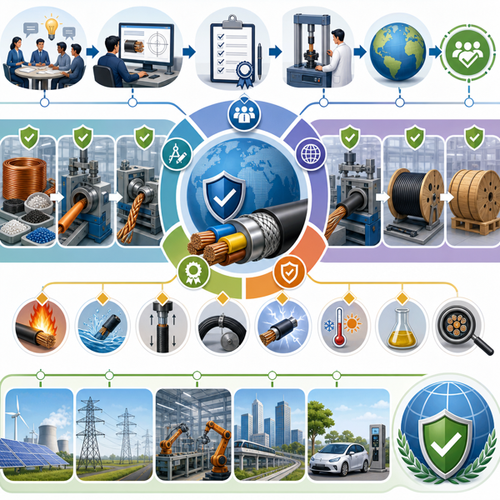
Cables are the lifelines of modern electrical and communication systems, powering everything from industrial machinery and ships to heating solutions and digital infrastructure. As organizations embrace rapid technological change, international cable standards have become essential—not only for regulatory compliance but for advancing safety, productivity, security, and scalable growth. This guide explores four key standards governing cable selection, installation, and operation across diverse sectors, supporting better business outcomes through robust specifications and consistent best practices.
Overview / Introduction
In today’s interconnected world, cables underpin almost every aspect of electrical engineering—whether transmitting power, data, or signals. The reliability and safety of an organization’s cabling infrastructure can directly impact operational efficiency and the adoption of new technologies. International standards, such as those developed by the International Electrotechnical Commission (IEC), serve as a universal language that ensures compatibility, optimizes performance, minimizes risk, and enables innovation on a global scale.
Implementing up-to-date standards is crucial for:
- Meeting legal and insurance requirements
- Protecting people, assets, and environments
- Reducing downtime and maintenance costs
- Future-proofing investments against technological change
This article examines four influential IEC standards for cables:
- IEC 60092-352:2025: Shipboard fixed installation cables
- IEC 60245-4:2026: Rubber-insulated cords and flexible cables
- IEC 60800:2021: Heating cables for comfort and ice prevention
- IEC 62807-2:2026: Hybrid indoor communication cables
You’ll learn what each standard covers, why it matters, and how compliance strengthens safety, productivity, and business scalability.
Detailed Standards Coverage
IEC 60092-352:2025 - Cables on Ships: Selection, Installation, and Operation
Electrical installations in ships - Part 352: Selection, installation, and operating conditions of cables
IEC 60092-352:2025 specifies comprehensive requirements for selecting, installing, and operating electrical cables in fixed systems on ships, at voltages up to Um 18/30 (36) kV. The scope covers power, control, symmetrical category (data), and fiber optic cables, accounting for the demanding conditions at sea, such as constant vibration and movement.
Key requirements include:
- Proper matching of cable type to application (power, control, data, optical)
- Calculation of cross-sectional areas, current-carrying capacity, and voltage ratings
- Installation practices to mitigate electromagnetic interference
- Mechanical protection, fire performance, and cable support/fixing systems
- Special requirements for cables bridging explosive and non-explosive areas
- Guidance for fiber optics and symmetrical category cables up to 1,000 MHz
The 2025 edition consolidates technical advancements with:
- Expanded scope for data and fiber cables
- Enhanced definitions and terminology
- Improved fire and safety provisions compliant with SOLAS regulations
- Detailed tables and annexes for current carrying capacities, installation corrections, and environmental factors
Who needs to comply: Shipbuilders, owners, offshore platform operators, electrical contractors, and naval architects must use this standard when designing, refurbishing, or maintaining shipboard electrical systems.
Practical implications:
- Ensures electrical safety under harsh marine environments
- Supports integration of high-speed data and communication systems
- Aligns with ship classification societies and international maritime regulations
Key highlights:
- Wide coverage across voltage classes and cable types
- Mechanical, fire, and EMC guidelines ensure long-term system resilience
- Enables safe implementation of new digital technologies onboard
Access the full standard:View IEC 60092-352:2025 on iTeh Standards
IEC 60245-4:2026 - Rubber Insulated Flexible Cables
Rubber insulated cables - Rated voltages up to and including 450/750 V - Part 4: Cords and flexible cables
IEC 60245-4:2026 covers rubber-insulated, sheathed cords and flexible cables used in a vast range of portable and moveable electrical equipment for voltages up to 450/750 V. The standard ensures these cable types meet performance and durability requirements above and beyond the baseline set in IEC 60245-1.
The standard addresses:
- Construction and material requirements for flexible multicore cables
- Testing protocols for conductor and insulation quality, mechanical strength, elongation, and resistance to chemicals and oil
- Sheath and insulation thicknesses and mechanical flexibility
- Guidance for specific applications, including ordinary and tough rubber, polychloroprene, and specialty elastomers
Major updates in the 2026 edition:
- Transition to modern test methods, referencing IEC 63294 rather than older protocols
- Updated normative references to support latest industry practices
Who should use this standard: Cable manufacturers, equipment designers, electricians, certifiers, and facility managers responsible for portable equipment safety and code compliance.
Implementation impact:
- Enables safe use of flexible cords in movable equipment, extension leads, lighting, power tools, and more
- Ensures consistency and reliability under repeated flexing and varying environmental conditions
- Provides clear criteria for testing and approving cable lots
Key highlights:
- Wide set of mechanical and electrical tests safeguard end-user safety
- Application guidance ensures proper use in real-world scenarios
- Supports innovation with new elastomeric materials for enhanced performance
Access the full standard:View IEC 60245-4:2026 on iTeh Standards
IEC 60800:2021 - Electrical Heating Cables for Comfort and Ice Prevention
Heating cables with a rated voltage up to and including 300/500 V for comfort heating and prevention of ice formation
IEC 60800:2021 standardizes requirements for resistive heating cables used for low-temperature applications, including floor and surface heating and protection against ice on roofs, gutters, and pipes. It ensures that both factory-assembled and field-assembled cable sets provide safe, durable, and efficient heating.
Scope and requirements include:
- Electrical, thermal, and mechanical performance criteria
- Mechanical classification, marking, and installation guidelines
- Safeguarding via conductive screens, armouring, and thermal controls
- Comprehensive testing for resistance, flammability, thermal cycling, and UV/weathering
- Excludes applications exceeding 100°C sheath temperature
The latest revision introduces:
- Stringent UV resistance and weatherproofing tests per ISO protocols
- Enhanced test protocols for plastic and metallic elements
- Stronger verification for cable and end-seal durability
Industries and users covered: Electrical contractors, HVAC professionals, flooring specialists, and facility managers implementing or maintaining electric heating or de-icing systems in residential, commercial, and light industrial settings.
Business and safety benefits:
- Reduces risk of fire, electric shock, and performance degradation
- Supports energy efficiency goals and regulatory compliance
- Protects assets in regions with harsh winter or variable weather
Key highlights:
- All-inclusive requirements for construction, installation, and routine sample testing
- Covers both surface and embedded heating, with detailed application guidance
- Facilitates safe adoption of efficient electric heating technologies
Access the full standard:View IEC 60800:2021 on iTeh Standards
IEC 62807-2:2026 - Hybrid Indoor Communication Cables
Hybrid communication cables - Part 2: Indoor hybrid cables - Sectional specification
IEC 62807-2:2026 is a sectional specification that addresses the complex requirements for modern hybrid communication cables combining optical fiber and metallic (e.g., coaxial, pair/quad) conductors, used in indoor applications. The focus is on cables for converged networks—supporting data, control, signaling, and power to remote devices.
Key provisions include:
- Definitions, design/construction requirements for hybrid cables
- Performance standards for optical, coaxial, twisted-pair/quad, and current-carrying elements
- Mechanical requirements (tensile, crush, impact, bending, torsion, UV resistance, kink)
- Environmental criteria: flame propagation, smoke emission, halogen content
- Reference to MICE (Mechanical, Ingress, Chemical, Climatic, Electromagnetic) classes from ISO/IEC 11801
Specific stresses:
- Current-carrying elements are strictly for powering communication or control devices (not for main power distribution)
- Interoperability among multiple element types within a single cable
- Testing and quality verification procedures per relevant IEC/ISO standards
Intended audience: Network designers, smart building integrators, IT/OT engineers, installers, and manufacturers of advanced structured cabling systems.
Real-world benefits:
- Enables fast, reliable installations for intelligent buildings, campuses, and industrial IoT
- Supports convergence (Power over Ethernet, smart sensors, unified comms)
- Ensures lifeline reliability for critical infrastructure and scalable technology rollout
Key highlights:
- Unified specification covers optical, data, and power needs in one cable
- Comprehensive testing ensures robust performance in demanding indoor environments
- Future-proofs infrastructure for digital transformation and IoT expansion
Access the full standard:View IEC 62807-2:2026 on iTeh Standards
Industry Impact & Compliance
How Cable Standards Affect Businesses
Cable standards go far beyond regulatory box-checking. For organizations, compliance means uncompromising safety, reduced liability, and robust future-readiness. Implementing these standards:
- Guards against electrical fires and equipment failure
- Minimizes downtime linked to faulty installation or subpar materials
- Streamlines insurance claims and inspections
- Facilitates integration of new digital and networking technologies
- Enables scalability—with confidence that infrastructure won’t be the limiting factor
Compliance Considerations
To stay ahead, businesses should:
- Regularly review and reference the latest editions of relevant standards
- Collaborate with certified suppliers and contractors knowledgeable in international specifications
- Document all installation and testing processes for quality assurance
Failure to comply brings risks:
- Non-insurable installations, project delays, and costly retrofits
- Regulatory fines and legal action after incidents
- Fast obsolescence, hampering adoption of advanced systems
Benefits of Adopting Cable Standards
- Productivity: Cables certified to the latest standards require less maintenance, deliver higher uptime, and support faster project delivery.
- Security: Clear protocols for fire performance, EMC, and segregation help prevent hazards and cyber/physical incidents.
- Scalability: Standardized cable systems allow seamless technology upgrades, support IoT and automation, and facilitate business expansion.
Implementation Guidance
Common Implementation Approaches
- Assessment: Conduct a gap analysis against current standards for existing installations.
- Design: Select cables and materials that are fully compliant, with future scalability in mind.
- Procurement: Source products verified by internationally recognized certification bodies.
- Installation: Follow all routing, segregation, protection, and fixation requirements outlined in the standards, with meticulous attention to manufacturer guidelines.
- Testing: Perform and document all required tests, from resistance and voltage to fire and environmental performance.
- Maintenance: Schedule regular inspections and update as standards evolve.
Best Practices
- Stay proactive—monitor new standard releases and apply timely updates.
- Train staff and contractors on standard requirements to ensure proper practices on-site.
- Archive compliance records, certificates, and test results for accountability.
- Leverage the expertise of platforms like iTeh Standards to remain current on international developments.
Resources for Organizations
- iTeh Standards platform: Search, interpret, and track standard updates
- Training and certification bodies: Offer ongoing education in best practices
- Industry associations: Publish guidance, application notes, and compliance checklists
- Qualified consultants and engineers: Provide audits, design reviews, and tailored implementation strategies
Conclusion / Next Steps
Choosing, installing, and maintaining cables according to international standards like IEC 60092-352:2025, IEC 60245-4:2026, IEC 60800:2021, and IEC 62807-2:2026 is no longer optional. It is a strategic imperative for any business that values safety, efficiency, and reliable integration of new technologies.
Key takeaways:
- Cable standards are critical for safety, resilience, and unlocking future innovations
- Each standard addresses a unique domain: ships, flexible applications, heating, and hybrid communications
- Compliance boosts productivity, system security, and scalability for organizations in every industry
Recommendations:
- Audit your cabling systems for compliance—don’t wait for failures to drive change
- Engage with the latest international cable standards early when planning expansions or upgrades
- Use iTeh Standards as your authoritative source for standard documents, updates, and interpretation
Empower your business—equip your engineers, technicians, and contractors with trusted, standards-compliant solutions.
Discover more and access the full library of cable standards:Explore iTeh Standards
Categories
- Latest News
- New Arrivals
- Generalities
- Services and Management
- Natural Sciences
- Health Care
- Environment
- Metrology and Measurement
- Testing
- Mechanical Systems
- Fluid Systems
- Manufacturing
- Energy and Heat
- Electrical Engineering
- Electronics
- Telecommunications
- Information Technology
- Image Technology
- Precision Mechanics
- Road Vehicles
- Railway Engineering
- Shipbuilding
- Aircraft and Space
- Materials Handling
- Packaging
- Textile and Leather
- Clothing
- Agriculture
- Food technology
- Chemical Technology
- Mining and Minerals
- Petroleum
- Metallurgy
- Wood technology
- Glass and Ceramics
- Rubber and Plastics
- Paper Technology
- Paint Industries
- Construction
- Civil Engineering
- Military Engineering
- Entertainment