


May 2026: Essential Electrical Engineering Standards Released
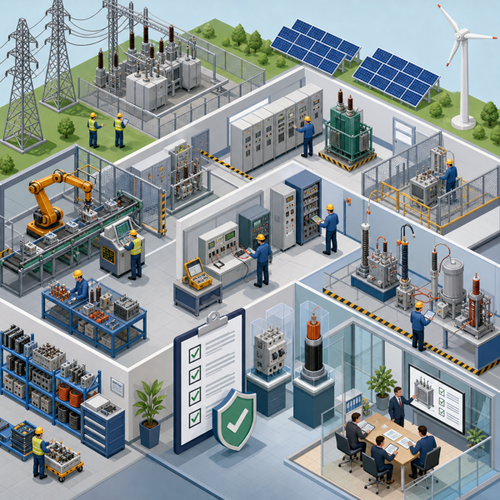
In May 2026, the electrical engineering landscape advanced significantly with the release of five pivotal international standards. These updates span critical components — from circuit-breakers to relays and fuses — ensuring more robust safety, interoperability, and performance benchmarks for a rapidly evolving sector. Part 1 of this three-part series provides an in-depth look into the requirements, practical implications, and compliance expectations shaping the future of electrical engineering standards worldwide.
Overview / Introduction
Electrical engineering underpins all modern infrastructure, from energy grids to intelligent buildings and industrial automation. The quality and safety of electrical equipment — and their integration into sprawling systems — depend on precise, harmonized standards. Such standards not only foster global trade and procurement but also pave the way for innovation, risk management, and operational efficiency. This article summarizes five newly published standards for May 2026, highlighting what’s new, who’s affected, and how organizations can capitalize on these technical updates. Readers will gain insights into:
- New requirements for circuit-breaker data modeling and selection
- Enhanced transformer impulse testing procedures
- Updated relay endurance testing methods
- Advanced switching devices for islanding solutions in prosumer’s electrical installations
- Expanded scope for miniature fuse-links for special electrical applications
Detailed Standards Coverage
EN IEC 63508:2026 - CDD Database: Circuit-Breakers for Household Use
CDD database – Circuit-breakers and similar equipment for household use
This standard represents a major milestone in digitalizing product information for circuit-breakers and related protection devices. EN IEC 63508:2026 establishes unified classes and properties for miniature circuit-breakers (MCBs), aligning with the IEC Common Data Dictionary (IEC CDD) — the global reference for unambiguous product semantics. The standard covers attributes for reliable selection, engineering integration, and catalog interoperability, ultimately streamlining digital workflows, data exchange, and e-commerce in electrical engineering markets.
Key requirements include:
- Comprehensive classification for MCBs, residual current devices, arc fault detection devices, and more
- Harmonized data attributes (such as number of switched poles, locking provisions, and impulse withstand voltage)
- Structured property blocks encompassing technical data, mounting/installation info, connections, environmental ratings, certification, and identification
- Guidance for integration with catalog consortia, software, and database standards to eliminate data mapping redundancies
Professionals in manufacturing, distribution, catalog management, and engineering — specifically those managing digital twins, product selection tools, or procurement catalogs — will find these requirements foundational for efficient operation. By adopting EN IEC 63508:2026, organizations can enhance interoperability, reduce data misinterpretation, and support advanced e-business platforms.
Key highlights:
- Standardizes data structures for all key attributes of household circuit-breakers
- Optimizes interoperability between manufacturers, integrators, and users
- Facilitates global e-catalogs and digital procurement
Access the full standard:View EN IEC 63508:2026 on iTeh Standards
FprEN IEC 60076-4:2026 - Power Transformers: Lightning and Switching Impulse Tests
Power transformers - Part 4: Lightning impulse and switching impulse tests of power transformers and reactors
FprEN IEC 60076-4:2026 modernizes and elaborates impulse testing protocols to verify the dielectric strength and durability of power transformers and reactors. With growing system complexity — and widespread integration of smart devices — robust impulse testing is essential to ensure equipment resilience against surges such as lightning or grid switching events.
The standard describes:
- Waveforms, test circuits, and equipment arrangements for accurate impulse simulation
- Best practices for grounding/earthing, measurement accuracy, and failure detection
- Step-by-step testing and interpretation in compliance with IEC 60060 and IEC 60076 series requirements
- Updated procedures for cases with significant waveform overshoot or oscillation, advanced test connections for three-phase transformers, and EMC considerations
Target industries include transformer and reactor manufacturers, electrical utilities, grid operators, testing laboratories, and large-scale industrial facilities. FprEN IEC 60076-4:2026 enhances test reproducibility, equipment safety, and regulatory assurance, crucial for both new installations and upgrades.
Key highlights:
- Detailed impulse test setups, including new oscillogram interpretation guides
- Expanded test coverage for both lightning and switching events
- Enhanced EMC practices for transformers with digital controls
Access the full standard:View FprEN IEC 60076-4:2026 on iTeh Standards
FprEN IEC 63522-19:2026 - Electrical Relays: Electrical Endurance Tests
Electrical relays - Tests and measurements - Part 19: Electrical endurance
FprEN IEC 63522-19:2026 provides updated methodologies for determining the electrical endurance of relays through controlled make-and-break cycling. It specifies:
- Standardized test procedures, severity levels, and sampling regimes for group/single mounting
- Load conditions (normal, overload, and abnormal), wiring arrangements, and operational frequencies
- Guidance for contact types, failure definitions, and post-test evaluations including dielectric and heating tests
These new requirements address reliability data for electromagnetic relays, high-capacity relays, and reed switches. They are vital for relay designers, equipment specifiers, and quality engineers striving to guarantee operational longevity in sectors like energy automation, industrial controls, automotive, and electronic systems.
Key highlights:
- Enhanced group- and single-mounting test scenarios
- Detailed evaluation and reporting criteria for relay failures
- Seamless integration with recent updates to IEC 61810-7 series
Access the full standard:View FprEN IEC 63522-19:2026 on iTeh Standards
FprEN IEC 63552:2026 - Switching Device for Islanding (SDFI)
Switching device for islanding (SDFI)
With the rise of distributed generation and prosumer-operated electrical installations (PEIs), the need for reliable islanding operation is more critical than ever. FprEN IEC 63552:2026 introduces the first dedicated international standard for SDFIs — specialized devices that disconnect installations from the grid, enabling safe autonomous (island) operation and reconnection.
The standard encompasses:
- Classification by construction, operational method, integration, current type, and pole number
- Detailed performance, marking, and product information requirements
- Operational endurance, voltage withstand capabilities, electromagnetic compatibility (EMC), and safety testing
- Integration options with other devices such as system referencing conductor switching devices (SRCSD)
- Communication interface provisions for seamless interaction with Customer Energy Managers and smart grid controllers
Stakeholders include equipment manufacturers, home energy system integrators, grid operators, and regulators — especially those responsible for energy-efficient installations with local generation or storage. Compliance with FprEN IEC 63552:2026 ensures not only technical reliability but also regulatory conformity in complex energy environments.
Key highlights:
- Enables standardized islanding transitions in advanced PEI setups
- Includes robust mechanical, electrical, and EMC performance benchmarks
- Advances grid resilience and end-user energy autonomy
Access the full standard:View FprEN IEC 63552:2026 on iTeh Standards
IEC 60127-7:2026 - Miniature Fuse-Links for Special Applications
Miniature fuses - Part 7: Miniature fuse-links for special applications
The third edition of IEC 60127-7:2026 significantly extends the family of miniature fuse-links, targeting specialty applications in low-voltage electrical and electronic circuits. Key provisions include:
- Scope for fuse-links with rated voltage up to 1000 V, current up to 125 A, and breaking capacity up to 50 kA
- Standardized dimensional and construction requirements, including expanded test board methods for surface-mount fuses
- Ratings, marking, and rigorous electrical performance (melting time, breaking capacity, and endurance)
- Guidance on specification, testing, and reporting to ensure safety and reliability — crucial for manufacturers and users alike
This part must be read in conjunction with IEC 60127-1, and applies primarily to applications where reliability and incident containment are paramount, such as critical control equipment, automotive electronics, and advanced consumer devices.
Key highlights:
- Expands allowable rated current for specialty fuse-links up to 125 A
- New testing regimes for both AC and DC breaking capacity
- Focused on non-user-replaceable applications for increased operational safety
Access the full standard:View IEC 60127-7:2026 on iTeh Standards
Industry Impact & Compliance
The release of these essentials standards marks a new era of harmonization and advanced requirements across the electrical engineering value chain. Organizations must:
- Review internal specifications and procurement protocols to align with new data structures, endurance tests, and product categories
- Train engineering and quality teams on new test procedures and documentation mandates
- Participate in compliance testing and third-party certification where required
- Plan update cycles for digital catalogs, product information systems, and integration middleware in line with new CDD and SDFI standards
Adoption brings measurable benefits:
- Improved operational reliability and safety across electrical assets
- Reduced complexity in product selection, engineering, and maintenance
- Enhanced efficiency for B2B and e-commerce interactions through harmonized data exchange
- Regulatory compliance and future-proofing for evolving grid architectures
Risks of delayed compliance include non-conformance penalties, interoperability failures, and delays in market access.
Technical Insights
Several technical themes connect these standards:
- Data Interoperability: EN IEC 63508:2026 lays the groundwork for digitized selection, tracking, and certification, supporting the move toward intelligent supply chains.
- Resilience Testing: Advanced impulse (FprEN IEC 60076-4:2026) and endurance (FprEN IEC 63522-19:2026) testing methodologies raise the reliability bar for both infrastructure and components.
- Islanding & Safety: FprEN IEC 63552:2026 directs the reliable management of islanding events — an increasingly common need in distributed energy and microgrids.
- Component Standardization: IEC 60127-7:2026 ensures uniform safety and performance in critical fuse protection, particularly for applications with complex risk profiles.
Implementation best practices:
- Cross-functional review for standard incorporation (engineering, compliance, procurement)
- Use of certified test laboratories and calibrated equipment for verification
- Digital upgrade of technical documentation and product data in alignment with IEC CDD models
- Vendor engagement to guarantee upstream compliance in supplied components
Testing and certification:
- Engage with notified bodies/labs accredited for IEC and EN standards
- Maintain written records of test reports, certifications, and material conformance declarations
- Schedule periodic reviews to capture future amendments and harmonized updates
Conclusion / Next Steps
The May 2026 update to electrical engineering standards delivers critical advances in safety, testing, and digital product management. Early adoption and training are essential for organizations aiming to maintain leadership in engineering quality and regulatory compliance.
Recommendations:
- Prioritize the integration of these new standards into company technical policies and quality systems
- Encourage continuous learning and skill development for engineering, testing, and procurement professionals
- Monitor future iTeh Standards releases for Parts 2 and 3, ensuring comprehensive alignment across the updated standards series
- Leverage the iTeh Standards platform to access, compare, and implement the latest requirements efficiently
Staying up-to-date is critical for success in the rapidly changing field of electrical engineering. Explore the full suite of standards and reinforce your organization’s commitment to excellence, safety, and compliance.
Categories
- Latest News
- New Arrivals
- Generalities
- Services and Management
- Natural Sciences
- Health Care
- Environment
- Metrology and Measurement
- Testing
- Mechanical Systems
- Fluid Systems
- Manufacturing
- Energy and Heat
- Electrical Engineering
- Electronics
- Telecommunications
- Information Technology
- Image Technology
- Precision Mechanics
- Road Vehicles
- Railway Engineering
- Shipbuilding
- Aircraft and Space
- Materials Handling
- Packaging
- Textile and Leather
- Clothing
- Agriculture
- Food technology
- Chemical Technology
- Mining and Minerals
- Petroleum
- Metallurgy
- Wood technology
- Glass and Ceramics
- Rubber and Plastics
- Paper Technology
- Paint Industries
- Construction
- Civil Engineering
- Military Engineering
- Entertainment