


Electrical Engineering Standards Update: Key Releases in May 2026
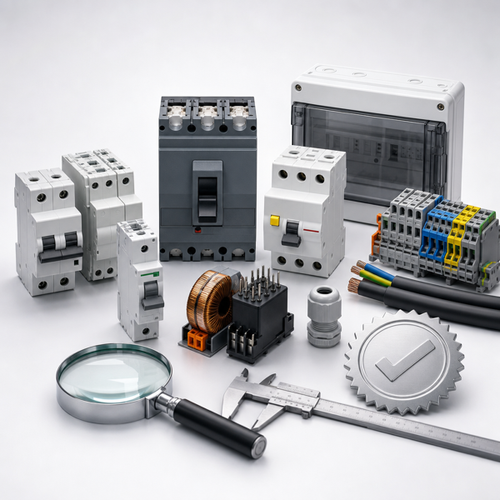
The field of electrical engineering saw the release of five significant international standards in May 2026, continuing a trend toward greater safety, compatibility, and performance in low-voltage systems and components. These standards—covering advanced semiconductor circuit-breakers, comprehensive requirements for primary batteries, and updated rules for recessed luminaires—signal important new expectations for manufacturers, engineers, and quality managers. This article examines the details of these latest standards, their practical implications, and what organizations need to know to remain compliant and competitive.
Overview / Introduction
Electrical engineering continues to underpin modern infrastructure, driving innovation across power distribution, device safety, and energy storage. As technology evolves, so do the requirements to ensure interoperability, product safety, and regulatory compliance.
International standards are essential tools in this context—they create common benchmarks for performance, enable interoperability, and set minimum safety expectations. May 2026 saw the publication of five pivotal standards focused on:
- The latest technologies in low-voltage switchgear,
- Primary battery design and safety (including aqueous and lithium chemistries), and
- Strict requirements for recessed luminaires in both standard and air-handling applications.
This article offers detailed insights into each standard, practical guidance for compliance, and a look at industry trends arising from these developments.
Detailed Standards Coverage
IEC 60947-10:2026 - Semiconductor Circuit-Breakers
Low-voltage switchgear and controlgear – Part 10: Semiconductor circuit-breakers
IEC 60947-10:2026 addresses the requirements for semiconductor circuit-breakers (SCCBs) and semiconductor hybrid circuit-breakers (SCHCBs) with rated voltages up to 1,000 V AC or 1,500 V DC. It includes detailed provisions for devices using semiconductor switching elements, with or without mechanical isolation contacts, thereby encompassing both pure semiconductor and hybrid configurations.
Scope and Application:
- Covers SCCBs and SCHCBs for operation by instructed or skilled persons, irrespective of current ratings or application sectors.
- Focuses on devices used in distribution boards, machinery control, renewable energy systems, and industrial automation.
Key Requirements:
- Comprehensive categorization based on operation, construction, communication interfaces, and safety measures (e.g., dielectric strength, EMC, short-circuit performance).
- Detailed construction rules for isolation, creepage and clearance distances, and electronic component reliability.
- Test sequences specify operational, short-circuit, dielectric, and environmental testing to verify all functional claims and safety aspects.
- Mandatory product information, labeling, and detailed operating instructions for installation and maintenance.
Who Should Comply:
- Manufacturers of low-voltage switchgear,
- Engineering teams integrating circuit protection,
- Compliance and safety officers overseeing energy distribution systems.
Practical Implications:
- Introduces alignment between mechanical and electronic switching so that safety is not compromised by software or hardware faults.
- Updates to EMC testing requirements ensure that SCCBs and SCHCBs can reliably function in environments with high levels of electrical noise.
- Clear guidelines on marking reduce chances of misapplication in the field.
Key highlights:
- Comprehensive rules for both SCCBs and SCHCBs, focusing on robustness and reliability.
- Detailed technical and type testing requirements for performance verification.
- Enhanced EMC, dielectric, and environmental testing aligned with latest IEC trends.
Access the full standard:View IEC 60947-10:2026 on iTeh Standards
FprEN IEC 60086-1:2025 - General Requirements for Primary Batteries
Primary batteries – Part 1: General
This foundational standard sets the general requirements for primary (non-rechargeable) batteries. It defines baseline performance, design dimensions, terminal requirements, marking rules, and safety expectations for all categories of primary cells and batteries used internationally.
Scope and Application:
- Applicable to all primary cells and batteries, regardless of chemistry or application sector.
- Widely referenced in portable electronics, medical devices, consumer goods, automotive key fobs, and more.
Key Requirements:
- Specifies mechanical dimensions, terminal configurations, and marking practices to ensure global interchangeability.
- Dictates performance measures including open-circuit voltage limits, discharge behavior, and leakage resistance.
- Stipulates conformity testing, including rigorous controls for storage, shipment, and packaging.
- Outlines product labeling for traceability and safe handling.
Who Should Comply:
- Battery manufacturers and designers,
- OEM device manufacturers,
- Procurement and quality assurance teams handling battery selection and sourcing.
Practical Implications:
- Adhering to this standard ensures compatibility across multiple systems and reduces the risk of battery failure or safety incidents.
- Facilitates global trade of primary batteries by harmonizing classification and designation systems.
- Sets the baseline for further product-specific battery standards and consumer labeling.
Key highlights:
- Standardizes key battery dimensions, electrochemical systems, and labeling.
- Enhanced safety and performance testing for leakage, discharge, and environmental conditions.
- Comprehensive guidance on packaging, storage, and disposal.
Access the full standard:View FprEN IEC 60086-1:2025 on iTeh Standards
FprEN IEC 60086-2-1:2025 - Aqueous Electrolyte Battery Specifications
Primary batteries – Part 2-1: Physical and electrical specifications of batteries with aqueous electrolyte
This first edition provides specialized requirements for primary batteries containing aqueous electrolytes. It addresses all dimensional, physical, and electrical aspects for these battery types, supporting standardized designs across applications ranging from consumer electronics to safety systems.
Scope and Application:
- Applies to a wide range of cylindrical and rectangular primary cells based on aqueous electrolyte systems, such as alkaline, zinc-carbon, and related chemistries.
- Critical for suppliers and engineers designing or sourcing batteries for devices like toys, smoke detectors, remote controls, and personal electronics.
Key Requirements:
- Sets out battery size codes, terminal features, and acceptable dimensional variations for assured compatibility.
- Lists specific electrical benchmarks (e.g., voltage, capacity, standard discharge rates) for each battery type.
- Includes application-specific tables mapping battery types to typical end-uses.
Who Should Comply:
- Manufacturers and designers of battery-powered devices,
- Battery suppliers,
- Quality managers validating product conformity for international markets.
Practical Implications:
- Promotes global harmonization for batteries used in mass-market goods, securing interchangeability and replacement ease.
- Reduces risk of device failure due to incorrect battery dimensions or performance.
- Aids product development for compliance with RoHS and environmental requirements.
Key highlights:
- Detailed, application-oriented specifications for a wide range of aqueous batteries.
- Standardized mechanical and terminal designs to support plug-and-play compatibility.
- Quality assurance protocols for storage, packaging, and shelf life.
Access the full standard:View FprEN IEC 60086-2-1:2025 on iTeh Standards
FprEN IEC 60086-2-2:2025 - Lithium Primary Battery Specifications
Primary batteries – Part 2-2: Physical and electrical specifications of lithium batteries
Responding to the increasing prevalence of lithium primary batteries in high-drain and portable applications, this standard delineates rigorous physical and electrical specifications for a wide variety of lithium cell formats.
Scope and Application:
- Covers non-rechargeable lithium cells and batteries, including coin, cylindrical, and specialty configurations.
- Targeted at device designers, battery manufacturers, and industries requiring high energy density and longevity (e.g., electronic keys, IoT devices, high-performance sensors).
Key Requirements:
- Precise mechanical dimensions, electrical characterization (including minimum capacities and open-circuit voltages), and terminal specifications for each cell type.
- Detailed discharge test conditions for digital audio, cameras, portable lighting, remote controls, and more.
- Incorporates updates on maximum OCV values and additional tests for new battery applications (e.g., high-intensity lighting, motorized toys).
Who Should Comply:
- Manufacturers of non-rechargeable lithium batteries and devices using them,
- OEMs utilizing lithium primary batteries for global markets,
- Product certification specialists.
Practical Implications:
- Supports safe integration of lithium batteries in demanding applications, minimizing fire, leakage, and reliability hazards.
- Assures performance consistency across batches and suppliers.
- Alignment with latest international practice streamlines certification for export markets.
Key highlights:
- First edition focused on lithium primary batteries, building on general principles in Part 1.
- New technical changes for OCV, digital audio applications, and more robust discharge performance.
- Supports updated labeling and international compliance for lithium-based products.
Access the full standard:View FprEN IEC 60086-2-2:2025 on iTeh Standards
prEN IEC 60598-2-2:2024 - Recessed and Air-Handling Luminaires
Luminaires – Part 2-2: Particular requirements – Recessed luminaires and recessed air-handling luminaires
This update addresses the growing complexity and safety needs of modern lighting installations—particularly those integrated within ventilation ducts or air-handling systems. The standard establishes particular requirements for recessed luminaires up to 1,000 V, including robust marking and testing methodologies for IP ratings, installation safety, and thermal management.
Scope and Application:
- Relevant to luminaires used in office, commercial, and industrial facilities—especially where integrated with HVAC (Heating, Ventilating, and Air Conditioning) infrastructure.
- Applies to both standard recessed and air-handling variants.
Key Requirements:
- Strict marking protocols for IP ratings and installation safety.
- Enhanced construction rules to prevent electric shock, fire risk, and thermal hazards.
- Endurance, electrical, and environmental testing for worst-case scenarios (e.g., abnormal operation, exposure to dust/moisture, humidity cycling).
- Symbols and instructions for installation on combustible and non-combustible surfaces.
Who Should Comply:
- Lighting OEMs and designers,
- Building systems integrators,
- Procurement, inspection, and facility management teams.
Practical Implications:
- Ensures installed luminaires are safe, compatible with ventilation/HVAC systems, and meet strict European market requirements.
- Reduces insurance risk and supports compliance with international building codes.
- Streamlines product testing and labeling for new luminaire designs.
Key highlights:
- Updated IP marking, construction, and installation requirements.
- Multiple endurance and thermal tests aligned with evolving installation practices.
- Supports harmonized safety certification for lighting products in complex spaces.
Access the full standard:View prEN IEC 60598-2-2:2024 on iTeh Standards
Industry Impact & Compliance
The publication of these standards marks a decisive shift toward more stringent safety, interoperability, and labeling requirements. Companies in electrical engineering, device manufacturing, energy storage, and building construction must now:
- Review and upgrade product designs to comply with the latest safety and performance requirements.
- Update test procedures and documentation for battery and switchgear products to align with new verification protocols.
- Train installation and maintenance staff on revised luminaire standards, particularly about marking, IP ratings, and thermal performance.
Adoption Timelines:
- New projects or contracts initiated after May 2026 should reference and require compliance with these standards.
- Organizations should consult relevant local and regional transition policies for existing stock or installations.
Business Benefits:
- Enhanced product safety and reliability,
- Easier international market access due to harmonized requirements,
- Reduced liability and insurance costs,
- Improved procurement efficiency via standardized component specifications.
Risks of Non-Compliance:
- Regulatory penalties,
- Market access restrictions,
- Increased risk of product recalls or post-market failures,
- Erosion of customer trust and brand reputation.
Technical Insights
Several cross-cutting technical requirements are evident across the five standards:
- Rigorous EMC protection for semiconductor circuit-breakers and sensitive electronic products.
- Standardized battery designation systems enhance interchangeability, reduce the risk of incorrect substitution, and lower device maintenance costs.
- Unified test protocols for performance, safety, environmental resistance, and labeling, facilitating common certification and procurement practices.
- Enhanced marking and documentation for all products ensures that essential safety and compatibility information is easily accessible.
- Thermal and endurance testing in luminaires and circuit-breakers tackles the challenge of device integration into increasingly complex systems—whether electrical panels or building automation.
Implementation Best Practices:
- Start with a gap assessment against new requirements, especially for laboratory testing and product marking.
- Invest in staff training for installation, testing, and compliance audit procedures under the new standards.
- Build partnerships with accredited test labs that offer turn-key certification for the full suite of standards.
- Regularly review and update compliance documentation, keeping track of revisions and product releases.
Testing and Certification Considerations:
- Obtain certifications from recognized bodies referencing the latest edition of these standards.
- Where products are exported globally, prioritize harmonized requirements to minimize redundant testing and re-certification.
- For new product development, integrate early certification planning to speed up time-to-market.
Conclusion / Next Steps
The latest international standards for electrical engineering published in May 2026 represent a broad advance in performance, safety, and harmonization. Whether your organization develops switchgear, batteries, or lighting systems, proactive adoption of these standards is key to sustained market success and risk management.
Key takeaways:
- Five essential standards reshape expectations for batteries, circuit-breakers, and luminaires.
- Compliance unlocks new opportunities for market access and innovation.
- Early education and system upgrades will minimize transition challenges.
Recommendations for organizations:
- Carefully review applicable standards and update product documentation.
- Engage with compliance bodies and test labs to accelerate certification.
- Monitor iTeh Standards and trusted sources for future updates and best practices.
Explore the full text and detailed requirements of each standard via iTeh Standards. Stay updated with ongoing news and developments in international electrical engineering standards by subscribing to alerts and newsletters from standards.iteh.ai.
Categories
- Latest News
- New Arrivals
- Generalities
- Services and Management
- Natural Sciences
- Health Care
- Environment
- Metrology and Measurement
- Testing
- Mechanical Systems
- Fluid Systems
- Manufacturing
- Energy and Heat
- Electrical Engineering
- Electronics
- Telecommunications
- Information Technology
- Image Technology
- Precision Mechanics
- Road Vehicles
- Railway Engineering
- Shipbuilding
- Aircraft and Space
- Materials Handling
- Packaging
- Textile and Leather
- Clothing
- Agriculture
- Food technology
- Chemical Technology
- Mining and Minerals
- Petroleum
- Metallurgy
- Wood technology
- Glass and Ceramics
- Rubber and Plastics
- Paper Technology
- Paint Industries
- Construction
- Civil Engineering
- Military Engineering
- Entertainment